
- Collection type
- Object
- Description
- Horse bone skate.
- Geographical reference
- England London
- Date
- Date collected
- By 1897
- Acquisition information
- Loaned: 03/1897 Bequeathed: 1939
- Materials and processes
- Material Horse Bone Animal, Process Perforated, Process Carved
- Dimensions
- Length: max 222 mm
- Object numbers
- Accession number: 1897.83.7
- Research and responses
http://en.wikipedia.org/wiki/Ice_skating ... The exact time and process by which humans first learned to ice skate is not known, though archaeologists believe the activity was widespread. The convenience and efficiency of ice skating to cross large, icy areas is shown in archaeological evidence by the finding of primitive animal bone ice skates in places such as Russia, Scandinavia, Great Britain, Germany, and Switzerland. The runners were made from bones of cattle. They ground down until they formed a flat gliding surface, and thongs tied them to the feet. ... [AP 28/09/2006]
Search terms: Transport and Travel, Clothing Footgear, Skate
Further items to explore
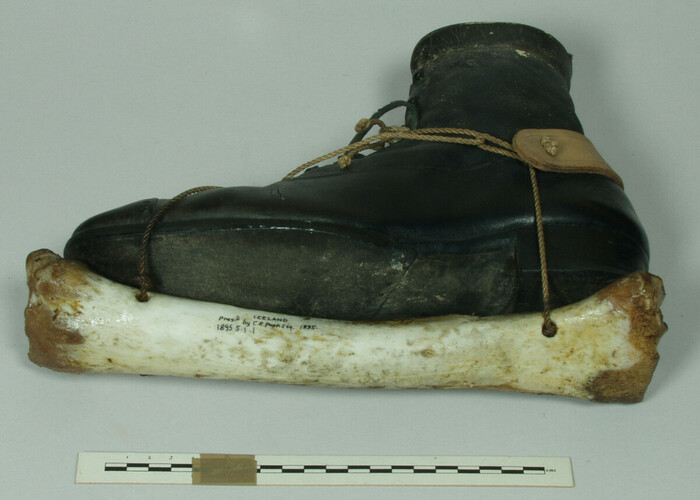 1895.5.1.1Pair of bone skates [ .1 - .2] Both have string and leather straps that enable them to be attached to shoes. [.1] is currently attached to a boot [2004.193.1 .2] to illustrate how they were used.1895.5.1.1
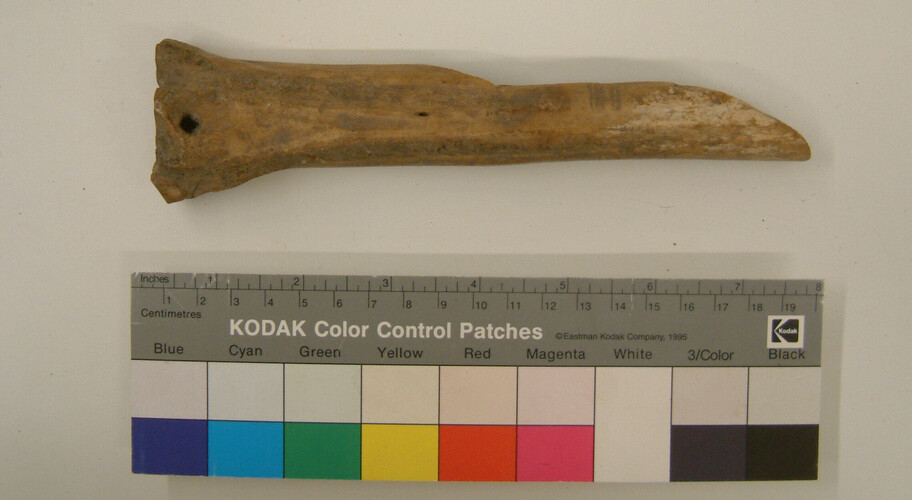 1899.69.4One end of bone skate.1899.69.4
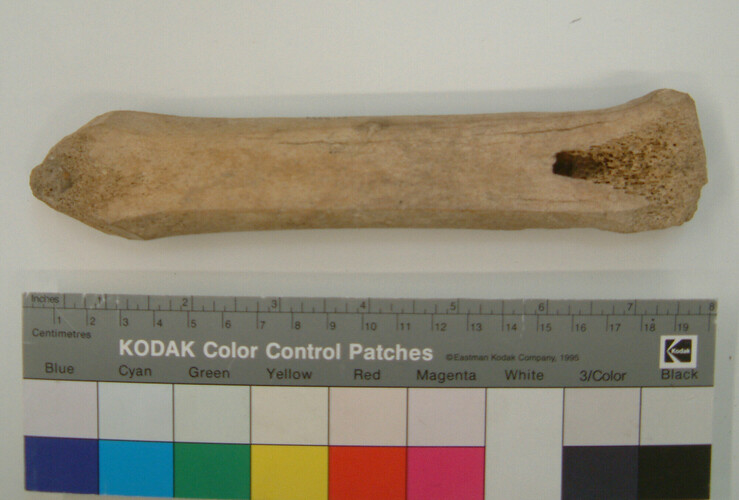 1926.13.35Bone skate.1926.13.35
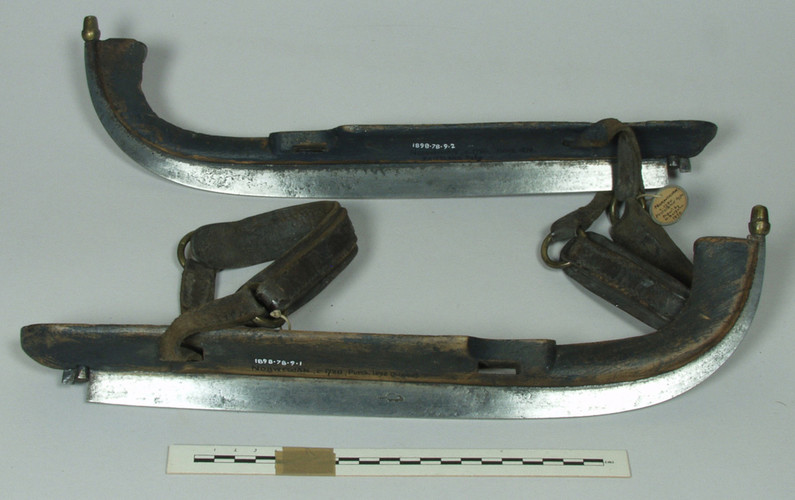 1898.78.9.1Wooden skates [.1 - .2] with a metal blade set in a groove along the centre.1898.78.9.1
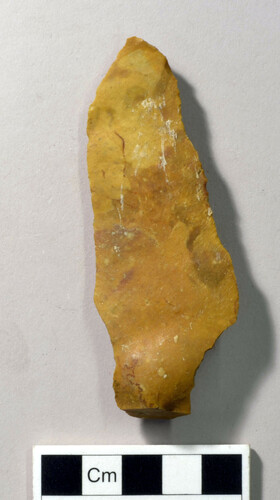 1884.123.628Stone implement1884.123.628
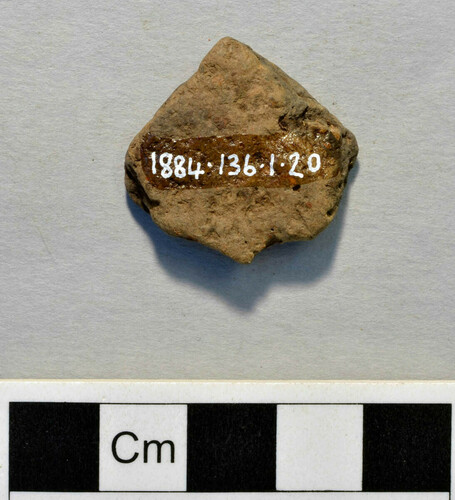 1884.136.1.20Ceramic sherd1884.136.1.20
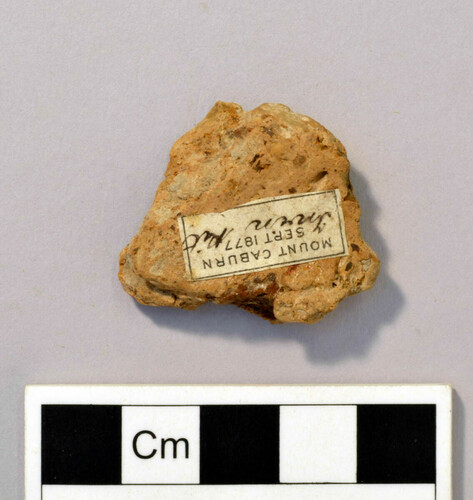 1884.137.44.15Ceramic sherd1884.137.44.15
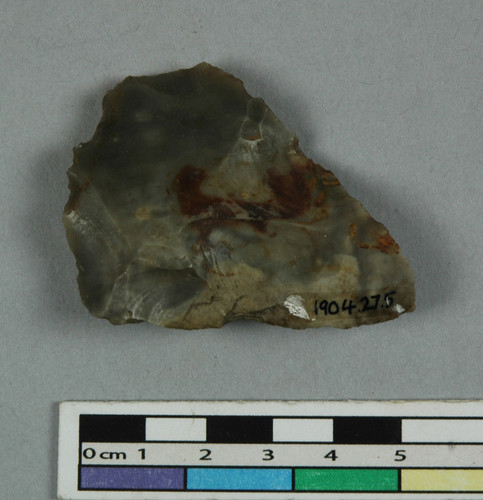 1904.27.5Flint flake, dark grey in colour, triangular shaped. [MJD DDF Body Arts Project 2010/2011 18/02/2011]1904.27.5