
- Collection type
- Object
- Description
- Hand modelled clay cow with humped back and trained horns pierced with grass, used as a toy [RTS 5/10/2004].
- Long description
- Toy figure of a cow, hand modelled from well levigated gray clay with occasional tiny mica and white inclusions (Pantone 404C), sun dried and then painted with a chalky coloured white pigment. It consists of a cylindrical body, roughly pinched at the front to form a vertical ridge running down the chest. The head is poorly defined as a roughly triangular area between two large horns, one curling sharply in towards the face and the other curving up and away from it, probably representing artificially trained horns. Each has been pierced near its tip with a short piece of yellow grass stem (Pantone 7509C). Behind the head, the back rises into an elongated hump with curved top, then is concave below to a slightly raised rump. A thin strip of clay has been added to hang down between the legs as a long tail; this splays out at the end. The underside of the body has been pulled out to form four legs, each separated only just above its base, with the underside flattened, allowing the figure to stand upright. A piece of clay has been applied to the underside of the torso, near the back legs, and pulled into a series of peaks to represent the udder. The surface has traces of white pigment covering large areas, including between the horns, the front flanks, and much of the back part of the figure; this is also partially covered with patches of greenish straw, probably dung. The figure is complete, but has been mended from 4 fragments with the ends of the horns and tail being reattached. It has a weight of 373.3 grams, is 100 mm high, 130 mm long, and measures 43 mm across the hind quarters [RTS 13/10/2004].
- Geographical reference
- Cultural groups
- Nuer
- Date / Period
- Date made: Before 1936
- Date collected
- 1935 - 1936
- Acquisition information
- Donated: 1936
- Materials and processes
- Material Clay, Material Grass Stem Plant, Material Pigment, Process Modelled, Process Pinched, Process Perforated, Process Dried, Process Painted
- Dimensions
- Length: max 130 mm, Height: max 100 mm, Width: max 43 mm, Weight 373.3 g
- Object numbers
- Accession number: 1936.10.89
- Research and responses
Evans-Pritchard did his fieldwork amongst the Nuer in four expeditions, which took place in 1930, 1931, 1935 and 1936. This object was probably collected in 1935 or 1936, when he held a research fellowship from the Leverhulme Trust (see E.E. Evans-Pritchard, 1940, The Nuer).
Evans-Pritchard discusses the use of mud figures by the Nuer: “The games of rather older children of both sexes centre round cattle. They build byres of sand in camps and of moistened ashes or mud in villages, and fill the toy kraals with fine mud cows and oxen ... with which they play at herding and marriage” (E.E. Evans-Pritchard, 1940, The Nuer, p. 38). The material used seems to be a naturally occurring clayey soil, and 'clay' has been chosen here as a better descriptive term than 'mud' [RTS 27/2/2004].
For clay figures made by neighbouring groups, such as the Dinka, see S.L. Cummins 1904, "Sub-tribes of the Bahr-el-Ghazal Dinkas", JRAI 34, 160-161, and H.A. Bernatzik, 1929, Zwischen Weissem Nil und Belgisch-Kongo, fig. 137 (for a photograph of Shilluk children playing with a large group of such figures) [RTS 15/8/2005].
Search terms: Toy and Game, Figure, Model, Pottery, Animal Figure, Toy
Further items to explore
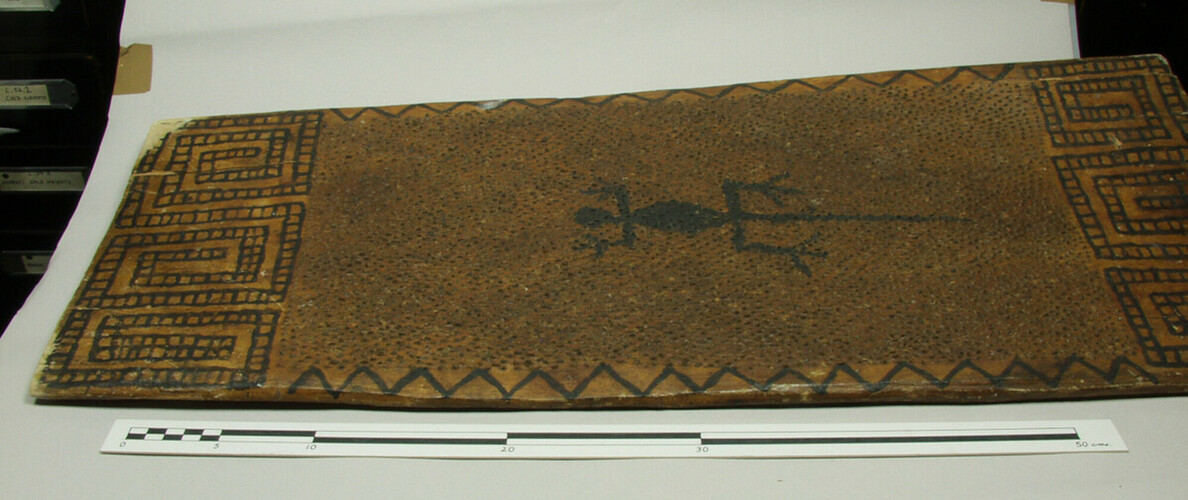 1994.10.24Rectangular manioc-grater made of wood inlaid with flint and lizard on the front face. [N.B. 'DCF 2004-2006 What's Upstairs?' 6/4/2005]1994.10.24
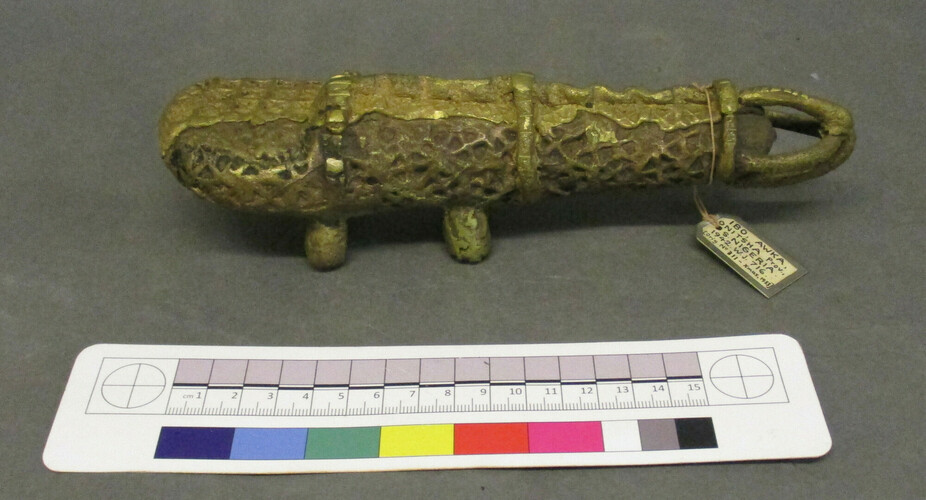 1942.13.716Brass object, possibly an animal figure in a conventionalised style. It has a rounded, tapering body and four short legs. [JC [OPS Move] 16/6/2017]1942.13.716
 1949.12.74Model animal.1949.12.74
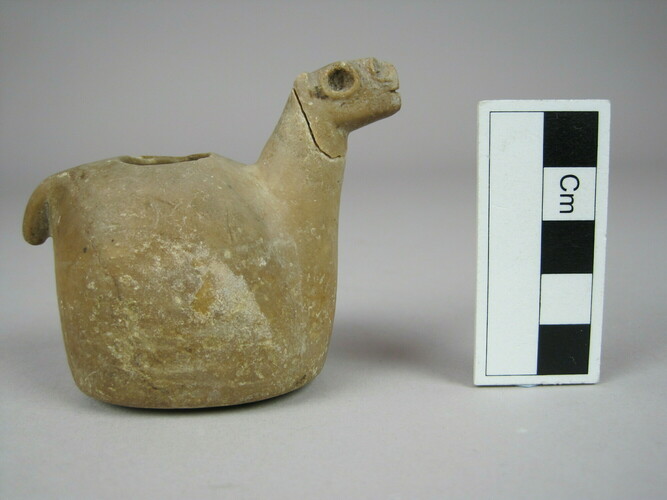 1922.8.7Carved stone vessel carved in the form of a llama [SM (Verve) 7/7/2016]1922.8.7
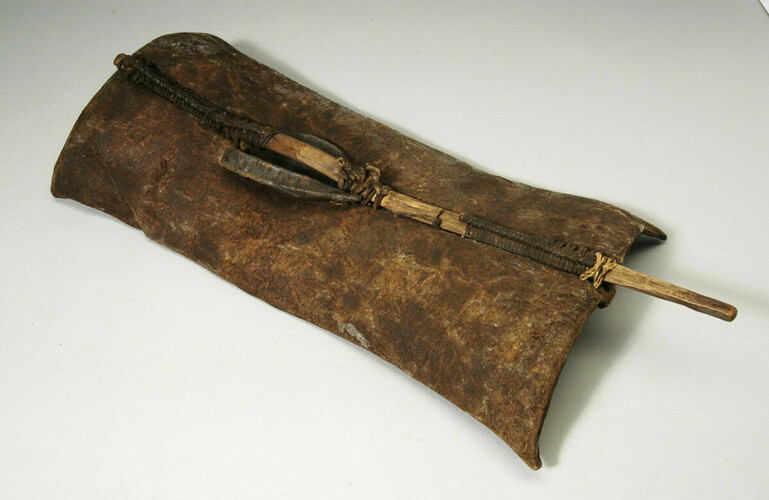 1979.20.180Small rectangular dance and fighting shield, made from giraffe hide [RTS 16/9/2005].1979.20.180
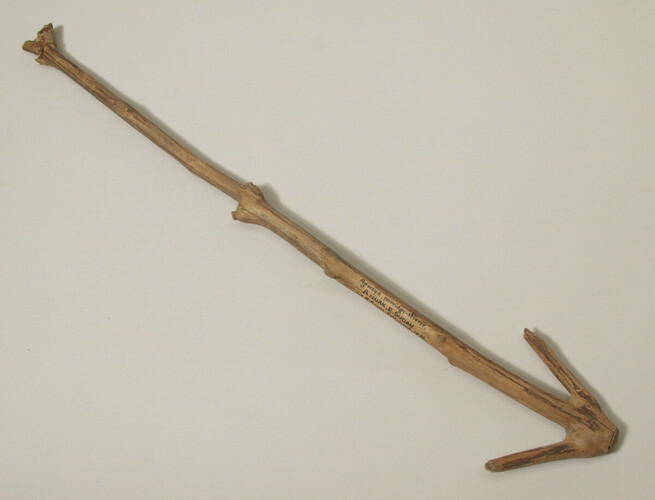 1936.10.47Trimmed wooden stick with branched end, used for stirring porridge.1936.10.47
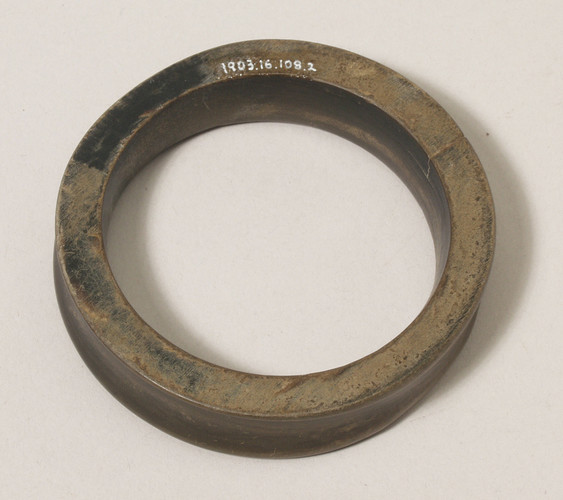 1903.16.108.2Annular armlet carved from elephant toe [RTS 24/3/2004].1903.16.108.2
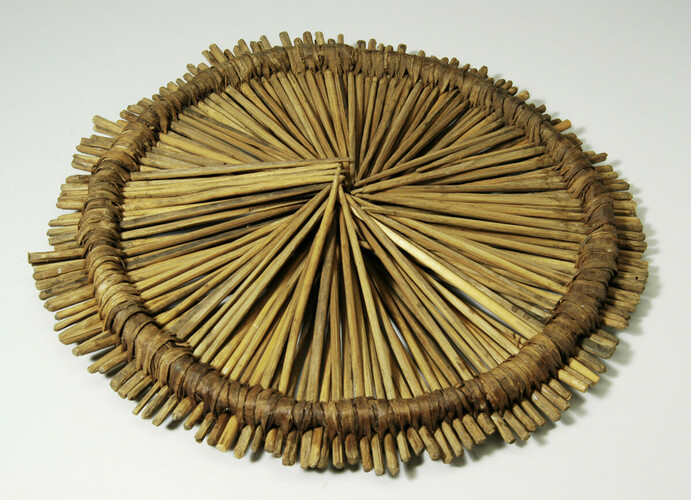 1936.10.99Circular wooden spiked wheel trap for capturing large game animals [RTS 22/9/2004].1936.10.99