
- Collection type
- Object
- Description
- Natural holed flint attached by a thong to a peg.
- Geographical reference
- England Oxfordshire Thame
- Cultural groups
- English
- Date / Period
- Date made: Before 1935
- Date collected
- By 1935
- Acquisition information
- Donated: 1935
- Materials and processes
- Material Flint Stone, Material String, Material Wood Plant, Process Hammered, Process Perforated
- Dimensions
- Length: max 130 mm peg
- Object numbers
- Accession number: 1935.41.1
- Research and responses
Thame workhouse: http://users.ox.ac.uk/~peter/workhouse/Thame/Thame.shtml: The new workhouse was built in 1836 to a design by Witney-born George Wilkinson on a site at the north-west of Thame on the north side of the Oxford Road. It was designed to accommodate 350 people and cost around £7,000. ... The building was constructed in red brick with slate roofs. From the central three-storey hub, which originally housed a chapel and men's dining-hall, two-storey wings radiated to the east and west, each terminating in three-storey blocks running north-south. The upper floors of the hub contained the Master's quarters and had windows providing views in all directions over the inmates' yards. South from the central hub lay a single-storey range, which originally housed the workhouse kitchens. Unusually, there was no corresponding range to the north of the hub. The main entrance to the site was flanked by two "pepper-pot" gate houses. ... In the 1930s, after the building's use as a workhouse had ended, it lay empty for a number of years, then was brought back into use as a school for the sons of deprived families from the north-east of England. In the late 1950s, the school was given to Oxfordshire County Council to run as a residential technical college specialising in agricultural engineering. Rycotewood College continued in operation until around 2004 but is now being redeveloped with part of the original building being preserved. [AP 25/09/2006]
- Associated publications
- Mentioned in Ellen Ettlinger, Folklorevol 54, no. 1, (March 1943) pp 227-249, 'Not only stone implements, the meaning of which have been forgotten, were regarded as thunderbolts, but also minerals of uncommon shape, as e.g. Iron pyrites. One example, which must have been believed to protect the house against lightning, was found with three other thunderbolts in a lump of plaster under the roof, when a block of old brick cottages was recently pulled down at Shaw, Newbury, [H. Balfour 'Thunderbolts' in Folk-lore vol xliv, p 236] It is now preserved in the Pitt Rivers Museum. That holed stones were also built as amulets into walls is proved by a natural holed flint, now in the Pitt Rivers Museum. "It was found attached to a hammered peg, buried inside a brickwall of the workhouse at Thame (Oxon.) built in 1836." [thanks PRM and TK Penniman for info]' [p235]
Search terms: Dwelling, Geology, Specimen, Religion, Ornament, Stone, Amulet
Further items to explore
 1940.12.831.3Rectangular metal cigarette box with lid containing two pieces of chert [1940.12.831 .1] and [1940.12.831 .2]. [JMC 24/10/2018]1940.12.831.3
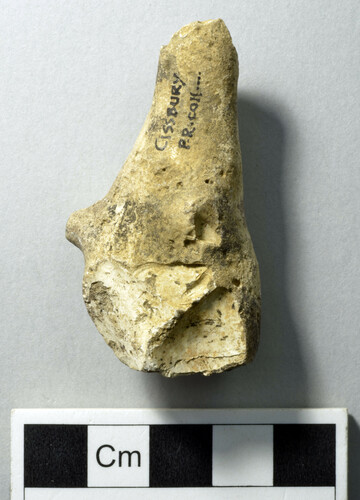 1884.140.1458.8Stone nodule; flint1884.140.1458.8
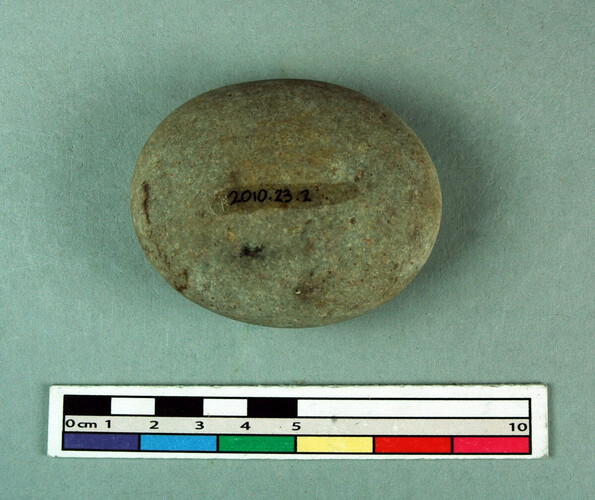 2010.23.2Stone [FC 08/04/2010]2010.23.2
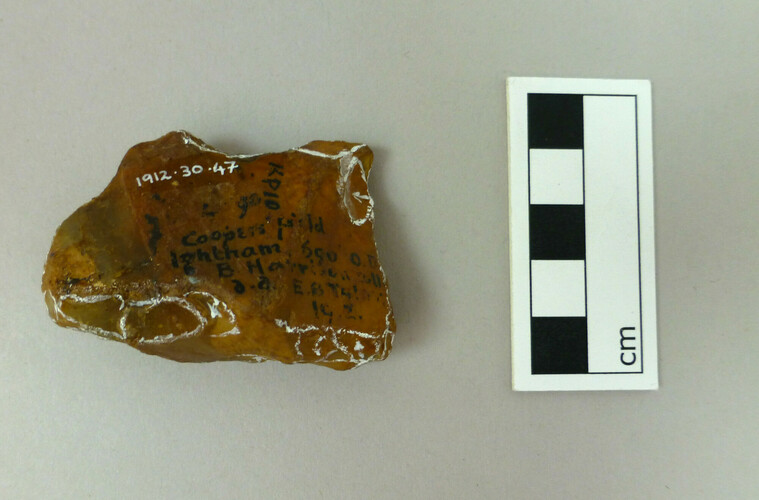 1912.30.47Stone eolith marked along the edges in white probably for display/ teaching purposes. [ZM 19/02/2008]1912.30.47
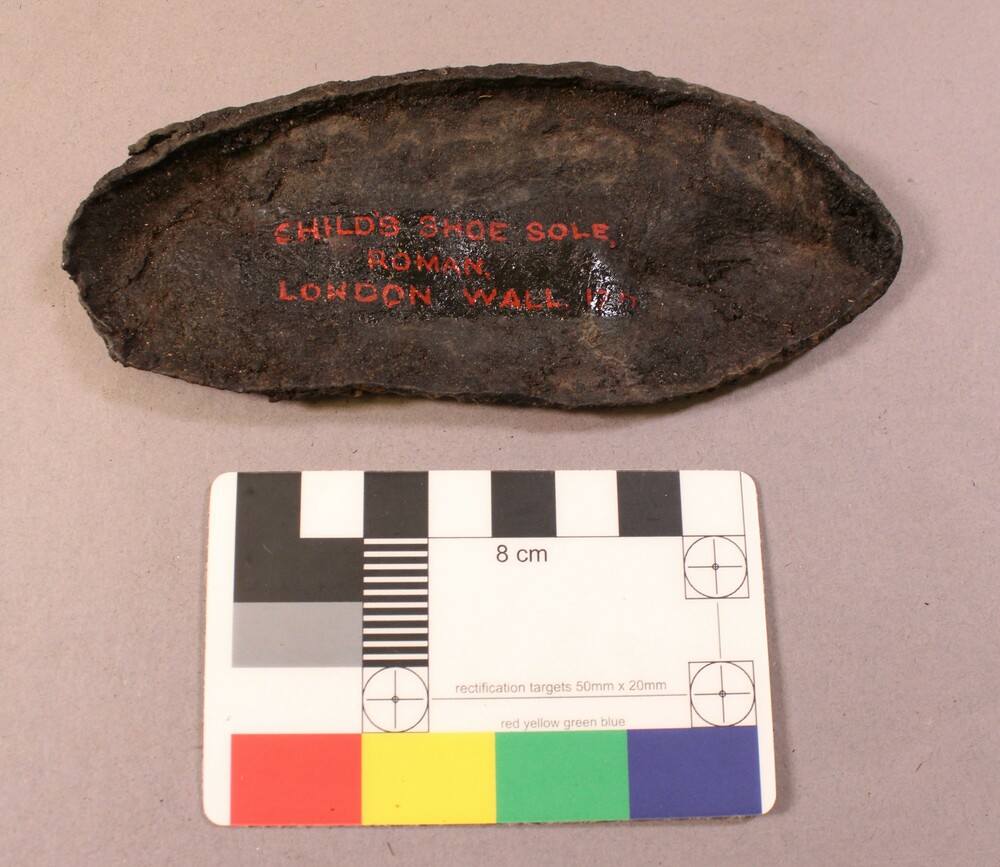 1884.92.39Leather shoe sole. [CG [Excav. PR] 11/11/2013]1884.92.39
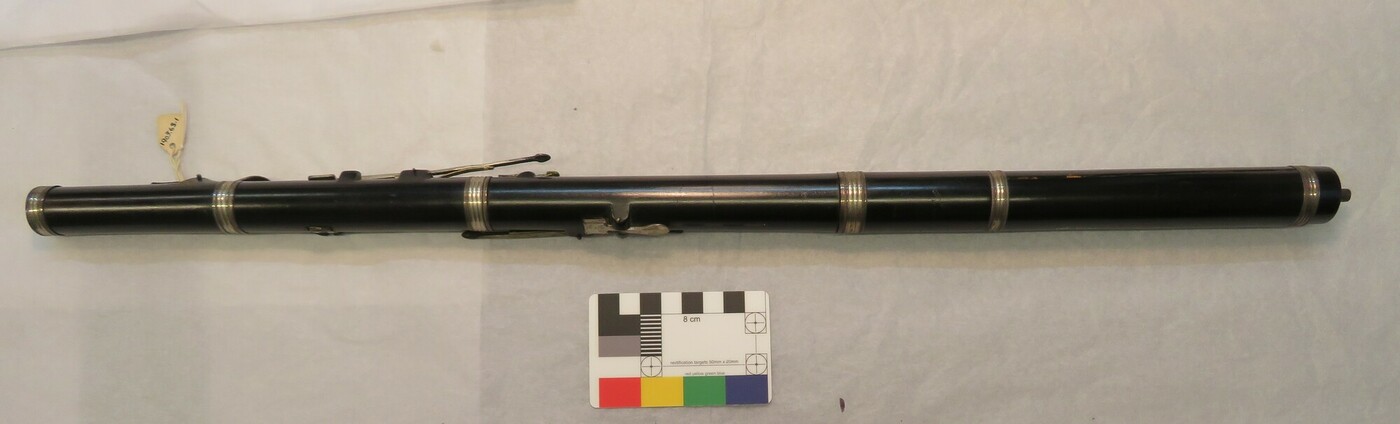 1903.63.1Ebony flute made by Gerock and Wolf, 79 Cornhill.1903.63.1
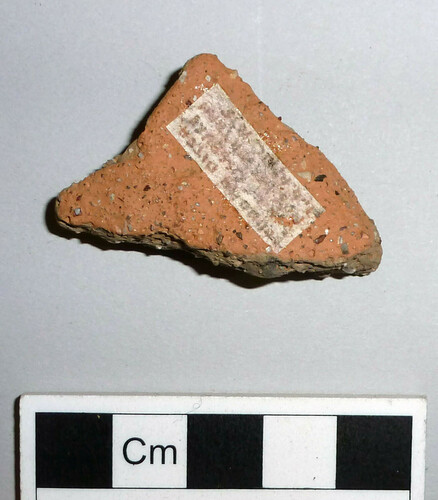 1884.140.1527.2Ceramic sherd. Body sherd of medium grained ceramic with mineral temper. [CG [Excav. PR] 20/08/2013]1884.140.1527.2
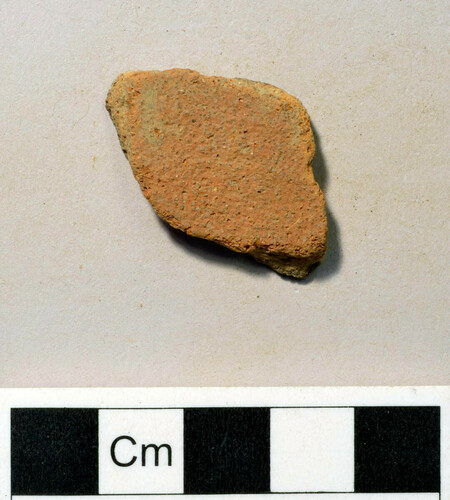 1884.140.1637.97Ceramic sherd1884.140.1637.97