
- Collection type
- Object
- Description
- Stone [FC 08/04/2010]
- Geographical reference
- Scotland Western Isles Barvas Galson
- Person
- Field collector Donald Ferlys Wilson Baden-Powell
- Field collector Charles Elton
- PRM source Donald Ferlys Wilson Baden-Powell
- Date / Period
- Archaeological period: Iron Age, uncertain
- Acquisition information
- Found unentered: 10/10/2009
- Materials and processes
- Material Stone
- Dimensions
- Depth: max 27 mm, Width: max 50 mm, Length: max 65 mm, Weight 141 g
- Object numbers
- Accession number: 2010.23.2
- Research and responses
These objects are likely from the Iron Age settlement located in 'Sand Park' field, north of Galson farmhouse (NB 4364 5943). The site was first excavated by Arthur J H Edwards in 1923, however this object was likely collected 10 - 13 years later by Donald Baden-Powell and Charles Elton who excavated four areas (A - D) in 1933 and 1935. Baden-Powell and Elton were primarily interested in the geological formation of the site, and consequently spent time documenting and collecting all material encountered, including natural unworked stones to understand the site formation process: “In both Excavations A and C well-rounded beach pebbles were found, which measured up to. about 5 inches long. These are bigger than the pebbles seen in the raised beach in the immediate locality, which are only 1 inch in grade, although pebbles up to 4 inches grade occur in the raised beach at a point about one-third of a mile farther west along the coast. If, therefore, these pebbles are from the raised beach, they may have been brought a short distance, but it is more likely that they were collected from the contemporaneous shore by the men who inhabited the Galson site. The petrology of these beach pebbles in the middens has not been worked out in detail, but they consist mostly of acid gneiss, hornblende gneiss, and pink granite gneiss, all rocks which occur in the neighbourhood. Pebbles of Torridonian sandstone were also found, but these need not have been brought any distance, as they occur both in the raised beach and in less rounded form in the boulder clay farther north along the coast. Dr Callander found no sign that the pebbles submitted to him had been used as hammer-stones, but as the natural matrix of the midden deposit is dune sand, they were presumably brought to the site by the hand of man. The green clay found associated with the hearths is like a greenish boulder” (p. 354) . It seems possible that 2010.23.2 is one of the stones mentioned. Unfortunately in the publication Powell and Elton only provide summaries of the stratigraphy meaning that it is not possible at present to provide a more accurate location than probably areas A or C. For Baden-Powell and Eltons full 1937 publication see 'On the relation between a raised beach and an Iron Age midden on the Island of Lewis, Outer Hebrides' in the Proceedings of the Society of Antiquaries of Scotland (Vol. 71: pp 347-65). [MN 09/04/2010]
The site is recorded on the Royal Commission on the Ancient and Historical Monuments of Scotland (RCAHMS) Canmore database of archaeological sites under site no. NB45NW 2.00 (Canmore ID 4357). The record can be accessed online at http://canmore.rcahms.gov.uk/http://canmore.rcahms.gov.uk/. [MN 09/04/2010]
Further items to explore
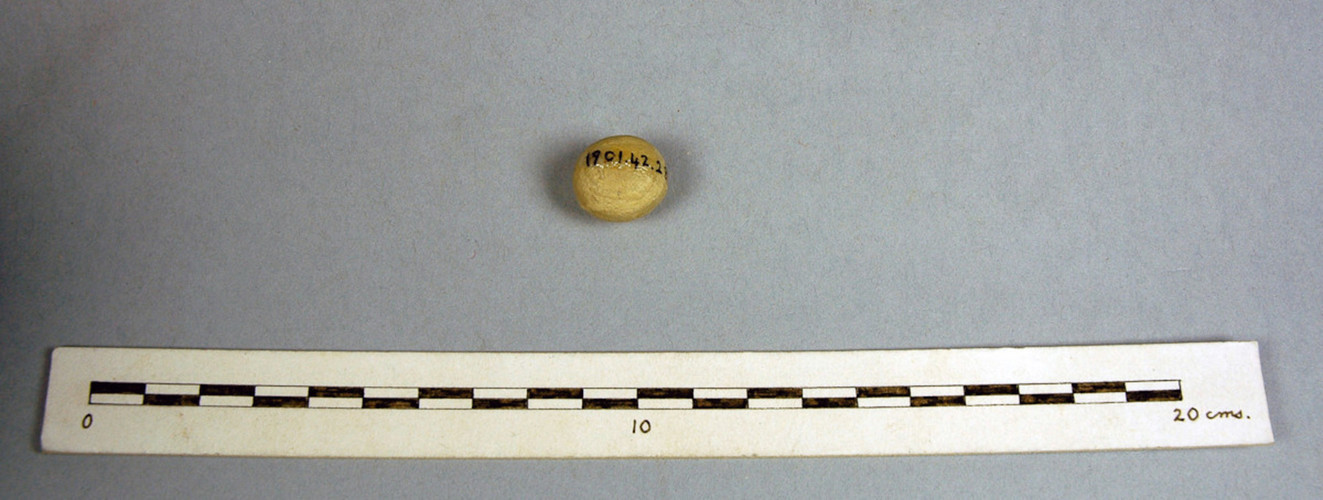 1901.42.28Spherical pebble.1901.42.28
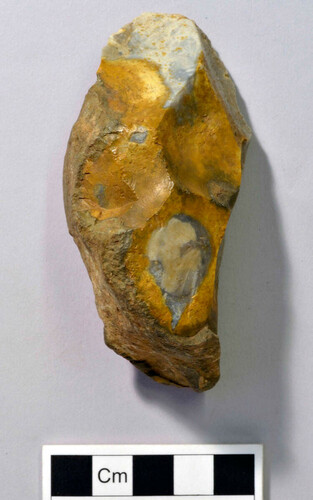 1884.140.1391Hammer-stone1884.140.1391
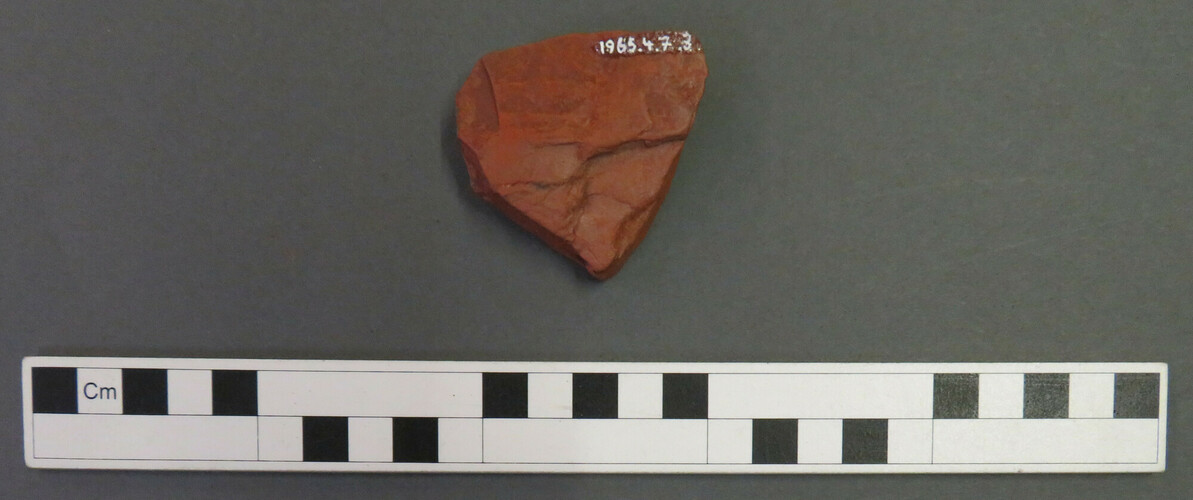 1965.4.7.3Piece of red rock used in making pigment. For the other rock samples see 1965.4.7 .3 - .5 and the fabric found containing the samples 1965.4.7 .1 [BS [OPS Move] 8/5/2017]1965.4.7.3
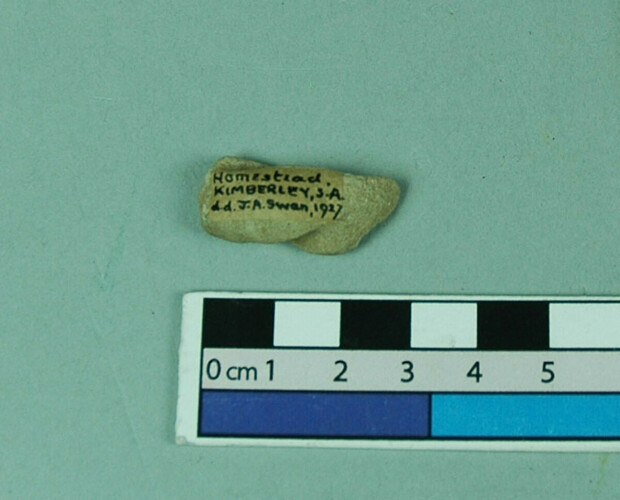 1927.39.105Stone tool with three distinct grooves, one on each of three sides. [LKG 10/03/2010]1927.39.105
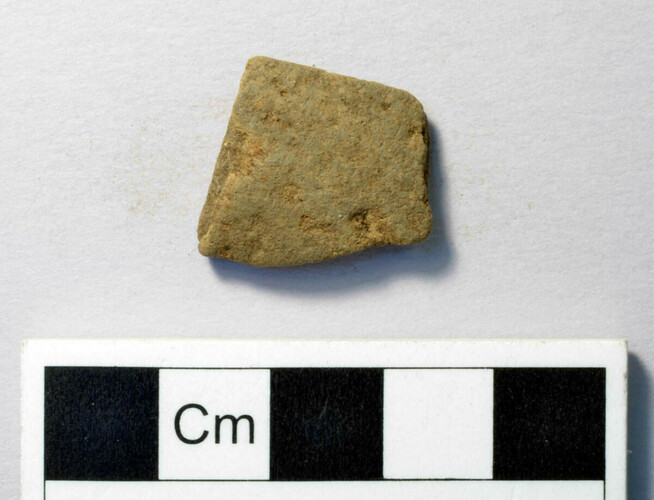 1884.136.1.327Ceramic sherd1884.136.1.327
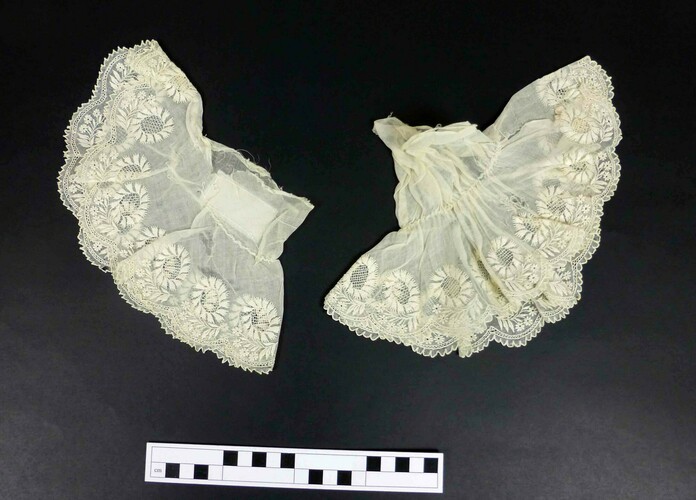 1949.9.185.1Pair of sleeve frills, made with muslin embroidery of floral design at the edges with lace fillings. [FB 17/02/2015]1949.9.185.1
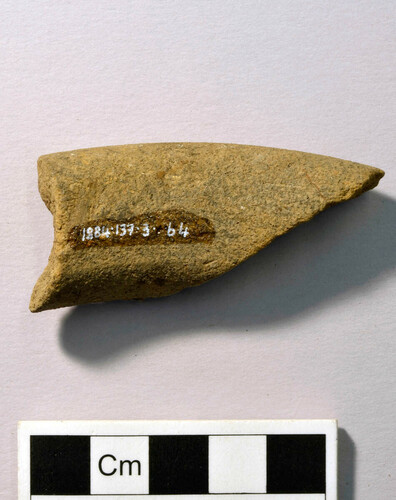 1884.137.3.64Ceramic rim sherd1884.137.3.64
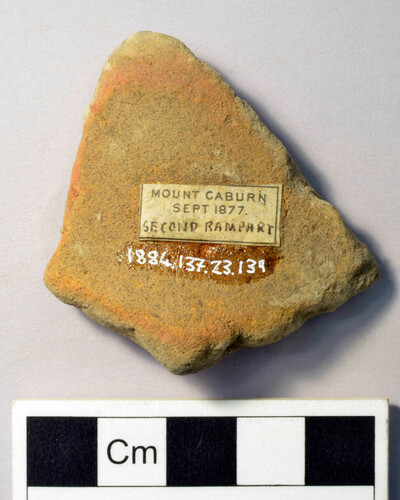 1884.137.23.139Ceramic sherd1884.137.23.139