
- Collection type
- Object
- Description
- Burial bird figure. [MJD 04/07/2014]
- Long description
- Burial bird figure of volcanic stone. The creature is seated - with its limbs folded to the sides. The figure's head and neck are raised. The figure has a short tail pointing in the air. The figure has a hole through the middle of its back, drilled from both sides. [MJD 04/07/2014]
- Geographical reference
- Society Islands Tahiti
- Date / Period
- Date made: Before 1935
- Date collected
- By 1935
- Acquisition information
- Donated: 1941
- Materials and processes
- Material Stone, Material Lava Stone, Process Carved, Process Drilled
- Dimensions
- Height: max 185 mm, Length: max 283 mm, Width: max 112 mm
- Object numbers
- Accession number: 1941.2.85 Other numbers: 3560
- Associated publications
- Illustrated as a drawing as Plate 5C on page 124 of The Art Forms of Polynesia, by Gilbert Archey (Bulletin of the Auckland Institute and Museum, No. 4), (Auckland: Whitcombe and Tombs Limited, 1965). Listed on page 71 in Archey's 'Appendix: Record of Society and Austral Islands images preserved in collections of illustrated in early voyages...'. [JC 27 8 2000] Referred to on page 529 of 'Australia and Oceania', by Dan Hicks, in World Archaeology at the Pitt Rivers Museum: A Characterization, edited by Dan Hicks and Alice Stevenson (Oxford: Archaeopress, 2013), pp. 525-553. Hicks writes: 'The final object from the Society Islands is a carved stone figure of a bird, recorded as recovered from a ‘cave burial’ on Tahiti before 1935 (1941.2.85; cf. Grüning 1937 [Grüning E.L. 1937. Notes on burial caves in the Cook Group, South Pacific. Ethnologia Cranmorensis 1: 21–25.]), from the collection of Harry Geoffrey Beasley, which was known as the Cranmore Ethnographical Museum (Waterfield and King 2006 [Waterfield, H. and J.C.H. King 2006. Provenance: twelve collectors of ethnographic art in England 1760–1990. Paris: Somogy Art Publishers.]).' [MJD (Verve) 7/1/2016]
Search terms: Figure, Death, Religion, Bird Figure, Grave Good, Animal Figure
Further items to explore
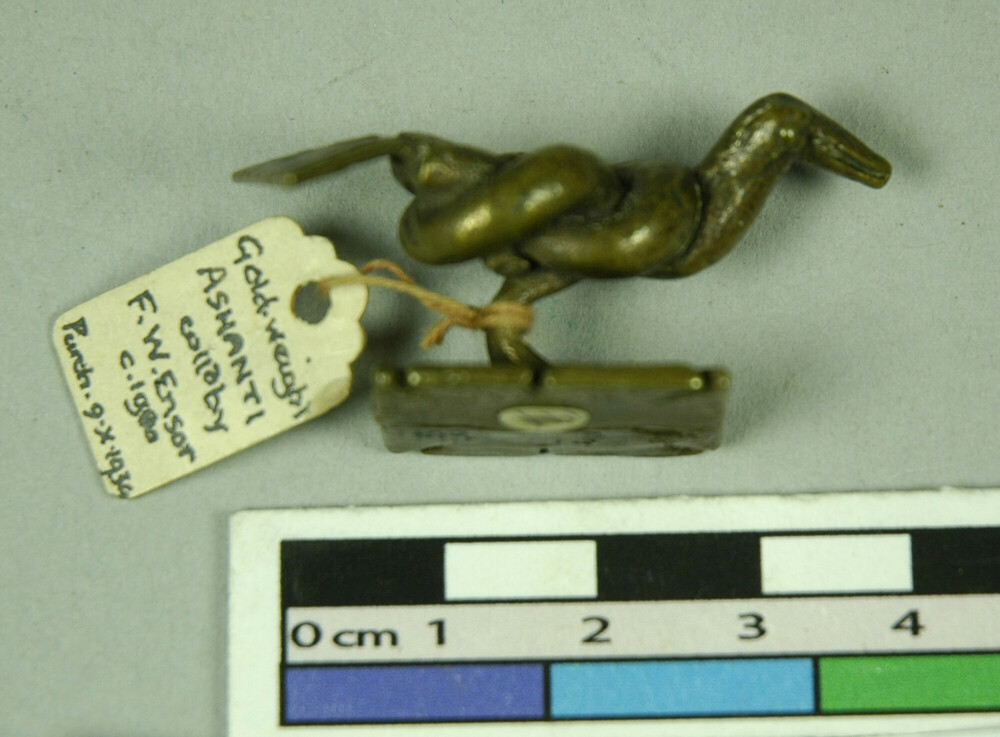 1934.71.28Brass cast weight representing a bird with knotted body, for weighing gold. [MJD 30/11/2009]1934.71.28
 1946.12.19Ceramic whistle in the form of a bird1946.12.19
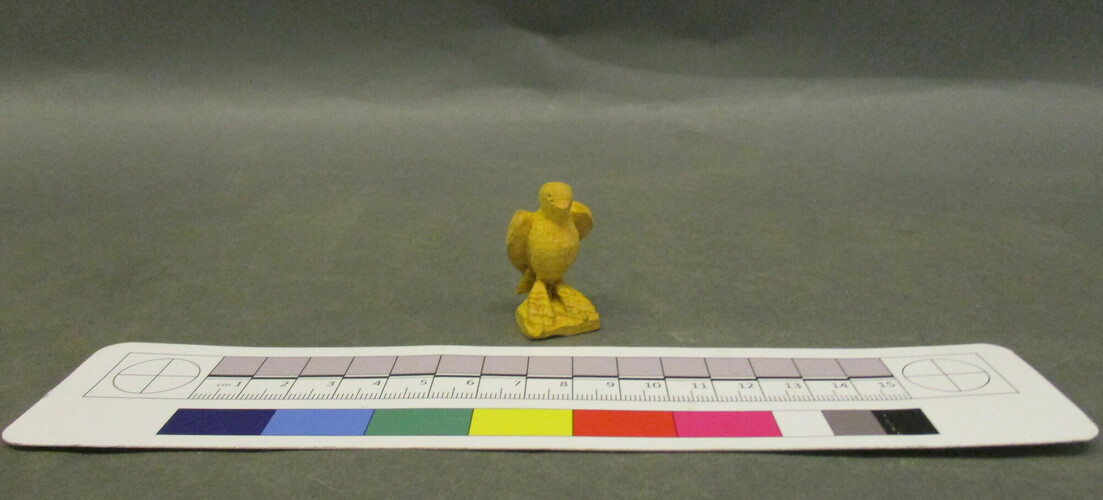 1972.24.130Carved bird figure. Stood upright on square base with a lenticular shaped body, rounded head with a pointed beak, two carved wings and irregular quadrangle tail feather. Two carved talons. Shallow perforations for eyes. [IL [OPS Move] 31/5/2017]1972.24.130
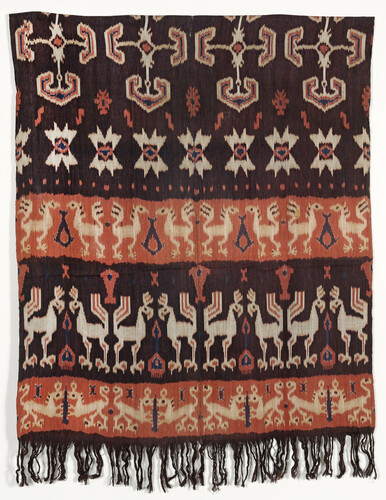 2008.58.1.2Man's cloth to be worn on the shoulder or hip.2008.58.1.2
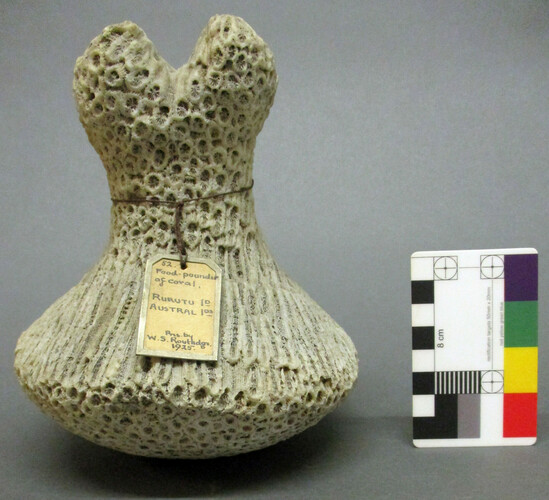 1925.29.90Food pounder. Made from coral and white in colour. The lower half is carved with a large rounded base and the handle is notched at the tip. [ASh [OPS move] 24/10/2016]1925.29.90
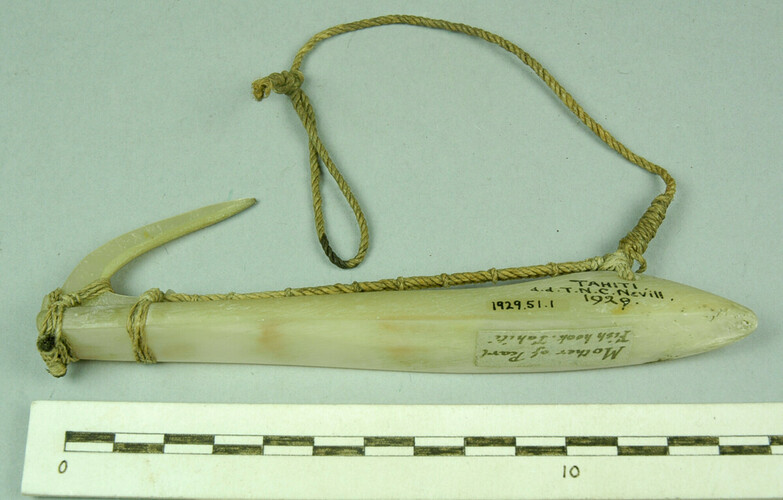 1929.51.1Fish hook of pearl shell shank and point with snood line attached. Remains of a tuft of dark fibre on the underside of the shank. [MJD 18/03/2009]1929.51.1
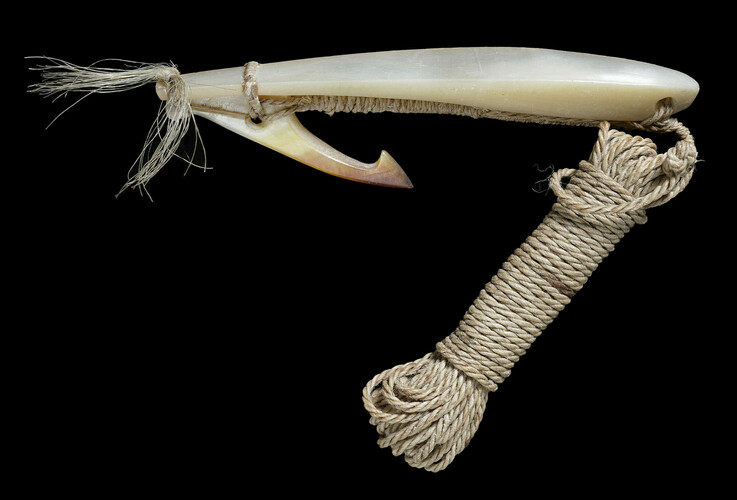 1886.1.1284Fish hook of mother of pearl shell shank and hook with plant fibre line. The barbed hook is bound to the shank with plant fibre. [MJD 16/03/2009]1886.1.1284
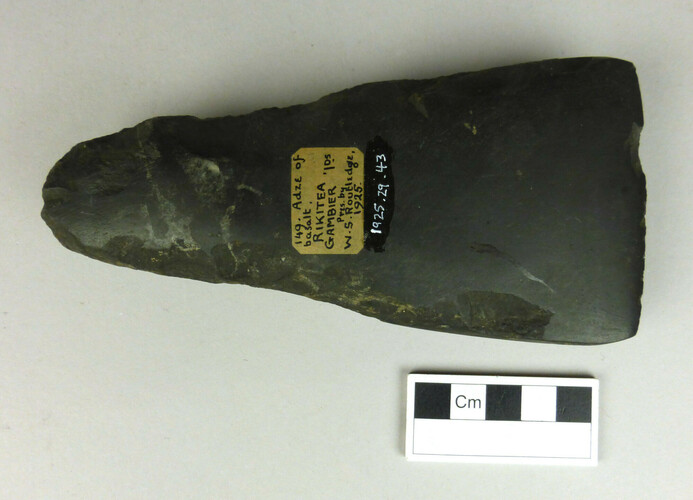 1925.29.43Ground adze-blade.1925.29.43