
- Collection type
- Object
- Description
- Sword, sosun pattah, with single edged blade and counterguard. Inlaid with silver and gold. [SM 01/05/2007]
- Long description
- Sword, sosun pattah, with single edged blade and counterguard. Inlaid with silver and gold. The blade is 'kopis' shaped and is grooved on both sides. It is also decorated with sections of gold inlay. The entire hilt is decorated with silver inlaid decorative patterns. The quillons are domed at the ends, the langets flare out towards the ends and are decorated with cut out sections. The pommel is flat with a small dome and protruding knob with a hole through it at the very top. [SM 01/05/2007]
- Date / Period
- Date made: Before 1911
- Date collected
- By 1911
- Acquisition information
- Purchased: 1911
- Materials and processes
- Material Iron Metal, Material Silver Metal, Material Gold Metal, Material Metal Wire, Process Forged (Metal), Process Inlaid, Process Damascened, Process Decorated, Process Grooved
- Dimensions
- Length: max 834 mm, Width: max 113 mm
- Object numbers
- Accession number: 1911.59.10
- Research and responses
"The term sosun pattah is Urdu for 'lily leaf'. It comes in two forms; the Rajput form set in a Hindu Basket hilt and that with an Indo-Muslim hilt. All instances preserved in National collections date from the 18th century and there is only one scrap of testimony to earlier versions in the form of a picture of a blade resembling a distorted form of that of the sosun pattah supposedly from a manuscript of the Ain-I-Akbari representing the weapons in use in India at the time of Akbar, It is possible that the Rajput sosun pattah is related, by direct descent, both to the sword with the forward angled blade known in the 10th century in Rajasthan and the Deccan kopis blade, and it is thus a parallel development with the Nepalese kukri, the South Indian Flamboyant Sword, and the obsolete long dao of the Khasis and Kacharis of Assam." Source: Rawson, P. S. (1967) The Indian Sword, Copenhagen; Danish Arms and Armour Society, pp.57-58. Research for CDF Cutting Edge Project 2006-8 [HA 08/01/2008]
Further items to explore
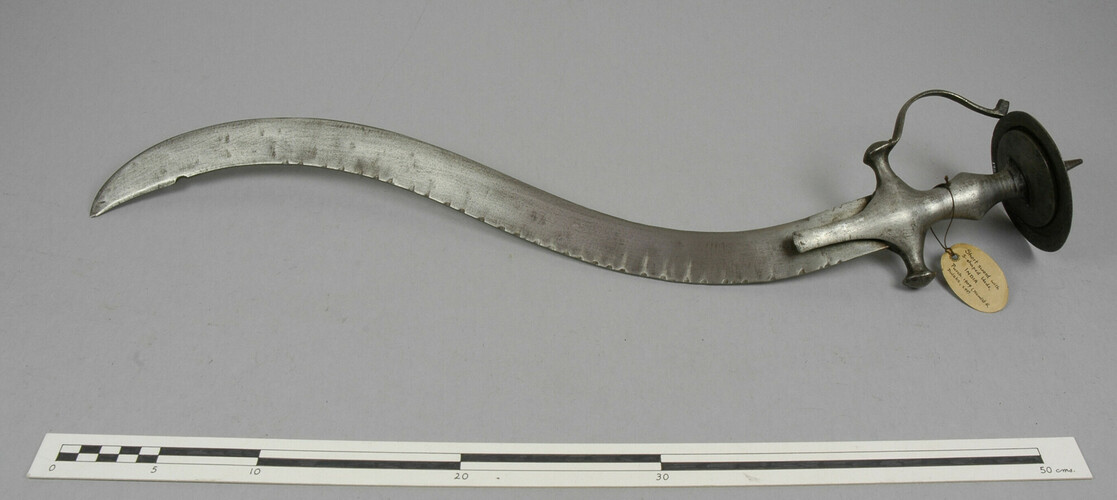 1909.79.42Short sword with single-edged, S-shaped blade. Indo-Muslim hilt with knucklebow and disc pommel with projecting spike. No decoration. [LM 05/09/2007]1909.79.42
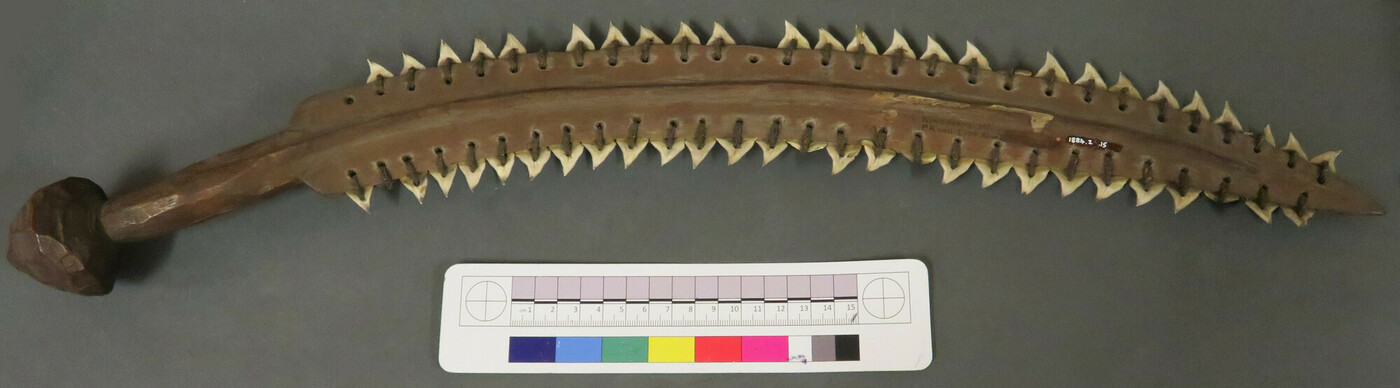 1884.23.15Wooden weapon with shark's teeth. [MJD (Verve) 23/5/2017]1884.23.15
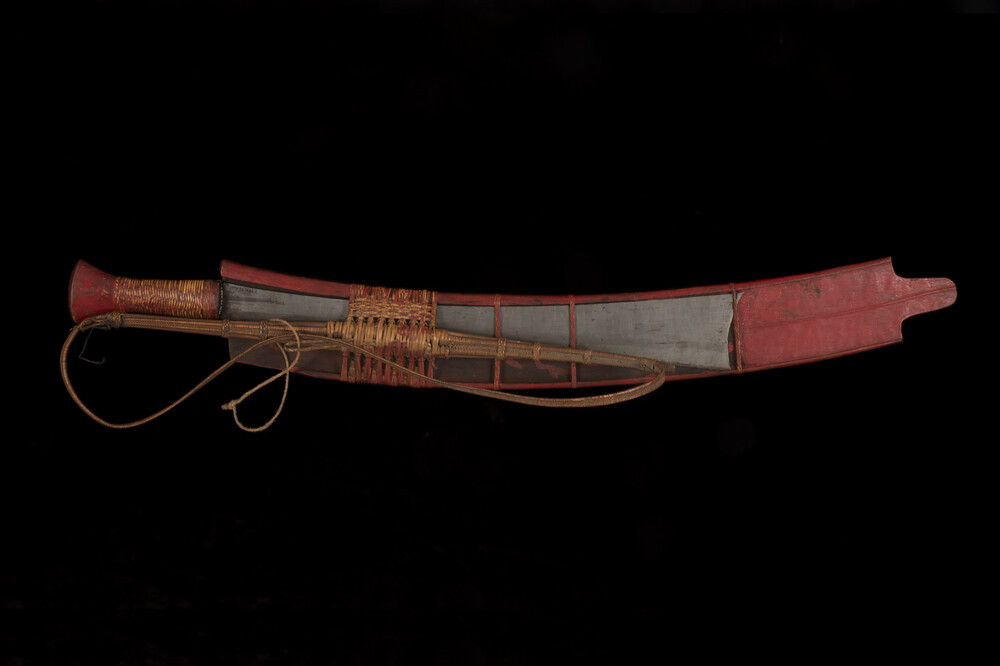 1938.35.1432.1Sword with red painted hilt [.1] and single edged blade [.2]. With wooden sheath [.3] also painted red and bear jaw [.4] [SM 17/05/2007]1938.35.1432.1
 1884.24.43.1Sword [.1] with long two edged straight blade and hilt with large guard. With sheath [.2] covered in pimpled leather. [SM 04/09/2007]1884.24.43.1
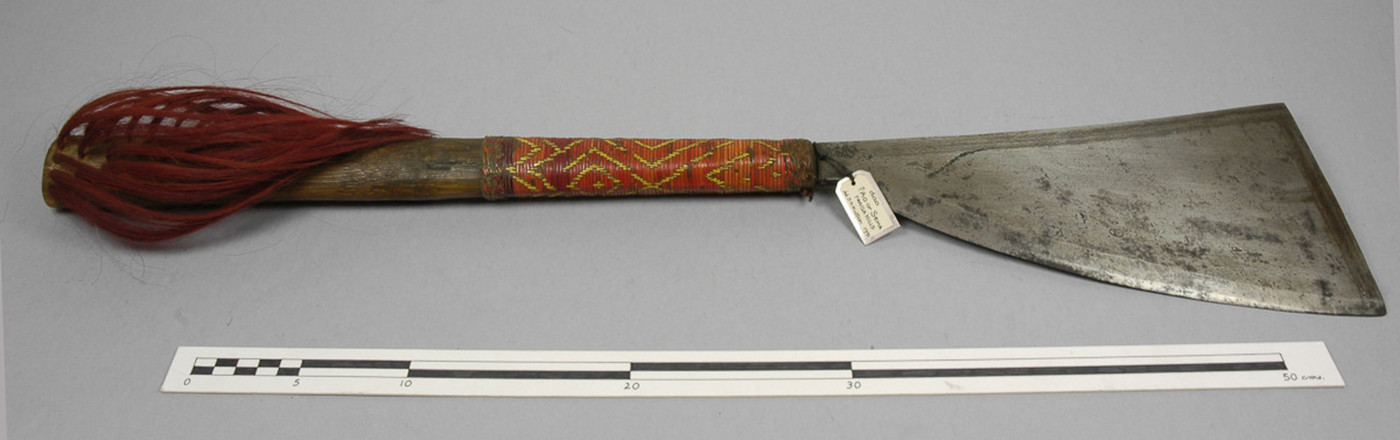 1923.85.709Dao with decorated, triangular single edged blade and bamboo haft bound with woven cane and orchid stem, with red hair fringe. [SM 06/07/2007]1923.85.709
 1884.25.36Long slender wood club of oval section. [JC [OPS Move] 19/09/2016]1884.25.36
 1892.24.155Arm ornament of cord of twisted orange yarn, bound with white, green and silver thread and ending with small purple balls. [MJD DDF Body Arts Project 2010/2011 17/08/2010]1892.24.155
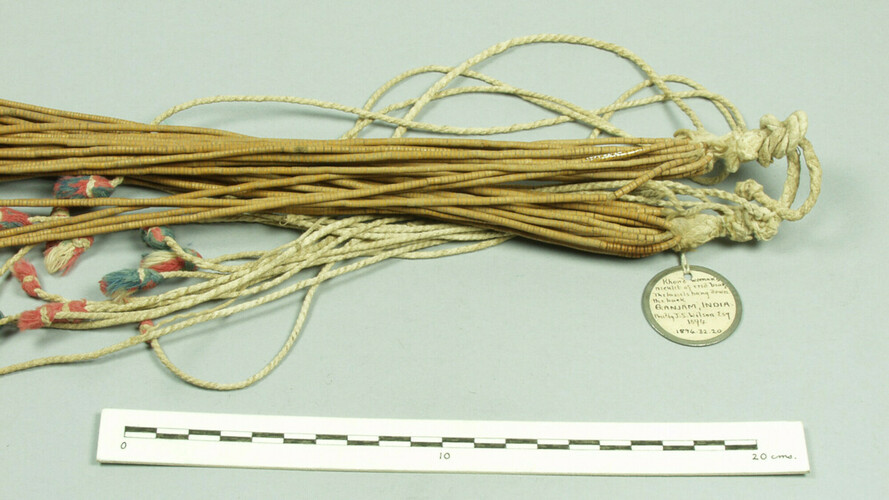 1894.32.20Woman's necklet of sections of reed strung as beads, with tassels at the end of twisted lengths of string [L.Ph 'DCF 2004-2006 What's Upstairs?' 6/6/2005]1894.32.20