
- Collection type
- Object
- Description
- Sword [.1] with steel scabbard [.2]
- Long description
- Sword [.1] with curved blade, narrow guard and handle covered with fish skin bound with wire. With steel scabbard [.2] with two rings attached. The blade is incised with the letters GR, the coat of arms of the Prince of Wales, and floral patterns, edged with gilt and on a dark background. Incised on the back of the blade is the maker's name '[initials unreadable] Runkel, Solingen'. [El.B 24/08/2007]
- Geographical reference
- Cultural groups
- English
- Date / Period
- Date made: Before 1907
- Date collected
- Before 1907
- Acquisition information
- Purchased: 1907
- Materials and processes
- Material Steel Metal, Material Fish Skin, Material Metal Wire, Process Forged (Metal), Process Bound, Process Incised, Process Gilded, Process Etched
- Dimensions
- Length: max 940 mm, Length: max 855 mm
- Object numbers
- Accession number: 1907.64.3.1 Accession number: 1907.64.3.2
- Research and responses
OED online: Sabre: A cavalry sword having a curved blade specially adapted for cutting. [AP 25/09/2006]
The curved European cavalry sabre, single-edged on the convex side, was ultimately derived from Asiatic sword forms. The etymology of the term sabre itself indicates something of this stylistic ancestry of diffusion; it is derived from the Hungarian szablya, meaning ‘to cut’. The Hungarians and Russians acquired this sword form during the 9th century AD from the nomadic peoples of the Eurasian Steppes, who were participating in largely the same sword culture as the peoples of southern and central Asia (Nickel, 2002: 120). This sword form was brought into Europe by the Eurasian Avars – a nomadic Eurasian peoples originating in the present-day Ukraine, who were forced into Eastern Europe by a Persian expansion in the mid-6th century AD. The sabre’s suitability for mounted use – like the other Asiatic curved swords – emerges from the benefit of an elongated Centre of Percussion in a Drawing Cut – i.e. downwards and backwards, effectively increasing the length of blade encountered by the victim’s body (Burton, 1884: 130-1). The Eastern European acquisition of this technology, and its widespread dissemination into Western Europe, reflects the superior results which such a form produces. It is, however, of more limited use when thrusting, and much debate went on among swordsmiths and cavalry troops throughout the 17th and 18th centuries over whether it was better to carry a thrusting or cutting sword in the cavalry charge. Research Conducted for DCF Cutting Edge 2006/2007 [AM].
Solingen is a place in Ruhr, Germany [AP 06/12/2007]
Further items to explore
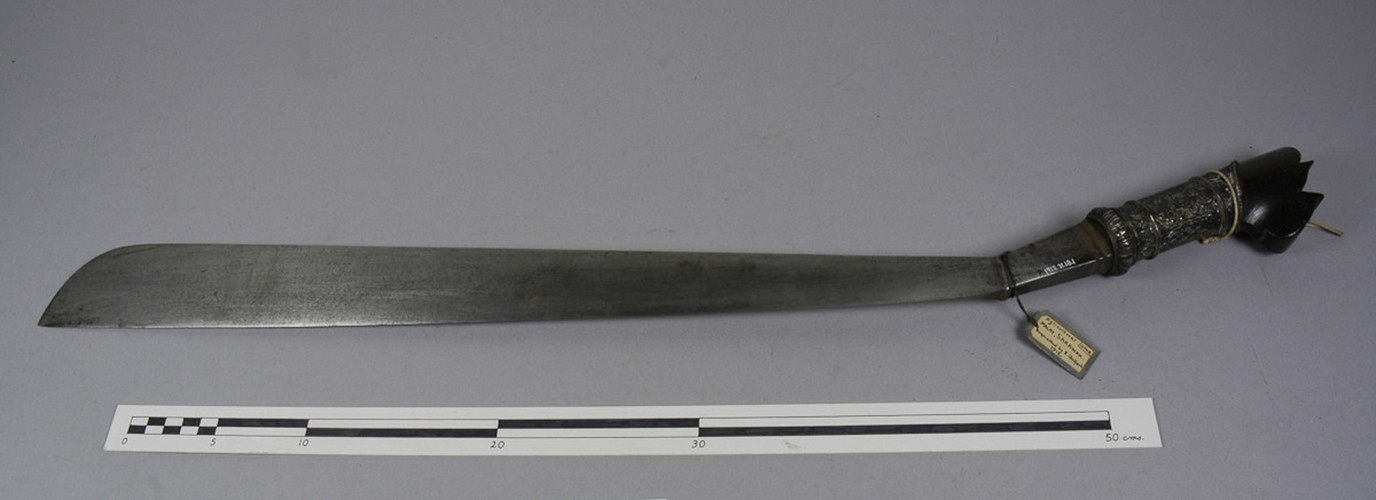 1912.31.18.1Heavy single edged sword with curved tip, the blade forged from a square bar of iron bent at an angle near the hilt. Grip covered with repoussé silver, carved wooden hilt. For sheath see 1912.31.18.2. [LM 04/06/2007]1912.31.18.1
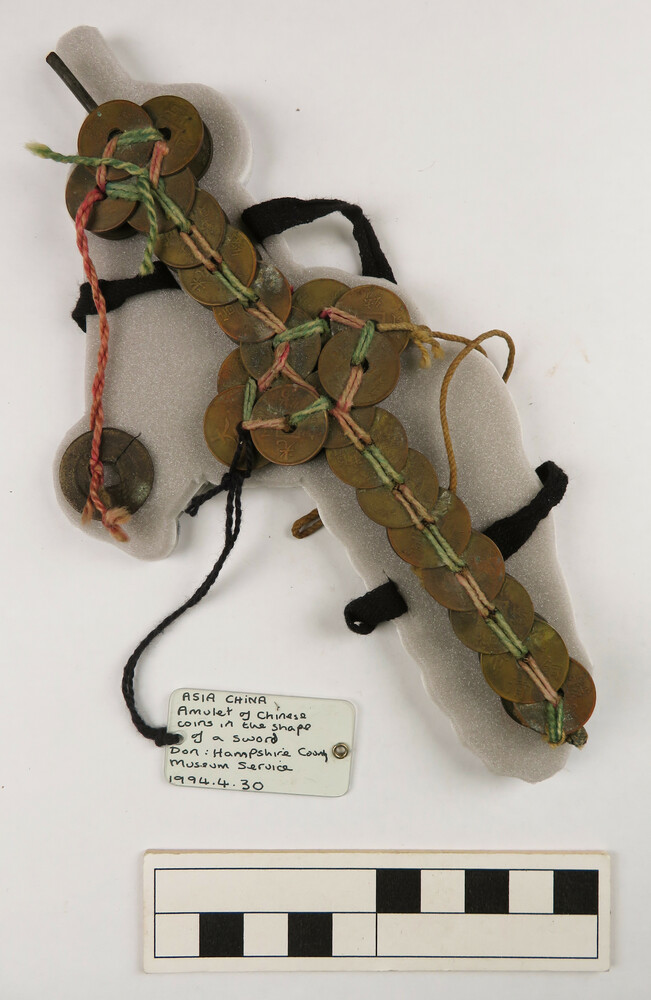 1994.4.30Sword shape made up of Chinese coins. It would be hung up in the house as a protective amulet.1994.4.30
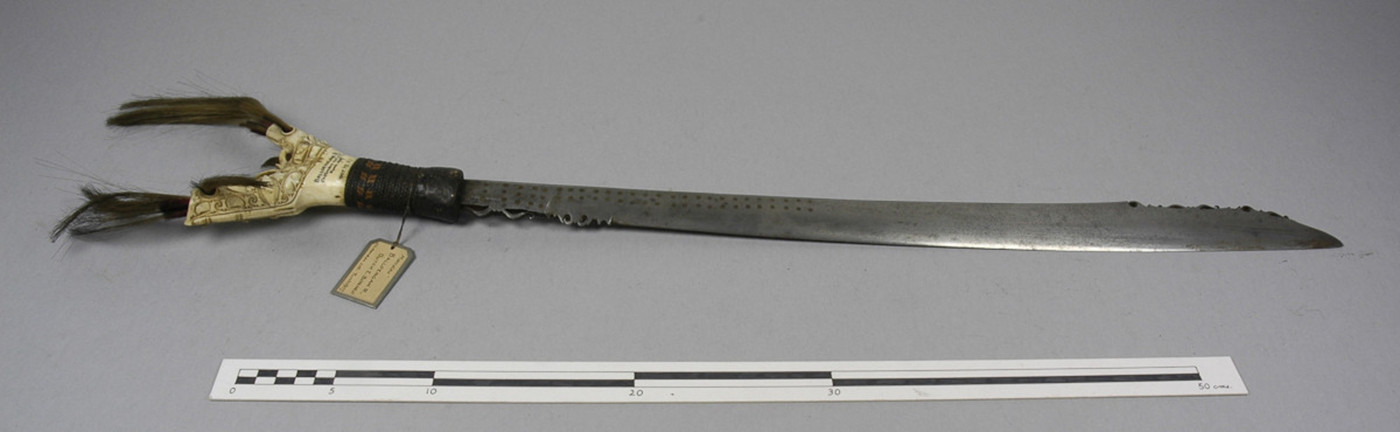 1907.75.7.1Sword with single edged blade decoratively edged, inlaid with copper alloy and carved ivory or antler hilt [sheath 1907.75.7.2] [SM 05/09/2007]1907.75.7.1
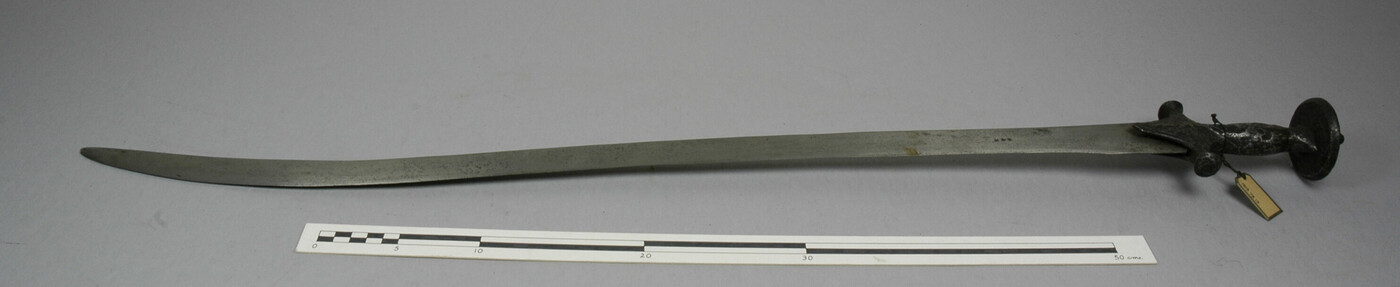 1909.78.15Sword, tulwar, with steel blade and ?steel hilt with disc pommel, quillons and langets, decorated with floral patterns. [SM 04/09/2007]1909.78.15
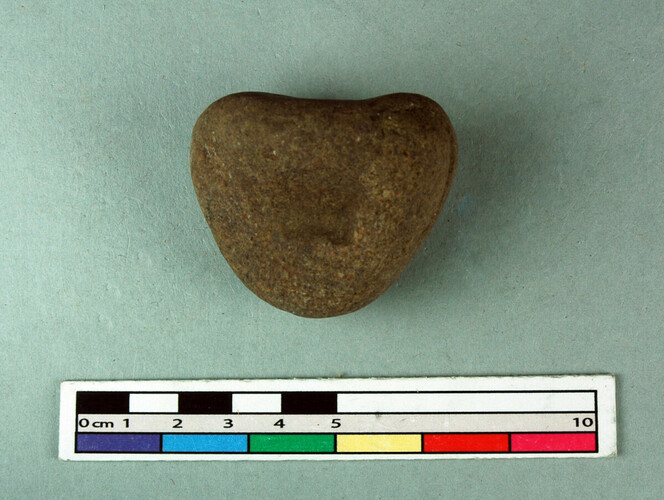 2010.23.8Sub rounded pebble with a natural sub rectangular impression. [MN 09/04/2010]2010.23.8
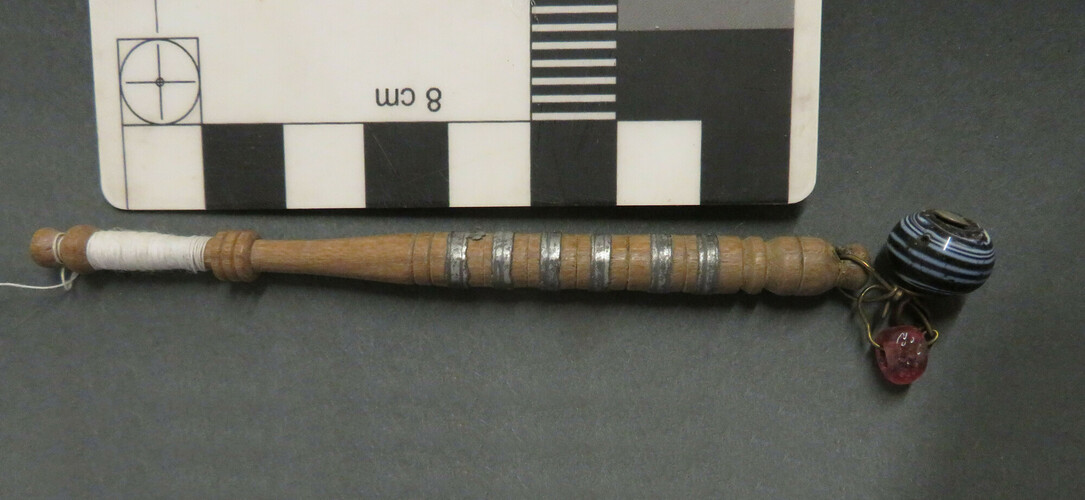 1947.5.5.41Wooden spangled bobbin for lace-making. Part of a set of wooden and bone bobbins still attached to a partially completed sample of lace, for the other bobbins in this set see [1947.5.5 .1 - .42, .83 - .90].[BS [OPS Move] 26/5/2017]1947.5.5.41
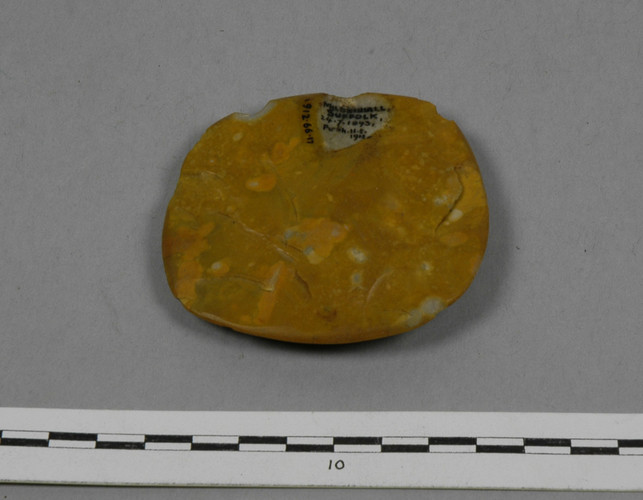 1912.66.17Discoidal blade of yellow flint. [El.B 08/10/2007]1912.66.17
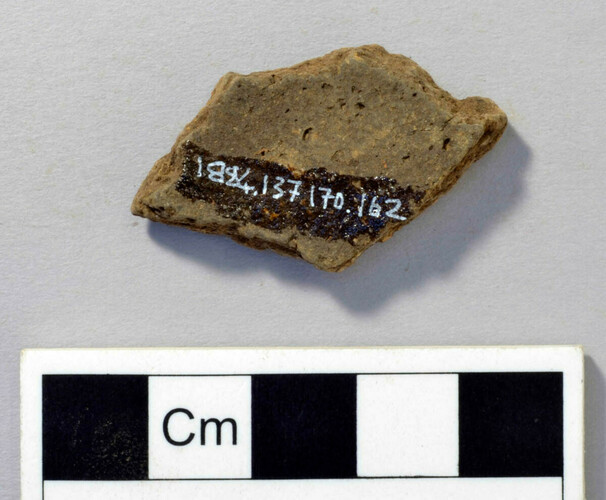 1884.137.170.162Ceramic sherd1884.137.170.162