
- Collection type
- Object
- Description
- Steel 'tiger's claws decorated with faceted glass set into the finger loops. [SM 18/04/2007]
- Long description
- Steel 'tiger's claws decorated with faceted glass set into the finger loops. Originally there were four claws, however, one is missing. The three claws are riveted onto the two finger loops. These loops are overlaid with copper alloy. One loop is decorated with two blue pieces of faceted glass which have been set in a mount. The other is decorated with two red pieces of glass. This glass is a replacement for the original jewels (see Pitt Rivers Museum label in primary doc. box) [SM 18/04/2007]
- Date / Period
- Date made: Circa 1850
- Date collected
- By 1924
- Acquisition information
- Donated: 1924
- Materials and processes
- Material Steel Metal, Material Copper Alloy Metal, Material Glass, Process Forged (Metal), Process Riveted, Process Overlay
- Dimensions
- Width: max 76 mm, Length: max 88 mm
- Object numbers
- Accession number: 1924.9.1
- Research and responses
The following notes are drawn from research compiled by Andy Mills as part of the DCF Cutting Edge project in 2006-2007.
These weapons are intimately associated with the Maratha Empire of India, and most examples seem to originate from the major cities of Gwalior in Madhya Pradesh, Satara in Maharashtra, and Kolapore (Egerton, Lord, of Tatton (1896) Indian & Oriental Armour. London: Arms & Armour Press). In that Satara is near Bombay, and was annexed by the British into the Bombay Presidency in 1848 (Wikipedia), it is highly likely that this baghnak collected in 1850 in Bombay came from the Satara area. The baghnak is a concealed weapon, and can be worn under a glove, or largely concealed between the fingers.
Our example is made of iron, with rings for the index and little fingers, and spot-welded rivets for four claws. Only three remain. There are settings for two missing jewels on each ring, which have been replaced with glass (seemingly by museum staff) at some point. Although we know the donor, it is unclear in our documentation who the Bombay collector was. [El.B 26/02/2008]
Search terms: Weapon, Finger Ring Knife Ornament, Knuckleduster Ring
Further items to explore
 1978.20.442Long wooden, barked, practice fighting stick. [RH [OPS move] 22/8/2017]1978.20.442
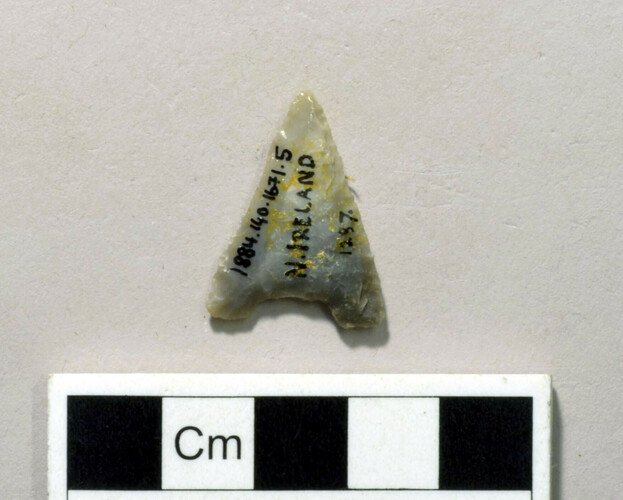 1884.140.1671.5Stone arrow-head1884.140.1671.5
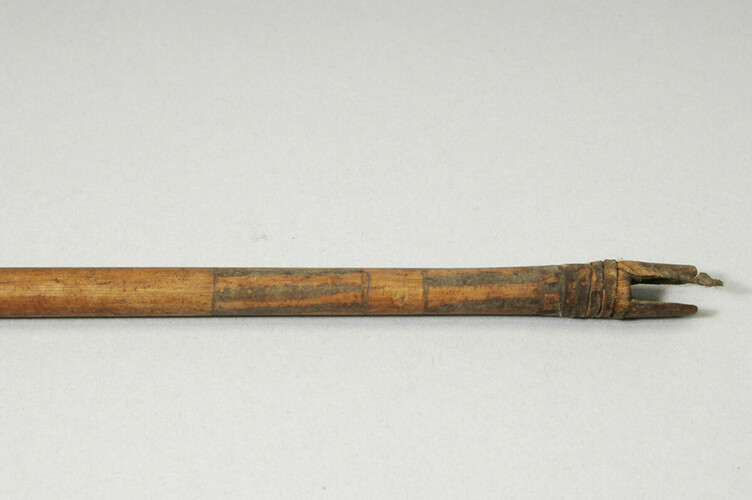 1944.10.60Carved arrow with incised and notched ebony point on a cane shaft with blackened decoration and bound and nocked end [RTS 5/7/2005]1944.10.60
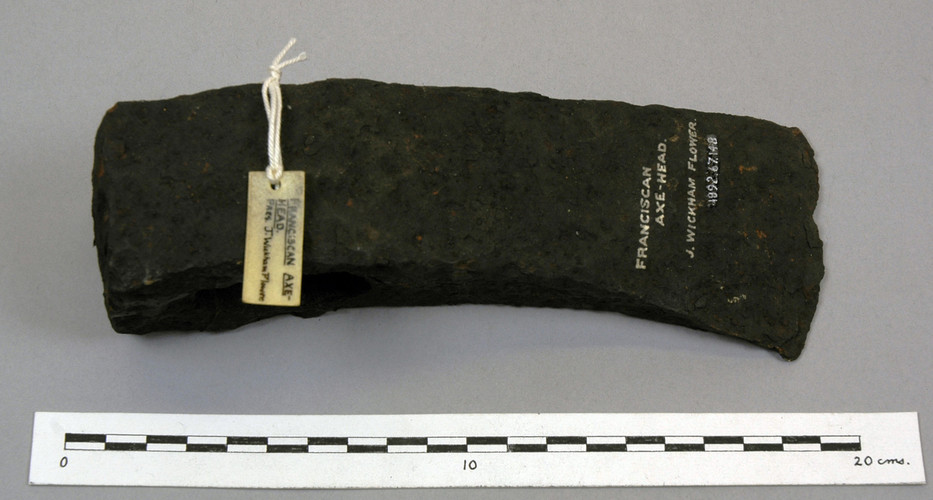 1892.67.148Axe head with narrow, curved blade and eye haft socket. [SM 28/01/2008]1892.67.148
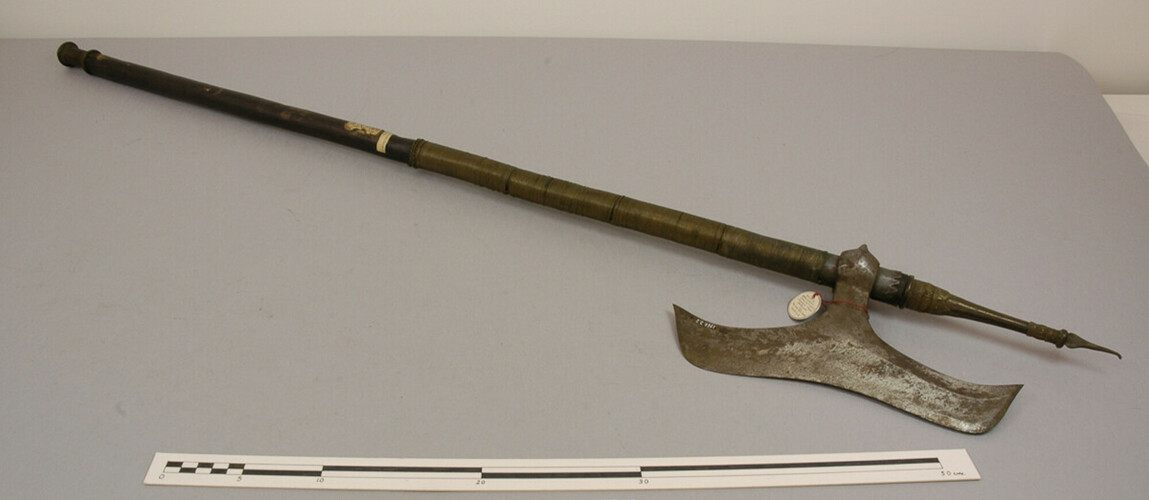 1965.3.2Battle axe with eye-hafted winged blade. The wooden haft is partly bound with brass wire. [SM 24/07/2007]1965.3.2
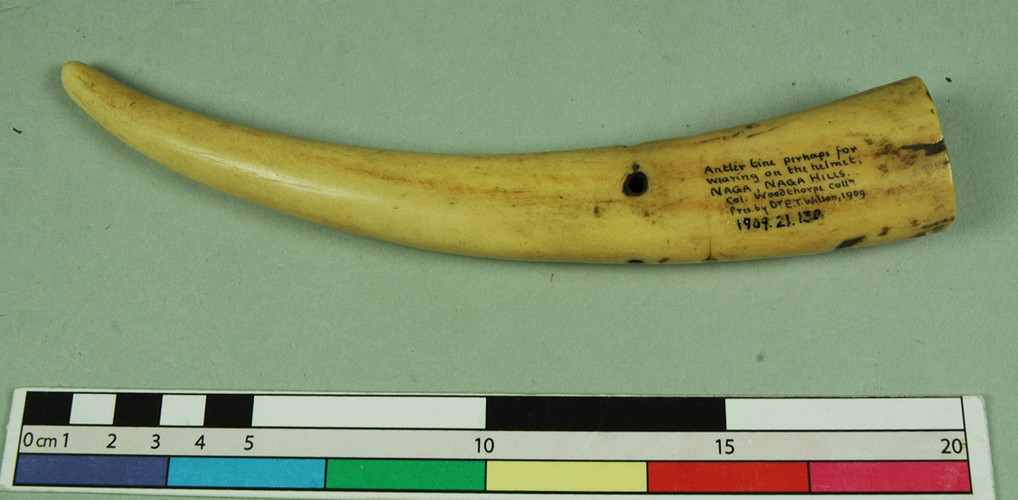 1909.21.130Antler tine, possibly for attaching to a helmet. [MJD DDF Body Arts Project 2010/2011 15/09/2010]1909.21.130
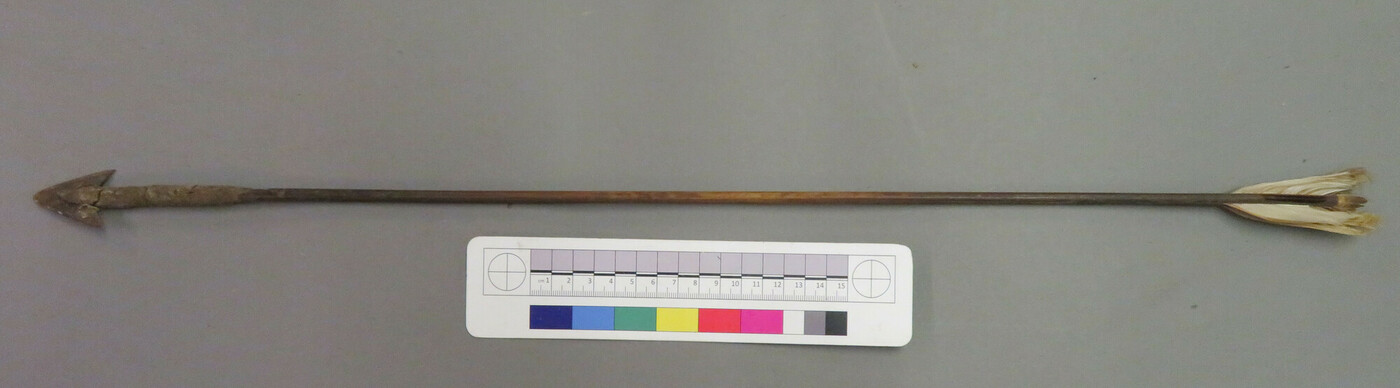 1928.69.1481.9Arrow. See [1928.69.1481 .1 - .3] for associated quiver, and [1928.69.1481 .4 - .12] for arrows. [EH [OPS move] 13/9/2017]1928.69.1481.9
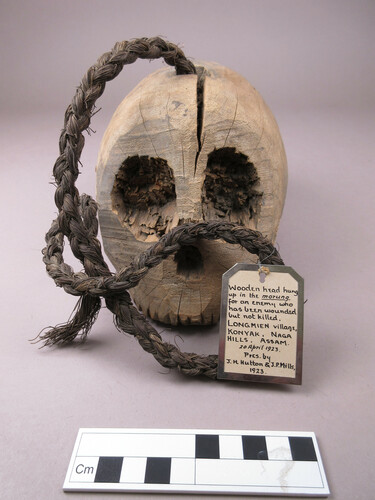 1923.84.985Wooden headhunting trophy. [DCF Court Team 12/11/2002]1923.84.985