
- Collection type
- Object
- Description
- Forehead mask with human and animal features.
- Long description
- Wooden mask with rectangular section cut out beneath the chin. Human features with scarification markings on the cheeks and forehead, buck teeth, elongated hare-like ears, with an animal figure and drum positioned between the ears. Painted in different colours on the outer surface.
- Geographical reference
- Cultural groups
- Yoruba
- Date / Period
- Date made: Before 1937
- Date collected
- 1937
- Acquisition information
- Donated: 1938
- Materials and processes
- Material Wood Plant, Material Pigment, Process Painted, Process Carved
- Dimensions
- Length: max 380 mm, Height: max 435 mm, Width: max 200 mm
- Object numbers
- Accession number: 1938.15.36
- Research and responses
It is not clear to me on what basis the accession book entry for this mask includes the information 'Obt. in Lagos. ? from OYO. YORUBA tribe'. In a letter to Henry Balfour dated 15 April 1936, the donor (Gwilym Iwan Jones) writes: 'I have just remembered that in that case I sent you I had also included a large black Yoruba mask which I hadn't mentioned in the invoice. / It's a Yoruba Egungun (i.e. the equivalent of Man) mask which I bought off a Hausa trader in Lagos and it is said to have come from Oyo. / I know nothing about Yoruba, so can tell you no more'. However, this information seems to me to apply only to 1938.15.68. If the provenance for 1938.15.36 was based on the information provided in Jones's letter then it appears to me to be unjustified. It may, however, have been based on some other documentation that has not survived. Original letter is in RDF. [JC 4 12 2008]
John Picton examined this mask during a consultation visit about the Yoruba masks on 20 August 2013 and noted the following: This mask combines human and animal features with the hare ears, buck teeth and the beard of an old man, plus the monkey between the ears that is eating maize (corn cob). This is a combination of features only seen in masks from Abeokuta. There are a row of medicine bottles carved around the forehead so this mask almost certainly has some reference to hunting. This is the style of mask associated with the egungun masquerade. This type of mask is worn at the forehead, like a cap or hat. [ZM 29/08/2013]
In the G.I. Jones photographic archive at Museum of Archaeology and Anthropology (MAA), Cambridge, is a black and white negative (identification number N.61189.GIJ) almost certainly of this mask, which is described on the MAA catalogue database as follows: 'Egungun mask'. [ZM 28/10/2013]
Search terms: Mask
Further items to explore
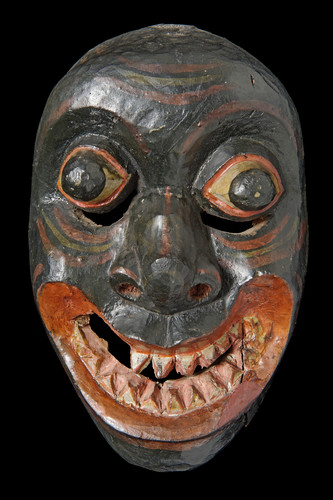 1895.36.7Mask used in dances performed for curing, an upturned mouth with a hole in it and holes under the eyes to enable the wearer to see [SM 11/07/2008]1895.36.7
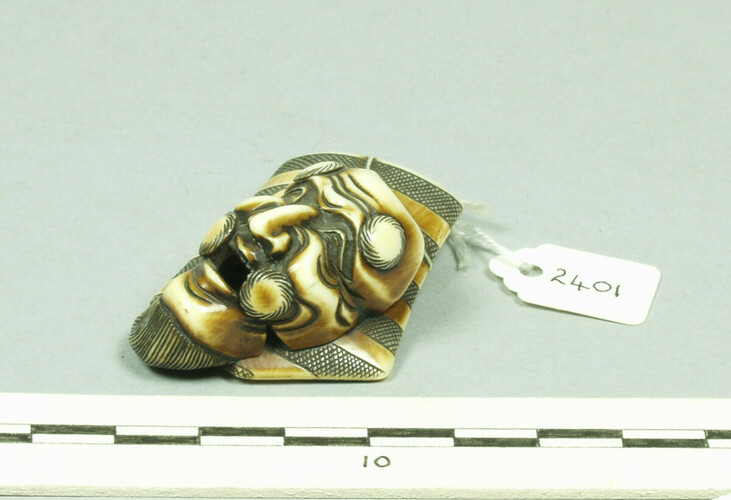 1980.34.2401Ivory netsuke toggle in the shape of a hat, with twelve divisions, and a mask resting on top. [N.B. 'DCF 2004-2006 What's Upstairs?' 5/5/2005]1980.34.2401
 1942.1.376.2Mask, part of a suit of Japanese armour. [El.B 12/4/2007]1942.1.376.2
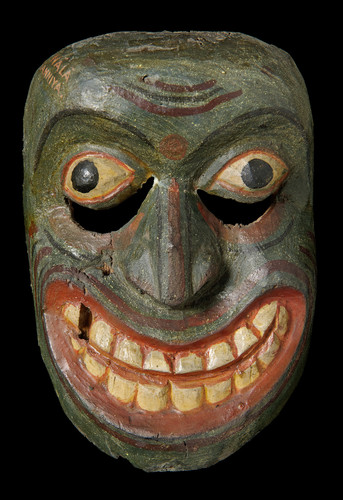 1895.36.8Mask used in dances performed for curing, an upturned mouth and holes under the eyes to enable the wearer to see [SM 11/07/2008]1895.36.8
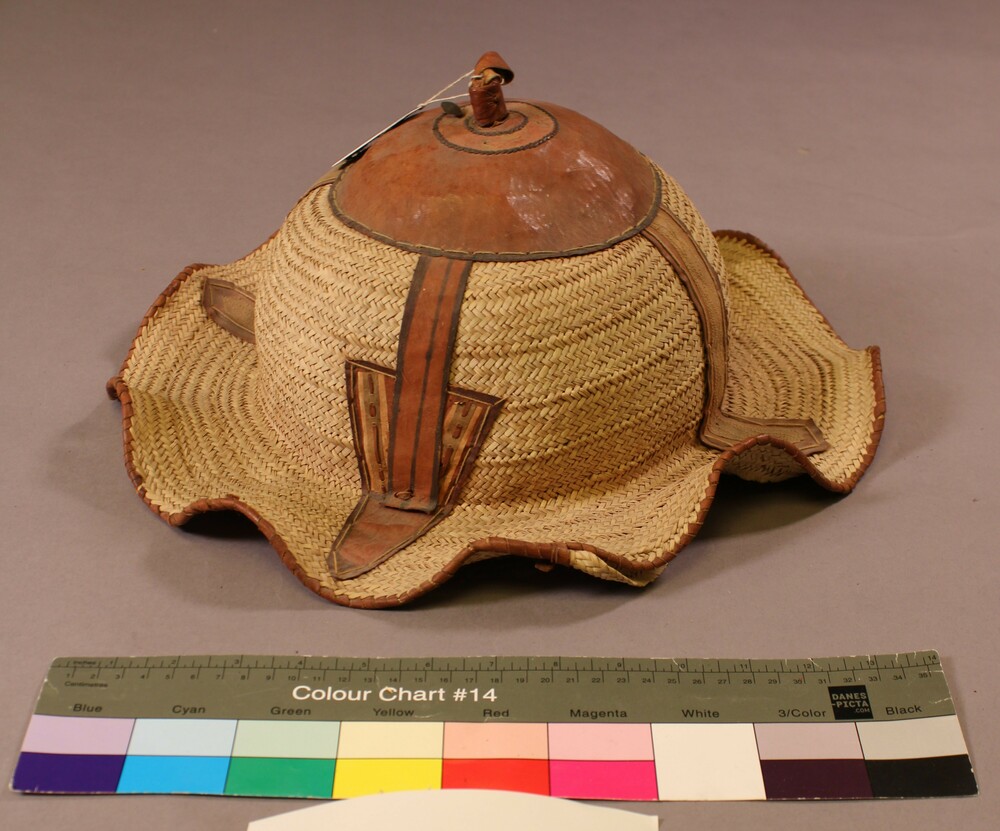 1992.21.17Hat of plaited basketry with undulating brim, trimmed with patches of brown and black leather. Some of the leather patches are decorated with strips of paper, stuck or machine stitched on. At the top of the crown are a leather loop and a small metal tag (more originally).1992.21.17
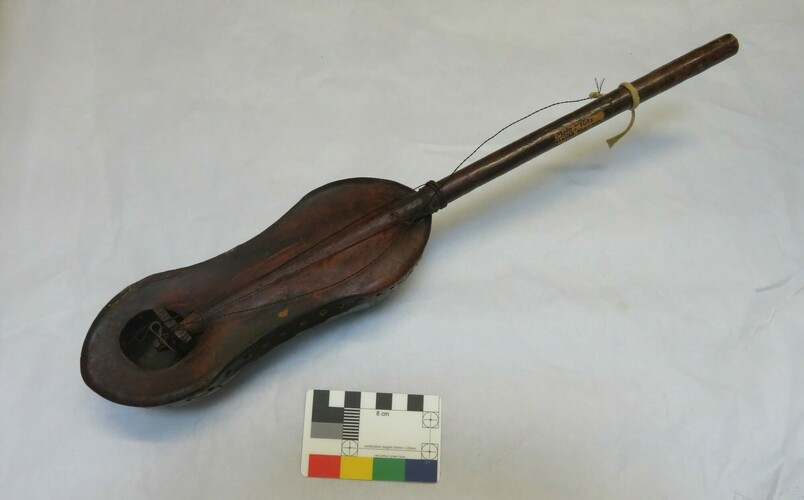 1934.66.6Small lute, molo, with long hollow wooden body covered with hide, and horsehair strings.1934.66.6
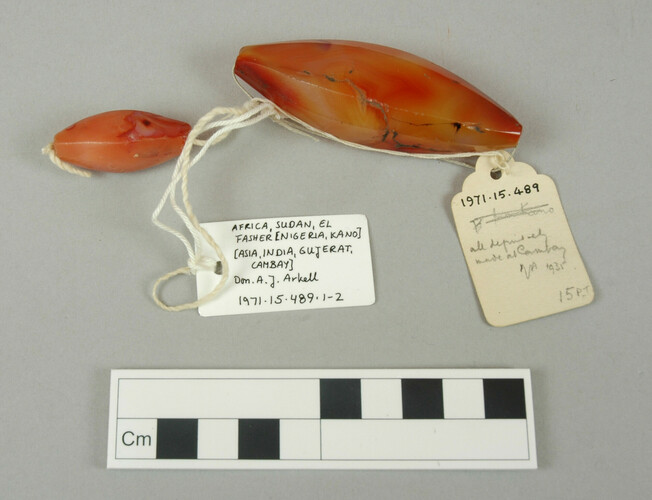 1971.15.489.1String of two carnelian beads, octagonal tapering cylinders. Strung by the donor. [El.B 04/07/2011]1971.15.489.1
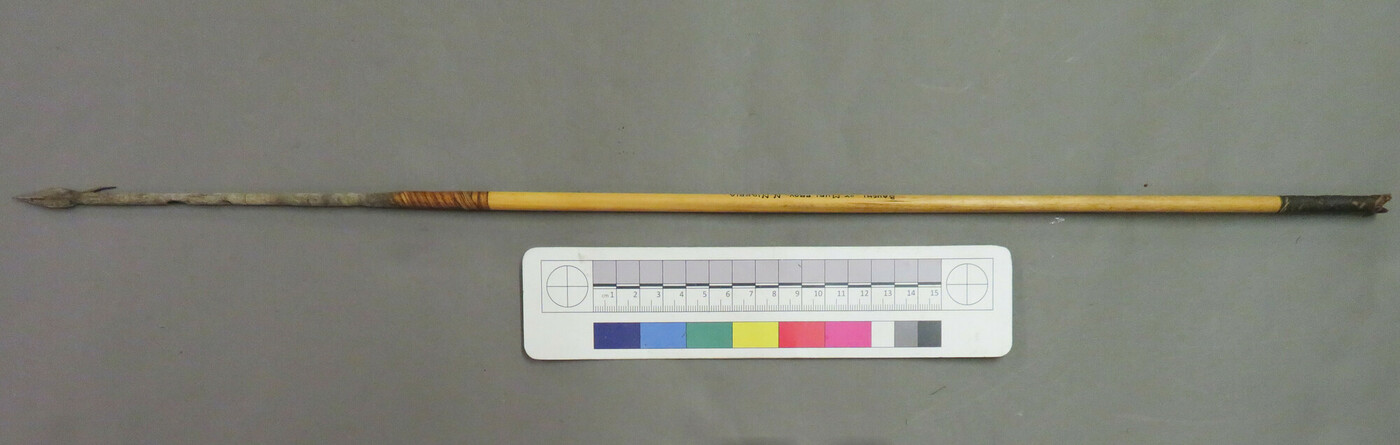 1922.23.18Arrow with cane shaft and single-barbed rounded pointed iron head. [EH [OPS move] 11/10/2017]1922.23.18