
- Collection type
- Object
- Description
- Perforated pear-shaped bone pendant.
- Geographical reference
- Cultural groups
- Natufian
- Date / Period
- Date made: 13000-10000 BC
- Date collected
- 1931
- Acquisition information
- Donated: 1932
- Materials and processes
- Material Bone, Process Perforated, Process Ground
- Dimensions
- Length: max 21 mm, Depth: max 3 mm, Width: max 9 mm
- Object numbers
- Accession number: 1932.65.203
- Research and responses
This pendant was studied by zooarchaeologist Dr Valasia Isaakidou and student Anna Neiblum in May 2025. They suggested that it could be made of shell rather than bone.
- Associated publications
- Featured in Out in Oxford: An LGBTQ+ Trail of the University of Oxford's Collections. Part of 'Celebrating Diversity' a project funded by Arts Council England via the Oxford University Museums Partnership and created with the LGBTQ+ community. [NC 16/02/2017] See booklet Out in Oxford: An : An LGBTQ+ Trail of the University of Oxford's Collections (published by University of Oxford) [in RDF with printout of webpage http://www.glam.ox.ac.uk/outinoxford-prm]: These pendants were excavated by Francis Turville-Petre in 1931. Turville-Petre (1901-1941) was an openly gay archaeologist who campaigned for more tolerant attitudes towards homosexuality and reform of the laws banning sex between men. He attended the 1928 Congress of the World League for Sexual Reform in Copenhagen, and between 1928 and 1931 stayed at the renowned Institute of Sexual Research in Berlin, run by the doctor and sexologist Magnus Hirschfield. Turville-Petre was also an active member of Hirschfield’s Scientific Humanitarian Committee, whose motto (Per Scientiam ad Justitiam or ‘Justice Through Science’) expressed its desire to use research and science to end discrimination against LGBTQ+ people. While in Berlin, Turville-Petre socialised with other gay intellectuals, including Christopher Isherwood and WH Auden. One of Auden’s lost plays, The Fronny (1930), was inspired by Turville-Petre, who was known as ‘Fronny’ because his German lovers were unable to pronounce the name ‘Francis’ (by Martha Robinson Rhodes).[NC 16/02/2017] Turville-Petre, F. 1932. Excavations in the Mugharet El-Kebarah The Journal of the Royal Anthropological Institute of Great Britain and Ireland 62, 271-76. [AS 04/01/2010]
Further items to explore
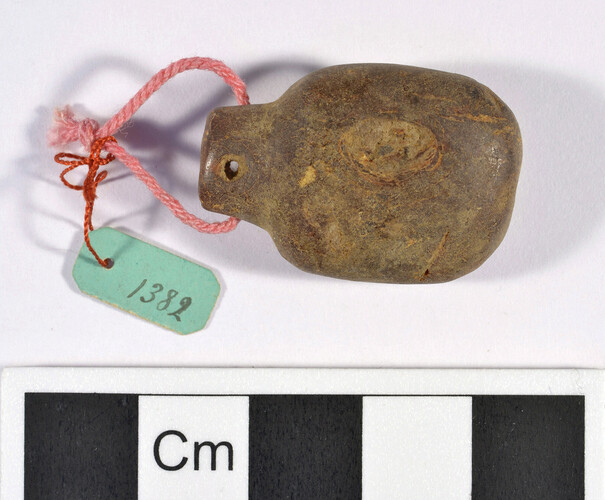 1985.52.716Amulet, unpolished amber pendant, rectangular in shape and with multiple perforations for suspension. [RB 29/03/2012]1985.52.716
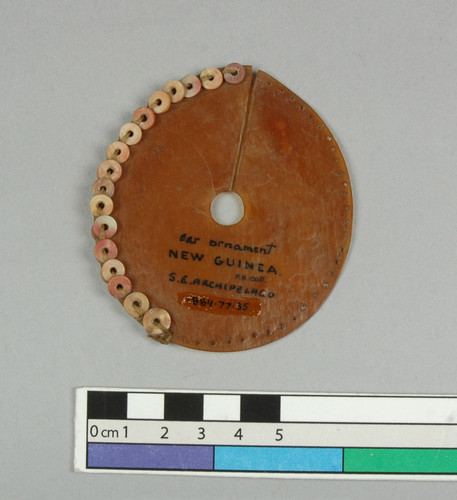 1884.77.35Ear ornament of an oval plate of turtleshell, with pink shell discs attached along part of the edge. [El.B DDF Body Arts Project 2010/2011 17/11/2010]1884.77.35
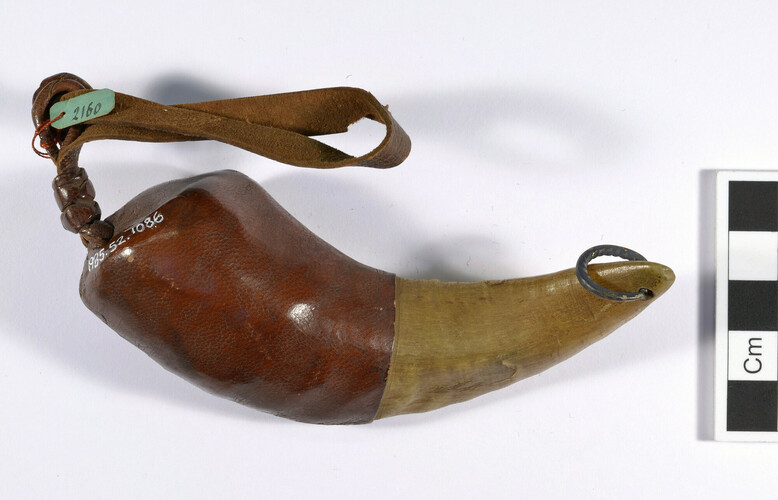 1985.52.1086Amulet, a ram horn, perforated at the tip with a metal loop, mounted in leather with a leather strap and button to form a loop for suspension. [ACA 01/05/2012]1985.52.1086
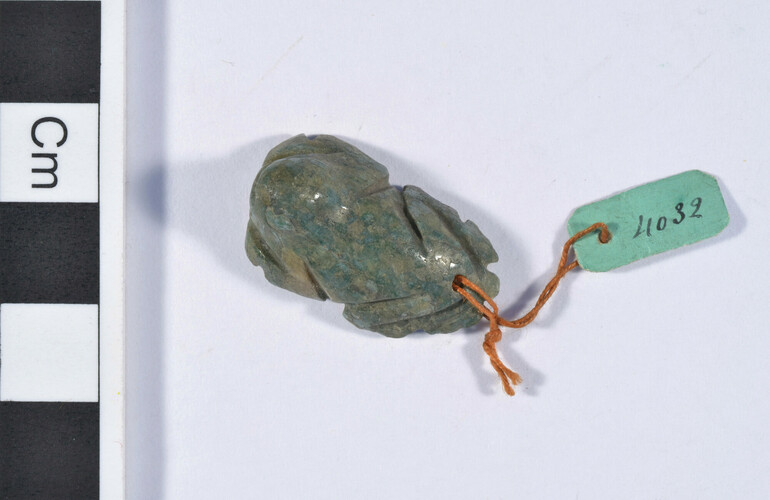 1985.52.1983Amulet, pendant in the shape of a frog, carved from green ?serpentine stone, with incised detail and perforated for suspension. [RB 27/06/2012]1985.52.1983
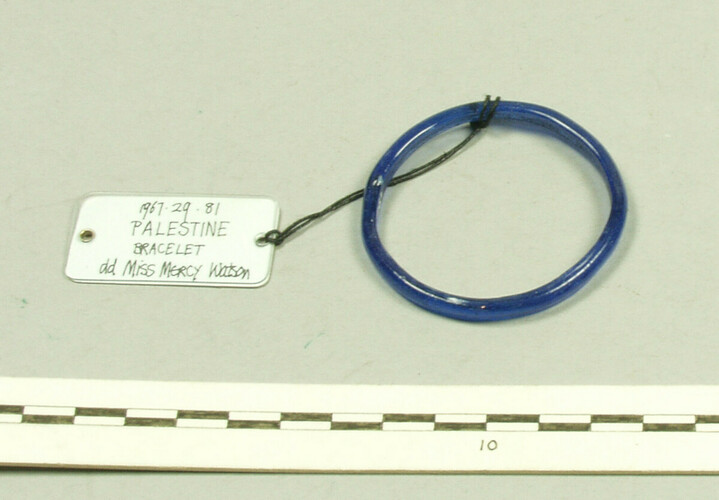 1967.29.81Royal blue glass bracelet. [El.B 'DCF 2004-2006 What's Upstairs?' 28/10/2005]1967.29.81
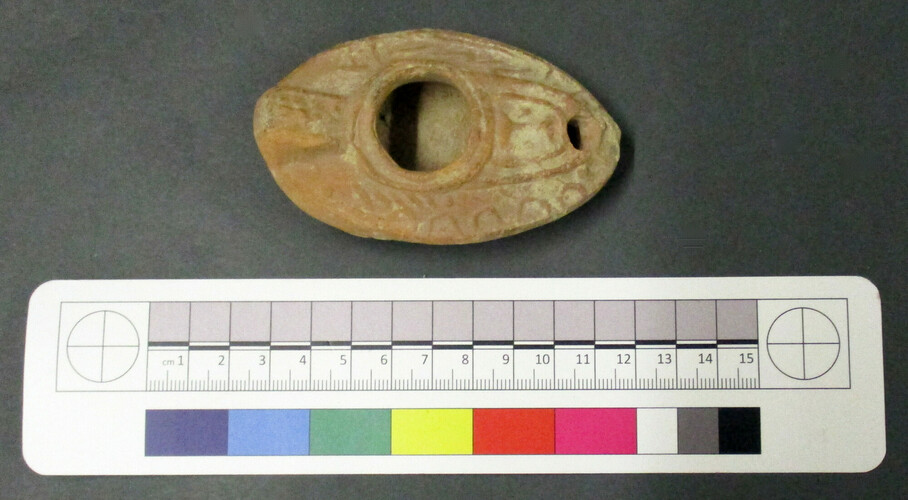 1909.68.21Pottery lamp of red ware, slipped red or pink. [MOBB [OPS move] 26/10/2016]1909.68.21
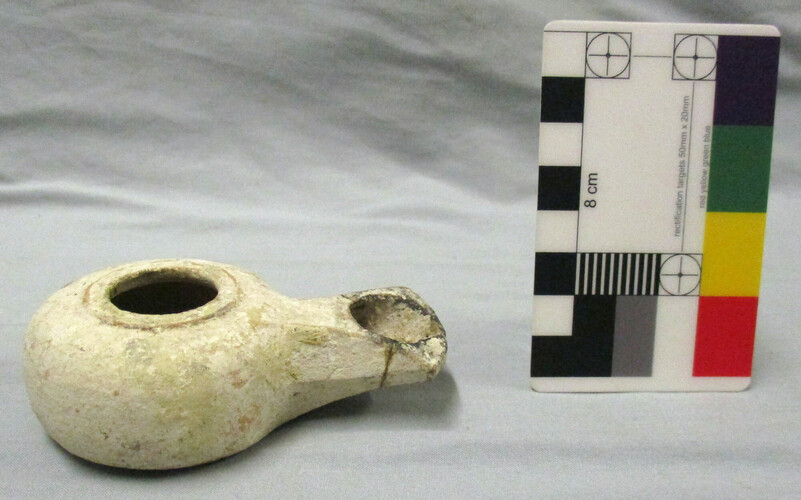 1967.29.44Pottery lamp of red ware slipped white. Circular body with flat bottom and top, straight sides and rounded shoulders. The central filling hole has a flat rim. The wick nozzle is wide, with large wick hole and expanded lip. There is blackening around the wick hole and lip. [MOBB [OPS move] 28/9/2016]1967.29.44
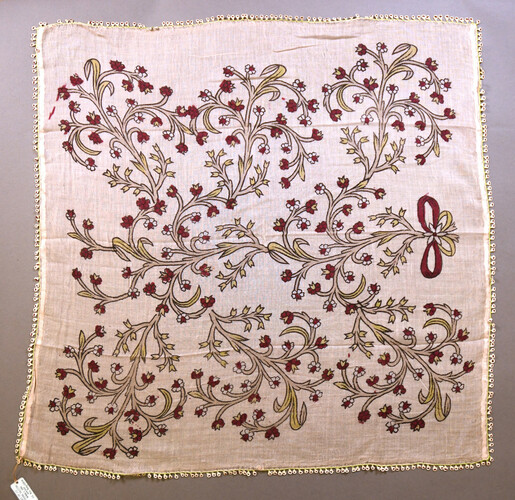 1967.28.22Woman’s head cloth (mandil oya) of pale pink cotton muslin with a block-printed floral design and edging of floral crochet.1967.28.22