
- Collection type
- Object
- Description
- Cast of Neanderthal tooth. [JC 5 12 2014]
- Long description
- Cast of Neanderthal tooth. Third left lower premolar.
- Date / Period
- Date made: After 08/1911 Archaeological period: Neanderthal
- Date collected
- 1910-1911
- Acquisition information
- Donated: 05/1911
- Dimensions
- Thick: max 12 mm, Width: max 12 mm, Length: max 18 mm
- Object numbers
- Accession number: 1911.14.13
- Research and responses
The site of La Cotte de St Brelade was first excavated by R. R. Marrett (1866-1943) between 1910 and 1914. For his report of the excavations, see 'The Site, Fauna and Industry of La Cotte de St Brelade, Jersey', by R. R. Marett, in Archaeologia, Vol. 67 (1916), pp 75-118. [MN 08/06/2009; JC 5 12 2014]
The entry for 1911.14.7-.18 is not contemporaneous with the entry for 1911.14.1-.6, which is dated May 1911. The writing is slightly smaller and the ink darker; moreover, it is written below the last line of the page. According to information received from Andrew Shaw (Department of Archaeology, University of Southampton), nine Neanderthal teeth were found at La Cotte in 1910 and a further three in August 1911. These casts cannot have been donated before August 1911. See printout of email correspondence between Dr Shaw and Jeremy Coote in RDF. [JC 5 12 2014]
Dr Andrew Shaw, University of Southampton, studied these teeth on 12 January 2015. He confirmed that this tooth fragment is Lower Premolar 3 left. He noted that what were then referred to as 1st and 2nd premolars are today referred to as 3rd and 4th premolars (P3 and P4), if that makes sense. [MJD 21/01/2015]
Search terms: Reproduction, Physical Anthropology, Cast, Human Body Part
Further items to explore
 1940.12.162.7.2Cast of geological specimen.1940.12.162.7.2
 1884.68.13Cast of piece of perforated baton of antler with engraved figure of horse.1884.68.13
 1907.68.18Cast of animal carving on stone1907.68.18
 1940.12.584Cast of seal ("117b").1940.12.584
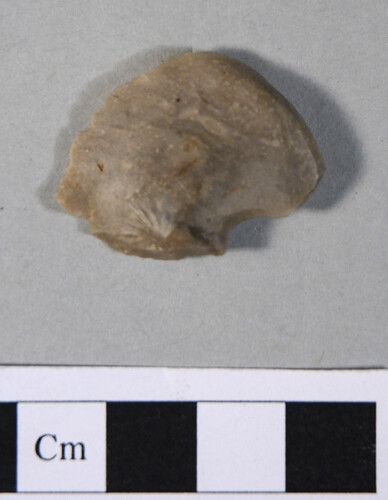 1911.28.99Stone tool; Flake1911.28.99
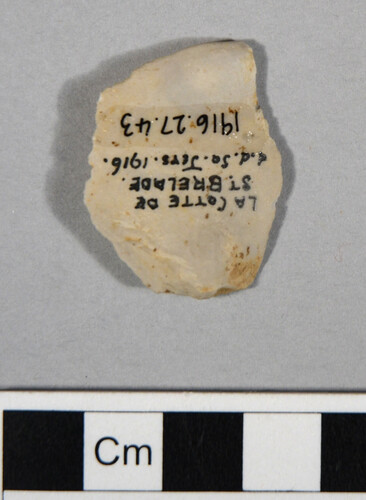 1916.27.43Stone tool; Flint flake implement.1916.27.43
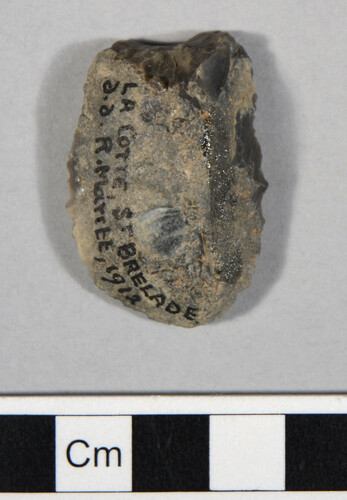 1912.43.11.32Stone flake.1912.43.11.32
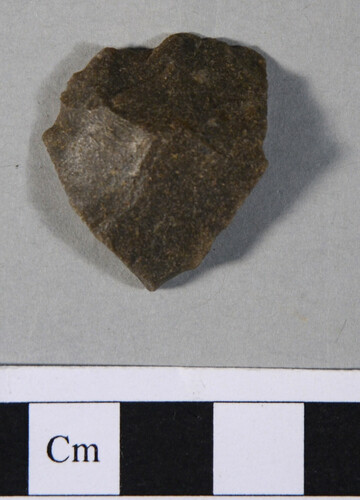 1911.28.84Stone tool; Flake1911.28.84