
- Collection type
- Object
- Description
- Pottery lamp of red ware with the design of frog and corn. [MOBB [OPS move] 2/12/2016]
- Long description
- Pottery lamp of red ware with the design of frog and corn. Pear shaped with projecting axe-headed wick nozzle. Flat bottom, rounded sides and convex top. The filling hole is depressed and surrounded by a slight rim. Behind this section, in relief, is the hind section and rear legs of a frog. The two sides of the lamp are covered in horizontal and vertical ridges which are incised with hatch marks. The wick nozzle is voluted on each side of the top with short horizontal ridges running the length. There is a maker's mark on the bottom. [MOBB [OPS move] 2/12/2016]
- Person
- Field collector William Matthew Flinders Petrie
- PRM source Committee of the Egypt Exploration Fund
- Date / Period
- Archaeological period: Roman
- Date collected
- 1903 - 1904
- Acquisition information
- Donated: 1904
- Materials and processes
- Material Pottery, Process Decorated, Process Coiled Handbuilt, Process Moulded
- Dimensions
- Height: max 33 mm, Width: max 68 mm, Length: max 86 mm
- Object numbers
- Accession number: 1904.35.3
- Research and responses
In the supplement to the excavation report by Petrie (1905) Roman Ehnasya, Petrie notes that the lamps were acquired from several sources in addition to the excavation in order to produce his corpus. E.g. see p.4. of the supplement: "As the excavations of the houses at Ehnasya yielded many lamps which could be fairly dated, it seemed worth while to attempt a corpus of Romano-Egyptian lamps. The material consisted of the dated examples from houses, undated from excavations, lamps found by the sebakh diggers and bought by our party, and lamps bought from dealers at Medinet el Fayum. I have not distinguished between these various groups, as it is clear that the great majority were made at some distance and brought by trade to these towns, so that they might as well be found in one place as in another close by." Therefore, the lamps in the Pitt Rivers might not necessarily be from the excavation. [AS 12/09/2012]
This lamp is similar to E.22 shown on pl. LXIV Petrie, W.M.F. 1905. Roman Ehnasya (Herakleopolis Magna). London: Egypt Exploration Fund. [AS 30/10/2012]
The provenance is probably Ehnasya el-Medina, a village at the mouth of the Fayum located just above the ancient site of Herakleopolis Magna, excavated by Petrie from 1903-4; see W.M.F. Petrie, 1904, Ehnasya [RTS 8/7/2004].
- Associated publications
- Petrie, W.M.F. 1905. Ehnasya. London: Egypt Exploration Fund. [AS 15/06/2012] Petrie, W.M.F. 1905. Roman Ehnasya (Herakleopolis Magna). London: Egypt Exploration Fund. See pages 5-7. [AS 26/06/2012]
Further items to explore
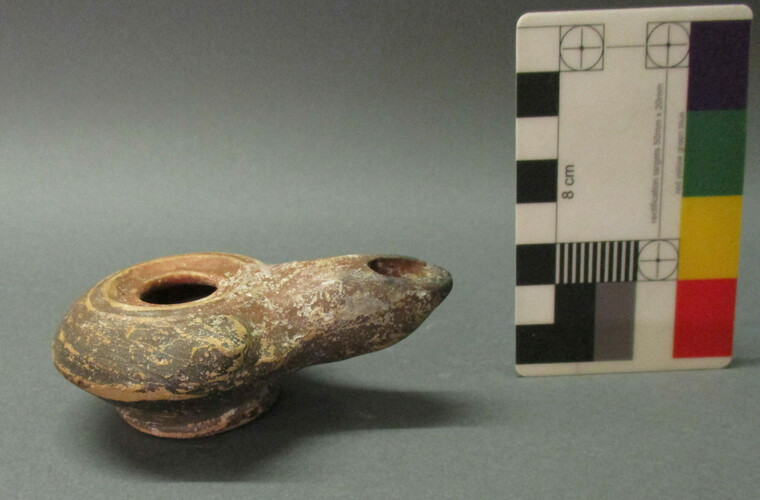 1932.88.565Unglazed pottery lamp of buff or pink ware slipped red or brown with blackening around the wick hole. Round body on a rolled foot. The top of the body is slightly concave with a ridge around the edge and a filling hole in the centre. Towards the front of the body just above the hemisphere is a perforated lug. The wick nozzle is projecting with a rounded bottom and slightly rounded top. [MOBB [OPS move] 30/08/2016]1932.88.565
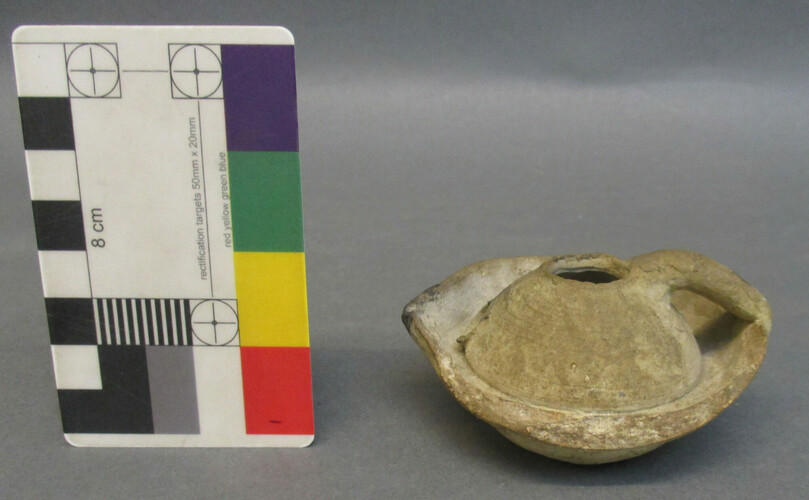 1932.88.417Pottery lamp of buff ware slipped white or cream. [MOBB [OPS move] 2/12/2016]1932.88.417
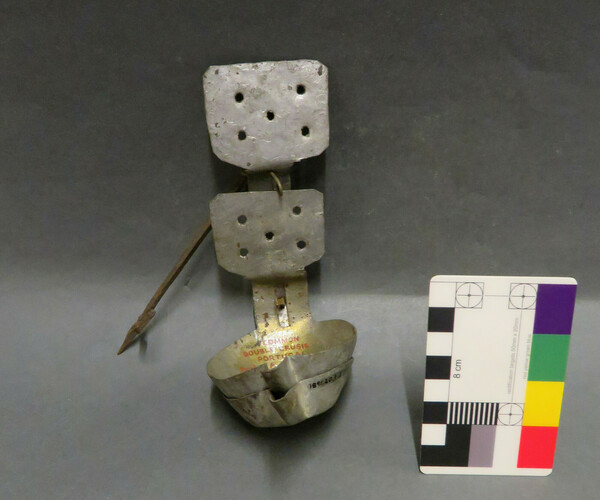 1891.20.1.1White metal, open lamp, part of a double lamp set. Nearly circular lamp with narrow projecting wick nozzle. Rounded sides and slightly rounded arm projecting vertically from the back, ending in a square plate with five perforations. Oblong aperture the length of the arm. The drip pan for this lamp is [1891.20.1 .2]. [MOBB [OPS move] 22/5/2017]1891.20.1.1
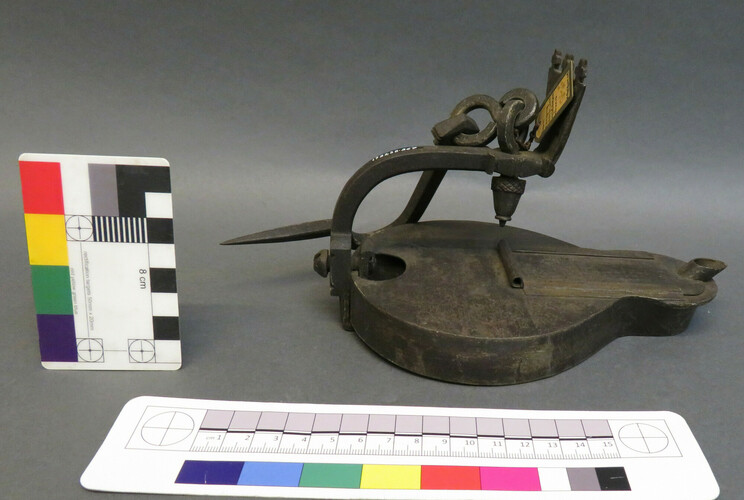 1932.88.867Miner's hanging metal (?iron) lamp. Pear shaped lamp with flat bottom and top with straight sides. The wick nozzle is covered with a sliding lid, a projecting cylindrical wick holder is visible at the tip of the nozzle. A curved arm is screwed onto the back of the lamp and extends up and over the lamp. At the top, via a loop, a thick suspension hook is attached. In front of the loop is a decorative ?brass plate with three small crosses on its upper edge. [MOBB [OPS move] 16/3/2017]1932.88.867
 1939.11.44Clay figure of a camel [.1] and rider [.2].1939.11.44
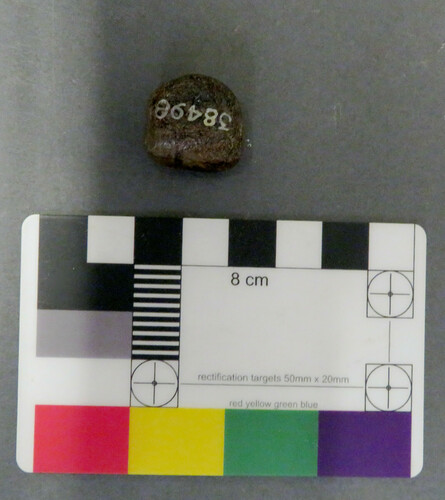 1985.54.2428Amulet, made from translucent brown stone, polished surface. Used by women to cure pain and swelling in the shoulder. [ASh [OPS move] 07/11/2017]1985.54.2428
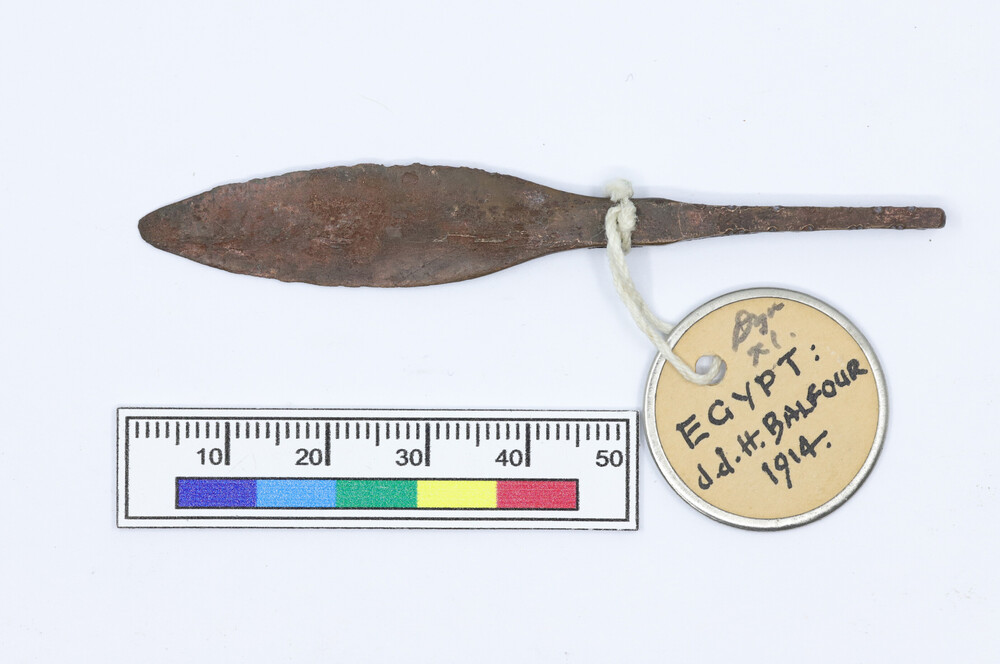 1914.11.21Leaf-shaped, tanged, flat arrowhead.1914.11.21
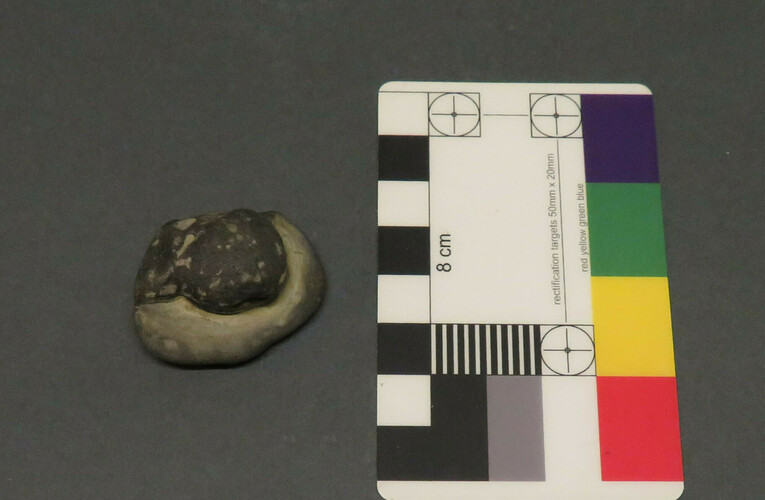 1985.54.534Amulet; grey stone which has a smaller and darker round section of stone which appears to be carved out of a paler stone base. Used by a man who is sad. [SB [OPS move] 23/08/2017]1985.54.534