
- Collection type
- Object
- Description
- Padded cap worn by the Khalifa's cavalry
- Geographical reference
- Date / Period
- Date made: Before 1914
- Date collected
- By 1914
- Acquisition information
- Donated: 1914
- Materials and processes
- Process Padded, Material Cotton Seed Fibre Textile Plant, Material Kapok Seed Fibre Plant, Process Stitched, Process Quilted, Process Dyed, Process Woven, Process Printed
- Object numbers
- Accession number: 1914.28.6
- Research and responses
Those individuals commonly spoken of as ‘Dervishes’ in the context of the Sudan of the late 19th century only loosely relate to the Persian term darwish in its proper sense – connoting a mendicant ascetic from any part of the Islamic world. Like many Islamic countries, the Sudan contains a number of active tariqa – sufi religious orders or brotherhoods in search of mystical enlightenment, nucleated around a teacher or chain of teachers. These teachers ultimately can claim some decent from the Prophet himself or one of the early Caliphs. The participants in the Mahdist movement are now conventionally spoken of as Ansar rather than Dervishes. The Mahdist movement was named after Mohammed Ahmad, known as El Mahdi (d.1885), who was himself originally a member of the Sammaniyya tariqa. However, following conflict with the order’s leader, he left the order and established his own movement, which rapidly grew to be the largest politico-religious movement of the Sudan. It was both a secular revolutionary movement, inspired by hatred of the colonial rule of the Ottomans since the 1820s, and an attempt to purify Sudanese Islam into a more orthodox form, and institute sharia law. El Mahdi declared a jihad on the Ottomans, and seized power in 1881. He was only to live another four years. In 1882, Egypt came under British rule due to British desires to secure control of the Suez Canal. Rule of the Sudan came with it. In 1885, El Mahdi died and was succeeded by one of his four deputies, the Khalifa Abdullahi, who led the movement until its defeat and destruction at the Battle of Omdurman in 1898. He was killed shortly after in the same year. The Battle of Omdurman (September 2nd, 1898) is one of the most poignant and mismatched battles ever fought. A combined army of Sudanese, Egyptian and British forces, number 25,800 men, under the command of General Sir Horatio Kitchener, met with the Mahdist army under the command of Khalifa Abdullahi. The Mahdist army taking the field that day was the single largest military force mobilised in Africa since the Crusades – in excess of 52,000 men - armed with a few thousand rifles, but in the main, spears, swords and daggers. They were predominantly armoured in cotton jibbah, supplemented by a minority of metallic armours. The Anglo-Egyptian-Sudanese force was significantly smaller in numbers, but had Maxim machine guns in their first major deployment, as well as gunboats in the Nile providing covering artillery fire. Early in the battle, the Mahdists employed a traditional tactic of a mass charge in tight formation, committing 16,000 men to this manoeuvre, which sent them into the muzzles of the Maxim guns. 4,000 men died outright in this first charge, and not one came within 50m of the Anglo-Sudanese line. This early part of Omdurman was described by one British officer present as “Not a battle, but an extermination”. At the end of the Battle of Omdurman, British dead numbered 48, and wounded 434. Mahdist dead numbered 9,700, and wounded 13,000. This battle served as the horrific proof of the senselessness of open-field tactical manoeuvres on a battlefield covered by long-range machine guns and artillery – a lesson which ultimately led to the trench warfare of Word War One sixteen years later.
Relevant Reading: Willis, C.A. (1921) Religious Confraternities of the Sudan. In: Sudan Notes & Records, Vol.4, pp.175-194. Aglen, E.F. (1937) Sheikan Battlefield. In: Sudan Notes & Records, Vol.20, pp.137-45. Mohammed, A.E.A. (1980) Militarism in the Sudan: The Colonial Experience. In: Sudan Notes & Records, Vol.59, pp.15-26.
Research Conducted for DCF Cutting Edge Project 2006/2007 [AM]
Search terms: Clothing Headgear, Armour Weapon, Clothing Textile, Religion, Textile, Insignia, Hat, Religious Object, Armour, Headgear, Helmet, Clothing
Further items to explore
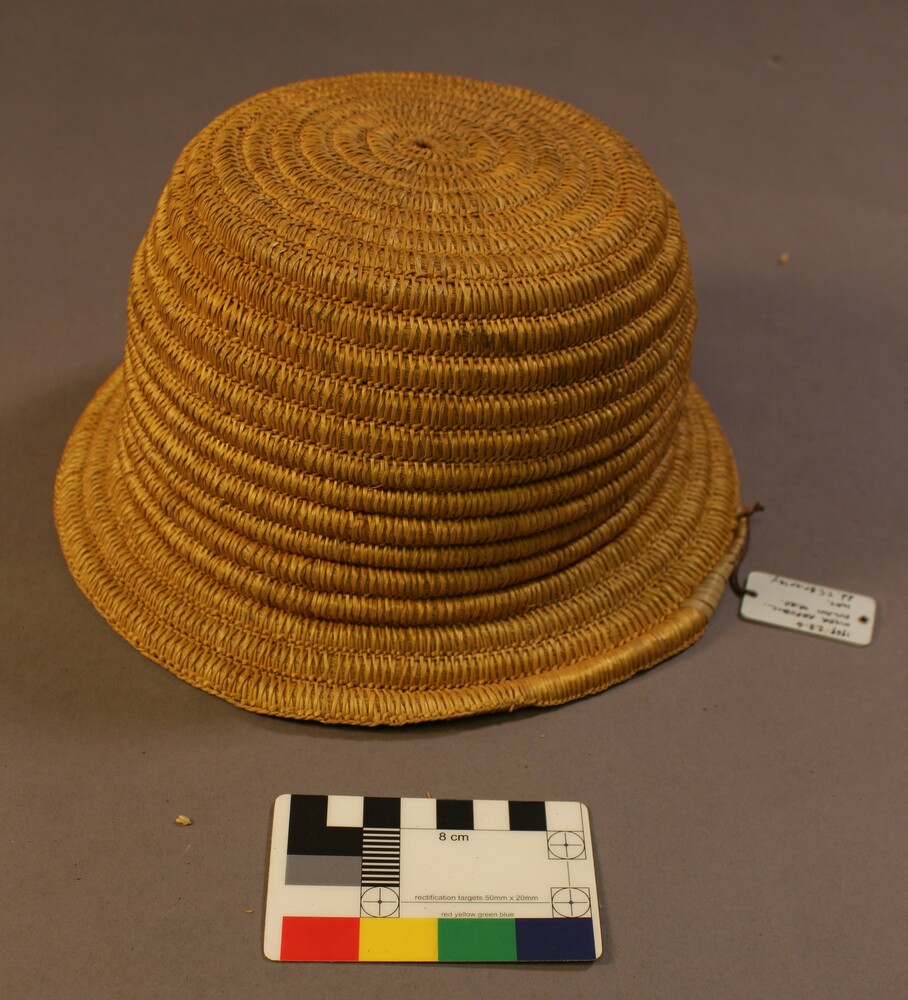 1969.23.6Hat of straw bound in strips and built up spirally. Round, with flattened top to crown and narrow flaring brim1969.23.6
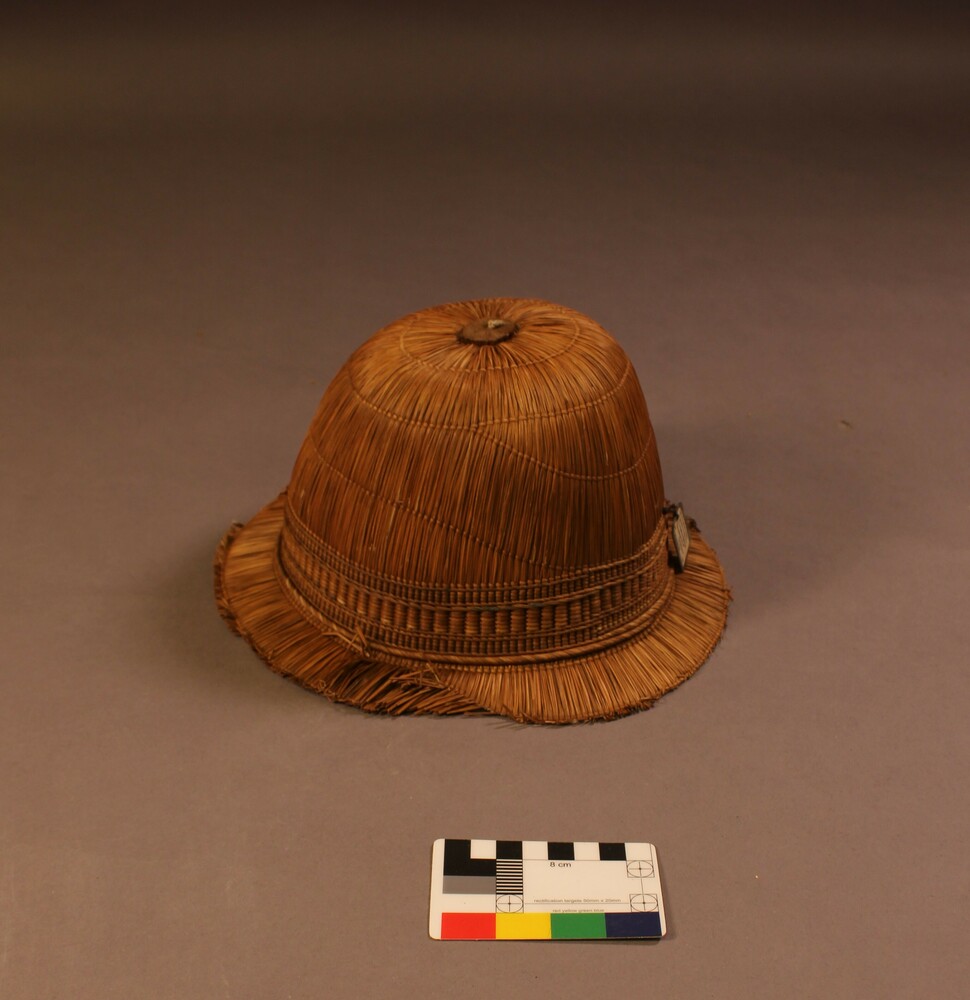 1895.22.128Hat1895.22.128
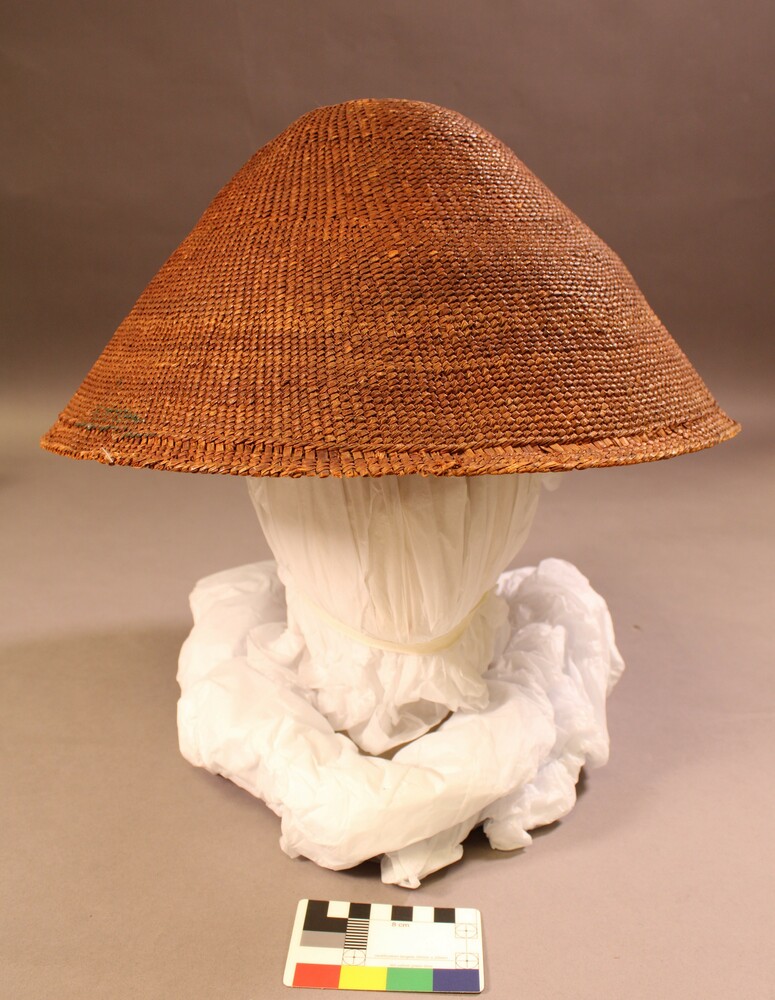 1948.12.64Hat of red cedar bark, with inner and outer brim. No decoration.1948.12.64
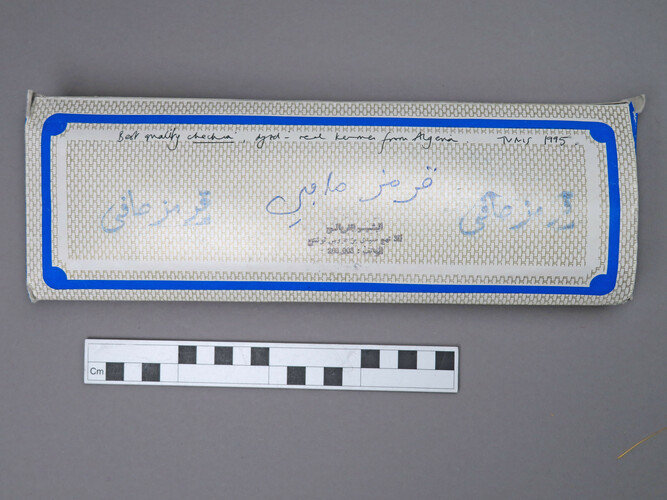 2018.37.117.1Cardboard box for a chechia (felted hat).2018.37.117.1
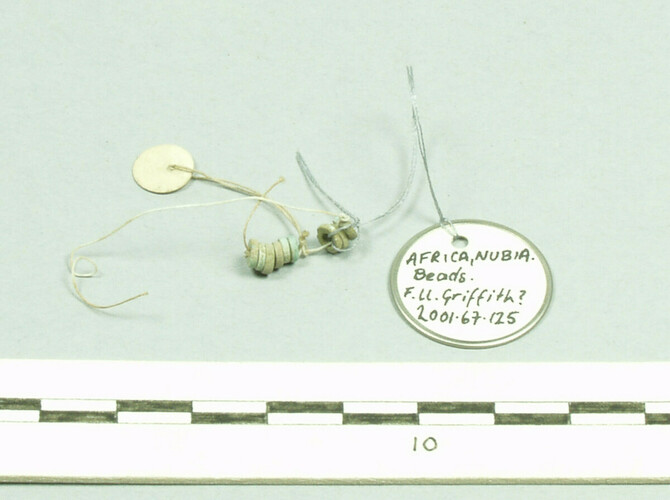 2001.67.125String of faience disc beads. [El.B 'DCF 2004-2006 What's Upstairs?' 29/6/2005]2001.67.125
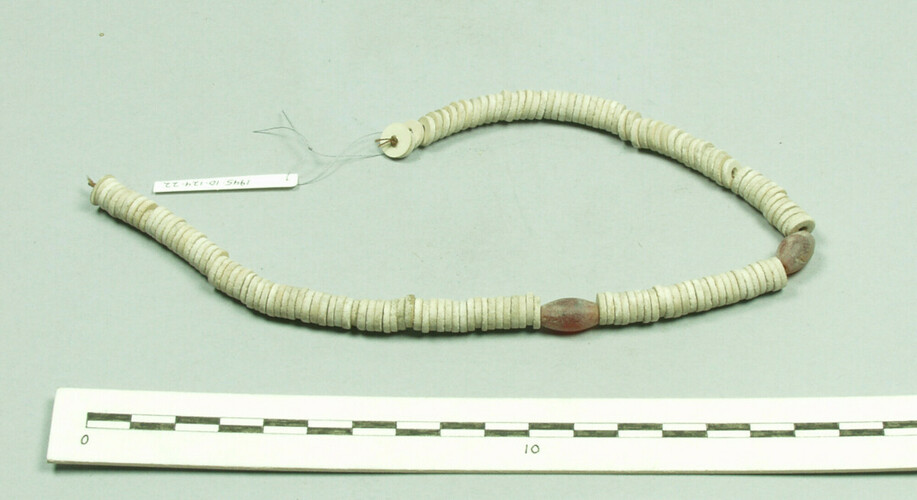 1945.10.124.22String of faience disc beads and two cornelian beads. [El.B 'DCF 2004-2006 What's Upstairs?' 27/6/2005]1945.10.124.22
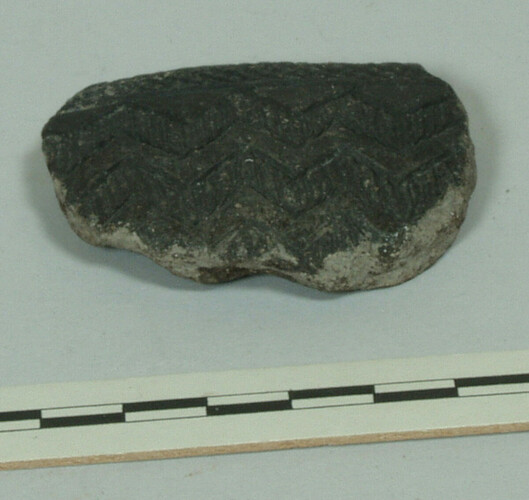 1949.12.140.1Sherd of pottery decorated with various incised geometrical designs.1949.12.140.1
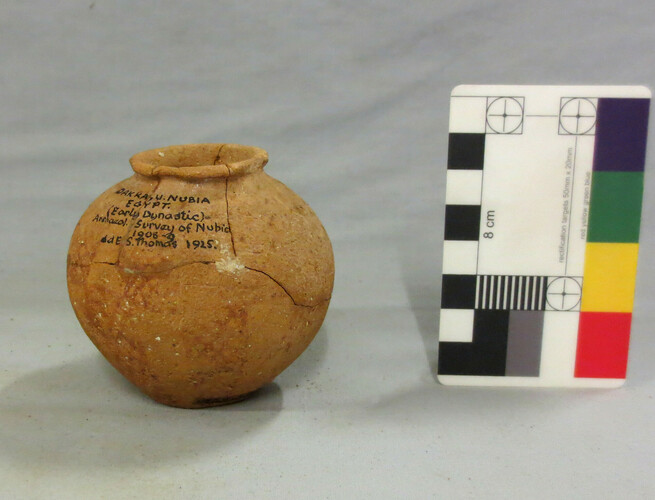 1925.32.13Small red pottery jar, bulbous body and small mouth with lip. Painted in reticulate designs, which are just visible. [ASh [OPS move] 16/02/2016]1925.32.13