
- Collection type
- Object
- Description
- Shirt or blouse (bag tunic)
- Long description
- The tunic is well preserved. The rolled and whipped hem of the neck opening has come away from the fabric body in places but the v-shape of the opening is clear. The most damaged areas are the arm-holes with fraying tears and some detached hemming. The opening of one arm-hole seems largely intact, with a length of ca. 33cm, but the other has split the fabric some way down the length of the side-seam; the side-seam of the other side is largely intact. The bottom of the garment has a decorative knotted fringe. There are no other signs of decoration. (Description from Dr Elizabeth Frood) [AS 07/09/2010]
- Date / Period
- Archaeological period: Ancient Egyptian New Kingdom
- Date collected
- 1890
- Acquisition information
- Donated: 1890
- Dimensions
- Length: max 1350 mm, Width: max 1170 mm
- Object numbers
- Accession number: 1890.26.98
- Research and responses
As part of Dr Elizabeth Frood's overview of the Egyptian collections for the Characterizing the World Archaeology project she found that in Petrie’s ‘journal’ of the seasons at Lahun, now in the Griffith Institute, Oxford, he reports the discovery of a burial with ‘three or four perfect shirts neatly folded up in packets, and wrapped in between the bandages’ of the mummy. Petrie dated the tomb to the 20th Dynasty from the style of the uninscribed but painted ‘coffin bust’; no inscribed material was recorded in association. He also included a sketch of the style of shirt in his notes. The location of the tomb is unclear, but could perhaps be reconstructed by close analysis of his notes and plans; the discovery was made in the week of the 28th of November to the 5th of December 1889 during which time Petrie recorded that he was working in the sector of the town reoccupied in the 18th Dynasty. It seems likely that the PRM tunic is one of these ‘perfect shirts.’ The location of the other tunics or the coffin fragment is not known. See also Vogelsang-Eastwood, G. 1993. Pharaonic Egyptian clothing (Studies in Textile and Costume History 2, Leiden, New York, Köln). [AS 06/09/2010]
Kennard, along with Jesse Hayworth, was Petrie's main sponsor for the excavations at Lahun. The division of finds from the excavation was that of the material that was allowed to return to England, it would be equally divided between Petrie, Kennard and Haworth. Most of Hayworth's material went to the University of Manchester (see http://www.museum.manchester.ac.uk/collection/ancientegypt/virtualkahun/), but Kennard's objects were mostly sold at auction after his death in 1911 but evidently donated some of his portion of the finds to the Pitt Rivers. [AS 05/07/2012]
- Associated publications
- Excavation accounts: Petrie, W.M.F. 1890. Kahun, Gurob and Hawara (London); Petrie, WM.F. 1891 Illahun, Kahun and Gurob, 1889-90 (London) [AS 06/07/2012] Illustrated in a black and white drawing as Figure 6.10 on page 107 of 'Egypt and Sudan: old Kingdom to Late Period', by Elizabeth Frood, in World Archaeology at the Pitt Rivers Museum: A Characterization, edited by Dan Hicks and Alice Stevenson (Oxford: Archaeopress, 2013), pp. 90-114. Caption (same page): 'Figure 6.10 Schematic sketch of a lare, possibly New Kingdom bay tunic excavated during W. Flinders Petrie's 1889-1890 seasons at Lahun and Gurob, Egypt. The sketch is currently held with the tunic (PRM Accession Number 1890.26.98). The tunic may have been found folded up with two or three other shirts wrapped in the bandages of a mummy'. [MJD 04/06/2014]
Further items to explore
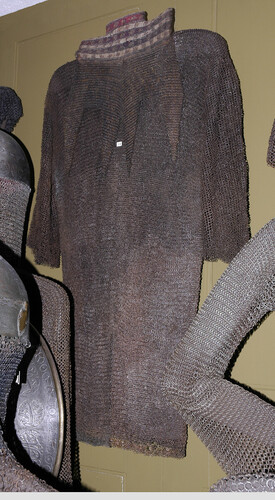 1935.7.13Chain mail shirt with riveted links, collar of padded textile and four pointed cape. [El.B 28/3/2007]1935.7.13
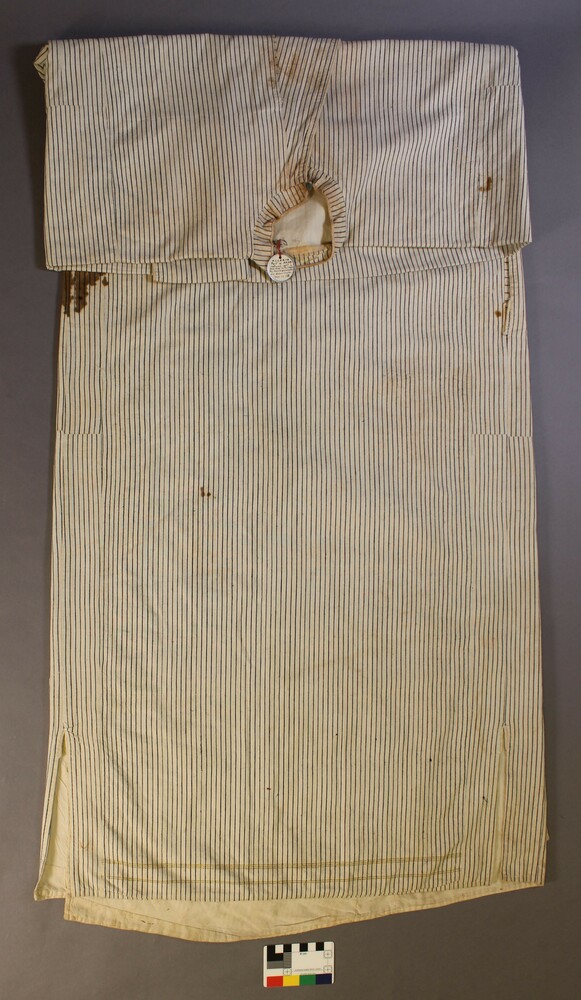 1956.12.1.2White cotton shirt with narrow black stripes, lined with white.1956.12.1.2
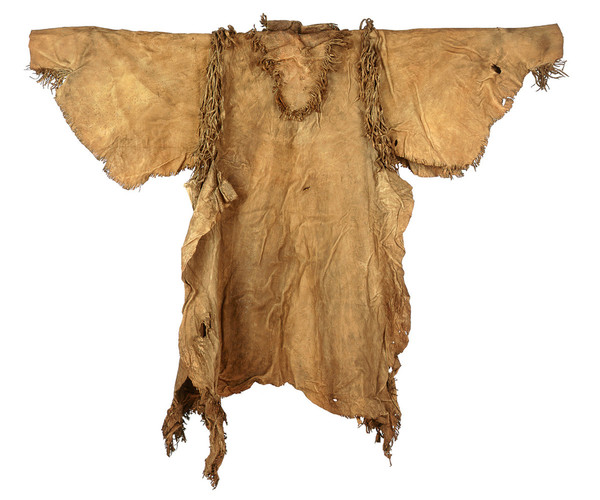 1893.67.5Plain fringed deerskin shirt with triangular neck lappets.1893.67.5
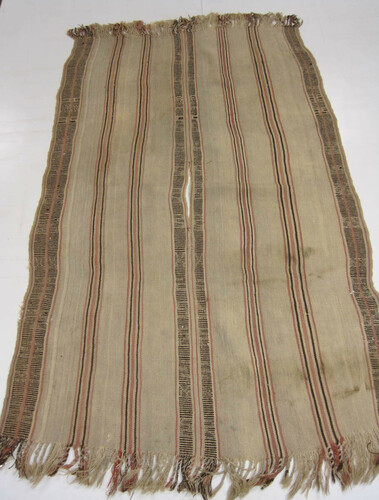 1926.81.13Man's wool poncho with slit for the neck and fringed at either end. Cream with narrow pink and brown stripes, and stripes of brown geometric motifs. Stained and signs of colour bleeding. [JP 24/9/2003]1926.81.13
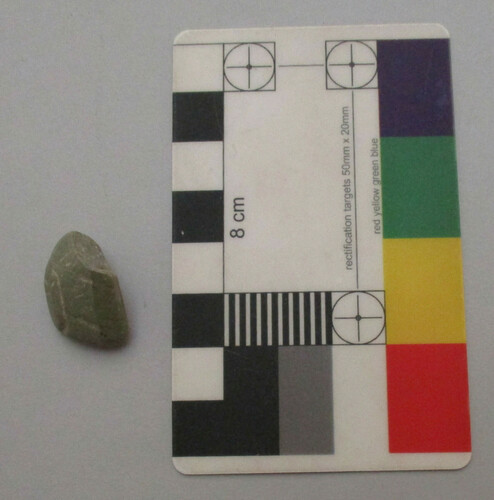 1985.54.990Amulet. Stone. Greenish grey in colour, with scratches to the surface and crack on one side. [EH [OPS move] 9/3/2017]1985.54.990
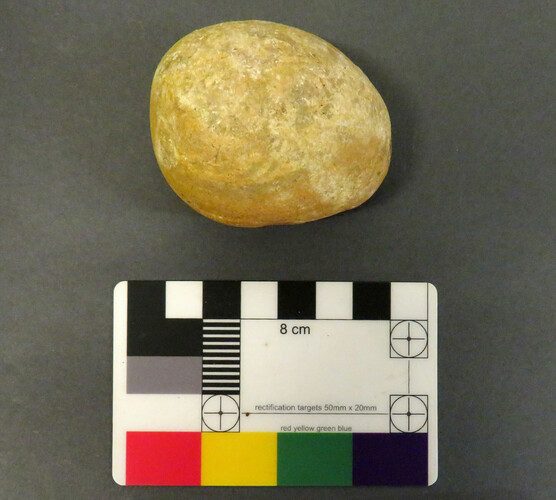 1985.54.2091Amulet. Stone, orange in colour and spherical in shape. Slightly rough surface. Used in a fertility rite. [ASh [OPS move] 23/10/2017]1985.54.2091
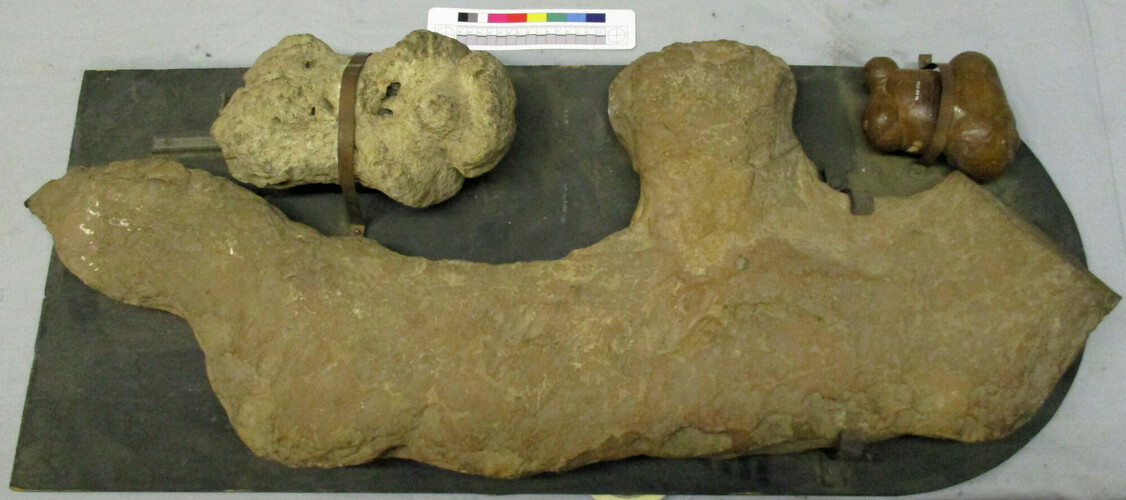 1903.22.9Flint. Abstracted rounded shape with nodules. It is described as "baboon-shaped". [AB [OPS Move] 10/8/2016]1903.22.9
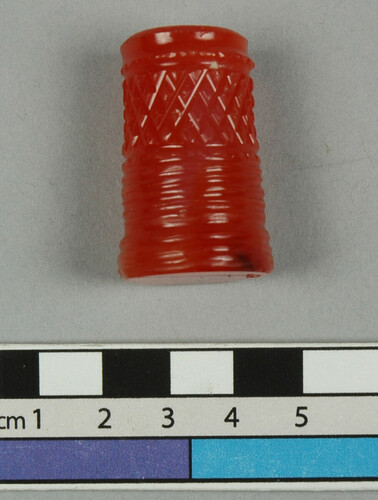 1971.15.525A piece from a chess set, possibly a pawn, made from cornelian stone. Cylindrical with lateral incised lines and a band of incised cross hatching. [SM 12/11/2010]1971.15.525