
- Collection type
- Object
- Description
- Barbed pearl shell fish hook for albacore, a kind of tuna. Tied to a length of plant fibre line.
- Geographical reference
- Date / Period
- Date made: Before 1890
- Date collected
- By 1890
- Acquisition information
- Donated: 01/1890
- Materials and processes
- Material Shell, Material Plant Fibre, Material String, Process Carved
- Dimensions
- Length x Width x Depth: max 110 x 70 x 25 mm hook and line
- Object numbers
- Accession number: 1890.5.6
- Research and responses
Labelled "Danger Is." but this probably refers to Pukapuka in the Cook Islands (formerly called Danger Island). Information provided by Barry Rolett, Professor of Anthropology at the University of Hawaiʻi, Mānoa, following a research visit in June 2024.
I can find no current reference to 'Danger Islands'. Current names of inhabited atolls forming part of the Tuamotu Archipelago include: Makatea, Rangiroa, Fakarava, Hoa, Pokapuka & Amanu. [SD 13/6/2000]
- Associated publications
- Illustrated with 1887.1.496 and 1887.1.497 in black and white as Plate XLIXa (PRM000081280) opposite page 34 in Fish Hooks (Pacific Island Records), by Harry G. Beasley (London: Seeley, Service & Co., Ltd, 1928). Beasley writes (page 34) under the heading 'Part I. Polynesia' and sub-headings 'Pukapuka' and 'Danger Island': 'Pl.XLIX.a.—The specimens in this plate were collected by the well-known missionary, Wyatt Gill, whose letter, dated 1877, has fortunately been preserved, and it is from this source that the following particulars are drawn. They are used for catching albacore, and the fibre from which the lines are made bears the name "Urtica argentea," being a plant indigenous to the Island. No. 1 [1886.1.497] is merely a variation of the well-known spinner, and in type it more closely resembles the Samoan–Tongan model than the Tahitian. The shank is of well-finished pearl shell, and the barb of turtle shell is attached by lashings passing through two holes. The snood is continued down the inner side of the shank, and passes through the upper barb hole. The hackle is peculiar, consisting as it does of nine or more short lengths of twisted fibre, each ending in a knot. Another distinction is that between the shank and the barb lashings small pieces of midrib of the palm are inserted as tighteners, as is customary in the Ellice Group. The length of this hook is 3 1/4 in. (8.3 cm.). Nos. 2 [1890.5.6] and 3 [1887.1.496] show examples widely divergent in form, and it is a matter of surprise that two such different types should occur in such a confined area, particularly as the total population only numbers 375. [Footnote 1 refers to Brigham, Index to the Islands of the Pacific, p. 133.] Both are cut from the solid pearl shell. The workmanship and finish are excellent, and the skill required to fashion the elaborate inner barbs would be considerable. The method of whipping the snood to the shank is very similar to that employed in the Hawaiian and Tahitian Groups; the snoods, however, are not looped. No. 2 [1890.5.6] measures 2 3/8 in. (6.1 cm.); No. 3, 1 1/2 in (3.8 cm.) in length.' [JC 24 6 2016]
Search terms: Fishing, Hook, Fishing Accessory
Further items to explore
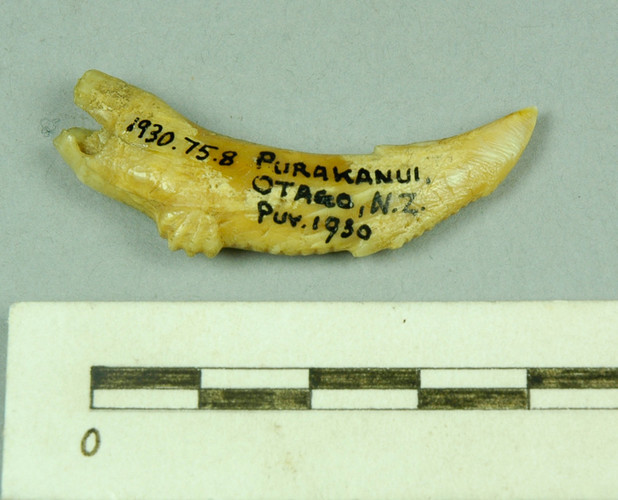 1930.75.8Fish-hook point made of bone with small barbs along it's length. [MJD 17/03/2009]1930.75.8
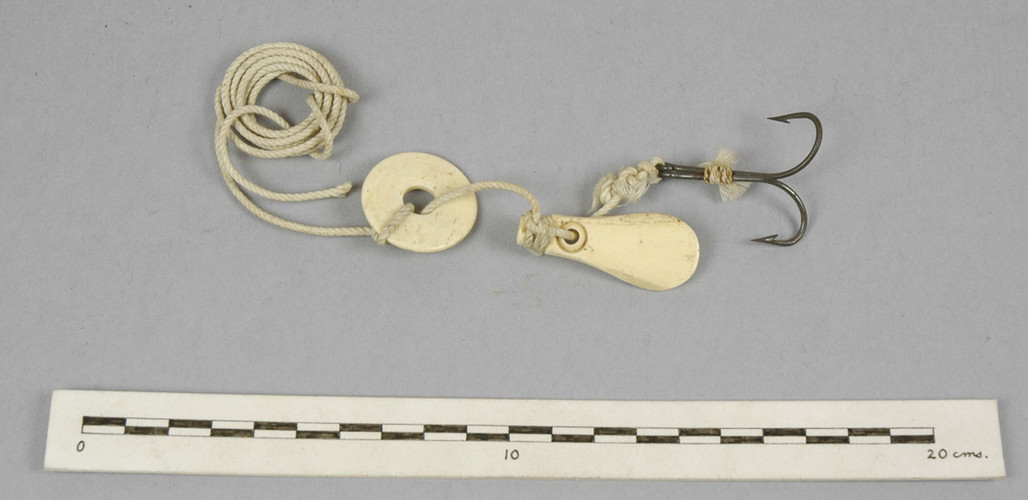 1914.15.5Fish lure comprising two perforated bone oscillators (one elongated, the other a disc) and two iron hooks of European manufacture, all tied to a coiled length of commercial cotton line. [LM 20/06/2007]1914.15.5
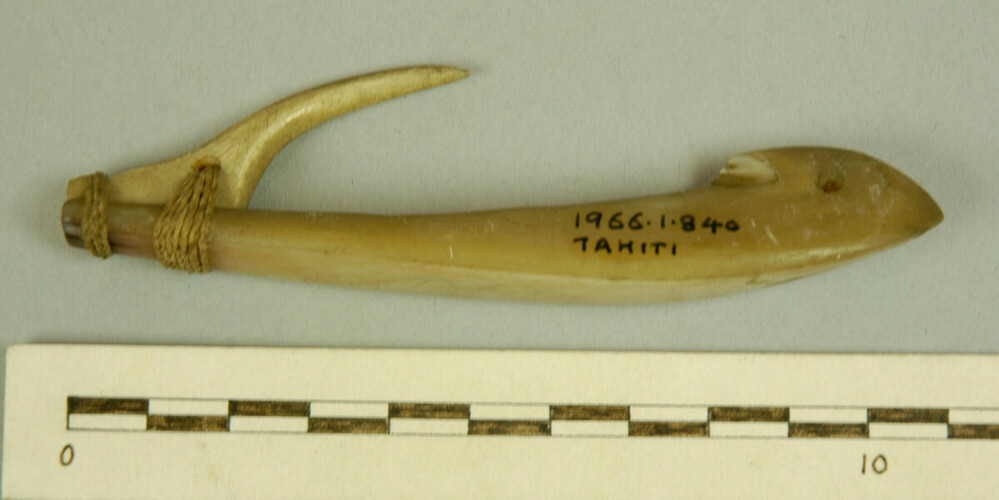 1966.1.840Fish hook with bone hook and shell shank with hole at one end of the shank. [MJD 22/06/2009]1966.1.840
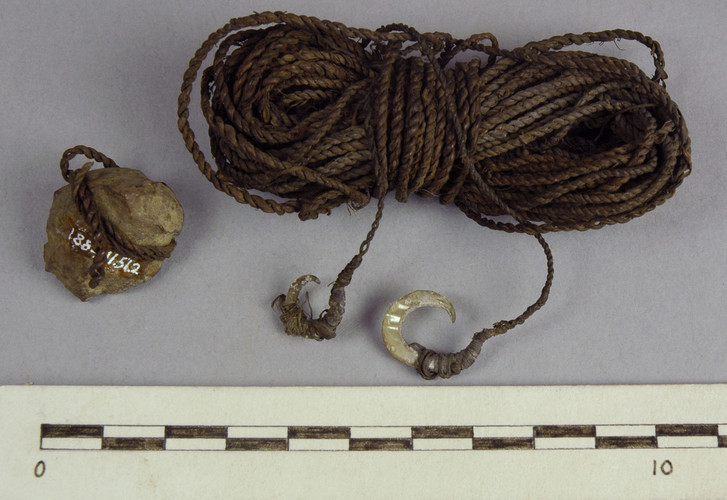 1884.11.51.1Fish hook [.1] of shell bound and tied to a string line. Separate stone [.2] tied with string line. [MJD 23/03/2009]1884.11.51.1
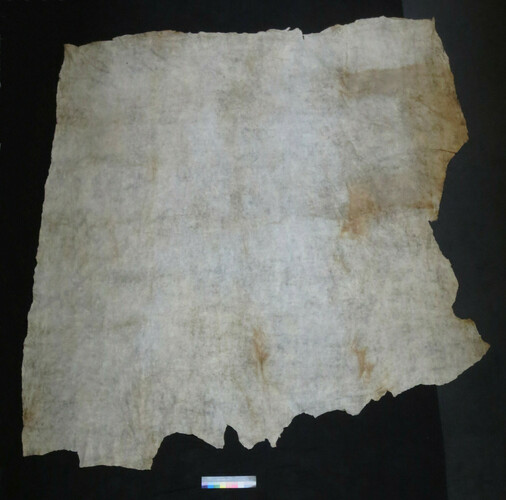 1886.21.29Barkcloth: white, finely ribbed.1886.21.29
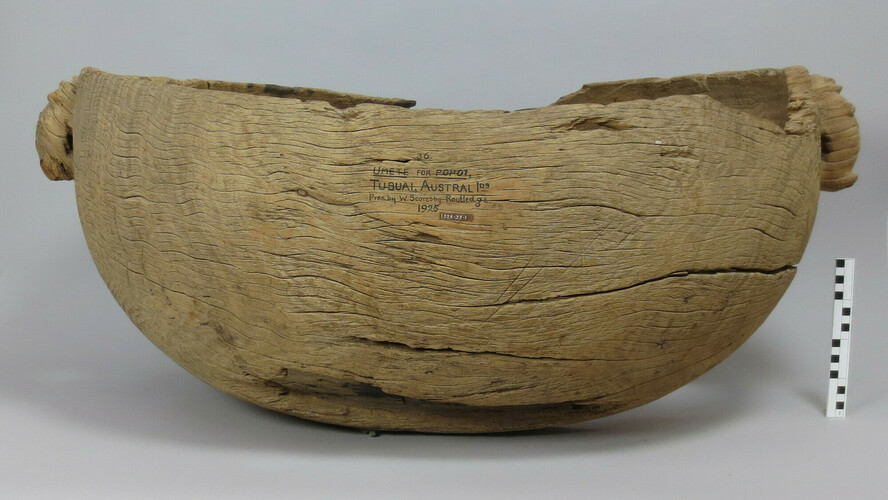 1925.29.1Carved wooden bowl with human figures at the ends1925.29.1
 1884.85.4Tattooing tool1884.85.4
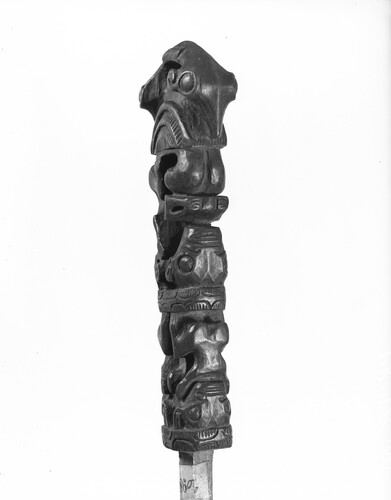 1884.65.37Carved brown wood fan handle, 4 figures in relief1884.65.37