
- Collection type
- Object
- Description
- One of two potatoes carried by Mr Burgess in 1897 as a cure for rheumatism.
- Geographical reference
- Cultural groups
- English
- Date / Period
- Date made: Before 1897
- Date collected
- 1897
- Acquisition information
- Donated: 1897
- Materials and processes
- Material Potato Starch Plant
- Dimensions
- Length: max 26 mm
- Object numbers
- Accession number: 1897.58.1
- Research and responses
Research by Anna Marie Roos, Professor of the History of Science and Medicine in the School of History and Heritage, University of Lincoln:
"In 1897, one Mr Burgess, the Clerk of Works at Oxford University, donated two shrivelled potatoes to the Pitt Rivers Museum. He usually kept them in his pockets. They were the ultimate “jacket” potatoes.
The Pitt Rivers is dedicated to categorising and displaying a “democracy of objects” not according to time or nation, but according to human usage. Since the potato is fairly ubiquitous in human culture, it means there are many in the museum’s collection.
In addition to Burgess’s donation, 11 other wrinkled specimens are catalogued in the museum’s collections, and are neatly labelled. The names of the previous owners are usually not identified because most of the potatoes were stolen before they were donated. They were medical charms thought to be cures for rheumatism – and if they were stolen, they were thought to be even more effective.
In the Victorian era, and for centuries before, a variety of vegetables were carried whole, or pulverised and put into bags to hang around the neck in the hopes of warding off or curing illness.
Before modern pharmaceuticals, most ‘materia medica’ (substances used in medical practice, or drugs) were herbal. Their usage was described in books by the ancient Greek physician Pedanius Dioscorides (40-70 AD) and in Pliny’s ‘Natural History’ (1st century AD), an encyclopaedia written in ancient Rome. These books from the ancient world continued to be reference guides throughout the Renaissance.
In his book Pliny described the usefulness of plants such as the mandrake root, which was thought to resemble a human figure complete with what was known as “the virile members”. The root was made into amulets to be worn to promote fertility and in love magic. Using it in this way, is also referred to in the ‘Song of Solomon’ in the Bible.
Paracelsus, a 16th-century Swiss doctor, elaborated upon such theories, claiming each plant had a sign of its medical application resembling the part of the body or ailment that it could cure.
For instance, lentils and rapeseed were thought sympathetically to cure smallpox because the seeds were similar to the pox pustules.
Plant therapy was also linked to the use of astrology in early medicine. The planets were thought to control the fluids or humours in the body (black bile, blood, yellow bile, and phlegm), all of which had to be kept in careful balance to promote health. An imbalance was believed to be cured by bleeding or by the ingestion of an herbal remedy, or in some cases, wearing of the appropriate plant amulet.
Diseases caused by a particular planet could be healed by a herb of the opposing planet. For example, lunar diseases like the common cold or fluid filled tumours were considered to produce an abundance of cold and moist humours, as the Moon controlled the waters in the tides. These lunar diseases could be cured by means of sunflower or solar herbs or tinctures, which were hot and drying as sunbeams. Lettuce which was watery was to be avoided.
But what of our potato and its connection to rheumatism?
There is a poison, called solanine, present in green potatoes and potato eyes (the root-like sprouts). Solanine is chemically closely related to atropine in deadly nightshade. In fact, the potato is called a nightshade vegetable.
Atropine creme in the Victorian era, sometimes in combination with morphine, was applied to “relieve the pain of rheumatism, sciatica and neuralgia”.
As to why the potatoes had to be stolen to cure rheumatism, we still don’t quite know, but it certainly adds to their charm."
See RDF for full article.
Research by Anne-Marie Condé found that carrying a potato in one’s pocket was a Victorian-era cure for rheumatism. Exactly how this was thought to work is unclear but it was commonly believed that the potato had to have been stolen for it to be effective. A person was to carry the potato in their left pocket if they were right-handed. Further information, including reference to another potato in the PRM collection (1897.83.3), can be found in the following essay: https://insidestory.org.au/john-curtins-potato/
Please note that the Donor Index card at the Ashmolean Museum lists a Mr William Burgess (Clerk of Works). [L.Ph 23/3/2004]
See publications below:
By atrupine Ettlinger presumably meant atropine OED online: a. A poisonous alkaloid found in the Deadly Nightshade and the seeds of the Thorn-apple. (as potatoes are related to deadly nightshade, I believe.) The poison in potatoes actually seems to be solanin or solanine:
http://en.wikipedia.org/wiki/Solanine: Solanine is a glycoalkaloid poison found in species of the nightshade family. It can occur naturally in any part of the plant, including the leaves, fruit, and tubers. It is very toxic even in small quantities. Solanine has both fungicidal and pesticidal properties, and it is one of the plant's natural defenses. ... Solanine and chaconine are present in potato shoots. In potato tubers 30–80% of the solanine develops in and under the skin and thus may be removed by peeling and removing the eyes. This is advisable if the tubers show green, but is not a guarantee of safety. Potato greening strongly suggests solanine build-up although each process can occur without the other. A bitter taste in a potato may be a more reliable indicator of toxicity. ... Solanine has fungicidal and pesticidal properties, and solanine hydrochloride (a modified version of solanine) has been used as a commercial pesticide, but never on a large scale.
Solanine has sedative and anticonvulsant properties, and has been used as a treatment for asthma, as well as for cough and cold medicines. However, its effectiveness for either use is questionable.
http://library.thinkquest.org/C007974/1_1pot.htm: This plant was the potato, which contains the poisonous glycoalkaloid solanine in all its parts but mostly in the blossoms and in the fruit. Its content is extremely high when tubers are unripe or green as a result of incorrect storrage but they cannot cause poisoning because solanin decomposes when boiled.
Only the fruit, blossoms, seeds, sprouts, and sun-greened tubers may be dangerous.
They can bring about stomachache, nausea and vomiting, dizziness, psychic depression, breathing disruptions, irregular pulse and even coma in the case of high dose intake and lack of therapy.
Bearing in mind the application of the potato in our everyday life, we should not expect it to have found application in medicine [AP 27/09/2006]
- Associated publications
- Mentioned in Ellen Ettlinger, Folklore vol 54, no. 1, (March 1943) pp 227-249, 'Just as crampnuts, "the woody out-growths, common on beech- or ash-trees were carried in the pocket as a cure for cramp," potatoes were frequently worn against rheumatism. Some examples, used by Oxford citizens about 1900, can be found in the Pitt Rivers Museum together with the name of their owners, which I do not like to reveal, because the potatoes had to be stolen, if they were to prove curative. I am indebted to Mr James Walton for the information that "atrupine, a reputed cure for rheumatism is found in potato "Eyes" which renders some justification for the belief."[ MS "Charms against Evil and Illness" p 4]' [p.238]
Further items to explore
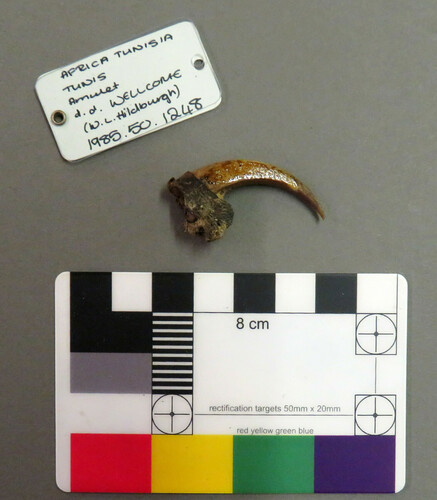 1985.50.1248Amulet, a pointed, curved bird's claw. Dark brown in colour. [EH [OPS move] 16/11/2017]1985.50.1248
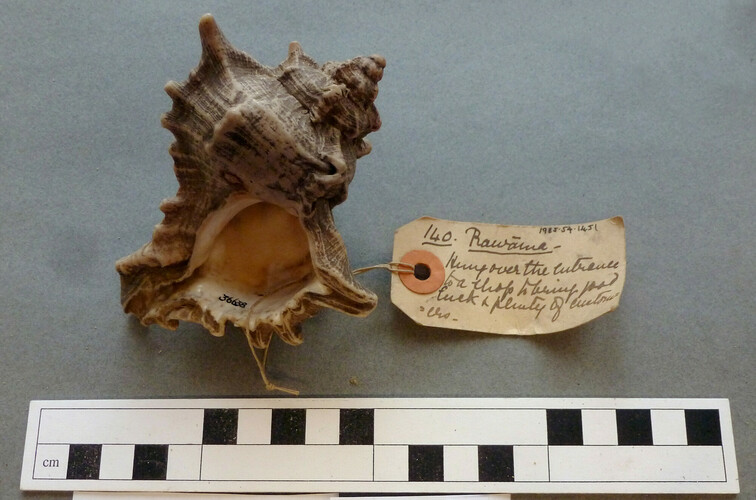 1985.54.1451Amulet, made from a conch shell with one perforation. Brown and cream in colour with narrow transverse grooves. Hung over the entrance of a shop to bring good luck and plenty of customers. [SB [OPS Move Project] 14/03/2017]1985.54.1451
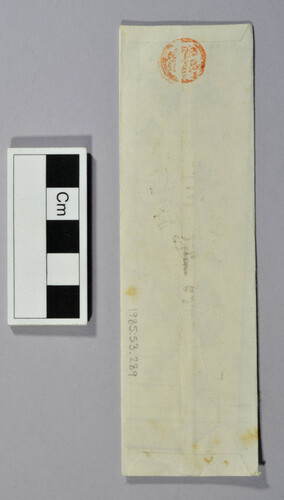 1985.53.289Paper charm with characters in black ink with red ink stamp on the bottom. [MJD 18/03/2013]1985.53.289
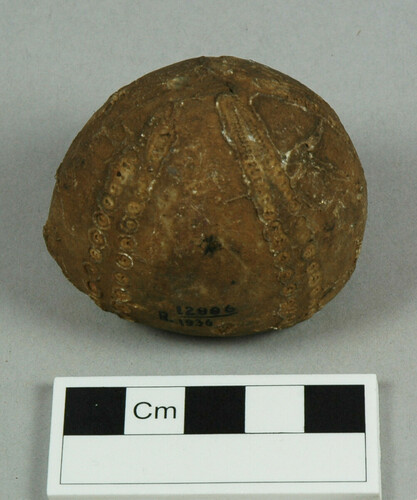 1985.51.1028Fossilised echinoderm, a sea urchin. Used as a "thunderbolt" amulet. [SM 19/05/2011]1985.51.1028
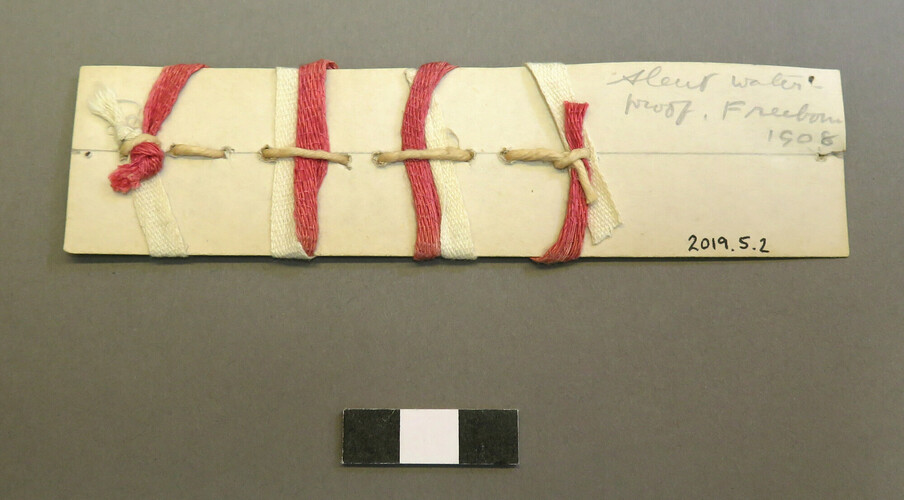 2019.5.2Piece of card bound with white and pink woven cotton braids demonstrating a diamond wrapping hair embroidery technique. [JMC 15/1/2019]2019.5.2
 1921.91.404.83Leaf shaped arrow-head, the lower half and the tip are both broken. [MN 21/11/2008]1921.91.404.83
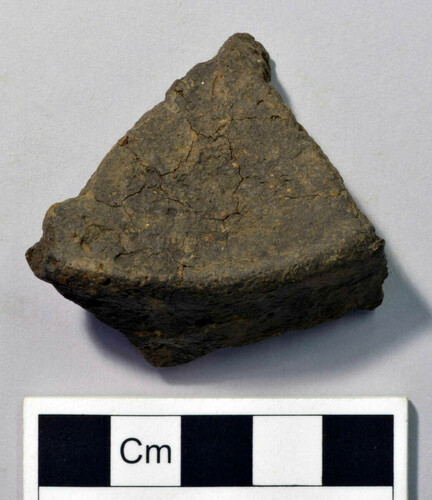 1884.137.62.4Ceramic base sherd1884.137.62.4
 1942.8.126.34Surgical instrument, found in wooden box. [L.Ph 'DCF 2004-2006 What's Upstairs?' 5/10/2004]1942.8.126.34