
- Collection type
- Photograph
- Description
- Variation in costume
- Geographical reference
- Date / Period
- Date of photograph: 1969
- Acquisition information
- Donated: 12/01/2022
- Photographic process
- Digital image
- Object numbers
- Accession number: 2022.82.22
Further items to explore
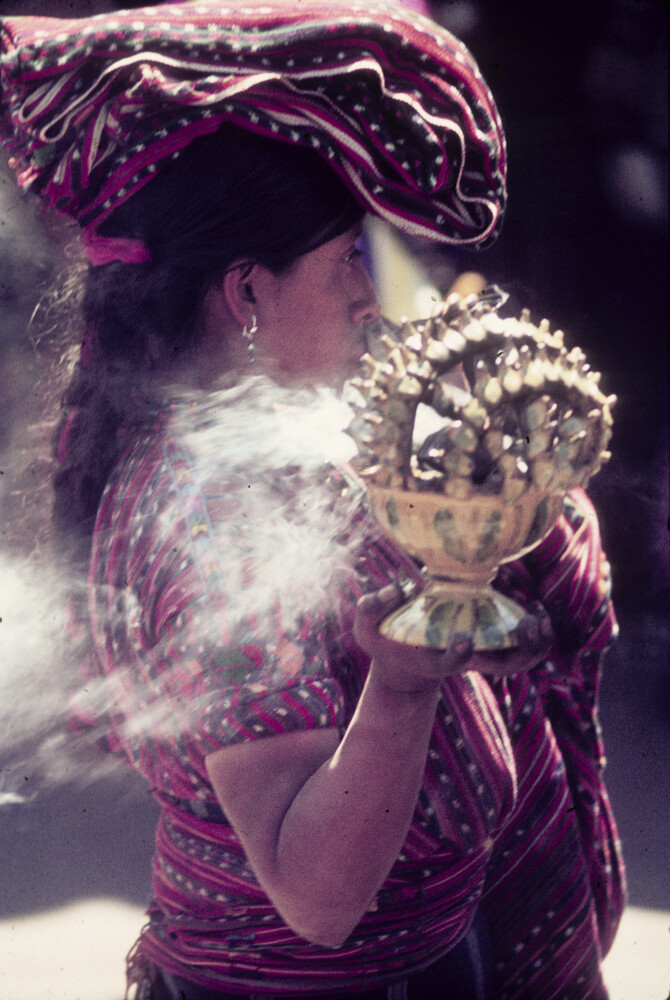 2022.82.32Incense carrier in procession2022.82.32
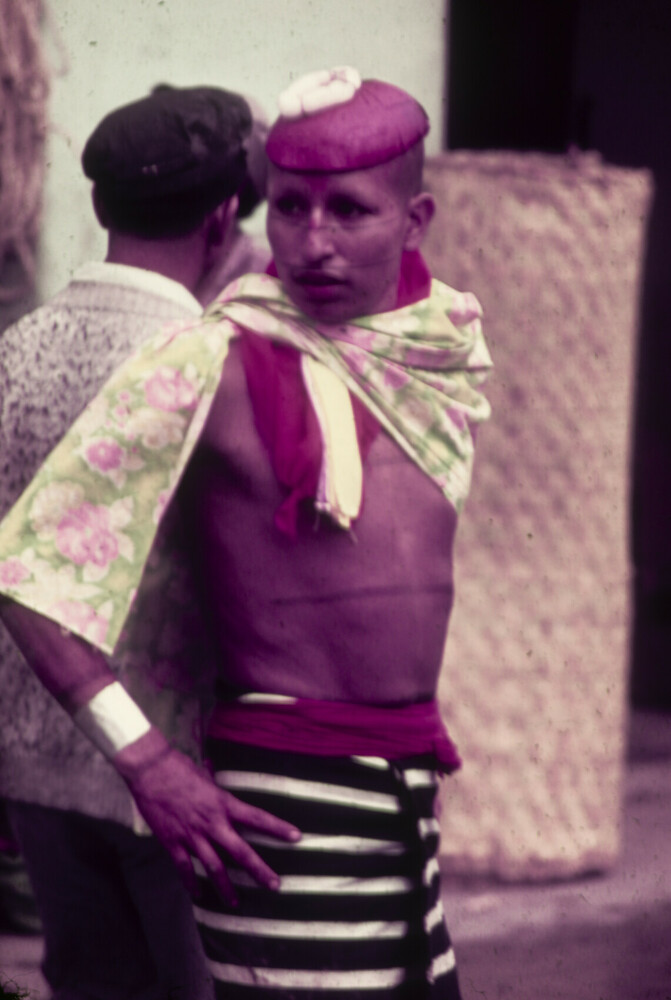 2022.82.977Distinctive headdress2022.82.977
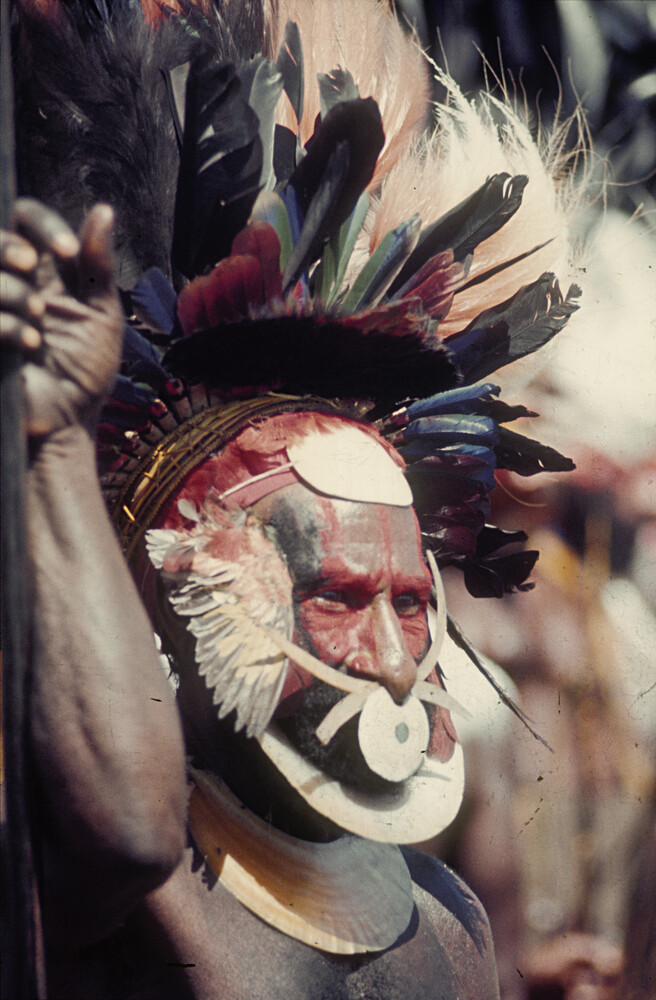 2022.82.286Men’s costume2022.82.286
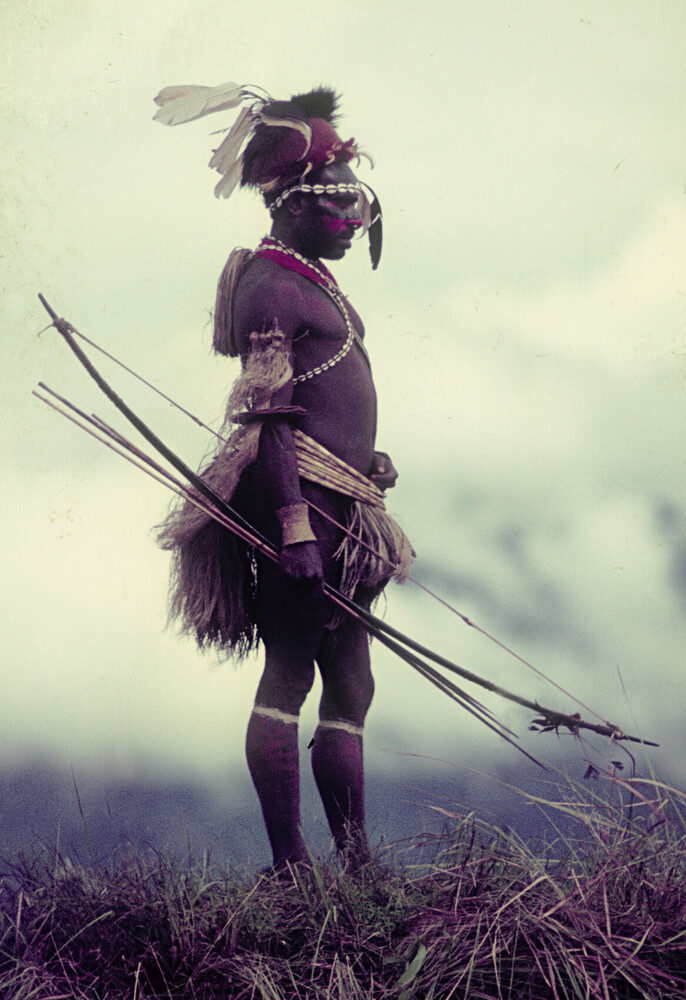 2022.82.334Archer2022.82.334
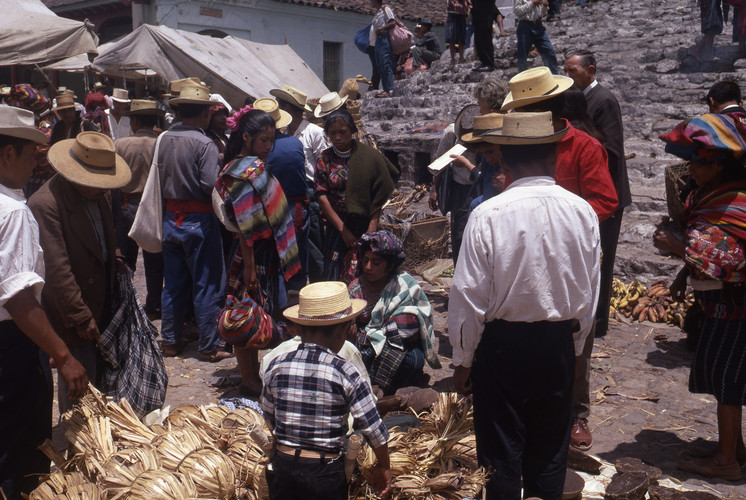 1998.287.3233Busy market stalls at the foot of the steps of Iglesia de Santo Tomás, Chichicastenango.1998.287.3233
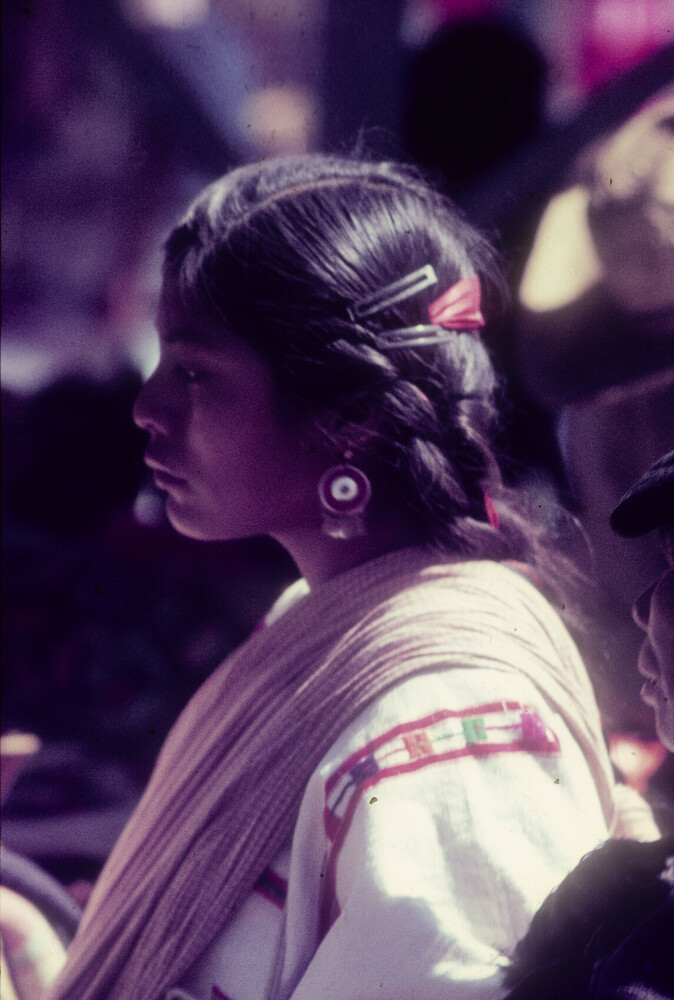 2022.82.40Nahala woman’s costume2022.82.40
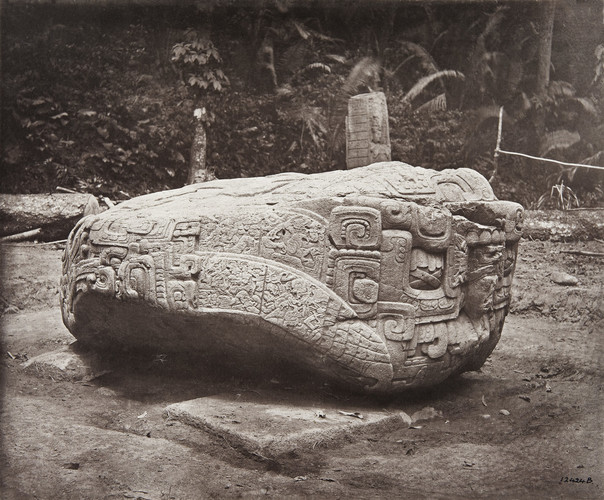 1998.182.17View of a large stone carving at the ancient Maya site of Quirigua located near the banks of the Motagua river in the department of Izabal, Guatemala. The photograph shows the west side of a carved stone zoomorph known by archaeologists as Zoomorph B, as it was first described by Alfred Maudslay in his seminal publication of the Quirigua site in his multi-volume Archaeology (1889–1902): 'This monument is lying on three large slabs of stone, which are well shown in Plates IX and X. It is carved into the shape of a great dragon, with a human head, bust, and hands issuing from the dragon's mouth. In Plate XII, a, the two great eyes of the dragon, with hanging eyelashes and crossed bands over the eyeballs, can be clearly seen. The upper jaw is raised so that the row of incisor teeth shows above the grotesque mask which surmounts the human head.' More recent scholarship dates the zoomorph (also known as Monument 2) to 9.17.10.0.0, 12 Ahau 8 Pax (Maya calendar), or A.D. 780 in the standard Western (Gregorian) calendar. Identified over the years variously as a tiger, dragon, turtle and toad, the carving is now understood by scholars to represent a supernatural crocodilian, sometimes termed the Cosmic Monster. The monument was created during the later part of the sixty-year reign of K'ak' Tiliw Chan Yopaat and marked the close of an era in the Maya calendar. It was one of a number of stelae and zoomorphs erected at Quirigua as part of a complex building programme which took place at the height of the city-state's power during the Late Classic period, and whose primary aim was to legitimate and reinforce the power of the ruler.1998.182.17
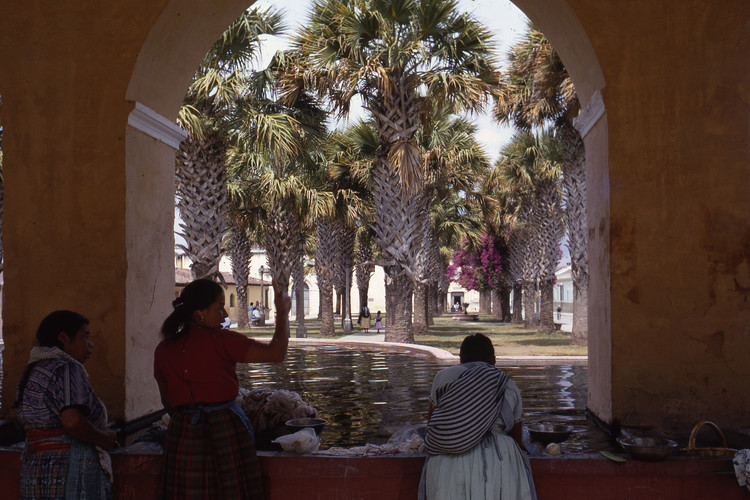 1998.287.3257Three woman stand in an archway of a courtyard of palm trees.1998.287.3257