
- Collection type
- Object
- Description
- Roughly triangular green glass pendant plaque with black dotted pattern. [El.B 'DCF 2004-2006 What's Upstairs?' 6/6/2005]
- Geographical reference
- Cultural groups
- Austrian
- Date / Period
- Date made: Before 1902
- Date collected
- By 1902
- Acquisition information
- Donated: 1902
- Dimensions
- Length: max 74 mm
- Object numbers
- Accession number: 1902.8.10
- Research and responses
From correspondence with Dr Maria Friend (Adjunct Senior Lecturer (Anthropology), James Cook University Australia). 'At the 'Made for Trade' exhibition I [Maria Friend] saw an exciting range of industrial imitations of African and Pacific jewellery - like ceramic teeth, shell rings, etc. Initially I encountered many objects of this kind when conducting field work on the north coast of Papua New Guinea. Recently I have found the 'source' of the word-wide production of these items - a small town in today's Czech Republic, very close to the boarder with Poland. The local museum has got many samples of such trade items and I hope to do some investigations soon... As regards to the imitation trade goods: they were produced by Alfred Saxe company situated in today's Jablonec in Czech Republic. The local Glass and Jewellery Museum is supposed to have many examples of the goods produced by Alfred Saxe. I hope to visit them in April to conduct an initial survey of the archives. Then it would be interesting to compare this data with objects in museums' collections plus fieldwork investigations... From my research in Papua New Guinea I know that these artificial 'treasures' which flooded the local markets at the beginning of the 20th century, created a significant inflation and to great extend upset the local economy... Missionaries were frequently the agents who introduced these goods to local communities and in a couple of mission museums in Europe I saw the samples of Saxe goods used to test the needs of individual markets... Certainly this is an interesting topic for research... Saxe is the German spelling of his name, Sachse is Czech. Until the First World War it was the territory of Austria (or rather Austro-Hungarian empire) - therefore the mention of 'Austria' in museum's records (the region was known as 'Sudetenland' and this group of Germans was known as 'Sudeten-Deutch' - most of them were resettled to Germany/Austria after the end of WWII). Until 1946, today Jablonec was known as Gablenz... The frequent changes of political boundaries in this past of Europe mean that, at times, we have several spellings of the same name... and to make these things even more complicated, a group of Sudeten-Germans expelled from Gablenz in 1946, moved to Bavaria where they established a town called New Gablenz/Kaufbeuren and continued to make beads... But Alfred Sachse/Saxe passed away in 1921, so he definately was not part of this movement... However, I don't know much about this type of beads produced at New Gablenz, especially whether they were for export or local use only. [FB 17/01/2013]
Further items to explore
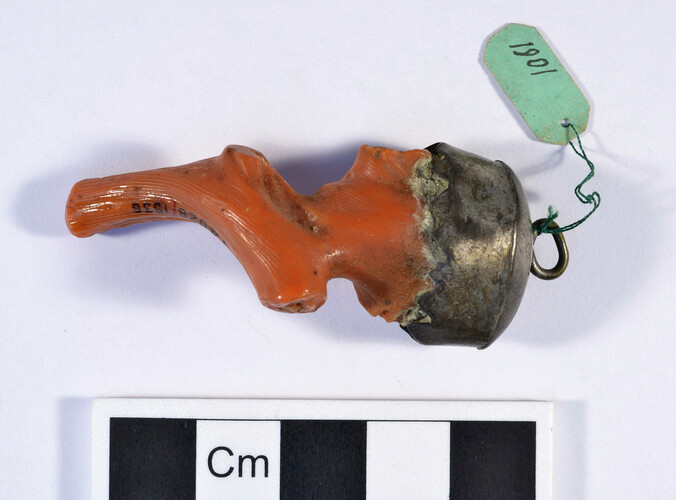 1985.52.556Amulet, red coral pendant, mounted in silver and with a loop for suspension. Worn to protect against the Evil Eye. [ACA 21/03/2012]1985.52.556
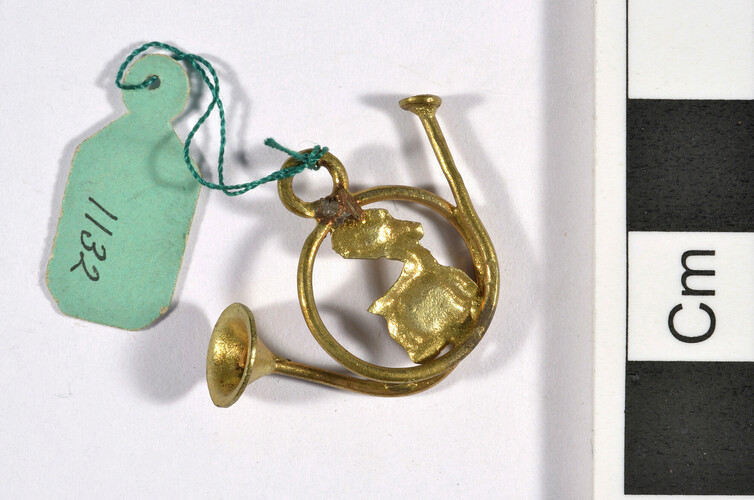 1985.52.604Amulet, metal pendant in the shape of a bugle horn, with a figure of a stag in the centre, and a loop for suspension. [ACA 23/03/2012]1985.52.604
 1921.75.44.5Tiny pendant in the form of a fly made of faience. One wing has broken off. [MJD (Verve) 30/3/2016]1921.75.44.5
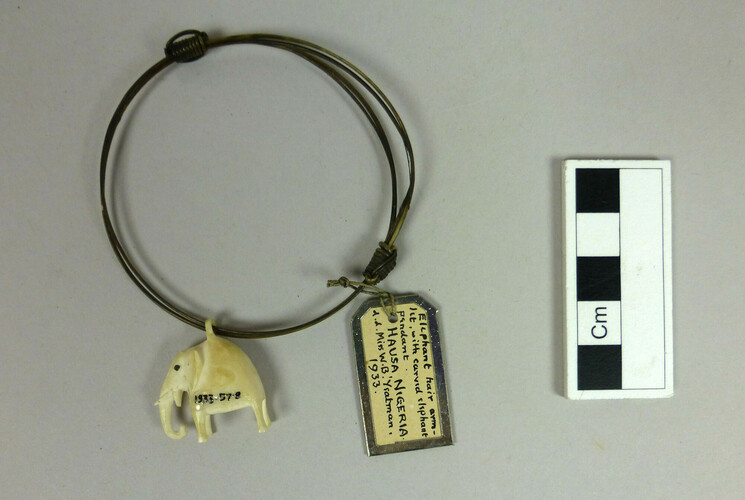 1933.57.8Elephant hair armlet with carved ivory pendant in the form of an elephant.1933.57.8
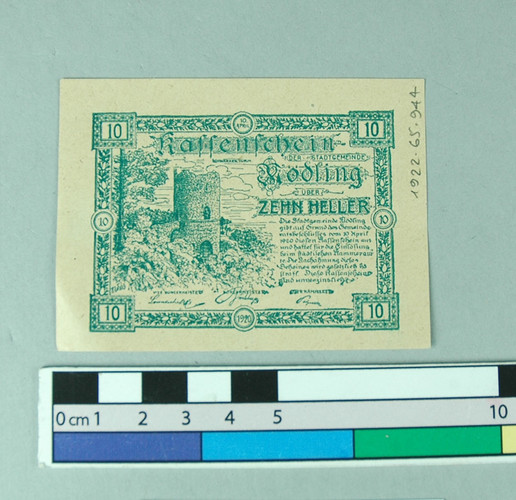 1922.65.944Banknote for 10 heller, printed on paper. [LKG 24/02/2010]1922.65.944
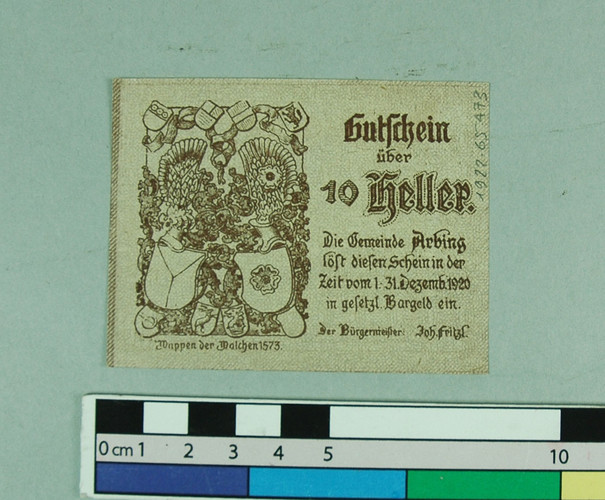 1922.65.473Banknote for 10 heller. Printed on paper. [LKG 08/02/2010]1922.65.473
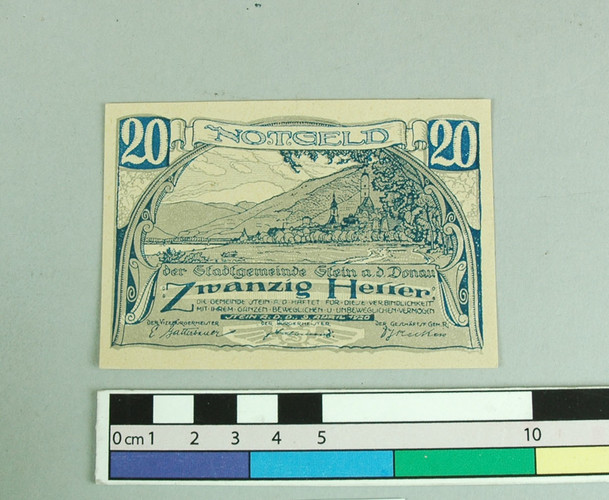 1922.65.1336Banknote for 20 heller, printed on paper. [LKG 20/04/2010]1922.65.1336
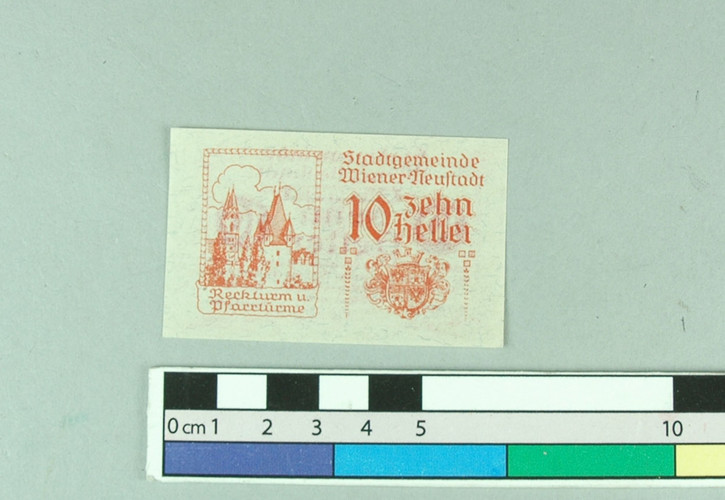 1922.65.1525Banknote for 10 heller, printed on paper. [LKG 23/04/2010]1922.65.1525