
- Collection type
- Object
- Description
- Rectangular shield of white oryx hide with two points at the top.
- Long description
- Rectangular shield of white oryx hide with two points at the top. Incised linear design infilled with black, over which are applied shapes of red woollen textile and four copper alloy bosses (two round, two four-pointed stars). The design is outlined by thin strips of leather, mostly missing. There is a wooden grip on the back of the shield.
- Geographical reference
- Cultural groups
- Asben
- Date / Period
- Date made: Before 1911
- Date collected
- 1910 - 1911
- Acquisition information
- Donated: 1913
- Materials and processes
- Material Antelope Hide Skin Animal, Material Pigment, Material Copper Alloy Metal, Material Wool Textile Animal, Process Painted, Process Woven, Process Incised, Process Appliqué
- Dimensions
- Length: max 1310 mm, Width: max 730 mm
- Object numbers
- Accession number: 1913.31.40
- Research and responses
The following notes are drawn from research compiled by Andy Mills as part of the DCF Cutting Edge project in 2006-2007.
Made of white oryx hide, dried in the sun to make it thick and hard, and then shaved to remove the fur. The oryx hide indicates that this shield – although collected in Kano, Northern Nigeria - was probably made in Elakkos or Damergu, further north on the border with Niger. Oryx hide is extremely strong, and turns most sword cuts and spear thrusts. The oryx was interpreted as a symbol of military victory throughout the southern Sahara.
Tuareg shields are too large to wield on the arm, or move quickly, and in combat were held relatively rigidly by a strap two-thirds of the way up the shield. Camel saddles were carved with a special hook to suspend the shield when not in use.
This example was collected in 1910 or 1911, at a time when the arrival of firearms in the region was starting to cause the abandonment of shields by Tuareg warriors. [El.B 13/06/2008]
Local name 'ayar' found in Chris Spring (1993) African Arms and Armour, p.29
Further items to explore
 1900.55.172Carved parrying-shield, narrow with pointed ends. [El.B 2/2/2007]1900.55.172
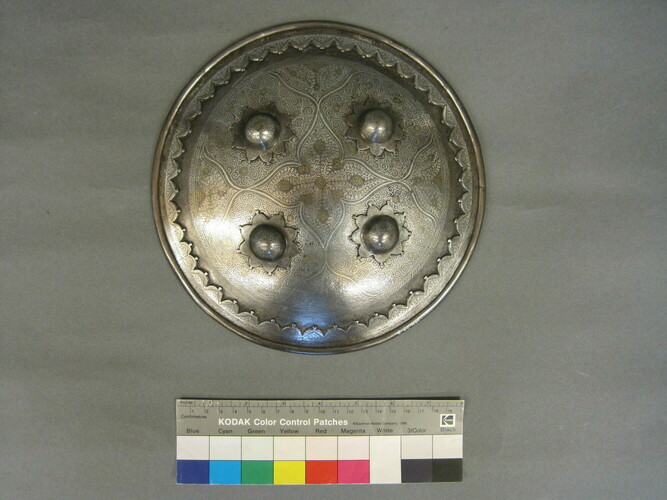 1911.29.7Round steel shield decorated with damascening on the front. [FC 11/08/2010]1911.29.7
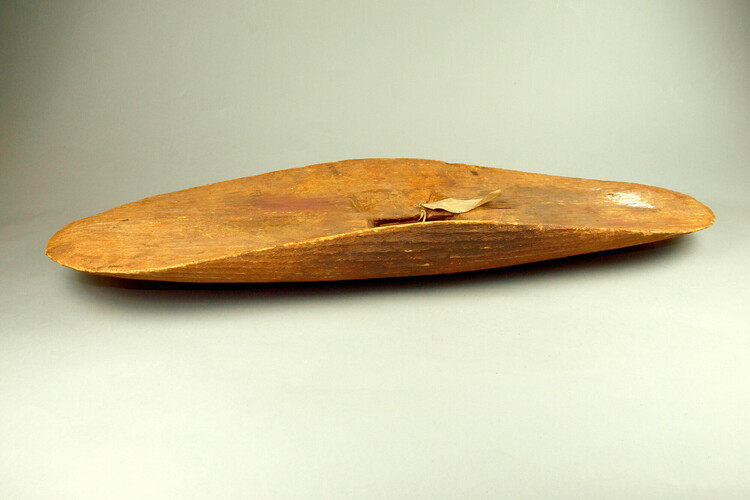 1903.39.55Soft wood shield with traces of red and white pigment. [MJD 07/07/2010]1903.39.55
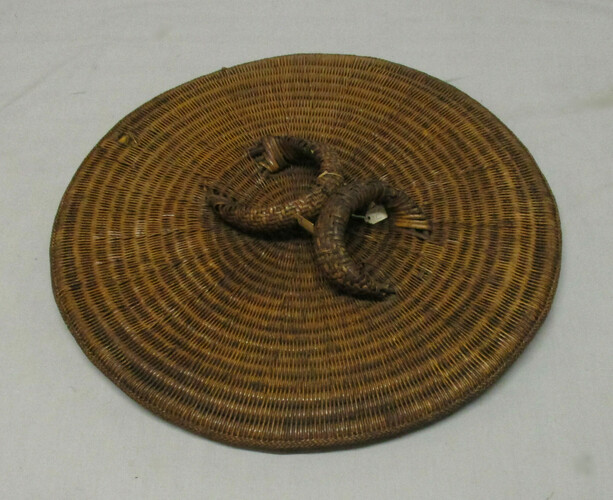 1900.63.8Wicker shield. It is circular with two woven handles in the centre. The handles are rounded. [AB [OPS Move] 2/8/2016]1900.63.8
 1942.13.1741Iron staff. [EH [OPS move] 31/7/2017]1942.13.1741
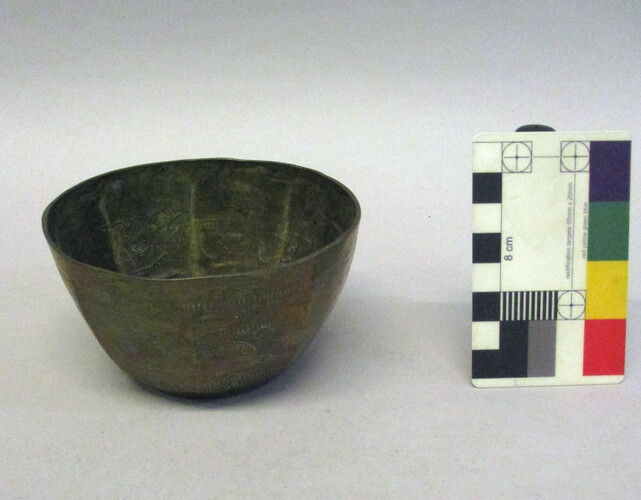 1967.16.4Copper alloy metal bowl with punched pattern and BIDA punched on base. A slight octagonal shape [BH [OPS move] 25/7/2016]1967.16.4
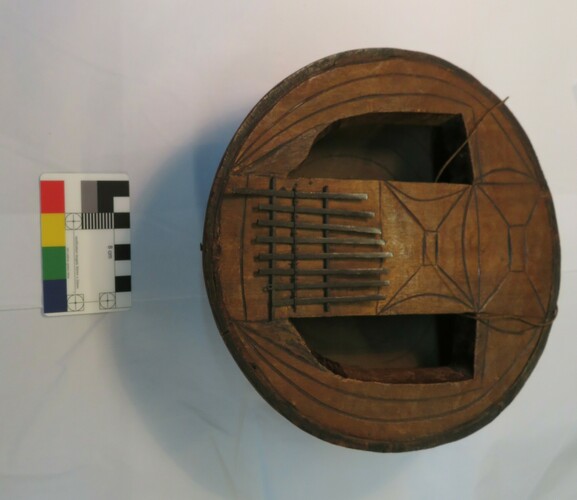 1966.4.16Lamellaphone [RR 20/1/2020]1966.4.16
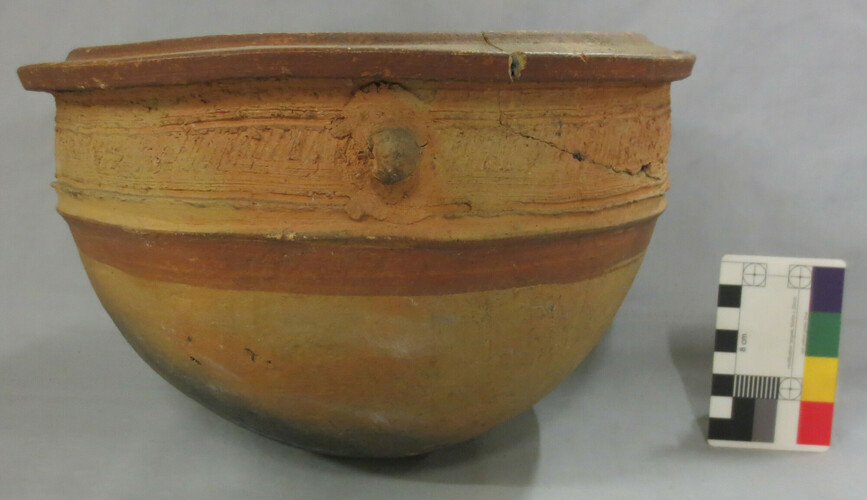 1942.13.1248Deep round pottery bowl of light red ware, decorated with painted dark red stripes. [MOBB [OPS move] 25/02/2016]1942.13.1248