
- Collection type
- Object
- Description
- Miniature pith helmet for a man.
- Long description
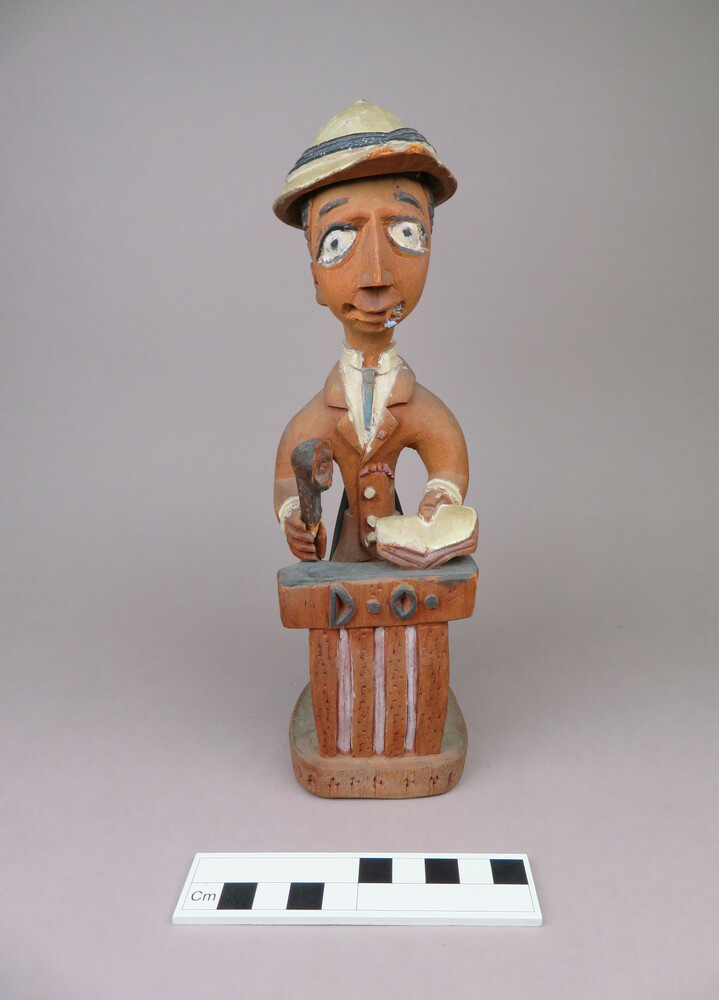
- Detachable miniature pith helmet that is part of a carved wooden figure of a District Officer. The helmet has been painted with white and black pigment.
- Geographical reference
- Cultural groups
- Yoruba
- Person
- Maker Thomas Ona Odulate
- Field collector Gladys Price
- Field collector Tommy Price
- PRM source David Ashcroft
- Date / Period
- Date made: circa 1930s
- Date collected
- 1930s
- Acquisition information
- Donated: 18/10/2023
- Materials and processes
- Material Wood Plant, Process Carved, Process Painted
- Dimensions
- Length: max 100 mm, Width: max 65 mm
- Object numbers
- Accession number: 2023.46.4.3
- Research and responses
During the colonial period it was common for African artists to create works which commented on European behaviours that they found peculiar or against local customs. Renowned artist Thomas Ona Odulate of Ijebu-Ode (c. 1900–1952) became known for his miniature wooden carvings that documented colonial life in a Yorùbá style. He created many commemorative figures for the early tourist trade in Nigeria, carving soft wood in the traditional Yorùbá way using an adze and a knife. He used inks and white shoe polish to colour his sculptures, rather than vegetable dyes, often leaving some areas in the natural wood colour. Ona was particularly interested in costume and would carve his subjects with accoutrements of power as removable items, such as the wide brimmed ‘sola topi’ which are common on many of his figures, despite traditional Yorùbá carvings being sculpted from a single piece of wood. He also incorporated long-established traditions for proportion into his artworks by carving the heads of his figures many times larger than life-size, reflecting the Yorùbá belief that the head is the most important part of a person. “Europeans, not accustomed to seeing themselves represented in an African style of sculpture, presumed that they were being caricatured. Ona however declared, when interviewed by William Bascom, that he was simply representing the world as he saw it” (Willett, F., 1971, African Art: an Introduction. New York: Praeger, p.143, fig. 132). See RDF for further information provided by the donor David Ashcroft.
Search terms: Figure
Further items to explore
 1897.59.12Carved model of woman spinning thread.1897.59.12
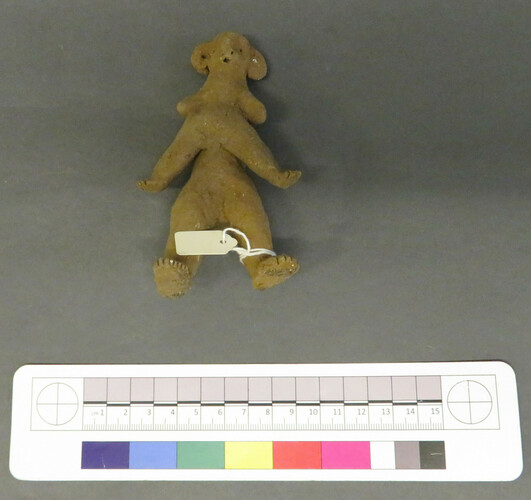 1958.11.1.8Clay Mkaramo figurine. Anthropomorphic figure with four legs, two short and two over sized. With short stumped arms. Flared perforated ears, one of which filled with a piece of white metal alloy. Open mouthed. [BH [OPS Move] 18/4/2017]1958.11.1.8
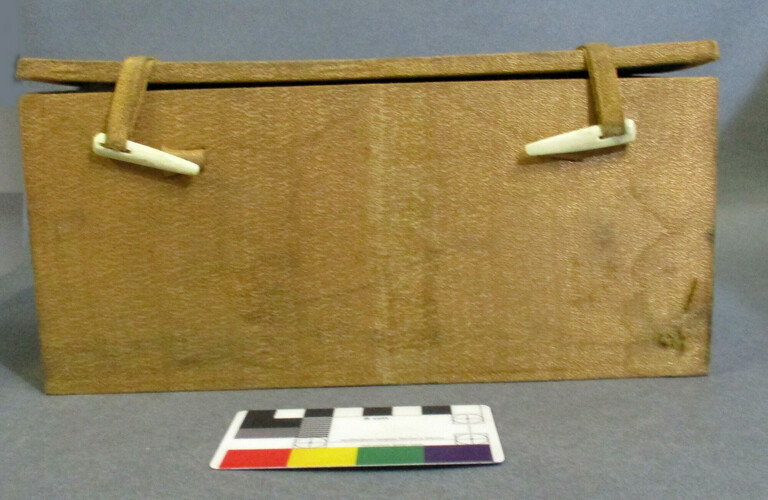 1990.29.5.2Wooden cuboid box, covered in golden textile with blue lining. The lid is secured with two latches made of ?bone. Please see [1990.29.5 .1] for the accompanying figure. [PR [OPS move] 19/6/2017]1990.29.5.2
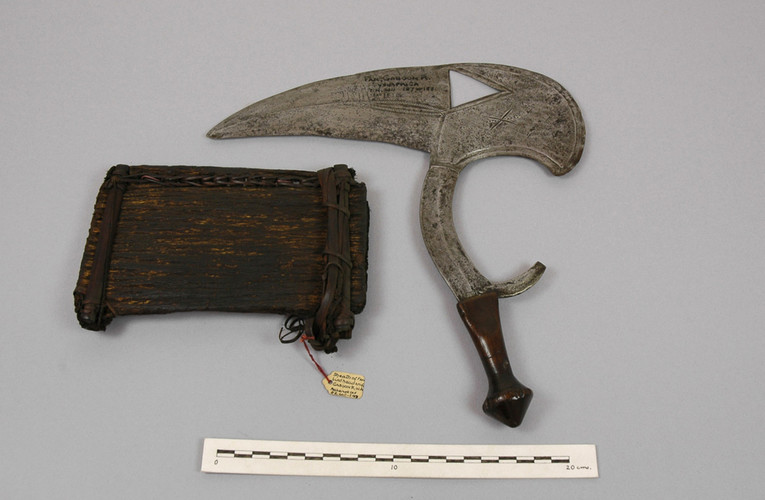 1884.25.7.1Throwing knife [.1] with bird-headed blade, triangular eye and spur above wooden hilt. With sheath [1884.25.7 .2] [SM 26/04/2007]1884.25.7.1