- Collection type
- Object
- Description
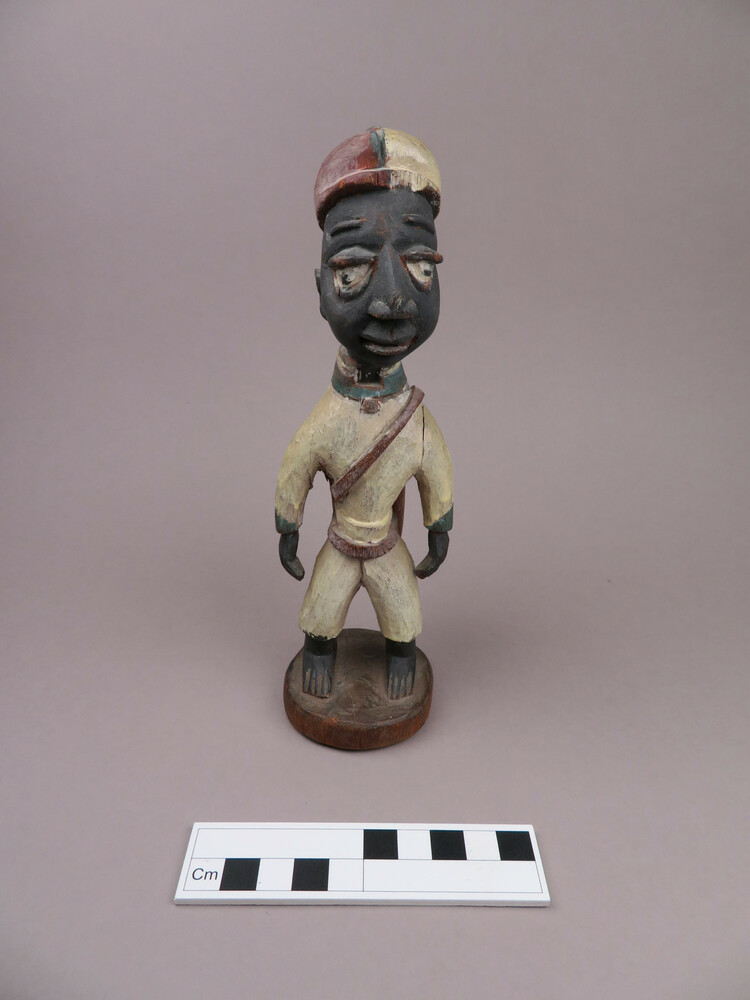
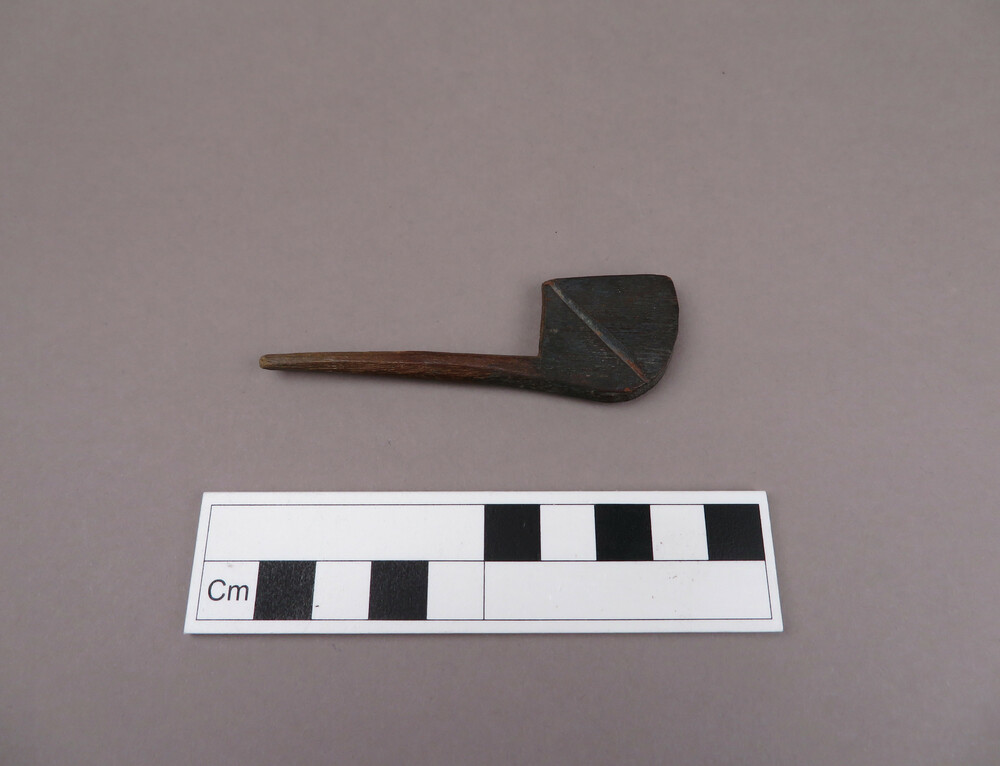
- Carved wooden figure of a golf caddy with detachable golf club.
- Long description
- Carved wooden figure of a golf caddy (2023.46.3.1) carrying a detachable golf club (2023.46.3.2). The caddy stands on a circular base and wears a white shirt with blue collar detail, white trousers, and a peaked cap coloured with red, white, and blue ink. There is a basket on his back to hold the removable golf club. Unlike the European golfer (see 2023.46.2) this figure is represented as a local Yorùbá man, his skin painted with black pigment rather than left the natural colour of the wood.
- Geographical reference
- Cultural groups
- Yoruba
- Person
- Maker Thomas Ona Odulate
- Field collector Gladys Price
- Field collector Tommy Price
- PRM source David Ashcroft
- Date / Period
- Date made: circa 1930s
- Date collected
- 1930s
- Acquisition information
- Donated: 18/10/2023
- Materials and processes
- Material Wood Plant, Process Carved, Process Painted
- Dimensions
- Height: max 195 mm, Width: max 65 mm
- Object numbers
- Accession number: 2023.46.3
- Research and responses
During the colonial period it was common for African artists to create works which commented on European behaviours that they found peculiar or against local customs. Renowned artist Thomas Ona Odulate of Ijebu-Ode (c. 1900–1952) became known for his miniature wooden carvings that documented colonial life in a Yorùbá style. He created many commemorative figures for the early tourist trade in Nigeria, carving soft wood in the traditional Yorùbá way using an adze and a knife. He used inks and white shoe polish to colour his sculptures, rather than vegetable dyes, often leaving some areas in the natural wood colour. Ona was particularly interested in costume and would carve his subjects with accoutrements of power as removable items, such as the wide brimmed ‘sola topi’ which are common on many of his figures, despite traditional Yorùbá carvings being sculpted from a single piece of wood. He also incorporated long-established traditions for proportion into his artworks by carving the heads of his figures many times larger than life-size, reflecting the Yorùbá belief that the head is the most important part of a person. “Europeans, not accustomed to seeing themselves represented in an African style of sculpture, presumed that they were being caricatured. Ona however declared, when interviewed by William Bascom, that he was simply representing the world as he saw it” (Willett, F., 1971, African Art: an Introduction. New York: Praeger, p.143, fig. 132). See RDF for further information provided by the donor David Ashcroft.
Search terms: Figure