
- Collection type
- Object
- Description
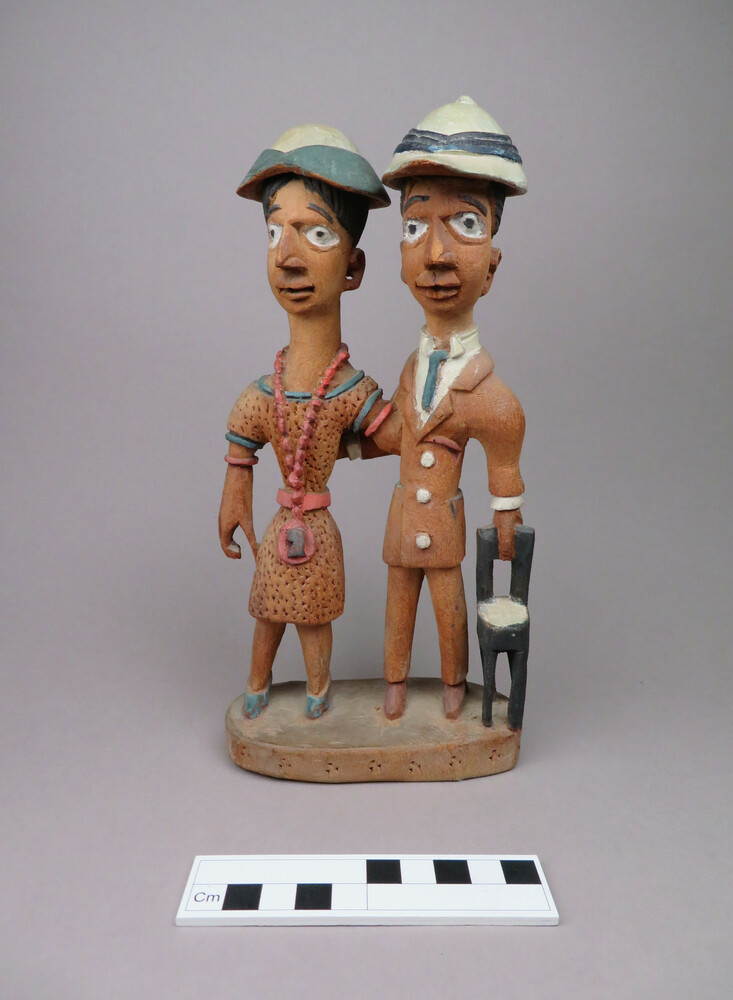
- Miniature pith helmet for a woman.
- Long description
- Detachable miniature pith helmet which is part of a carved wooden figure of a standing European couple. This helmet is for the woman on the left-hand side of the figure.
- Geographical reference
- Cultural groups
- Yoruba
- Person
- Maker Thomas Ona Odulate
- Field collector Gladys Price
- Field collector Tommy Price
- PRM source David Ashcroft
- Date / Period
- Date made: circa 1930s
- Date collected
- 1930s
- Acquisition information
- Donated: 18/10/2023
- Materials and processes
- Material Wood Plant, Process Carved, Process Painted
- Dimensions
- Length: max 52 mm, Width: max 53 mm
- Object numbers
- Accession number: 2023.46.1.2
- Research and responses
During the colonial period it was common for African artists to create works which commented on European behaviours that they found peculiar or against local customs. Renowned artist Thomas Ona Odulate of Ijebu-Ode (c. 1900–1952) became known for his miniature wooden carvings that documented colonial life in a Yorùbá style. He created many commemorative figures for the early tourist trade in Nigeria, carving soft wood in the traditional Yorùbá way using an adze and a knife. He used inks and white shoe polish to colour his sculptures, rather than vegetable dyes, often leaving some areas in the natural wood colour. Ona was particularly interested in costume and would carve his subjects with accoutrements of power as removable items, such as the wide brimmed ‘sola topi’ which are common on many of his figures, despite traditional Yorùbá carvings being sculpted from a single piece of wood. He also incorporated long-established traditions for proportion into his artworks by carving the heads of his figures many times larger than life-size, reflecting the Yorùbá belief that the head is the most important part of a person. “Europeans, not accustomed to seeing themselves represented in an African style of sculpture, presumed that they were being caricatured. Ona however declared, when interviewed by William Bascom, that he was simply representing the world as he saw it” (Willett, F., 1971, African Art: an Introduction. New York: Praeger, p.143, fig. 132). See RDF for further information provided by the donor David Ashcroft.
Search terms: Figure
Further items to explore
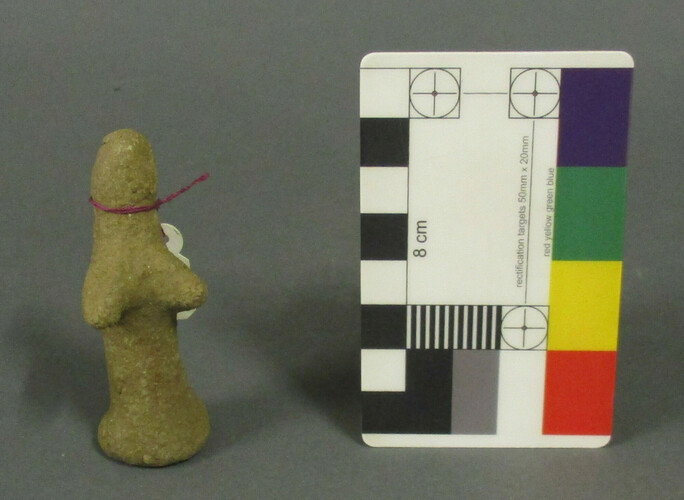 1958.11.2.253Clay Mkaramo figure. Cylindrical body, with a flared base. Two extended protrusions, possibly either arms are breasts. No distinction between the body and the head, with no facial features. [BH [OPS Move] 10/5/2017]1958.11.2.253
 1948.6.58.2Circular plaited basketry lid. The rim of the lid is bound between two wooden bands. The outer band is stained black and carved with zigzags, concentric lines, semicircles and triangles. For the plaited base with matching carved designs see 1948.6.58 .1. [CW [OPS Move] 7/12/2016]1948.6.58.2
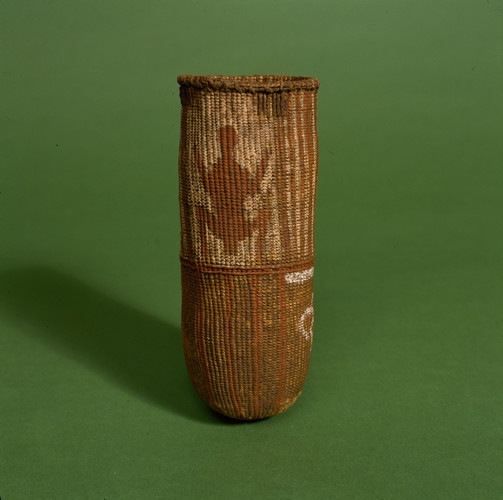 1900.55.219Small dilly basket, decorated with human figure in red on white ground, and conventional designs in white.1900.55.219
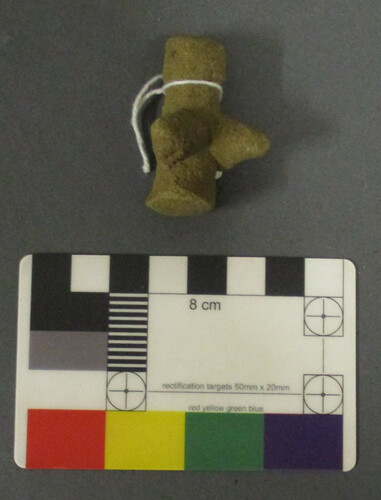 1958.11.2.301Clay Mkaramo figure. Cylindrical body, with a circular base. No distinction between the body and head. Two extended protrusion, representing breasts or arms. [BH [OPS Move] 12/5/2017]1958.11.2.301
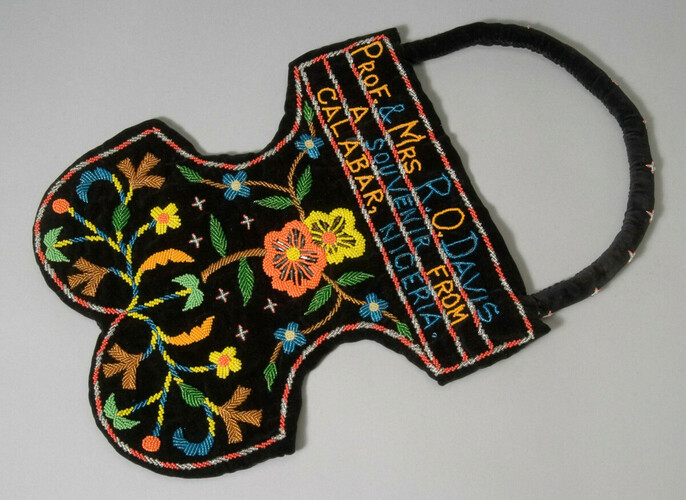 2005.102.1Black velvet bag with beadwork designs. [MdeA 10/11/2005]2005.102.1
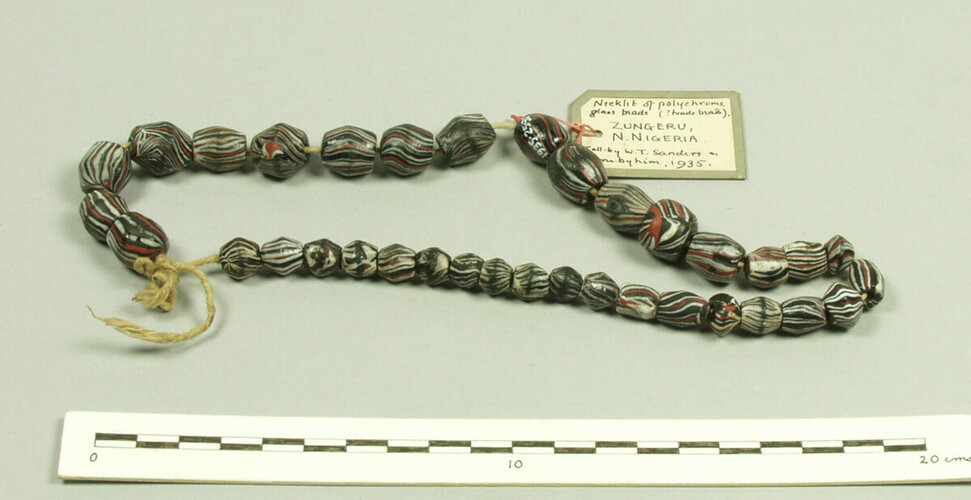 1935.25.31Necklet of polychrome bevelled glass beads.1935.25.31
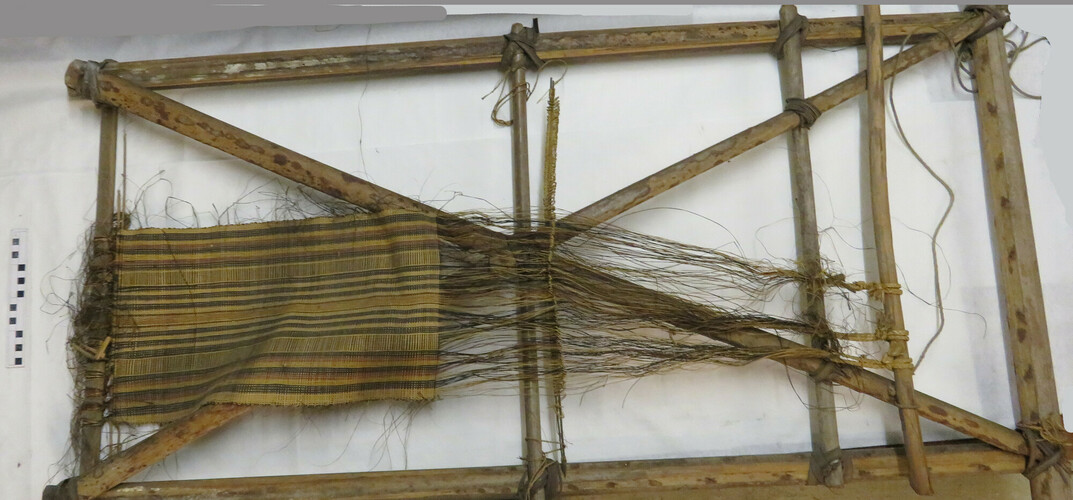 1942.13.1720.1Vertical loom with woven raffia mat being made on it. For associated loom parts and accessories see [1942.13.1720 .2 - .6].1942.13.1720.1
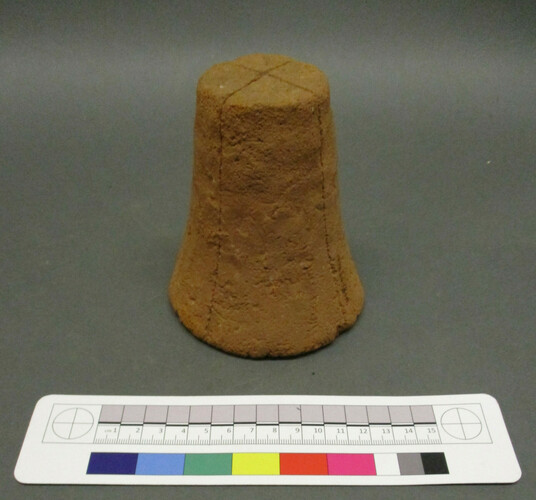 1972.24.181.1Clay mould (bell), to demonstrate lost wax process. The mould is for the inside of the bell. It is solid and conical and has been scored to delineate four quarters. The clay is very rough. [JC [OPS Move] 22/2/2017]1972.24.181.1