
- Collection type
- Object
- Description
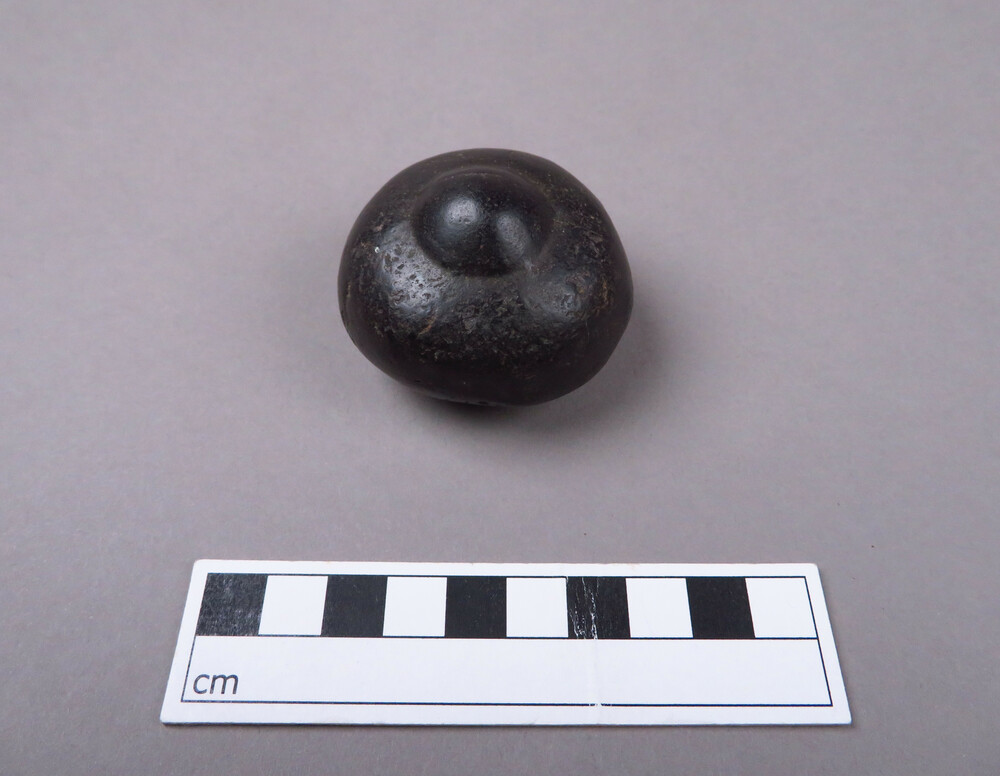
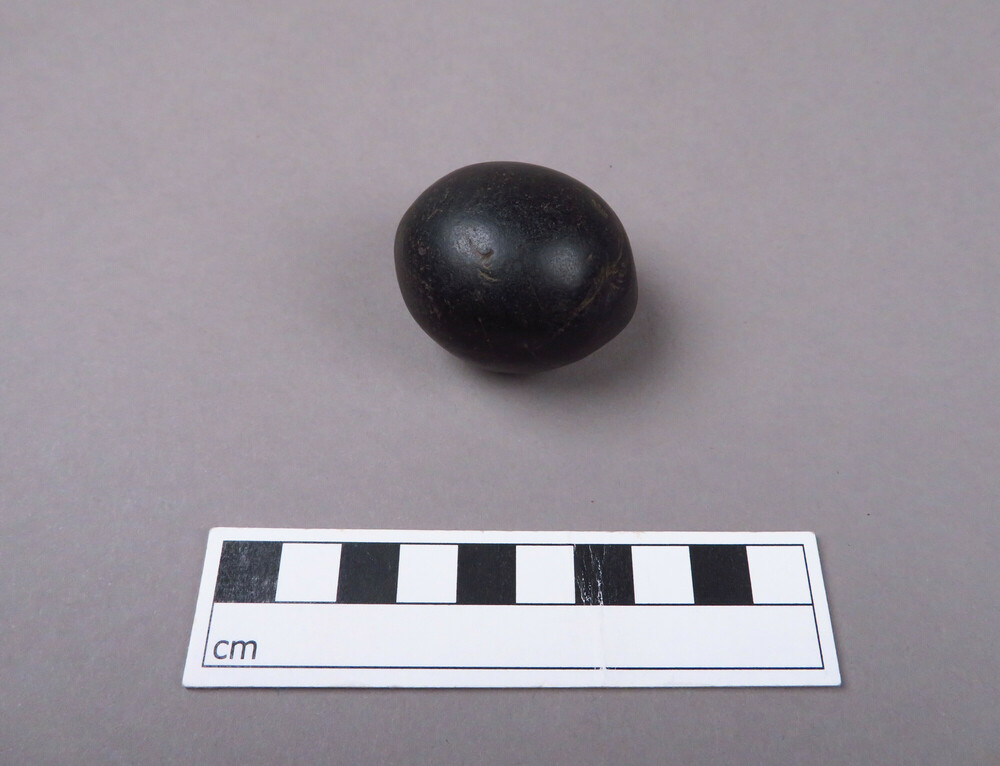
- Rattan belt for holding two mutya ("belly rocks") and worn around the waist.
- Long description
- Plaited rattan belt with opening for holding two mutya ("belly rocks") and worn around the waist. A carved wooden peg operates as a fastener when secured to the length of twisted cord attached to the other end of the belt.
- Geographical reference
- Cultural groups
- Mangyan
- Person
- Maker Unknown Maker
- Field collector Edward Shearman Ross
- PRM source Sandra Miller Ross
- PRM source Edward Shearman Ross
- Date / Period
- Date made: Before 1945
- Date collected
- 1939-1945
- Acquisition information
- Donated: 12/09/2021
- Materials and processes
- Material Rattan Fibre Plant, Process Plaited, Material Wood Plant, Process Carved, Material String Plant, Process Twisted
- Dimensions
- Length: max 390 mm of string, Length: max 160 mm, Width: max 150 mm, Height: max 90 mm
- Object numbers
- Accession number: 2023.28.1
- Research and responses
Edward Shearman Ross PhD was a Commanding Officer and entomologist of an Army Malaria Survey Unit on Mindoro during World War II. He made frequent trips into the mountains and jungle to collect mosquitos, Embioptera and other insects, and make tropical disease surveys. He befriended indigenous Mangyan hunter-gatherer families of Indonesian descent, trading rice, salt, and red cloth, and receiving bows and arrows, baskets, pink bananas, small ornaments, and these Belly Rocks. Belly Rocks are heavy, shiny, round, black stones called mutya. Found swirling in rock holes at the base of waterfalls and in rapids, they must be "caught alive". It takes great skill to catch these stones while they are whirling. The successful person may practice the art of healing, blowing over them through a clenched fist. It is believed a spirit lives in the stones and the person that possesses a stone has the power of that spirit literally in their hands. They are referred to as Belly Rocks because of the protrusion which looks like a belly button. Lucky owners wear their Belly Rocks in a rattan belt around their waist. These particular rocks were likely collected about 100 years ago. Information provided by the donors, Drs Edward and Sandra Ross.
- Associated publications
- Reference: "Mangyan Memories" in Pacific Discovery: California Academy of Sciences, Volume 21, Number 5., Main author: Edward Shearman Ross, 1968, Page: 181
Search terms: Ornament, Clothing, Medicine, Waist Ornament, Belt, Medical Accessory
Further items to explore
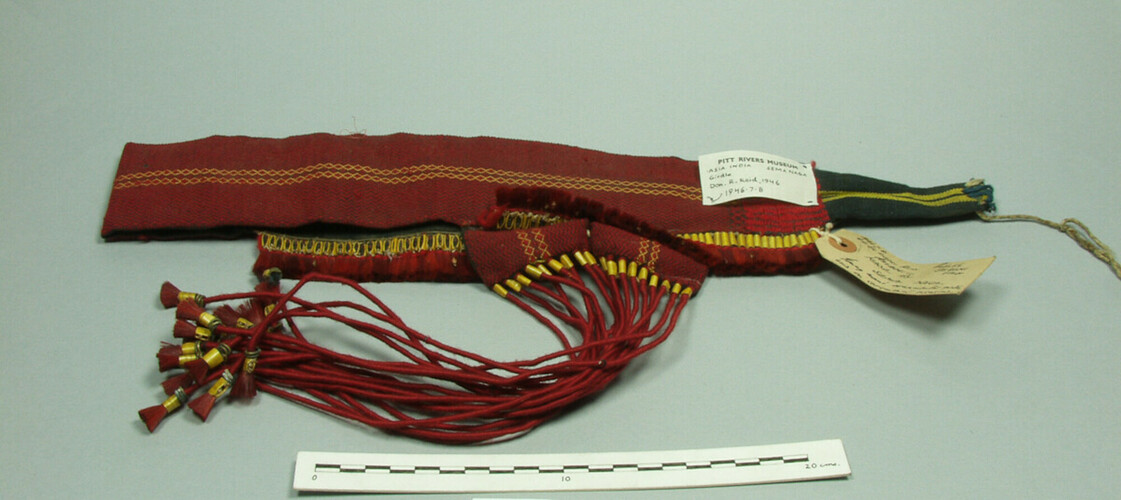 1946.7.8Young man's ornamental girdle decorated with two fringes of red goat-hair cut short and bound with orchid stalk and 18 long, thin, red tassels ending in short tufts of red goat hair.1946.7.8
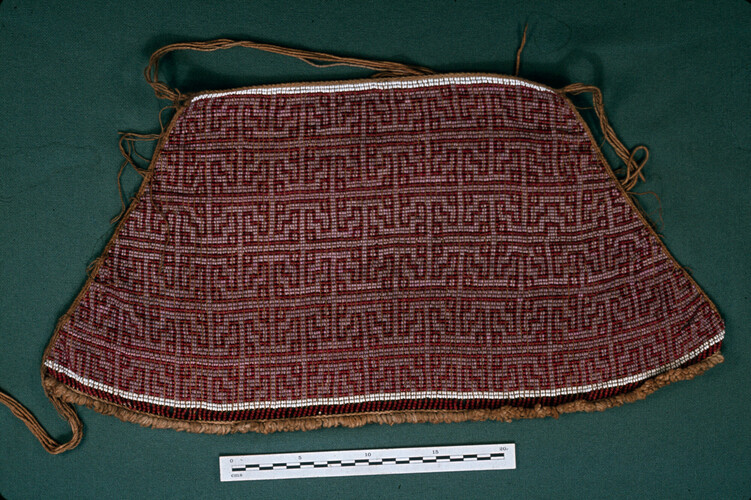 1941.8.229Beadwork apron, with a "Greek key" pattern in red on a pink background, with white top and bottom, a short red beadwork fringe, and tie cords. [N.B. 'DCF 2004-2006 What's Upstairs?' 26/7/2005]1941.8.229
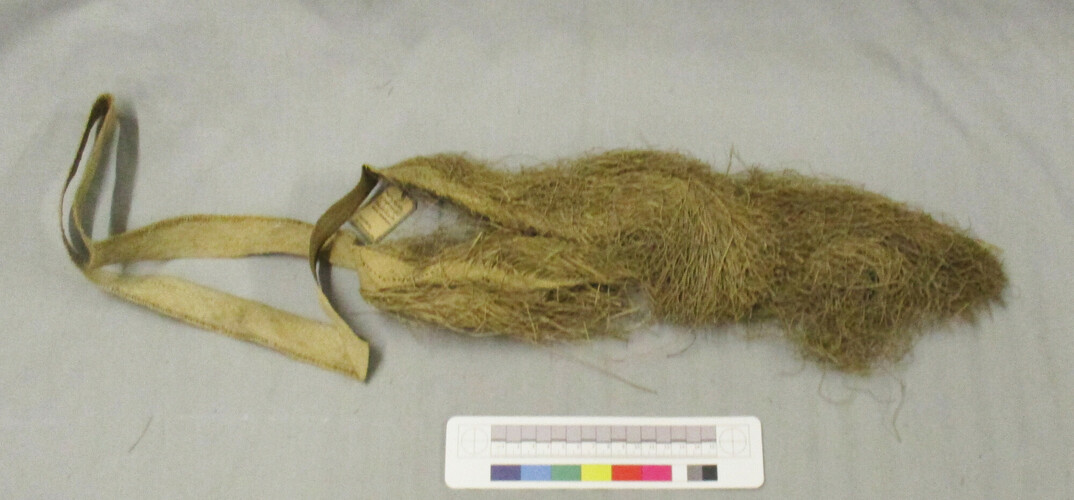 1893.27.6Ceremonial waist ornament or belt made from plaited plant fibre with fringing at both ends. [FB 22/01/2015]1893.27.6
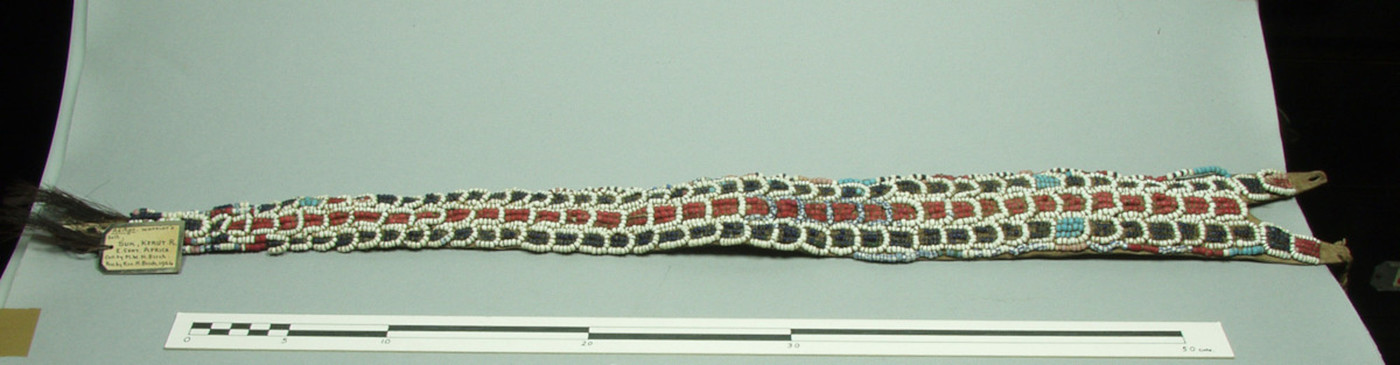 1924.50.2Hide belt decorated with trade beads in a scale pattern; a plait of leather at one end. [N.B. 'DCF 2004-2006 What's Upstairs?' 29/4/2005]1924.50.2
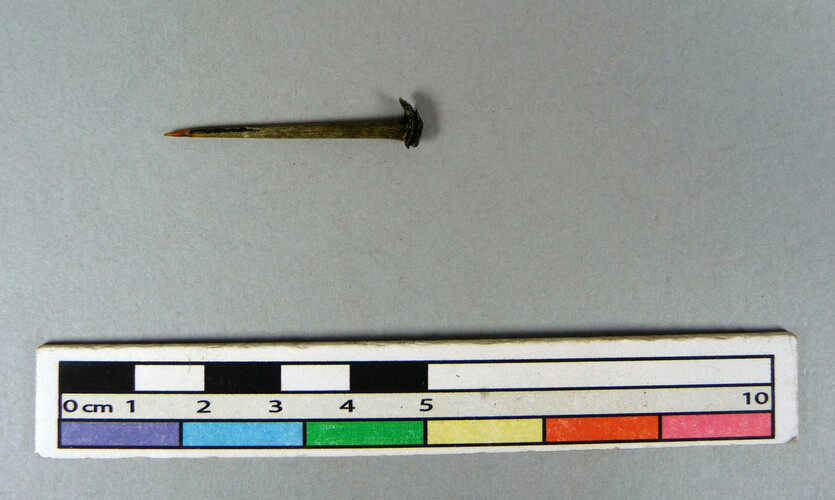 2011.102.1.2Thorn from the lemon tree used to pierce the skin in tattooing. [FB 30/11/2011]2011.102.1.2
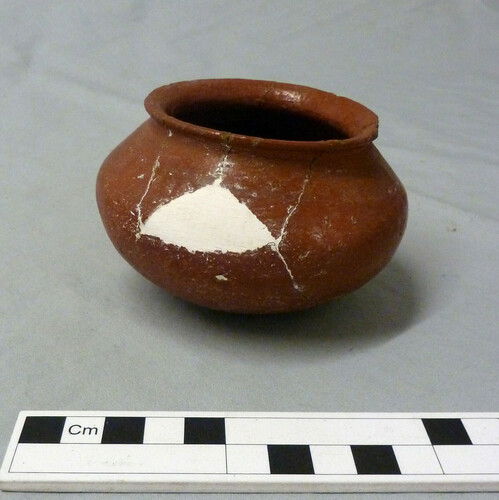 1909.30.99Cooking pot of red ware that has been slipped. The shoulder is decorated with impressed pattern and the body has vertical lines heavily impressed creating clearly defined sections. This object has a flat bottom and no rim.1909.30.99
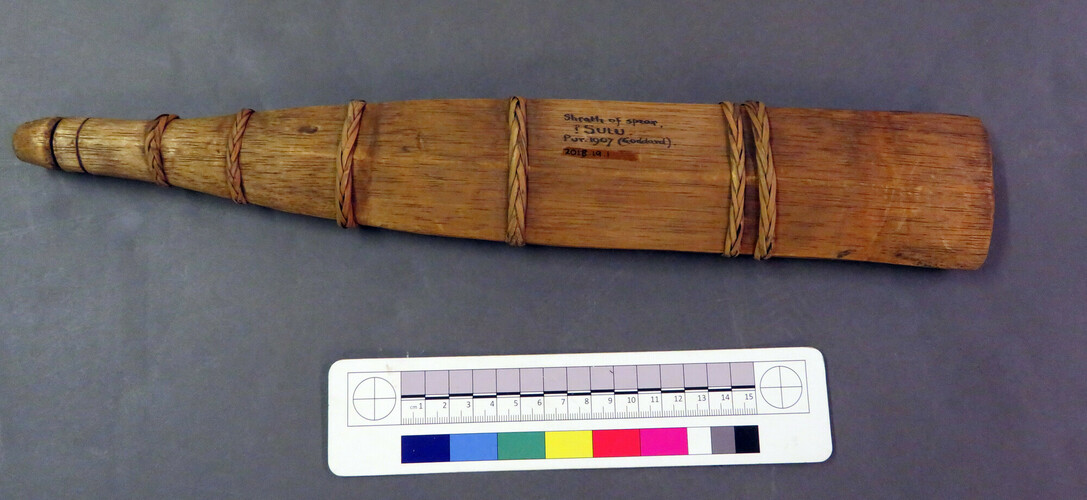 2018.19.1Sheath for a spear. [MdeA [OPS move] 25/1/2018]2018.19.1
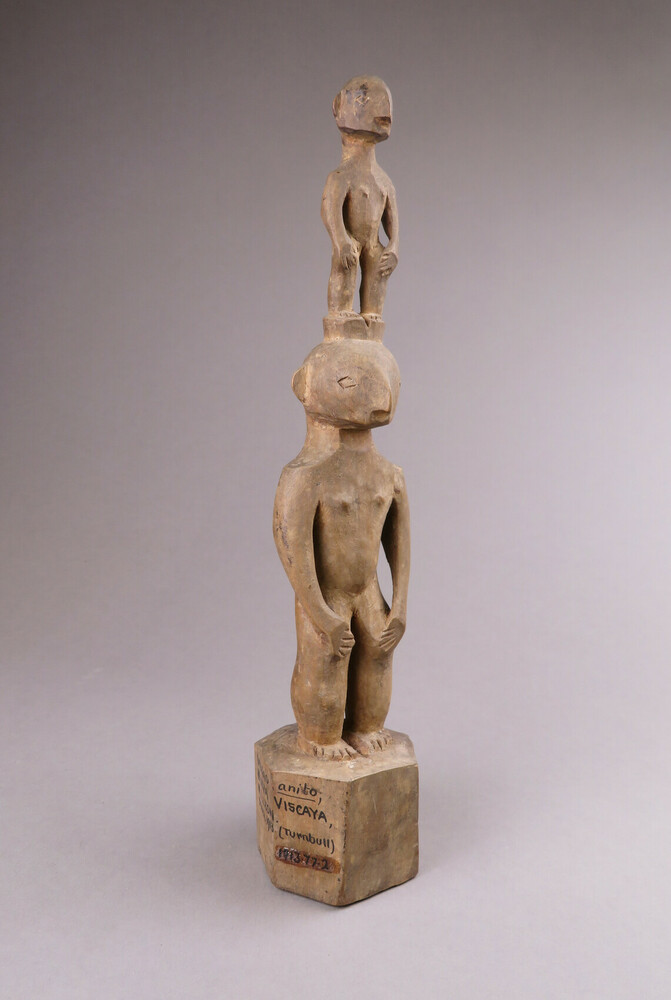 1913.77.2Carved wooden figure with second figure standing on head.1913.77.2