
- Collection type
- Object
- Description
- Quilt (Kukui ʻo Hale Aliʻi), quilted by Yoko Nishiwaki and designed by John Serrao.
- Long description
- The quilt represents the Iolani Palace, as it depicts the street lamps to give the sense of illumination. The street lamps have been appliquéd in black cotton with yellow cotton flames on a white background.
- Geographical reference
- Date
- Acquisition information
- Purchased: 2022
- Materials and processes
- Process Quilted, Process Embroidered, Process Stitched, Process Appliqué, Material Cotton Seed Fibre Textile Plant, Material Cotton Seed Fibre Yarn Plant
- Object numbers
- Accession number: 2022.57.13
- Research and responses
The Poakalani Quilting group was founded in 1972 by John Serrao and Althea Poakalani Serrao to promote and provide instruction of Hawaiian quilting. Quilting was introduced to Hawaiians in the 1820s by American missionaries. Sewing was part of the missionaries' agenda to 'civilise' the Hawaiian people, in particular it was seen as a solution to address nudity. However, while Christianisation was successful in Hawaiʻi, a hybridity formed and by the late 1860s a distinct quilting style began to appear preserving parts of the Hawaiian culture. Hawaiian quilting differs from the predominant patchwork quilt of the mainland United States and the United Kingdom. The art form relies on meticulous appliqué work and aesthetically is also very different from other forms of quilting. Hawaiian quilts overwhelmingly focus on environmental (flora and fauna) and historical and sacred object motifs in a distinct mirror image pattern. The iconography and stylistic choices illustrate a continuation and transition of Hawaiian practices onto a western material. Hawaiian quilts themselves are archives and can be read as texts that tell the story of foreign expansion into the Hawaiian islands, documenting political upheavals, remembering the Hawaiian monarchy, celebrating the Hawaiian landscape and highlighting its environmental losses. The aesthetics of the quilts speak to Hawaiian epistemological and ontological understanding of balance and spirituality and are an extension of the historic motifs on the barkcloth textile (tapa or kapa) used by Polynesian peoples prior to the introduction of cotton materials. Essentially the Hawaiian quilts are a means through which Hawaiian identity is able to speak.
This quilt represents the Iolani Palace, as it depicts the street lamps outside the palace. The quilt utilises organza within the lamps to give the sense of illumination. It was important to represent the Iolani palace for two reasons: 1) It is the only palace in the United States of America, as Hawaiʻi was a kingdom prior to annexation by the US. It was the site of imprisonment of Queen Liliuokalani, the last monarch of Hawaiʻi who was forced to abdicate. 2) Pre-pandemic, the Iolani Palace was also the home of the Poakalani quilting classes every Saturday.
Further items to explore
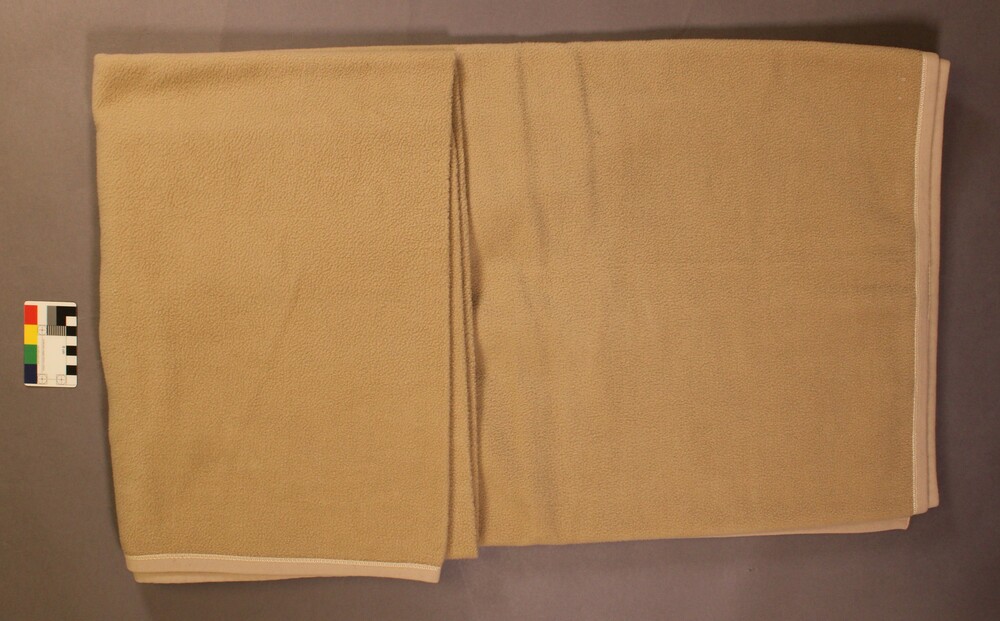 1996.17.377Beige blanket.1996.17.377
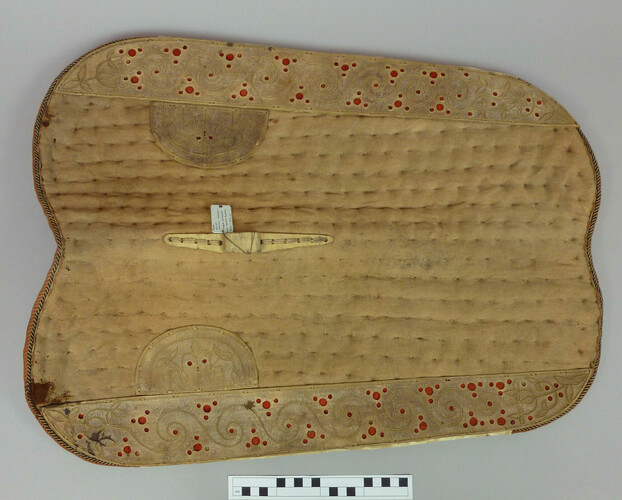 1966.1.1316.4White cotton numnah (pad to put under a saddle) with rounded corners. Decorated with incised animal hide edging and red woollen textile [SM (Verve) 13/03/2014]1966.1.1316.4
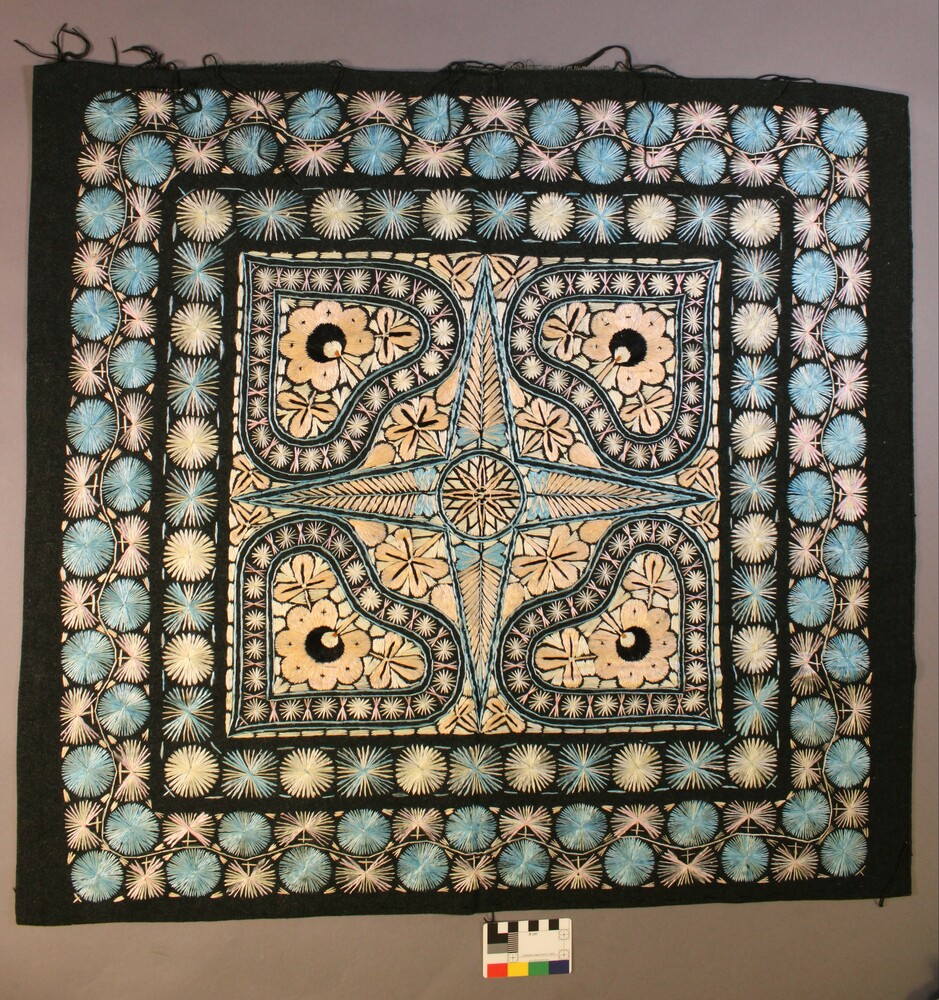 1994.45.37Cloth1994.45.37
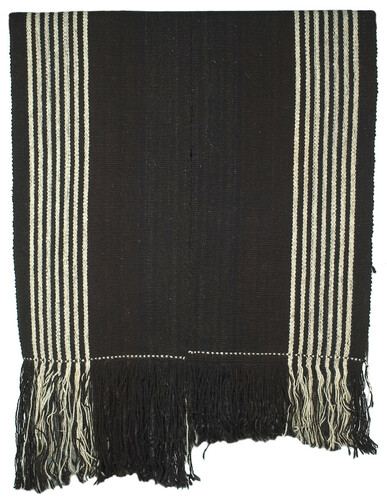 2003.9.12Donkey rug used to sit on when riding the donkey and to carry loads.2003.9.12
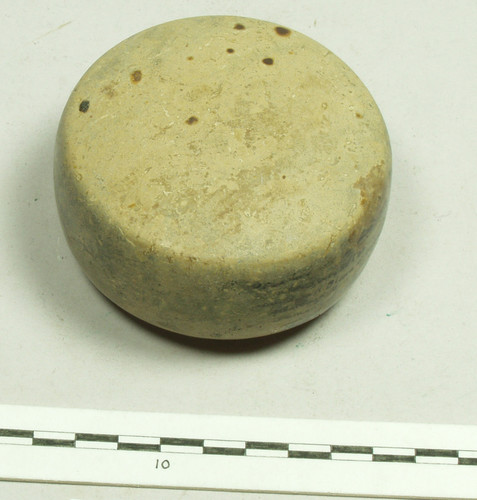 1886.1.1536Stone used in game, circular, the two sides being being moderately convex, smooth and polished.1886.1.1536
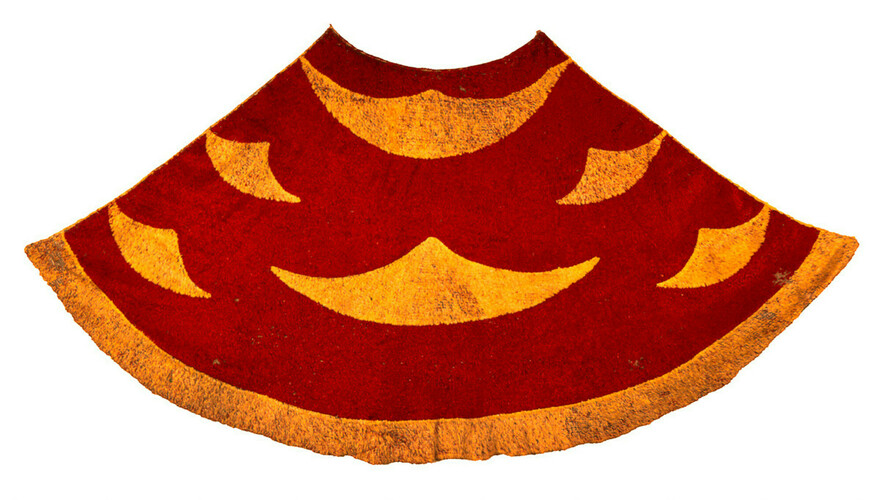 1934.76.2Fibre cloak covered in red and yellow feathers.1934.76.2
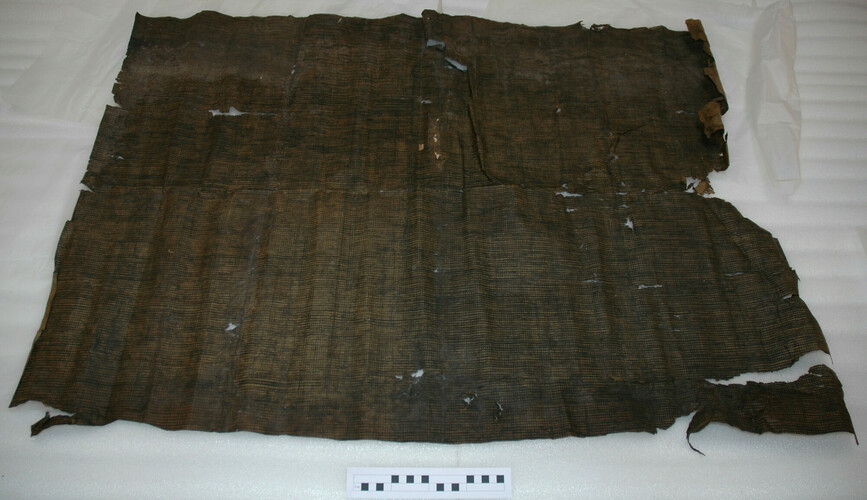 1886.1.1205Barkcloth 'of a brown colour, stamped with numerous narrow black lines' of chequered design. Very fragile. [ZM 15/6/2004]1886.1.1205
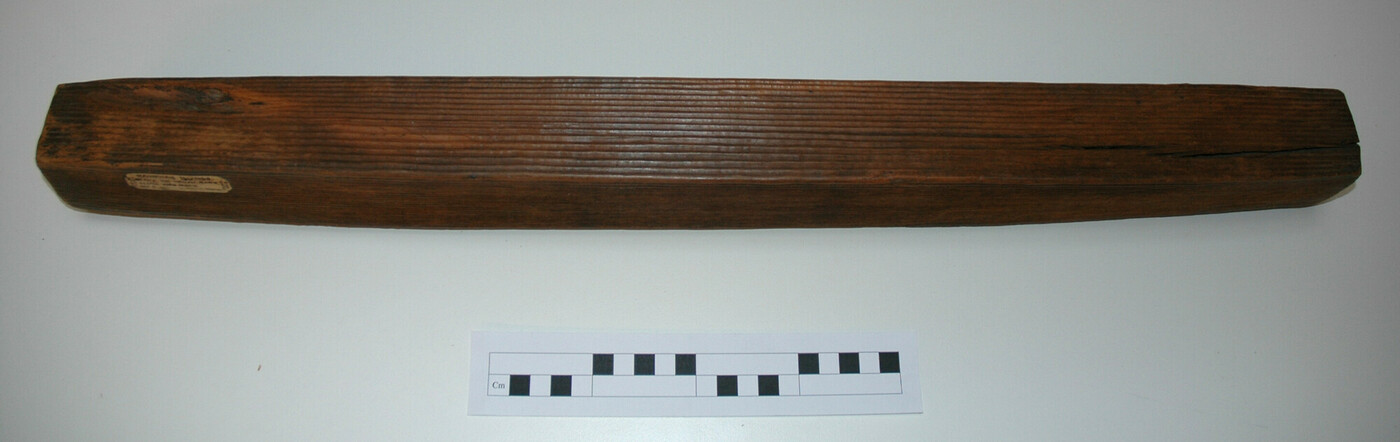 1913.65.31Grooved block of wood used for beating barkcloth.1913.65.31