
- Collection type
- Object
- Description
- Iron hoe blade. The hoe is socketed, from the socket the blade extends with straight edges, the is rounded. The iron surface is rough and pitted. [AB [OPS Move] 13/1/2017]
- Date
- Date collected
- By 1916
- Acquisition information
- Donated: 1916
- Materials and processes
- Material Iron Metal, Process Forged (Metal)
- Dimensions
- Width: max 102 mm, Length: max 214 mm, Depth: max 29 mm
- Object numbers
- Accession number: 1916.24.1
- Research and responses
The Archaeological Survey of India provide the following details about the archaeological site of Adichanallur (lat 8.629889, long 77.87636) "[it] is located on the right bank of the Tambraparani River, in the Tuticorin District of Tamil Nadu. The extensive urn burial site at Adichchanallur in Tuticorin District (formerly Tirunelveli) was first discovered by Dr. Jagor of Berlin Museum in 1876. A. Rea excavated a good number of urns during 1910s and discovered gold diadems with parallels from Mycenae; bronze objects notably lids with exquisite finials depicting many animal forms, iron objects besides thousands of potsherds. The excavation was resumed during 2003-04 and 2004-05. More than 160 urns within the area of 600 square meters have been exposed." http://asi.nic.in/asi_exec_adichchanallur.asp. [MN 17/06/2010]
Search terms: Agriculture and Horticulture, Death, Tool, Religion, Agricultural Tool, Hoe, Grave Good
Further items to explore
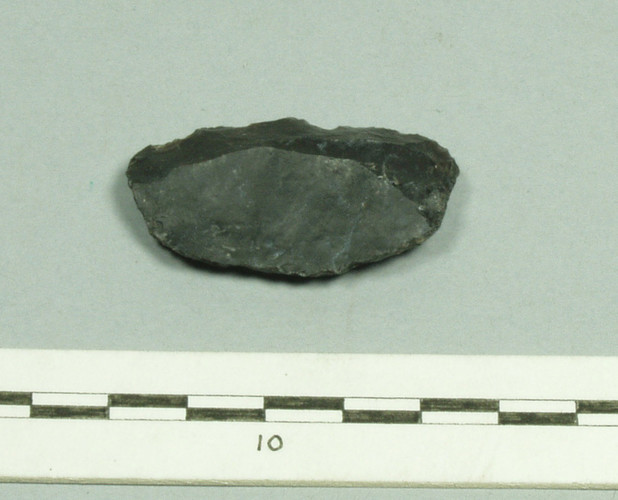 1902.50.5Flint flake from threshing board. [El.B 'DCF 2004-2006 What's Upstairs?' 11/5/2005]1902.50.5
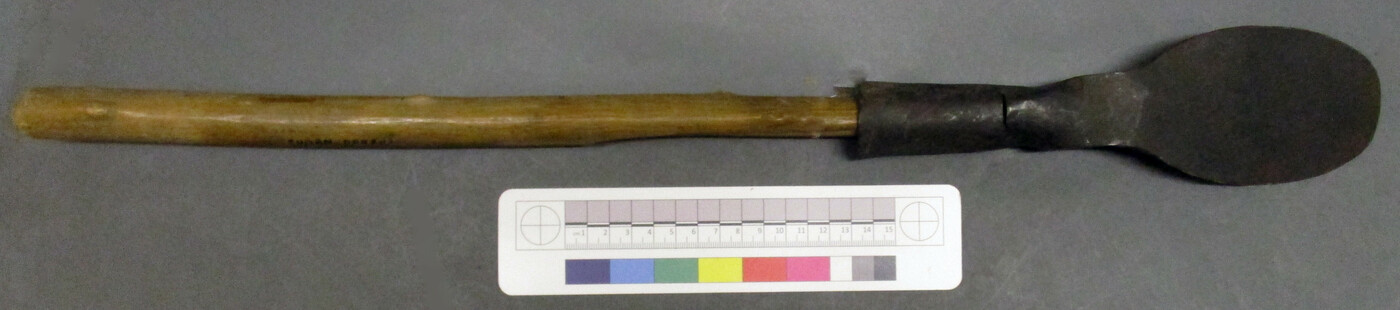 1954.5.93Hoe with open-socketed blade set onto a wooden shaft. [JC [OPS Move] 21/12/2016]1954.5.93
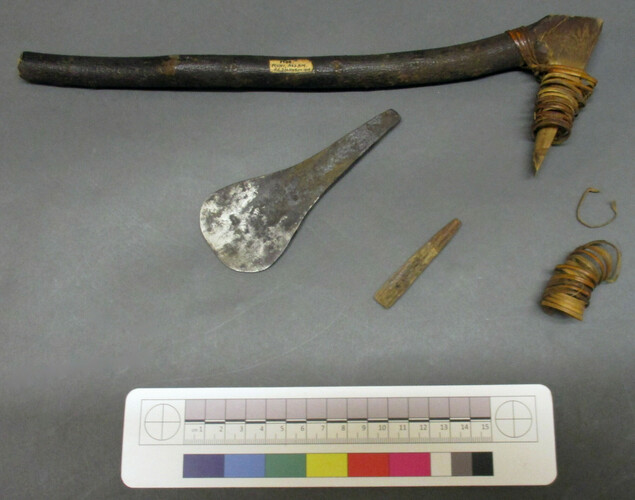 1923.84.572Hoe, made with a wooden handle and metal blade. [AB [OPS Move] 6/12/2016]1923.84.572
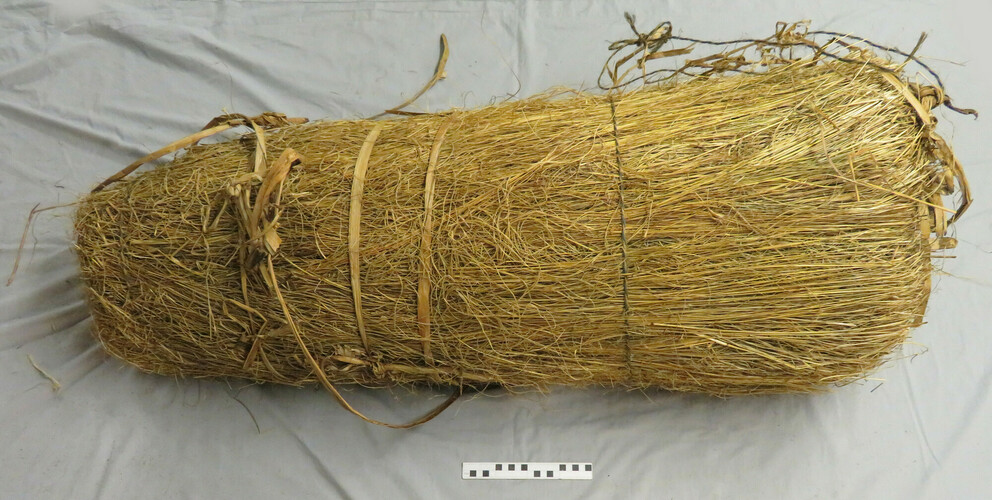 1973.14.100Beehive. Roughly cylindrical in shape and tapering towards one end. [SB [OPS move] 7/11/2017]1973.14.100