
- Collection type
- Object
- Description
- Traffic light filter with silhouette of Carmen Rupe.
- Long description
- Victoria Barton-Chapple who initially donated this traffic light filter details the history of the piece: "Copy of black plastic mask of Carmen Rupe. Mask is used in pedestrian traffic signal displays as alternative to standard human figure. Carmen-modified lanterns were installed in 2016 at three Wellington City Council signalised intervals in Cuba St, a downtown location synonymous with Carmen's alternative lifestyle. The Carmen lanterns are still in operation today and have sparked a lot of interest from other local authorities wanting to use non-standard signal displays."
- Geographical reference
- Cultural groups
- Māori
- Person
- Maker Wellington City Council
- Commercial manufacturer Grayley Plastics
- Named Person Carmen Rupe
- PRM source Victoria Barton-Chapple
- PRM source Wellington City Council
- Date / Period
- Date made: Around 2016
- Acquisition information
- Donated: 31/10/2022
- Materials and processes
- Material Plastic Synthetic, Material Metal
- Dimensions
- Diameter 180 mm, Height 200 mm
- Object numbers
- Accession number: 2022.87.1
- Research and responses
As part of the Beyond the Binary Exhibition (1 June 2021 – 30 June 2022) Mara Gold produced research regarding the importance of the traffic light to the LGBTQIA+ community as follows: “Transgender entertainer, businesswoman and activist Carmen Rupe (1936 – 2011) was the heart of the takatāpui and LGBTIQ+ communities and is a New Zealand icon, especially in the capital city of Wellington, where Carmen lived for much of her life. Moving to Sydney in the late 1950s, she began her career as the first Māori performer in the Australian drag scene at a time when drag was still illegal, leading to numerous arrests. Carmen returned to Wellington in 1967 where she ran a number of venues that became home to the LGBTIQ+ community, including the famous Carmen’s International Coffee Lounge. Openly defying the discriminatory laws, Carmen fought for trans, gay and sex workers’ rights, running for Mayor in 1977 to promote her cause. Although unsuccessful (coming 4th), she had an undeniable impact on the lives of LGBTIQ+ people as well as local and national politics, continuing to commit herself to activism for the rest of her life. Today she is honoured in Wellington with pedestrian crossing lights shaped as her silhouette.” Mara Gold (Beyond the Binary Community Curator), 2019.
"Installed in 2016, four sets of traffic lights were placed on Cuba Street in downtown Wellington, New Zealand to honor the political work and community activism of Carmen Rupe, a Māori trans woman, drag performer, and 1977 mayoral candidate. Rupe was noted as being an inspiration to Georgina Beyer, the world’s first openly transgender Member of Parliament. " (Pitt Rivers Museums' Exhibition Scavenger Hunt, 2021)
This object was featured under the Indigenous Power: Countering Colonialism portion of the Beyond the Binary exhibition under this text introduction: "Th imposition of colonial laws and beliefs criminalised and attempted to erase Indigenous gender and sexual identities. This section reveals stories of how these gender expressions and sexual fluidities continued and thrived in spite of colonial atrocities. The material displayed shows the reclamation and resurfacing of Indigenous traditions and identity expressions in the 20th and 21st centuries, often amid continued oppression.
For the purpose of this exhibition we have used western and/or contemporary terminology to help us to group together identities outside of the western binaries. Many contemporary activists and artists associate traditional practices with these umbrella terms to create a sense of community. However, many cultures would not have labelled their own practices or lifestyles as queer or even LGBTQIA+ either because they were not considered outside the norm or simply because this language was unfamiliar." [Beyond the Binary, Indigenous Power: Countering Colonialism, June 1st 2021 - June 30th 2022].
"Transgender entertainer, businesswoman and activist Carmen Rupe (1936 – 2011) was the heart of the takatāpui and LGBTIQ+ communities and is a New Zealand icon, especially in the capital city of Wellington, where Carmen lived for much of her life. Moving to Sydney in the late 1950s, she began her career as the first Māori performer in the Australian drag scene at a time when drag was still illegal, leading to numerous arrests. Carmen returned to Wellington in 1967 where she ran a number of venues that became home to the LGBTIQ+ community, including the famous Carmen’s International Coffee Lounge. Openly defying the discriminatory laws, Carmen fought for trans, gay and sex workers’ rights, running for Mayor in 1977 to promote her cause. Although unsuccessful (coming 4th), she had an undeniable impact on the lives of LGBTIQ+ people as well as local and national politics, continuing to commit herself to activism for the rest of her life. Today she is honoured in Wellington with pedestrian crossing lights shaped as her silhouette." [Mara Gold, Beyond the Binary researcher, 2019]
"Transgender icon Carmen Rupe is about to light up the former red light district of Cuba Street again, as a new set of pedestrian crossing lights featuring her silhouette will be unveiled on Monday. Carmen, born Trevor Rupe in 1936, was a drag performer, brothel keeper, anti-discrimination activist, would-be politician, and HIV/AIDS activist, who was a colourful member of the Cuba Street and transgender community until she died in 2011.
Following the success, locally and internationally, of the Kate Sheppard pedestrian crossing lanterns installed near Parliament in 2014, a series of other famous Wellington icons/figures are planned to be rolled out in similar fashion across the capital – and Carmen is a popular choice for the local community.
“Cuba Street has always celebrated colourful characters and diversity, and Carmen fits into both those categories, so we’re glad she’s being honoured in this way – and she would’ve loved it too!,” says Mal Kennedy-Vaughan from Scotty & Mal’s bar.
The launch has been planned to mark the 30-year anniversary of the Homosexual Law Reform Bill coming into effect on 8 August – celebrating diversity and raising awareness and support for the LGBTQI community, which is something the Council’s Director Strategy and Communications, Jeremy Baker, sees as an essential part of Wellington’s character.
“New Zealand has come a long way in its support of the rainbow community, but there’s still a lot of work to be done. Celebrating the wonderful character that Carmen was in this way displays tolerance, unity, and Wellington pride on many levels – and the Council is proud to be a part of that,” he says.
The concept involves replacing the green man on the ‘cross-now’ signal with a Carmen silhouette. The lanterns will appear at four intersections along Cuba Street, and are in place indefinitely.
The official unveiling will be held on Monday 8 August at 2pm on the corner of Cuba and Ghuznee streets, with colourful characters from Carmen’s past joining in with the entertainment and music for everyone to enjoy as part of the celebrations." ["Carmen to provide light relief on Cuba Street," Wellington City Council.]
Search terms: Commemoration, Figure, Gender and Sexuality, Building Part, Plaque, Screen
Further items to explore
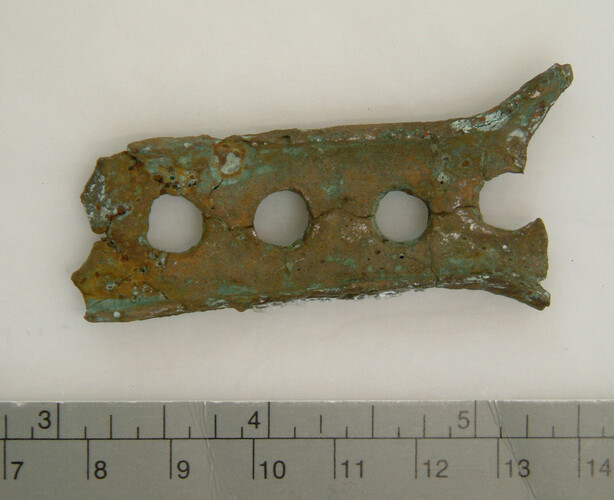 2003.155.1Unknown piece of metal - possibly a tang from a knife or sword.2003.155.1
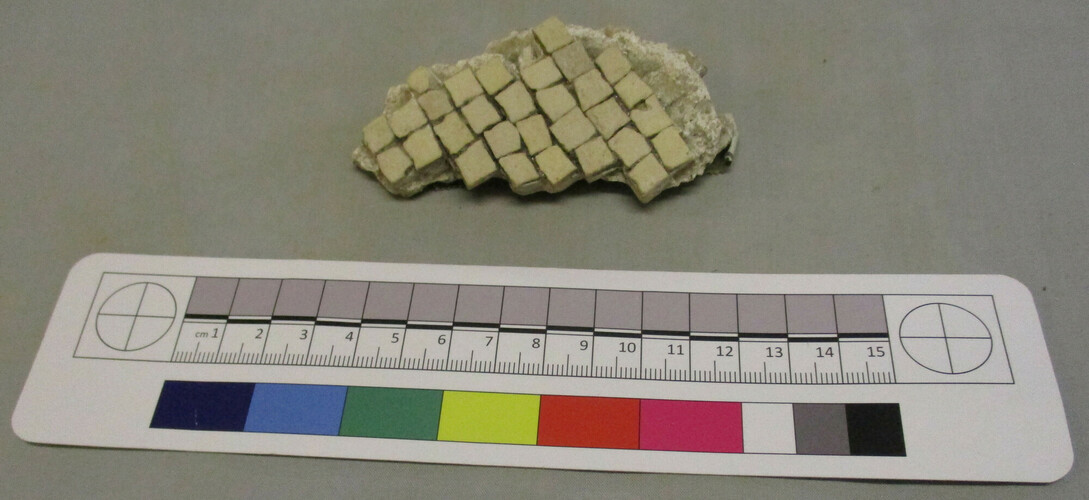 1934.32.6Stone tessera [mosaic tiles], consisting of multiple square, white tiles adhered to a fragment of flooring. Stones within the fabric of the flooring. [ASh [OPS move] 17/5/2016]1934.32.6
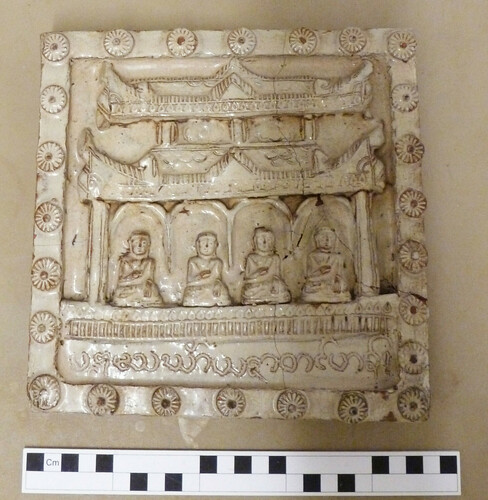 1921.44.6Red ware pottery tile with a pale green glaze.1921.44.6
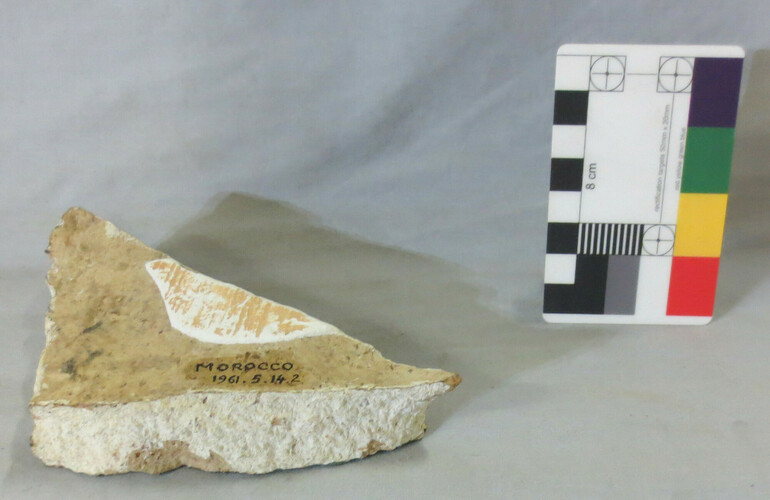 1961.5.14.2A triangular-shaped tile fragment with green glaze, relief patterns. [MOBB [OPS move] 04/02/2016]1961.5.14.2
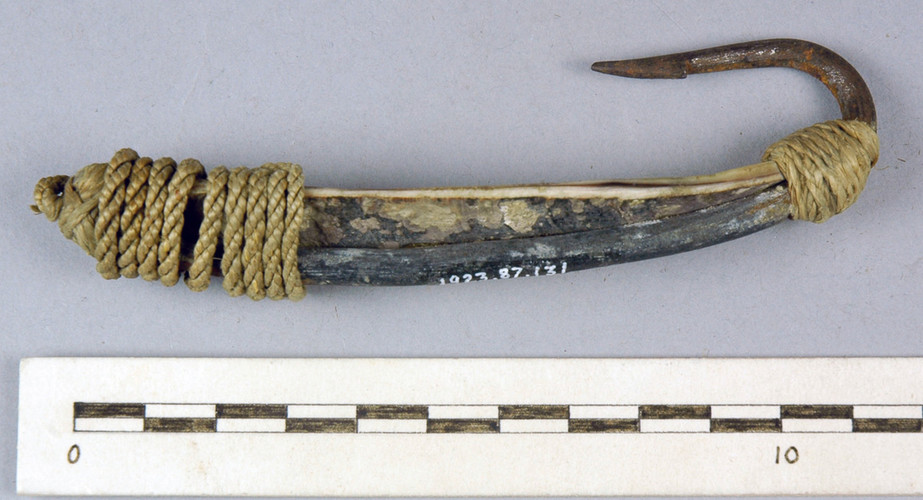 1923.87.131Fish hook of iron mounted on a plate of iridescent shell.1923.87.131
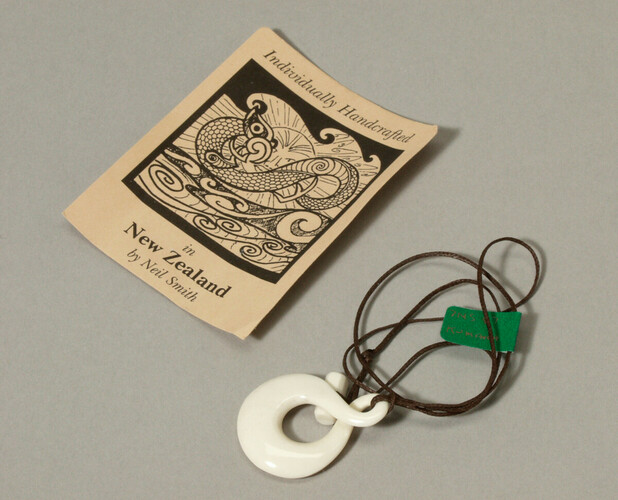 2002.33.2.1Bone pendant in the form of a figure 8 on a long brown fibre cord with a small bone toggle.2002.33.2.1
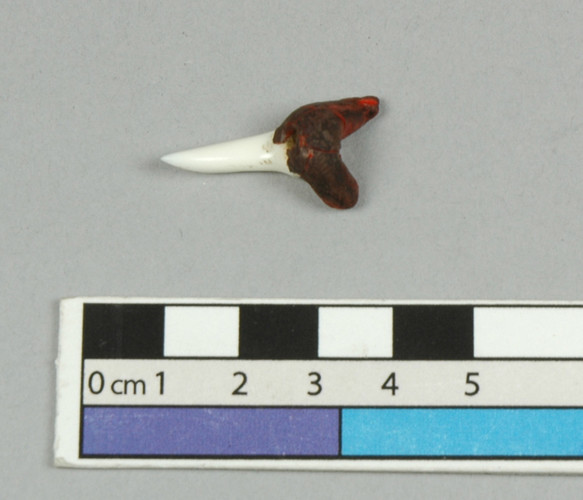 1905.50.1Tiger shark tooth, perforated and mounted with red sealing-wax. [El.B DDF Body Arts Project 2010/2011 19/11/2010]1905.50.1
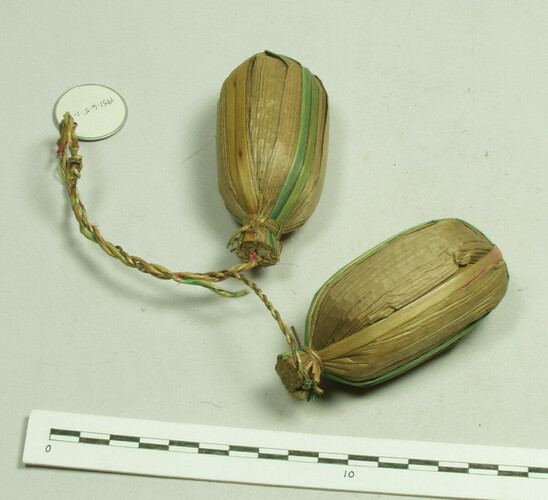 1951.6.5.1Pair of poi balls [.1-.2], joined by small twisted string and decorated with green bands. [E.S-R 'DCF 2004-2006 What's Upstairs?' 10/1/2005]1951.6.5.1