
- Collection type
- Object
- Description
- Cylindrical wooden club, Bowai, with much worn handle decorated with a chip-carved zigzag design, squared-off at the end. The shaft flares a little at the head, which is slightly domed. [JC [OPS Move] 14/09/2016]
- Person
- Associated person Stephen William Silver
- Field collector Unknown Collector
- PRM source Sarah Constance Silver
- Date / Period
- Date made: Before 1906
- Date collected
- By 1906
- Acquisition information
- Donated: 03/1906
- Materials and processes
- Material Wood Plant, Process Carved, Process Chip Carved
- Dimensions
- Length: max 1025 mm, Diameter: max 45 mm
- Object numbers
- Accession number: 1906.20.26
- Research and responses
See F Clunie 'Fijian Weapons and Warfare' 1977 Fiji Museum, Suva, Bulletin of the Fiji Museum no.2 and R. Ewins, Fijian Artefacts: Tasmanian Museum and Art Gallery collection' Australia 1982: p.29. "Bowai (baseball-bat clubs) and Gadi (pole clubs). The difference between bowai and gadi is often not very clear. Typically, a bowai is shaped like a baseball bat, with distinctly tapered shaft and rounded tip. In practice, many examples appear as hybrids. Cakobau presented his favourite bowai to Queen Victoria at the time of Cession; it was ornamented in silver and returned by King George V to Fiji as the Mace of Parliament, which it remains today. The bowai was probably introduced from Tonga (where it was called povai) or Samoa. Gadi were named for the wood from which they were frequently made (gadi-Storckiella vitiensis), and were virtually straight-shafted heavy poles, sometime plain, sometimes decorated, usually with flat ends." [FC 26/09/2011]
Further items to explore
 1884.12.243Double ended wooden club with the faces of each blade flat one side, rounded on the other. The shaft is cylindrical and widens and flattens to either head, the larger of which expands to a rounded tip with a crescent ridge. The smaller head, similar to this, expands slightly at a right angle from the shaft and is perforated in the centre. [BS [OPS Move] 09/08/2016]1884.12.243
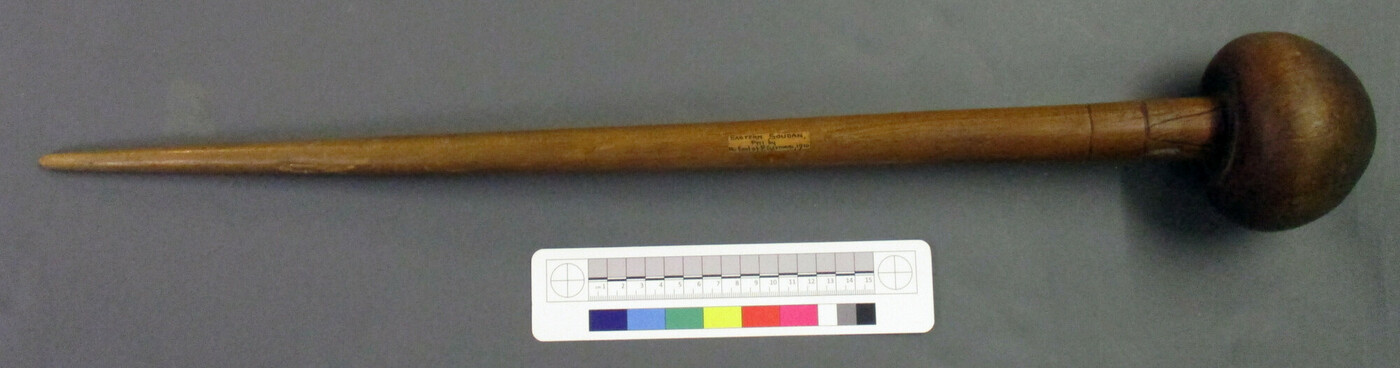 1910.4.1Wooden ball-headed club. [JC [OPS Move] 13/10/2016]1910.4.1
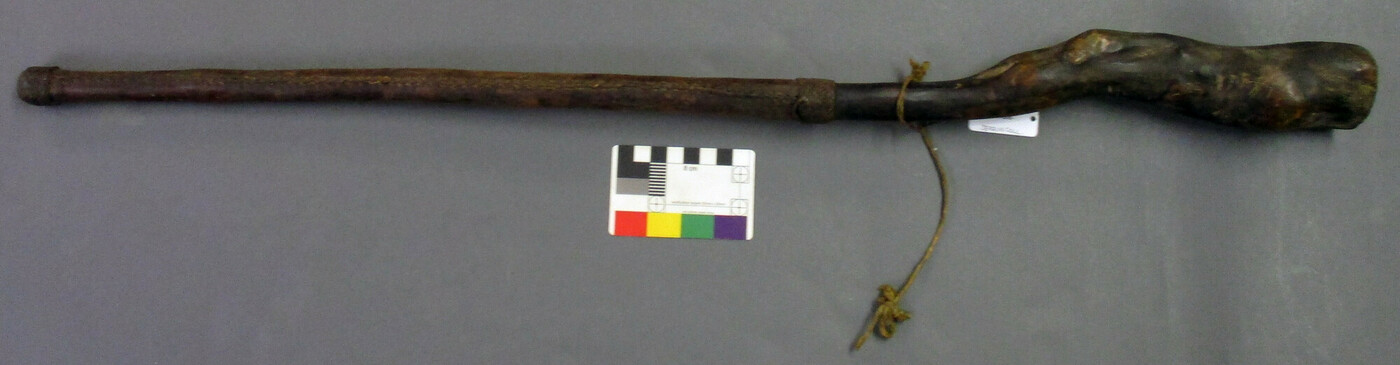 1966.16.13Wooden club with irregular expanded head following the natural shape of the wood. [JC [OPS Move] 10/10/2016]1966.16.13
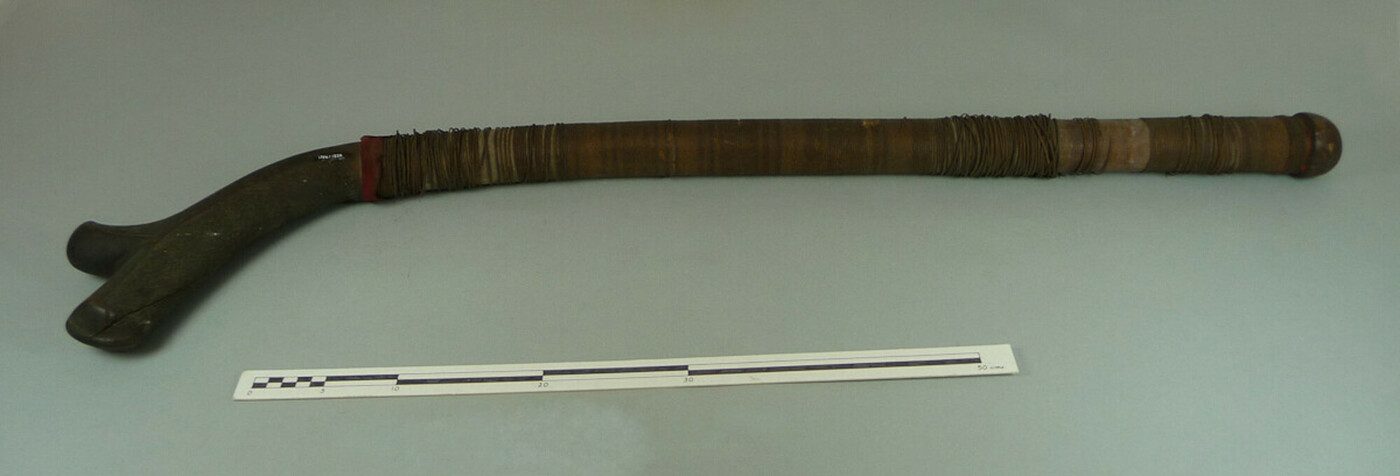 1886.1.1357Wooden dance/ceremonial club, (Kiakavo). [FC 08/08/2011]1886.1.1357
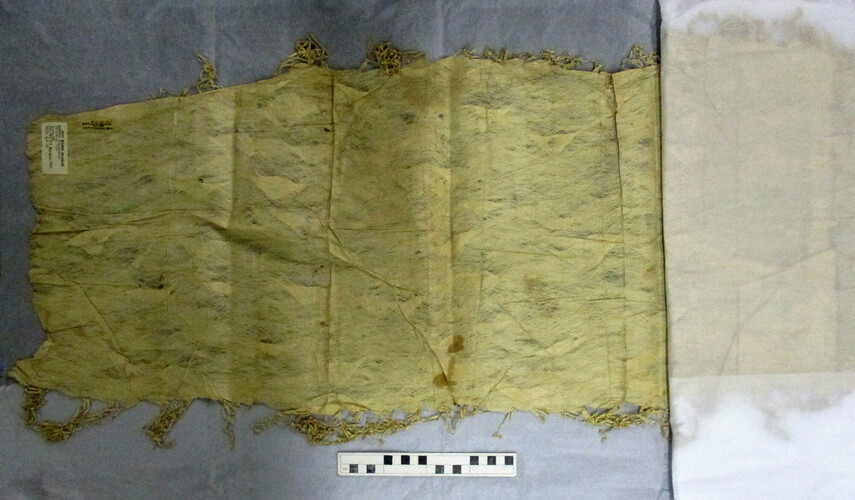 1922.43.13Barkcloth. It is cream in colour, the edges are fringed. There are patches of the barkcloth which the fibres are very fine. There is a brown stain on the barkcloth. It has been folded five times. [AB [OPS Move] 18/7/2017]1922.43.13
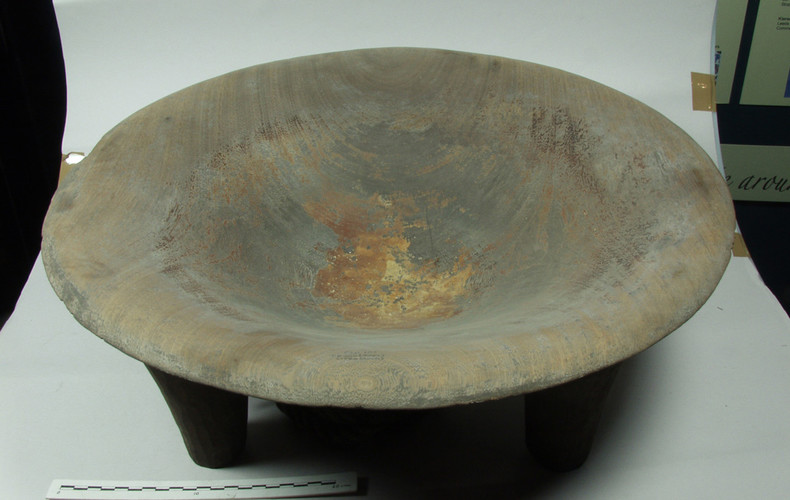 1884.6.21Wooden bowl with four legs and rope.1884.6.21
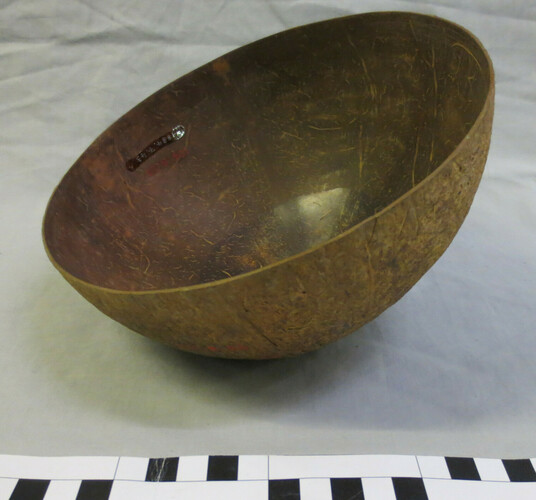 1884.7.43Coconut shell vessel made of a hemispherical half of a very large coconut shell, polished inside. [FB 25/06/2015]1884.7.43
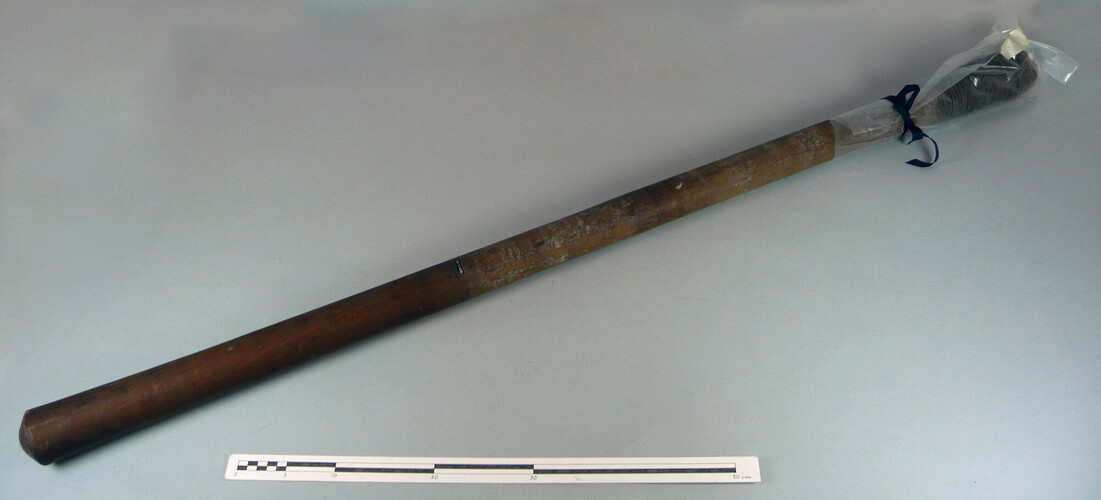 1884.12.109Cylindrical wooden club. [FC 28/09/2011]1884.12.109