
- Collection type
- Object
- Description
- Natural flint with two holes. [DCF Court Team 16/1/2003]
- Date / Period
- Archaeological period: Ancient Egyptian Predynastic
- Date collected
- By 1901
- Acquisition information
- Donated: 1901
- Materials and processes
- Material Flint Stone
- Dimensions
- Length: max 64 mm
- Object numbers
- Accession number: 1901.29.4 Other numbers: b9
- Research and responses
p 25 of excavation report (1902) " b 9. Grave of class 4a. Depth of pit 8ft., length 5ft. 6in., width to recess 3ft.9in. Oval clay coffin 32 in. x 21 in. and 15 in. high and 1/2 in. thick. Body Female. Beside the coffin at head end were two pots of type L 33g (pl. xiii)." [AS 11/05/2009]
The Pitt Rivers Museum received a number of flint implements from Randall MacIver's work at el Amrah because the Pitt Rivers Museum's curator, Henry Balfour, was asked to comment on them. His account of 'the entire series' was published on pages 44-46 of the 1902 excavation report. [AS 15/06/2012]
- Associated publications
- Randall MacIver, D. and Mace, A. (1902) El Amrah and Abydos 1899-1901. London: Egypt Exploration Fund. [AS 07/06/2012]
Search terms: Geology, Death, Religion, Specimen, Tool, Stone, Grave Good
Further items to explore
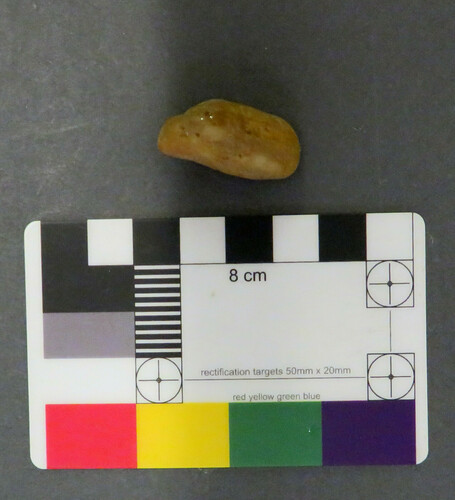 1985.54.2601Amulet. Stone, yellow in colour with a bulbous uneven surface. Used in pregnancy. [ASh [OPS move] 15/11/2017]1985.54.2601
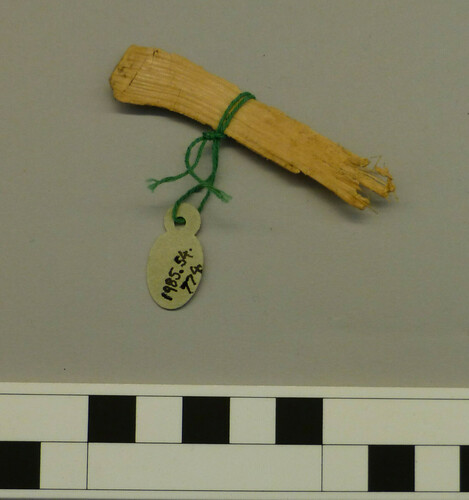 1985.54.774Amulet, a dried strip of "bus", durra stalk. light in colour. Passed around the head to cure illness. [JC [OPS] 07/03/2017]1985.54.774
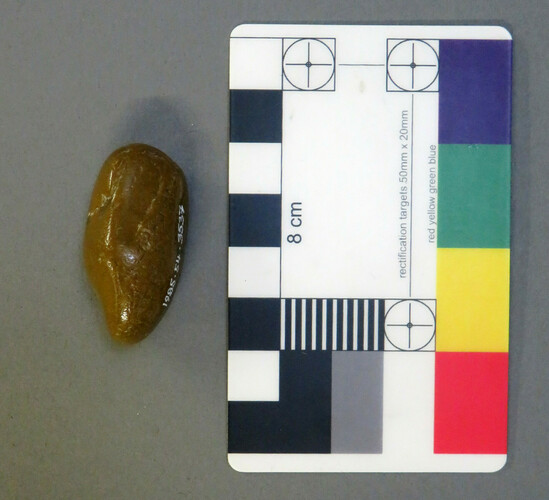 1985.54.3537Amulet. Stone, brown in colour and oval in shape. The surface is highly polished and slightly lumpy. [ASh [OPS move] 16/01/2018]1985.54.3537
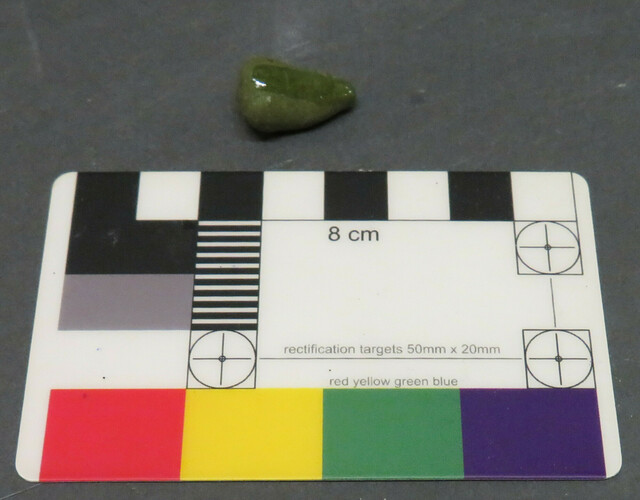 1985.54.1844Amulet; green, cone-shaped pellet. Used by women to cure 'harara' a rash and spots in the throat. [ASh [OPS move] 13/09/2017]1985.54.1844