
- Collection type
- Object
- Description
- Votive offering, 1877 penny.
- Geographical reference
- Isle of Man Marown Chibbyr Roney [Chibbyr Runey] [Chibber Rona]
- Cultural groups
- Manx
- Person
- Field collector Ernest Bickersteth Savage
- PRM source Ernest Bickersteth Savage
- PRM source Oxford University Museum of Natural History
- Date / Period
- Date made: Before 1886
- Date collected
- 29 April 1886
- Acquisition information
- Donated: 07/1887, uncertain Transferred: 07/1887, uncertain
- Materials and processes
- Material Metal
- Dimensions
- Diameter: max 31 mm approx
- Object numbers
- Accession number: 1887.19.4
- Research and responses
For a brief account of Chibbyr Roney, i.e. [St] Ronan's well, and the practices relating to it, including the 'votive rags and coins', see pages 226-227 of 'Water and Well-Worship in Man', by A. W. Moore, Folklore, Vol. V, no. 3 (September 1894), pp. 212-229 (photocopy in RDF). Moore relates (page 227-8): 'Its water is supposed to be a marvellous cure for sore eyes. An educated Manxman, now living, told the writer that it had completely cured his brother, who was nearly blind, and that he himself, when his eyes were weak, had received great benefit from it. He simply took some of the water home in a bottle to bathe his eyes, and did not condescend to go through the ordinary ritual, which consisted, as usual, in / walking round the well, repeating the same prayer as at Chibber Lansh, leaving a rag, and either dropping a coin in the well, or leaving three white pebbles close to it, the pebbles being the offerings of those who were too poor to put in a coin. The Rev. E. B. Savage, who visited this well three [sic; see below] years ago, found no rags [sic; see below], but there were a number of halfpence in the well, and a large pile of white pebbles close by it. He sent some of the coins and pebbles [sic; see below] to the Pitt-Rivers Museum at Oxford, retaining some for the proposed Manx Museum.' He also notes (page 227, n. 2): 'Mr. Savage thinks that the three pebbles indicate some survival of Phallicism; but, as they prayed in the name of the Three Persons, it is more likely to be Trinitarian.' He also notes (page 228): 'I may mention that, since the visit of the Rev. E. B. Savage, some ardent folk-lorists have evidently been to the well, as I found that the pile of pebbles had almost disappeared.' NB According to the PRM's records, Savage collected the material (including rags, twigs, and coins, but no pebbles) on 29 April 1886, eight (not three) years before the publication of Moore's article. [JC 6 7 2006]
Search terms: Religion, Medicine, Ornament, Currency, Religious Offering, Medical Accessory, Coin
Further items to explore
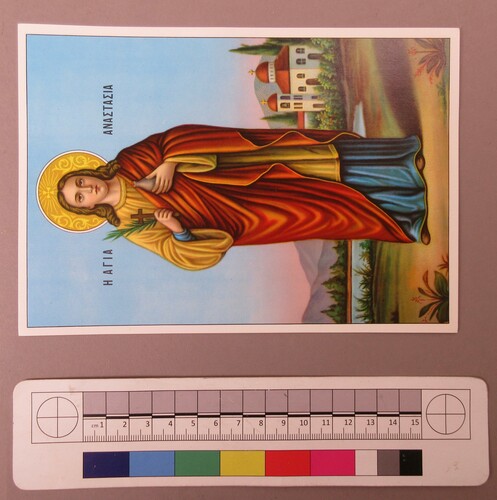 1978.16.1Paper print of saint, ?Anastasia.1978.16.1
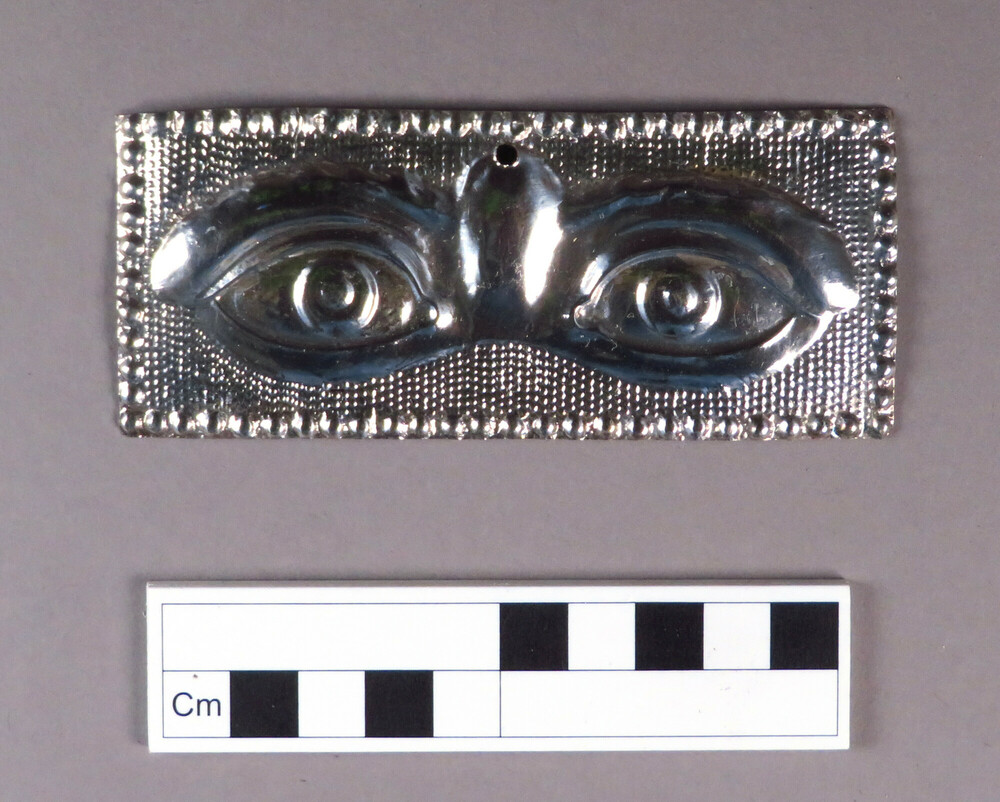 1954.5.52Silver votive offering of pair of eyes.1954.5.52
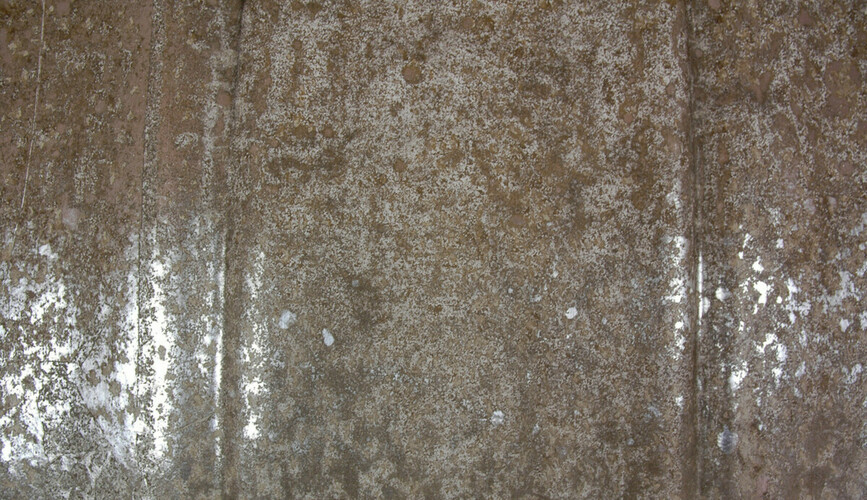 1987.51.3Printed sheet of paper, coloured silver on one side. [El.B 09/04/2008]1987.51.3
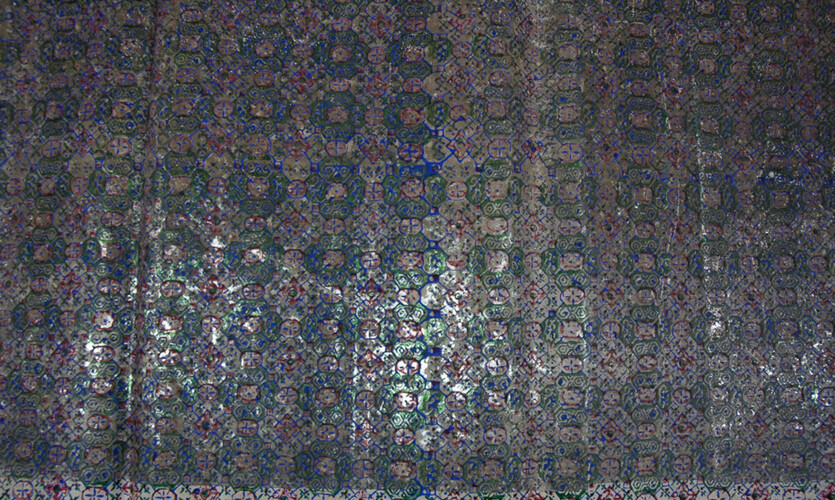 1987.51.53Printed sheet of paper, silver with a geometric pattern in red, green and blue. [El.B 08/04/2008]1987.51.53
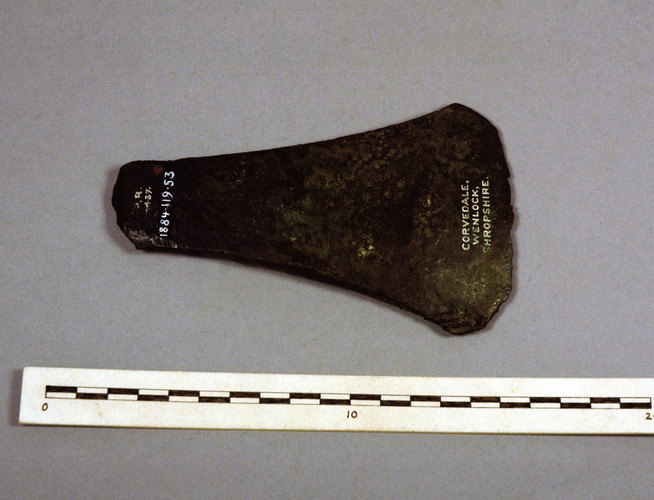 1884.119.53Bronze axe1884.119.53
 1912.19.8.24Flint flake, no retouch, one large flake scar visible on the dorsal face. Probable debitage. [MN 17/03/2009]1912.19.8.24
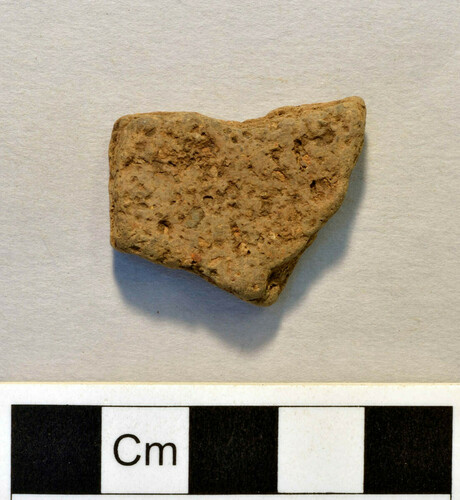 1884.136.1.207Ceramic sherd1884.136.1.207
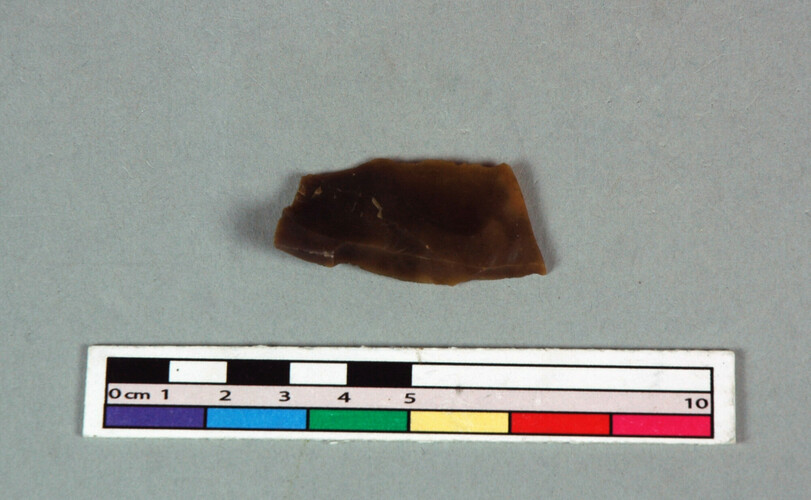 1897.11.64Flint flake with hinge termination. Some flaking on the dorsal face, no retouch - probable debitage. The flint is a dark brown colour. [MN 05/02/2010]1897.11.64