
- Collection type
- Object
- Description
- Stone tool, mata'a, made of obsidian.
- Long description
- Stone tool. 1 of 29 implements including wasters, tanged obsidian spearheads and hammer-stones together in a clear fronted old museum display box. [ZM 28/4/2004]
- Person
- Field collector William Scoresby Routledge
- Field collector Katherine Maria Routledge
- PRM source William Scoresby Routledge
- Date / Period
- Date made: Before 18/08/1915
- Date collected
- Between 29 March 1914 and 18 August 1915
- Acquisition information
- Donated: 1916
- Materials and processes
- Material Obsidian Stone, Process Flaked
- Dimensions
- Length: max 90 mm, Width: max 70 mm
- Object numbers
- Accession number: 1916.36.122
- Research and responses
Please note that the Routledge's published account of their journey includes many specific object references, drawings, maps and photographs. Please refer to: Routledge, Mrs. [Katherine] Scoresby Routledge (1919) The Mystery of Easter Island: The Story of an Expedition. London: Sifton, Praed & Co. Ltd. [L.Ph 29/4/2004]
Please note that the unpublished field notes relating to this expedition are at the Royal Geographical Society. This information was found on p. 334 of the biography of Katherine Routledge (Pease): van Tilburg, Jo Anne (2003) Among Stone Giants: The Life of Katherine Routledge and her Remarkable Expedition to Easter Island. London: Scribner. [L.Ph 29/4/2004]
- Associated publications
- One of twenty objects from the Pitt Rivers Museum included in the exhibition catalogue Making Monuments on Rapa Nui: The Statues from Easter Island, by Colin Richards and Bryan Sitch (Manchester: The University of Manchester, Manchester Museum, 2015). On page 39 in the section 'The End of an Era' this particular object is one of a group described as follows: 'Hoard of obsidian implements or weapons called mata'a. Mata'a appear much more frequently and in greater numbers in more recent archaeological contexts on Rapa Nui. This has been interpreted as evidence that the islanders' traditional way of life descended into civil strife and open warfare. This seems to be supported by oral history testimony and by the discovery of skeletons showing trauma but researchers differ in how to interpret the evidence (see below). Loan courtesy of the Pitt Rivers Museum, 1916.36.118-128, 130, 132, 134 and 135'. [ZM 9/9/2015]
Search terms: Tool, Technique, Weapon, Flake, Spear-head, Hammer-stone, Debitage
Further items to explore
 1935.13.106.504Brown stone flake with curved distal edge and Y shaped rough dorsal crest. [LKG 11/06/2010]1935.13.106.504
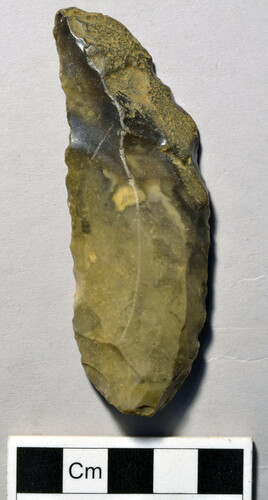 1884.122.394Stone flake1884.122.394
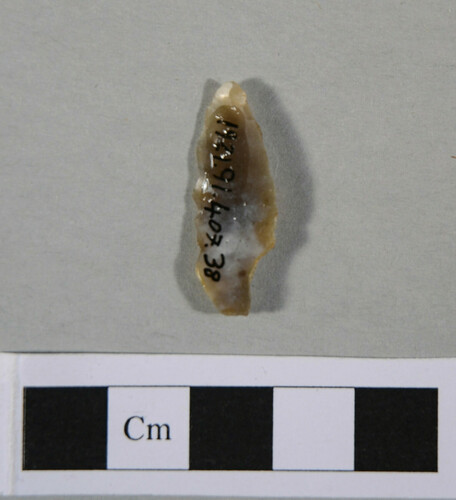 1921.91.407.38Flint flake with retouch along one lateral edge towards the distal end. The bulb of percussion has been removed. Possible microlith? [MN 05/12/2008]1921.91.407.38
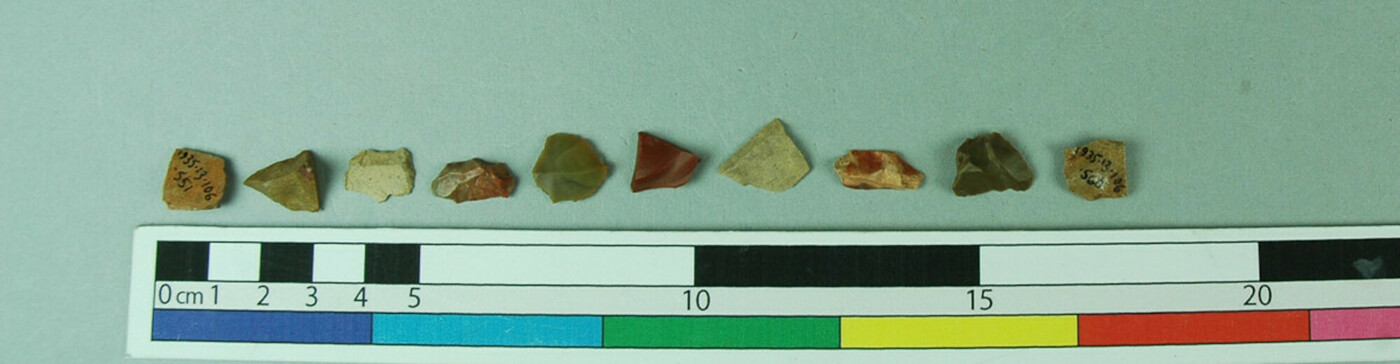 1935.13.106.551Light orange stone flake with curved distal edge and straight proximal. One strong dorsal crest with two shallower parallel crests. [LKG 11/06/2010]1935.13.106.551
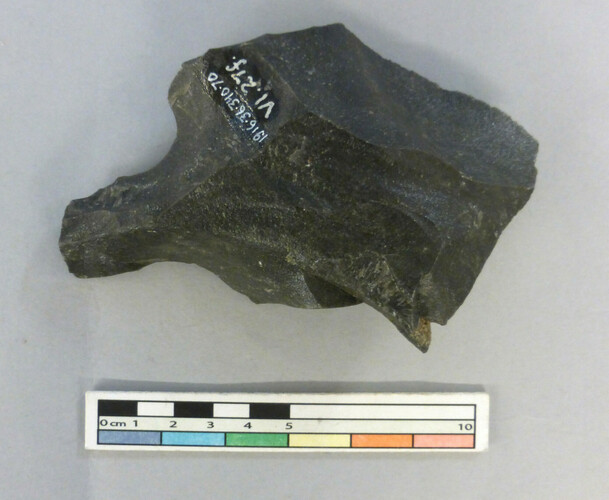 1916.36.340.70Obsidian stone tool (mata'a ).1916.36.340.70
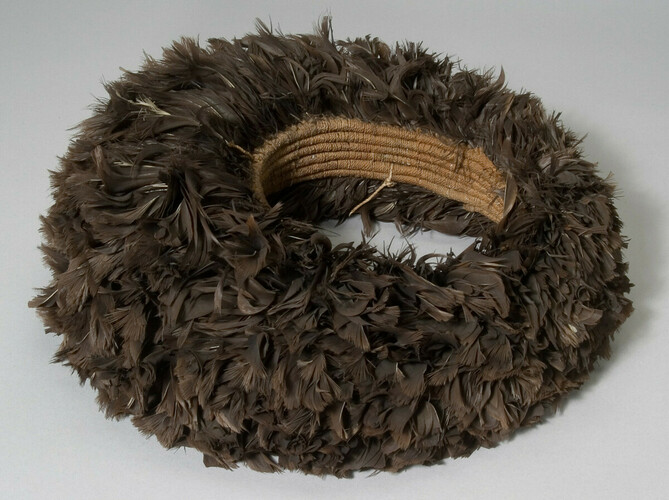 1886.1.1528Headdress. Bunches of feathers bound with fibre to a six-banded coil of plant material. [JC 22 12 2006]1886.1.1528
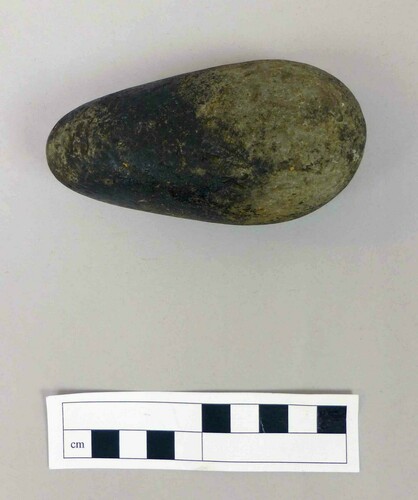 1916.36.245Flaking pebble from a cliff cave. [FB 27/06/2014]1916.36.245
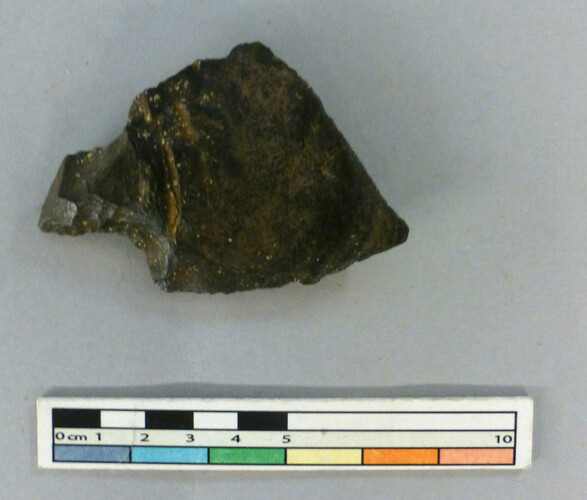 1916.36.340.53Obsidian stone tool (mata'a ).1916.36.340.53