
- Collection type
- Object
- Description
- Cover for a gun, probably for a bolt-action rifle.
- Long description
- Cover for a gun, probably for a bolt-action rifle. The cover is made from a long strip consisting of two layers of textile which have been folded over and stitched together at both ends and also along part of the side. The bottom layer of the cover is made of red cotton textile and the upper layer is made of dark purple silk textile which has been embroidered all over with designs in silk yarn and metal couched cotton yarn. The cover is closed by means of a flap which goes from one side to the other and is fastened with metal poppers (press-studs) to the main body of the cover. There is also a popper on the inside of the cover. The flap is decorated in a similar way to the main body of the cover and has a pale blue and white beadwork edge. There is a hole in the upper section of one side of the cover. This has been carefully edged in blanket stitch and was probably made for the bolt of a bolt action rifle. [MdeA 16/11/99] The embroidery is mainly in orange coloured silk yarn but there is also some embroidery in dark purple, green and red silk yarn. The metal threads are made of cotton around which a fine layer of metal has been rolled, they are not taken through the background fabric but applied onto it. The couched threads are laid parrallel to each other and caught down by a row of machine stitching. This work is common in Pashtun nomad embroideries. [In the case of this object I am not sure whether the couched threads are laid down or whether they are a pre-made sort of braid which has been stitched to the fabric.] There appear to be three types of couched threads - the older where the threads are laid parrallel and stitched by hand, and the more modern where they are either stitched down by machine or where a braid made of couched threads has been stitched to the fabric by machine. There are three bands on the main body of the cover which are decorated with small circular mirrors which have been surrounded and semi-covered with embroidery so as to attach them to the cover. There are also mirrors attached in a similar way to the flap which closes the cover. Along one open edge of the cover the edge has been bound with silk threads in a close blanket stitch. Along the other open edge the cover has been trimmed with a beadwork fringe. The fringe is made from short, pendant silk threads which have been strung with three beads. The beads are either pale blue or white and the cover is edged with alternating sections of blue and white beads. The widest end of the cover has a strip of purple textile (different from the purple silk of the main body of the cover) which has been decorated with machine stitched couched silver threads. This end is edged with a section of light blue beads. The narrow end of the cover has been decorated and edged with both the blanket stitch edging and a section of white beads. [MdeA 15/11/99]
- Geographical reference
- Cultural groups
- Pashtun
- Date / Period
- Date made: Circa 1960?, uncertain
- Date collected
- 29 September 1999
- Acquisition information
- Purchased: 18/10/1999
- Materials and processes
- Material Cotton Seed Fibre Textile Plant, Material Silk Yarn Animal, Material Cotton Seed Fibre Yarn Plant, Material Silk Textile Animal, Material Metal, Material Mirror Glass, Material Bead, Process Stitched, Process Embroidered, Process Beadwork, Process Machine-made, Process Woven
- Dimensions
- Width: max 155 mm, Length: max 1130 mm
- Object numbers
- Accession number: 1999.33.45
- Research and responses
For further information on this type of embroidery see 'Afghan Embroidery' by Roland Paiva and Bernard Dupaigne published by Musée de L'Homme, U.N. High Commissioner for Refugees, Fondation de France. [MdeA 16/11/99]
See also page 40 of the above publication for a photograph of an object showing the techniques and materials used in this object. [MdeA 16/11/99]
Search terms: Transport and Travel, Textile, Firearm Weapon, Bag, Bead, Toilet, Firearm Accessory, Mirror, Holster, Toilet Article
Further items to explore
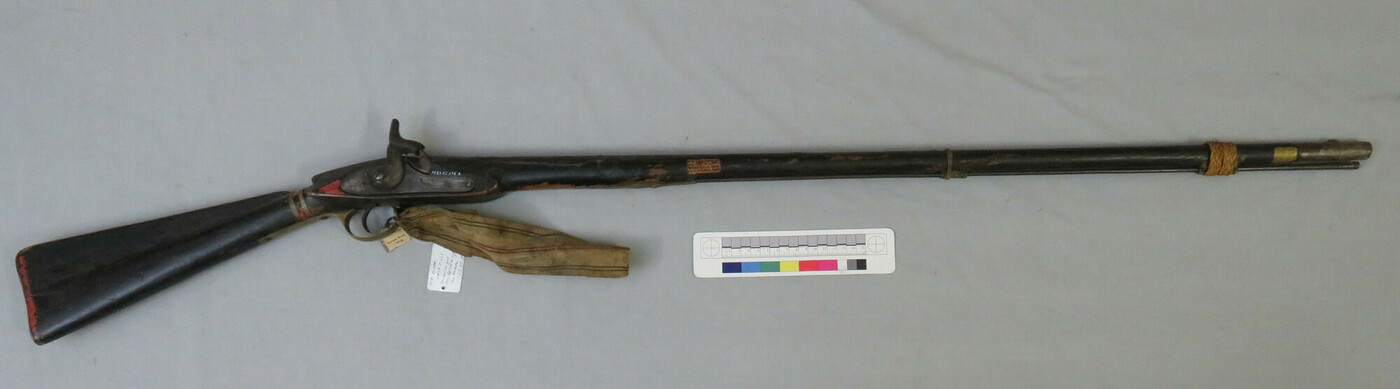 1923.85.896.1Percussion cap long gun [.1] with a cut-down British bayonet [.2]. The gun is muzzle-loading and has an iron ramrod with locally made cane ring holders. [AF [OPS Move] 29/6/2017]1923.85.896.1
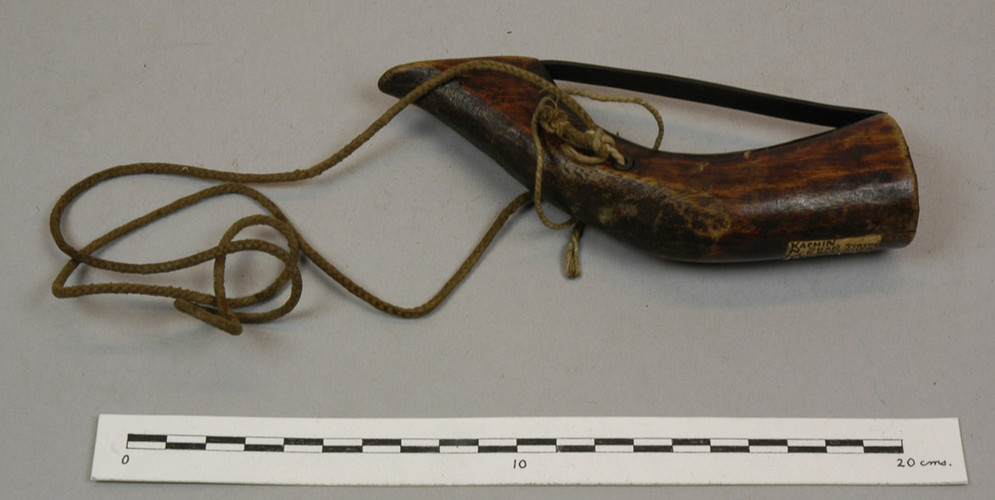 1912.11.3Flask for gunpowder, wooden, with a horn spring valve and a loop of string that is attached through a hole in the centre of the flask. [SM 02/11/2007]1912.11.3
 1918.25.170Gun flint painted silver. [El.B 08/01/2008]1918.25.170
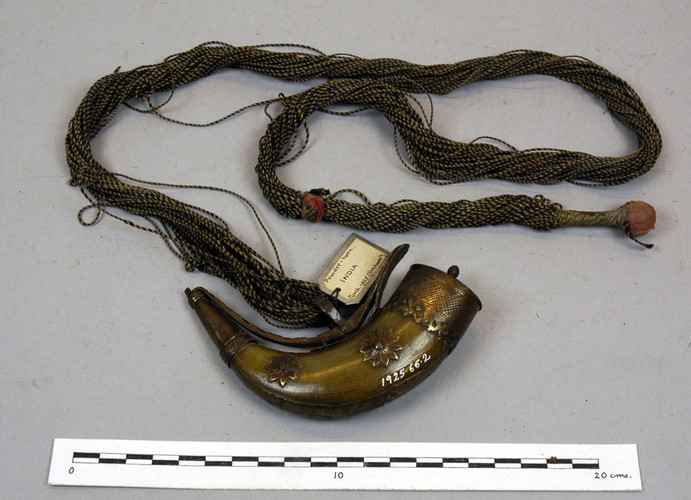 1925.66.2Priming horn, consisting of a brass mounted horn with a spring valve and long blue and white yarn carrying strap. [SM 02/11/2007]1925.66.2
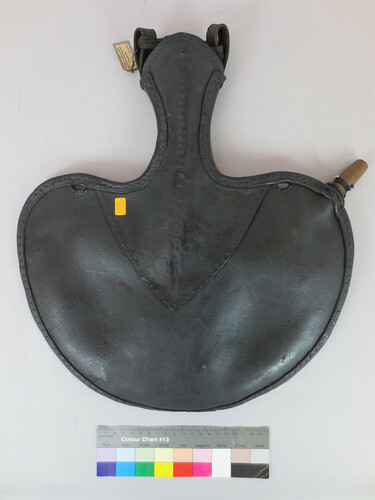 1884.140.816Water bottle of leather with central neck with aperture for filling with water and wooden side nozzle for pouring out. [ZM 20/7/2005]1884.140.816
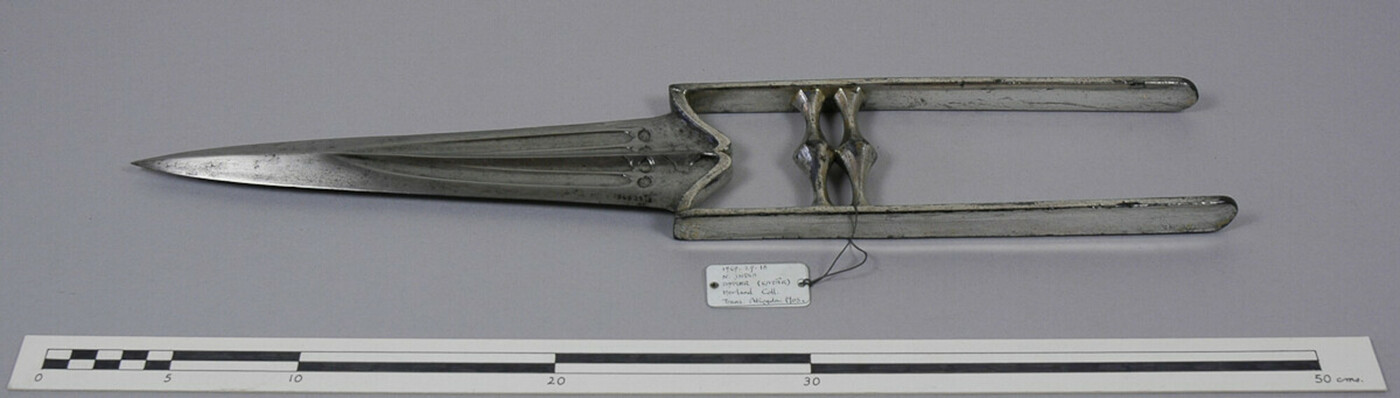 1969.29.18Katar with wide blade. The two crossbars and side guards have a silver finish [SM 08/03/2007]1969.29.18
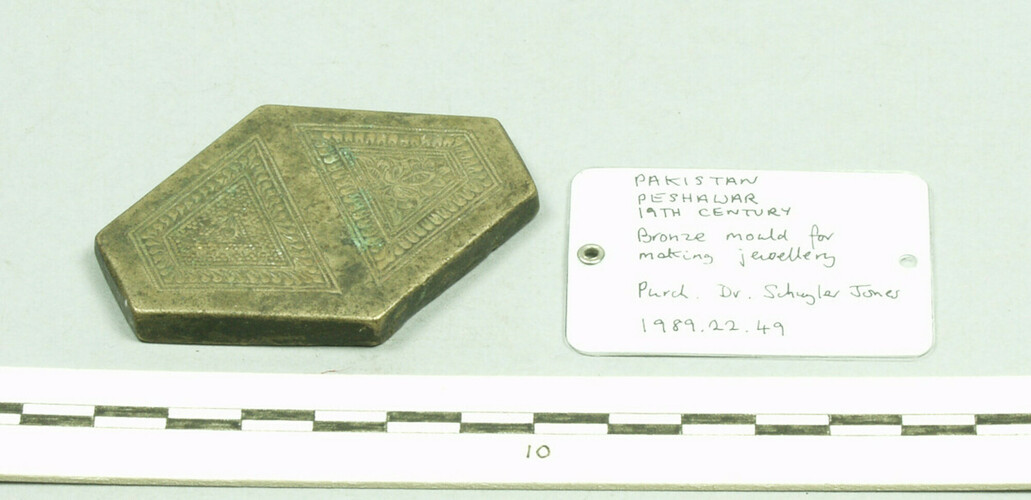 1989.22.49Bronze mould for making jewellery from sheet gold or silver. [N.B. 'DCF 2004-2006 What's Upstairs?' 21/6/2005]1989.22.49
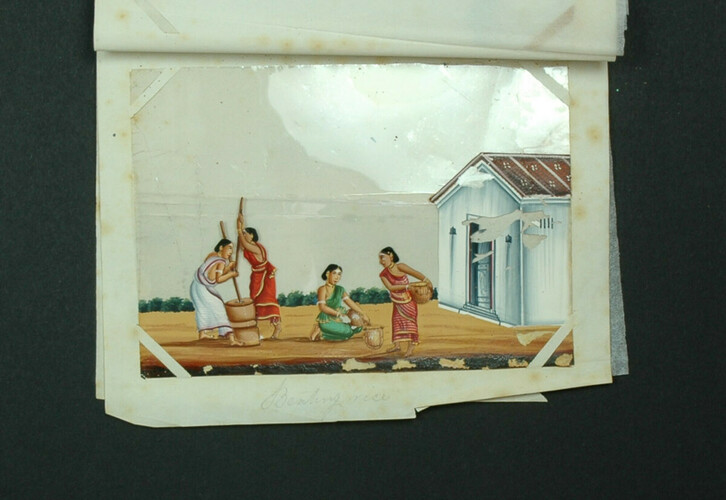 1946.3.23.11Talc painting of a group of four women working with containers of rice. Two are pounding the rice with poles. [LKG 30/11/2009]1946.3.23.11