
- Collection type
- Object
- Description
- Barkcloth. Worn by women in specific areas and for mourning. It is brown in colour with a loose, lace-like texture in the fibres, with many natural holes. [AF [OPS move] 9/8/2017]
- Geographical reference
- Nicobar Islands
- Date / Period
- Date made: Before 1886
- Date collected
- Before 1886
- Acquisition information
- Transferred: 1886
- Materials and processes
- Material Bark Cloth Textile Plant, Process Beaten
- Dimensions
- Length: max 1950 mm, Width: max 1500 mm
- Object numbers
- Accession number: 1887.11.44 Other numbers: 87 Other numbers: Brigham (1911) 242
- Research and responses
On the donor card it says 'The Nicobar collections came in two ways 1. via the University Museum transfer in 1886 and via General Pitt Rivers own collections ... Donations volume 1 pages 12 - 15 which lists those objects given by Man to the University Museum and then transferred to PRM in 1886; with retrospective numbers', all objects need to be carefully matched against entries and where uncertain both Objects PRM and the PR catalogue entries examined to ensure the right entry has been chosen [AP 2/9/99]
This is presumably the source of one of the specimens of barkcloth given by Henry Balfour to William T. Brigham, Director of the Bernice Pauahi Bishop Museum; see Ka Hana Kapa (Memoirs of the Bernice Pauahi Bishop Museum of Polynesian Ethnology and Natual History, III; with separately boxed set of color plates), by William T. Brigham (Honolulu: Museum Press, 1911). On page 231 Brigham notes that his private collection contains many specimens 'gathered in visits to many museums, and sent by correspondents who desired to make the knowledge of bark-cloth manufacture more complete'. A list of 'Specimens of Kapa in the Author's Collection' follows (pages 240-49). This includes some 14 specimens given to Brigham by Balfour, including (on page 240) Brigham's number 242: 'Heavy, stiff brown (BB, 11) kapa from Shom Pen, Great Niobar, where it is called Ok ho; worn also by coast women when in mourning. Said to be made from a species of Celtis. E. H. Man collection. Given by H. Balfour, Esq.' The reference 'BB, 11' is to Plate BB (11) in the separately boxed set of colour plates. The later history and current whereabouts of this and the other samples is not known. [JC 5 9 2003; JC 23 9 2003]
Search terms: Clothing Textile, Barkcloth, Death, Textile, Waist Cloth
Further items to explore
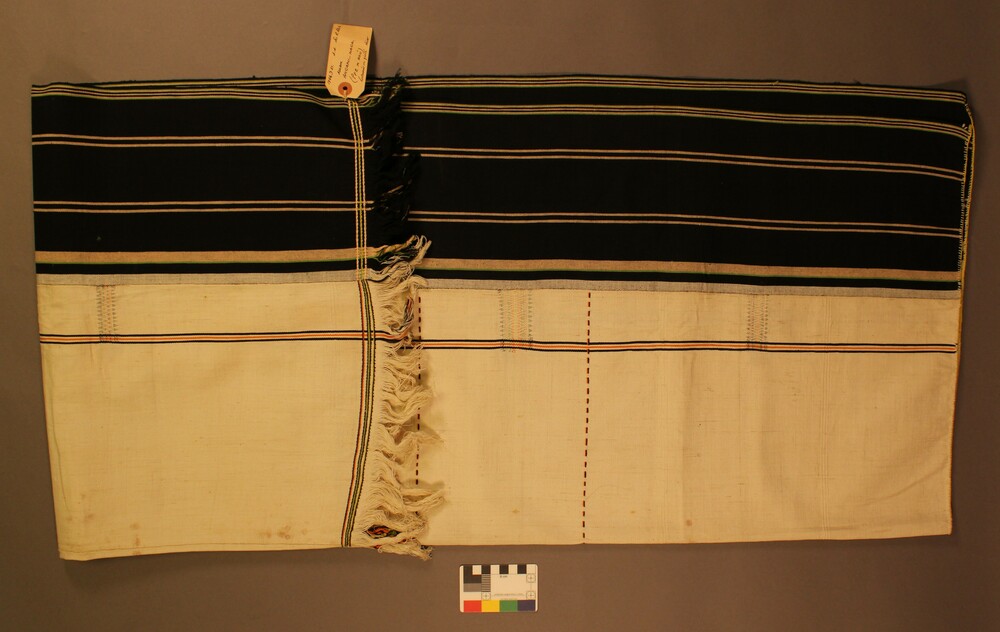 1946.7.81cloth1946.7.81
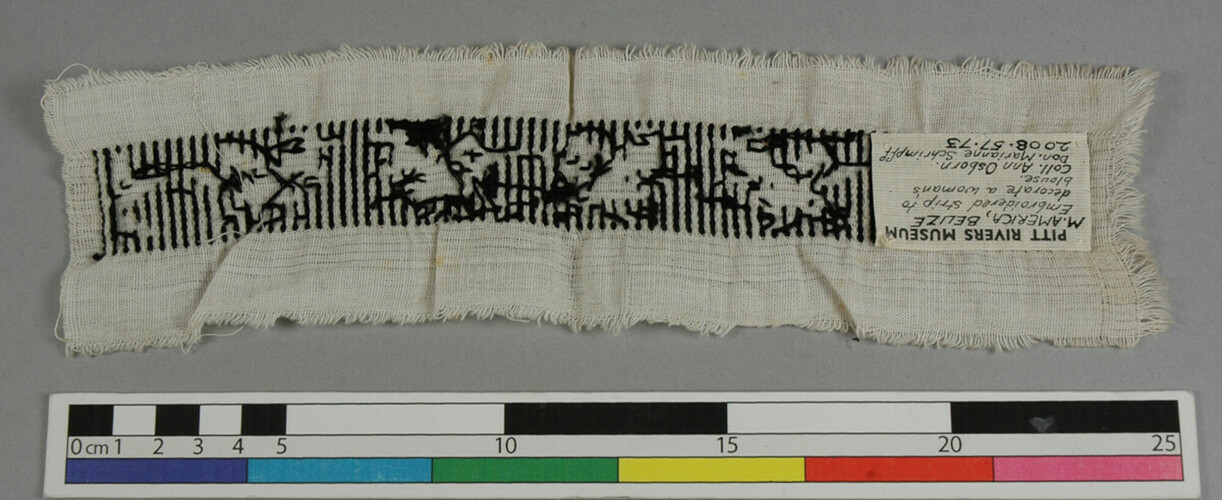 2008.57.73Strip of cotton textile embroidered with a band of bird motifs in black yarn. Used for decorating blouses or 'camisas'. [MdeA 24/08/2009]2008.57.73
 1966.1.1312Protective padded helmet made of cotton, filled with kapok, finished with blue cotton trim and adorned with five tassels. 1966.1.1312
 1972.24.6Textile1972.24.6
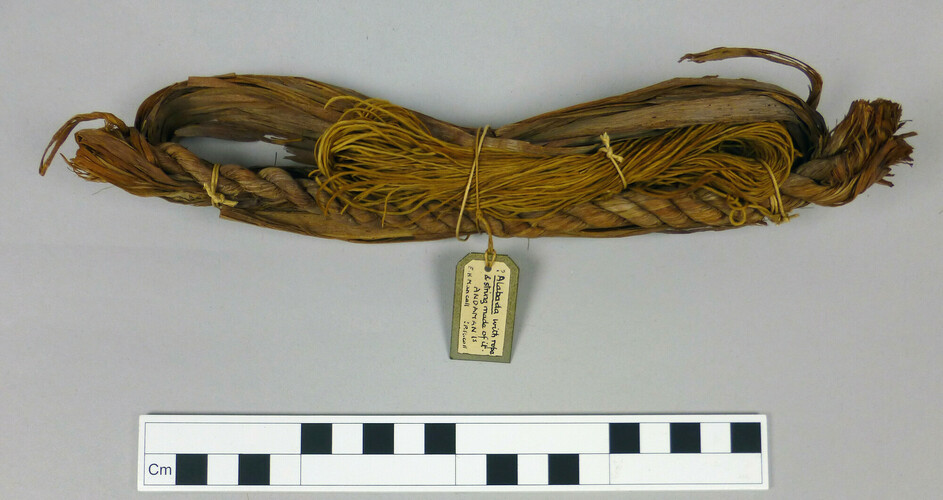 1884.48.49Bundle comprising a bark specimen, rope specimen, and string specimen. [SM (Verve) 27/05/2014]1884.48.49
 1966.15.10Bow, made from wood. [ASh [OPS move] 8/8/2017]1966.15.10
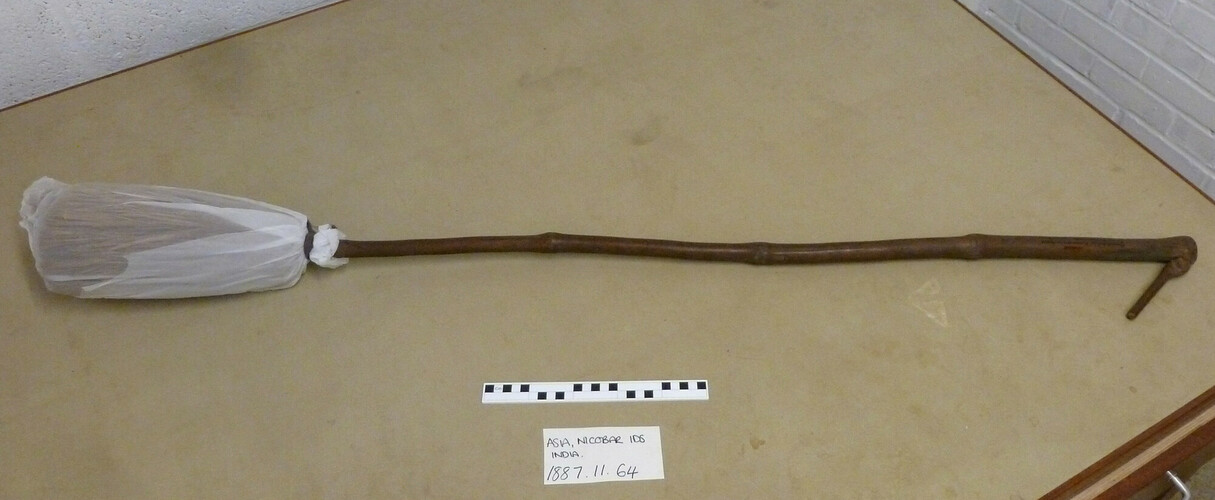 1887.11.64Broom made of young cane leaves, used for sweeping the hut floor. The hook is made from a natural shoot at the end of the broom. [SM (Verve) 19/11/2015]1887.11.64
 1884.140.115Shell used to scrape the kernel of the coconut into fine thin pieces for old people to eat. [MdeA 17/9/2001]1884.140.115