
- Collection type
- Object
- Description
- Stone pestle. One end is considerably ground through use. [MN 23/11/2009]
- Long description
- Stone pestle. One end is considerably ground through use. Five flake scars are visible running from the grinding surface longitudinally along the pestle for a max of 12 mm. It is unknown if they are associated with wear or may have been deliberately removed to create a suitable grinding surface for the pestle. [MN 23/11/2009]
- Geographical reference
- Scotland Orkney Isles Kirkwall and St Ola Lingrow Broch Of Lingro
- Date
- Date collected
- 1871
- Acquisition information
- Transferred: 1892
- Dimensions
- Length: max 124 mm, Depth: max 47 mm, Width: max 60 mm, Weight 408 g
- Object numbers
- Accession number: 1892.67.413 Other numbers: IV
- Research and responses
The Broch Of Lingro [HY 4345 0878] is recorded on the Royal Commission on the Ancient and Historical Monuments of Scotland's [RCAHMS] database of archaeological sites [Canmore] under site no. HY40NW 1 and Canmore ID no. 2348. The site is described as being "the remains of a broch remarkable for the extent and complex character of the outbuildings". The Canmore record states that Petrie excavated the site in 1879, not 1871, and that "owing to Petrie's death, no detailed account of the excavation was prepared". The record is available to view online at http://canmore.rcahms.gov.uk. [MN 09/07/2009] Although note that the site also has an image of a plan of the broch that was based on a drawing by George Petrie dated to 1870-71 and thus it is likely these artefacts were collected at this earlier date. [AS 27/11/2009]
Note that only a tiny fraction of JW Flower items are also marked as being related to the Pitt Rivers founding collection. Whilst it is possible that they did originally form part of the founding collection, were brought from London in 1884 and then placed with the geological(or other) collections at Oxford University Museum of Natural History before eventually being transferred to the Pitt Rivers Museum it seems odd that they were not all recorded as being related to the founding collection. Most are attributed to being donated by Flowers to OUMNH and being transferred from there [AP 23/07/2009]
Search terms: Tool, Food and Drink, Food Accessory, Grinder
Further items to explore
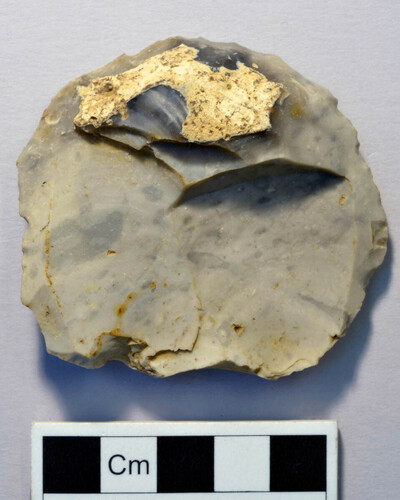 1884.140.1440.2Stone scraper1884.140.1440.2
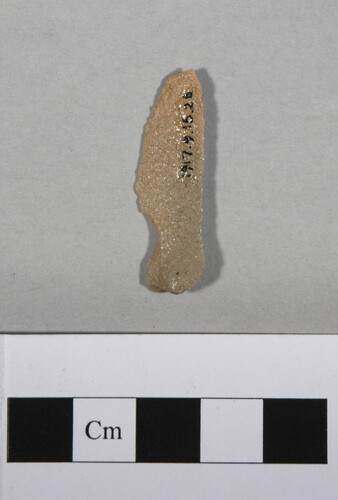 1917.9.15.28Stone tool, flake. [MJD 31/05/2013]1917.9.15.28
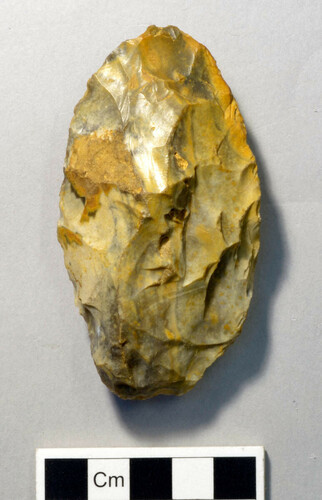 1884.122.75Stone axe ?1884.122.75
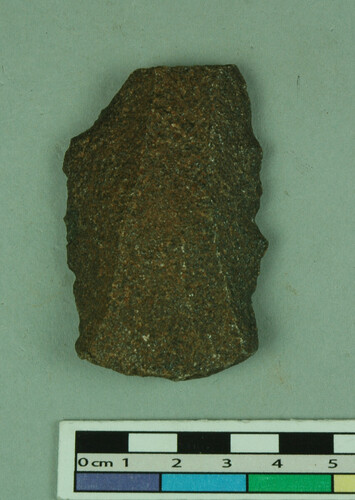 1954.7.13.21Stone tool; small implement of roughly textured dark red brown stone, with ?retouched long lateral sides, and dorsal crests. [LKG 26/07/2010]1954.7.13.21
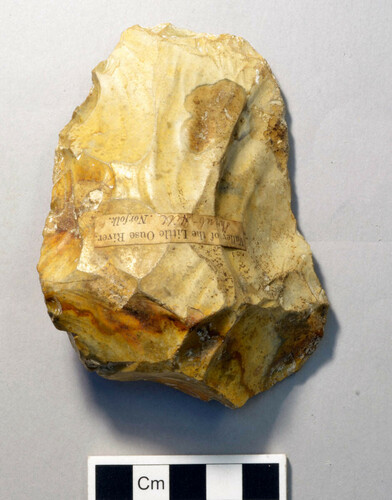 1884.122.80Stone implement1884.122.80
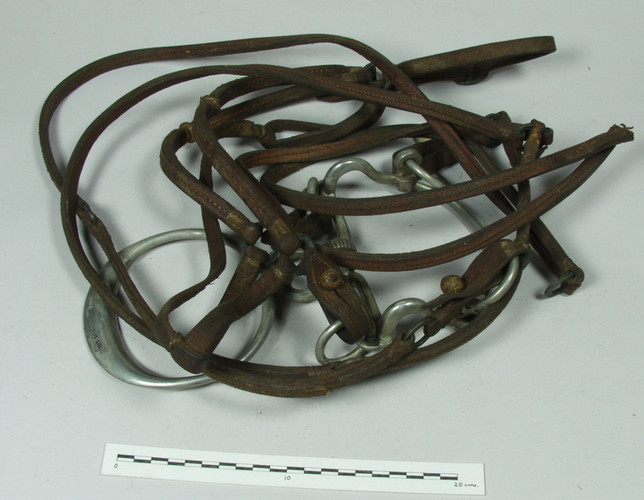 1913.51.1Leather bridle and reins with English-made bit. [E.S-R 'DCF 2004-2006 What's Upstairs?' 7/12/2004]1913.51.1
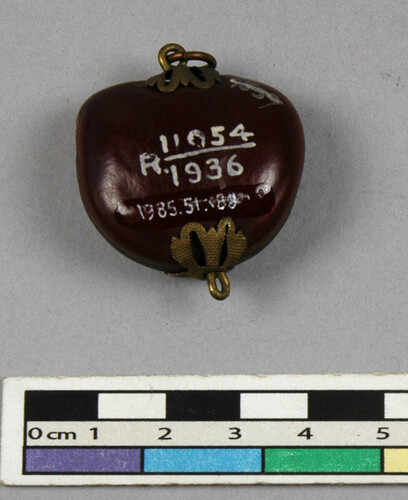 1985.51.188Charm for luck. Plant nut/seed that has been perforated and fitted with decorative copper alloy mountings at the top and bottom. [SM 26/01/2011]1985.51.188
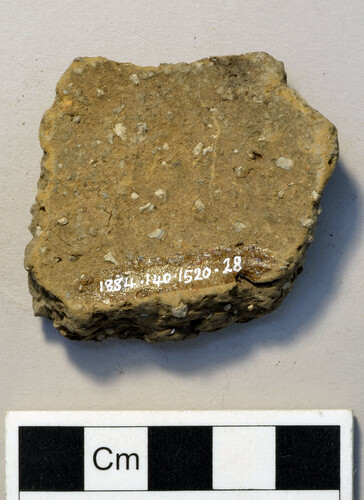 1884.140.1520.28Ceramic sherd. Body sherd of coarse grain ceramic with mineral temper. [CG [Excav. PR] 29/07/2013]1884.140.1520.28