
- Collection type
- Photograph
- Description
- Grave post, a carved and incised wooden post.
- Geographical reference
- Person
- Photographer Edward Evan Evans-Pritchard
- PRM source Institute of Social and Cultural Anthropology, University of Oxford
- Date / Period
- Date of photograph: 1926 - 1930
- Acquisition information
- Transferred: 13/12/2012
- Photographic process
- Negative film nitrate
- Dimensions
- Length x Width 103 x 75 mm
- Object numbers
- Accession number: 2013.2.59.1 Previous PRM number: 149 Previous other number: 349 VIII/6
Search terms: Death
Further items to explore
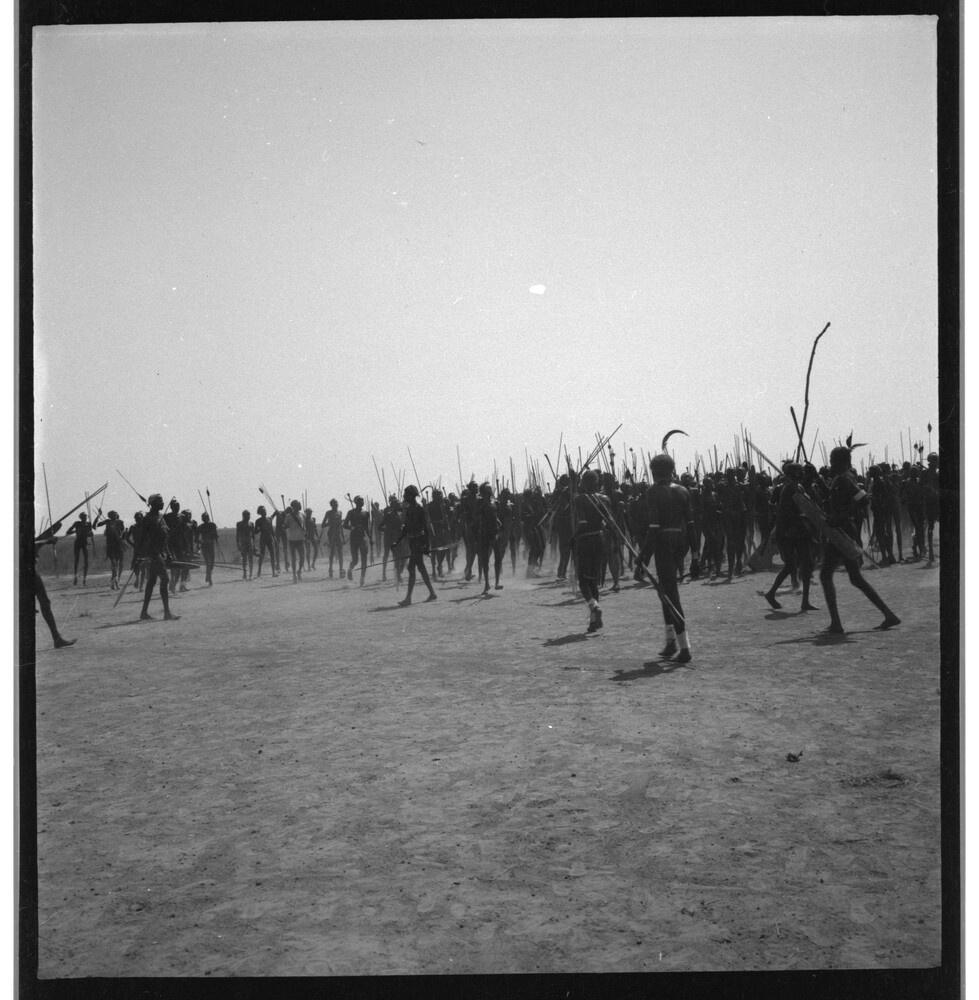 1998.355.162.1A group of people gathered on a dance-ground holding spears and other dancing paraphenalia. Dances were more a feature of village life than cattle camps since people had more ready access to other social groups, and often accompanied ceremonies such as marriages. Such events were the main arena for courtship among Nuer youth, and often took the form of mock battles between village groups.1998.355.162.1
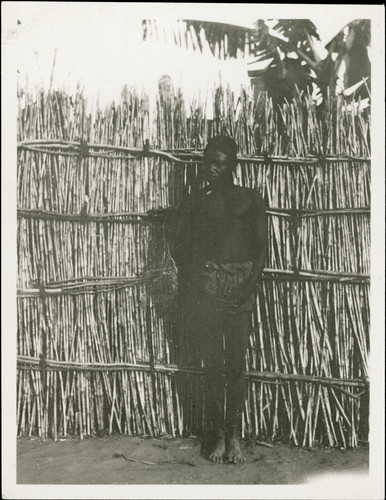 1998.341.568.2A portrait of a youth (unidentified) in barkcloth with a reed fence as backdrop.1998.341.568.2
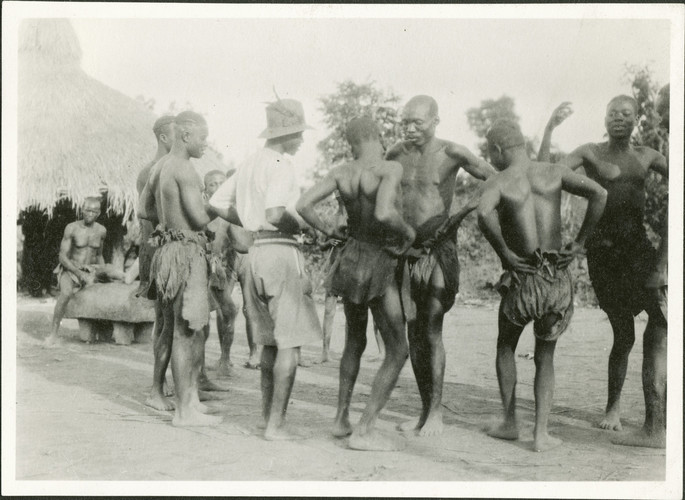 1998.341.592.2A line of male dancers wearing barkcloth with a wooden gong (gugu) being played near a thatched shelter beyond, possibly an open cooking shelter. Such dances were sometimes spontaneous affairs held at the end of the day (notice length of shadows).1998.341.592.2
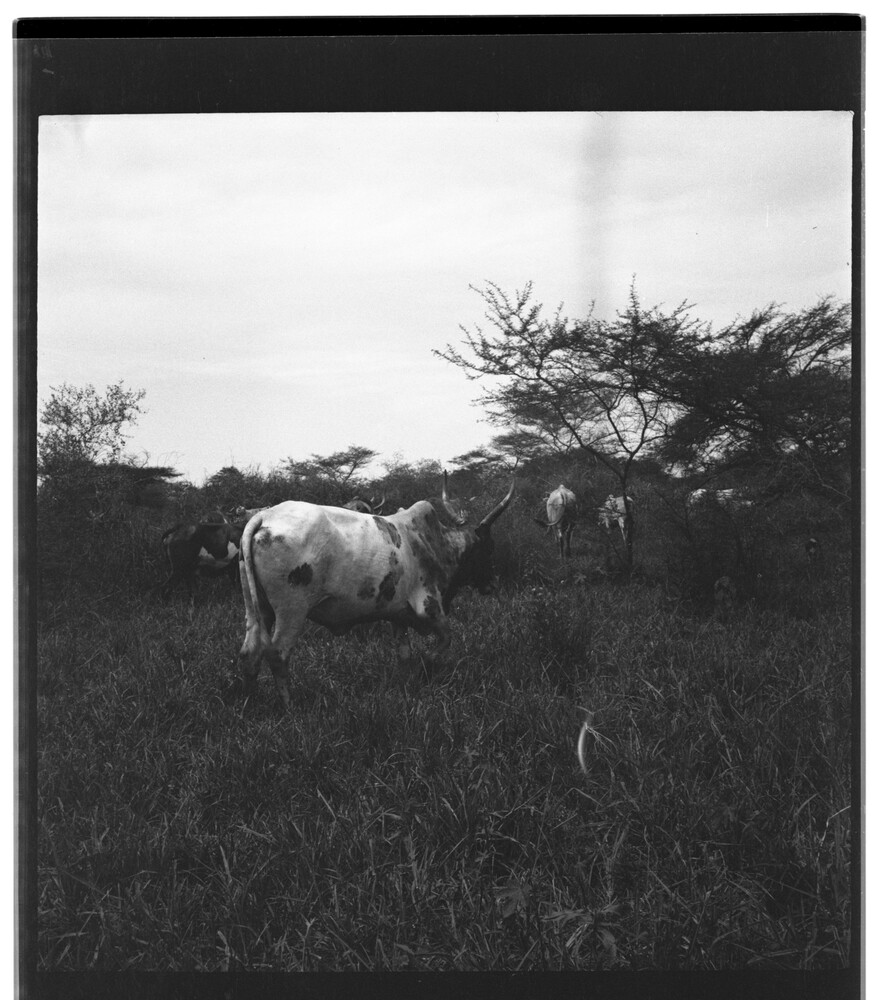 1998.355.560.1An ox with mottled markings and a large hump grazing in a wooded area, probably in eastern Nuerland. In contrast to his two earlier fieldwork visits when photographing cattle was viewed suspiciously by the Nuer, Evans-Pritchard took numerous record images of them during his later field trips.1998.355.560.1
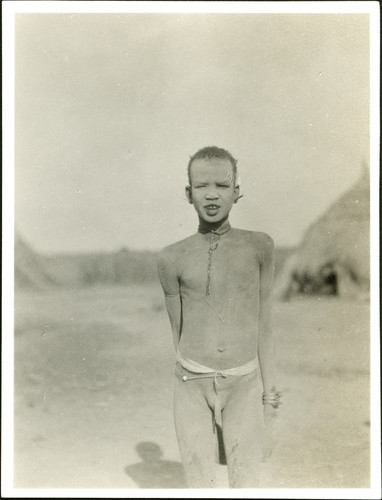 1998.346.48.2A three-quarter length full face portrait of a youth (holding something behind his back?) with ash smeared on his body, typical of dry season life when youths sleep on a layer of ash around a fire in the windbreak. He is wearing ear ornaments and others on his wrists, waist and neck. In the background can be seen a sleeping hut.1998.346.48.2
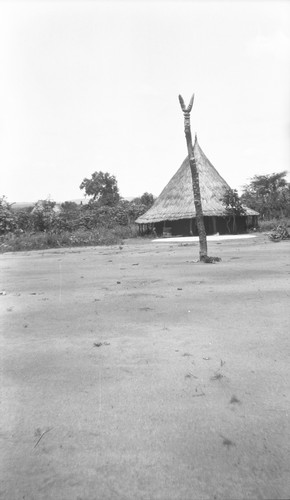 2013.2.203.1Hut with a forked carved wooden grave post in front of it.2013.2.203.1
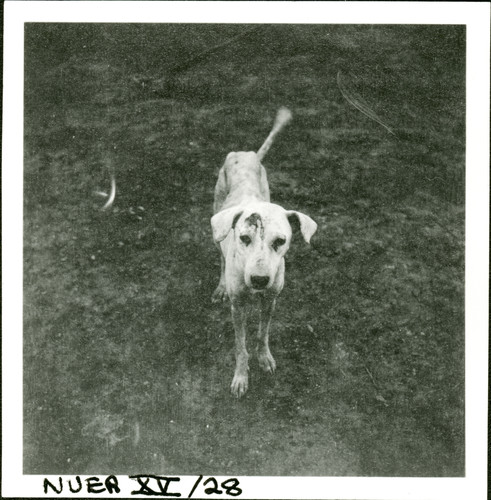 1998.355.714.2A portrait of a dog with an apparent wound on its head. Dogs were used by the Nuer for occasional hunting of antelope and other game. Based on the film number, this dog was photographed at Yakwach on the Sobat River, which Evans-Pritchard revisited in 1935.1998.355.714.2
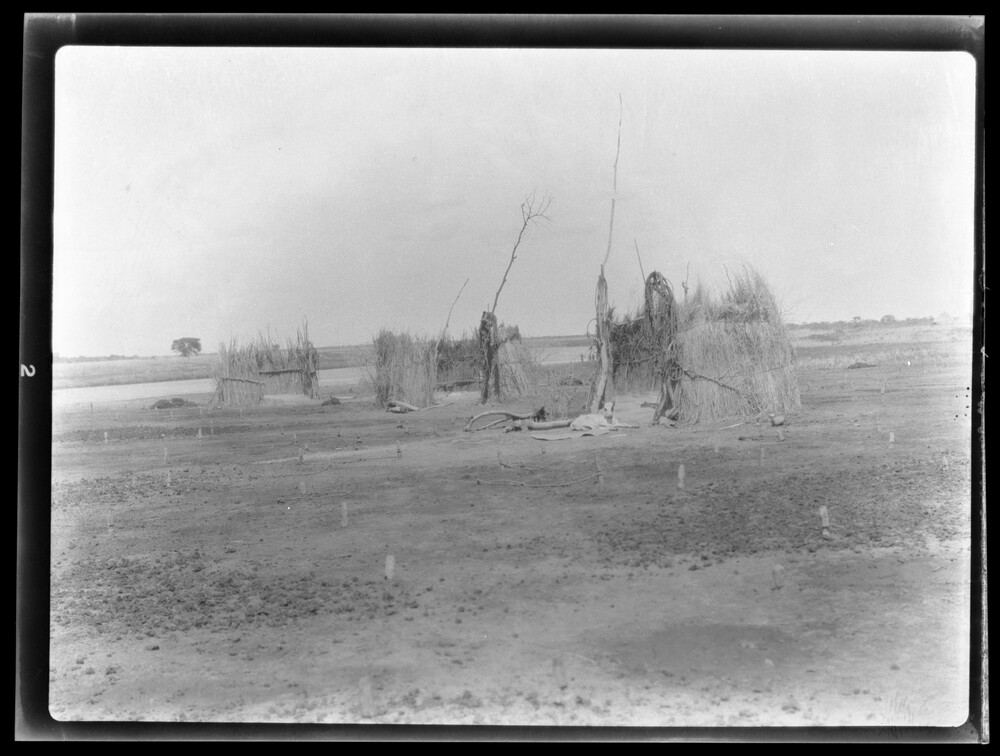 1998.346.73.1Three curved grass windscreens (one with a calf sitting in the entrance) with ash-covered floors where people sleep next to the fire in the dry season cattle camp. The camp is probably some weeks old judging by the depth of ash built up against the wall of the nearest screen, as well as their smoke-blackened interiors. Tethering pegs for cows can be seen nearby. Beyond is the Sobat River, a main source of water for the Lou tribe during the drought. This image may well be of Yakwach camp where Evans-Pritchard spent 3 months in 1931 or close by at Kurmayom (just downstream on the Sobat) where he spent about 3 weeks in the same year.1998.346.73.1