
- Collection type
- Object
- Description
- Circular rain-cape made from twined cedar bark fibres, with marten-fur attached to the neckline.
- Long description
- Circular rain-cape made from twined cedar bark fibres, with marten-fur attached to the neckline. The cape flares out from the circular opening at the neck (circumference 600mm) to the much wider hem (circumference 2140mm). The cape is formed from warps, comprising bundles of cedar bark fibres, which are held in place with a continuous spiralling plant fibre weft of single twining. The twining creates horizontal lines every 10 to 15mm. The neckline is formed by folding the warp bundles over a large ring of bundled fibres. The neck is edged all the way round with pieces of marten fur, the hair ranging from pale to dark brown. The warp bundles are cut at the hem, with four spiralled bands of close twining just above this. The flared shape of the cape is created by extra warp bundles which are inserted at various points in the twining. These inserts are much more visible on the outer surface of the cape than the inside.
- Geographical reference
- NW Coast; Juan de Fuca Straits
- Cultural groups
- Makah
- Person
- Field collector James Wood
- Field collector HMS Pandora
- PRM source Ashmolean Museum, University of Oxford
- Date / Period
- Date made: On or before 1850
- Date collected
- 1846
- Acquisition information
- Transferred: 17/02/1886
- Materials and processes
- Material Cedar Bark Fibre Plant, Material Animal Fur Skin, Process Woven, Process Twined Woven, Material Palm Fibre Yarn Plant
- Dimensions
- Height: max 480 mm, Width 930 mm laid flat, 600 mm Circumference at neck, 2140 mm Circumference at bottom
- Object numbers
- Accession number: 1886.1.852
- Research and responses
The Pacific Northwest Coast voyage of the H.M.S. Pandora, captained by Lieutenant James Wood, lasted from 1845 - 1848. The ship arrived at the Pacific Northwest Coast in June 1846 before sailing south in September 1846. It seems likely, therefore, that this cedar-bark cape was collected by Lieut Wood between June and September 1846. Reference: https://www.islapedia.com/index.php?title=WOOD,_James
This cape was viewed virtually by members of different First Nations of the Pacific Northwest Coast during a virtual meeting on 24th June 2021, organised as part of the Talking Threads Project. For the list of attendees and full research notes taken during the session please see the project file.
Donna Cranmer ('Namgis First Nation) offered the suggestion that the cape may be inside out. This was based on how prominent the warp inserts are on the outside of the cape, rather than the inside where they would normally be visible. She added that the locations of these warp inserts, and whether they are forming a pattern, is useful information for weavers to know. She also noted that capes such as this were probably made on something similar to an A-frame, enabling you to weave in the round, with several spiralling wefts and often several weavers working on a piece at once. There are two drawings of such frames with partially woven capes on p.146 of 'Cedar' by Hilary Stewart (1984).
Evelyn Vanderhoop (Haida Nation) noted that her sister weaves cedar bark capes. She uses a tripod of sticks for the frame, with a heading loop around the tripod from which warps of pounded cedar hang.
Further items to explore
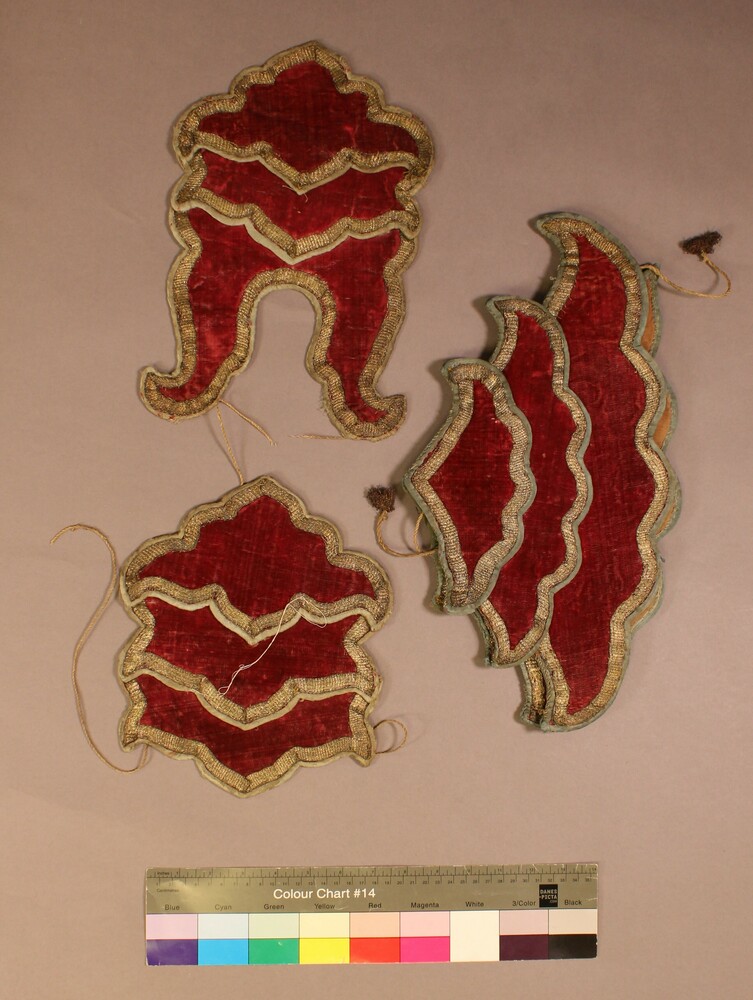 1886.1.132.5Part of neck piece worn with coat. 1886.1.132 .2-.4 all stitched together to form neck piece. [ZM 10/3/2006]1886.1.132.5
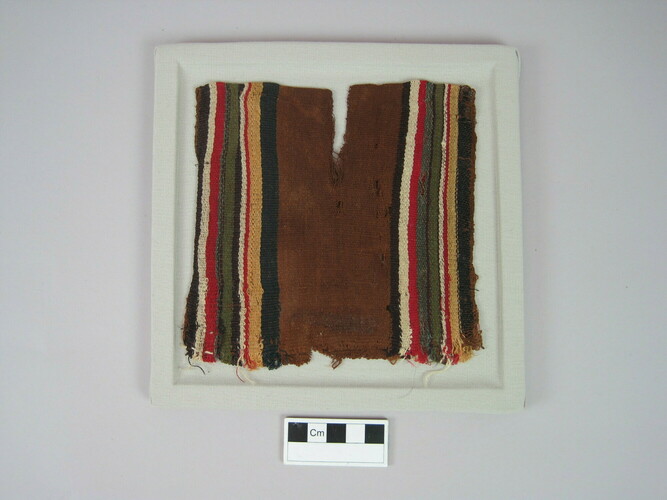 1935.68.12Miniature woven wool shirt [SM (Verve) 16/6/2016]1935.68.12
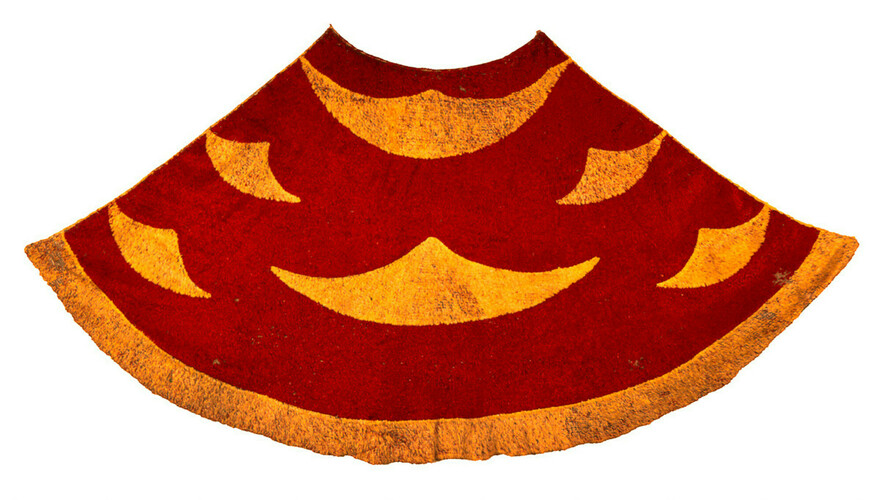 1934.76.2Fibre cloak covered in red and yellow feathers.1934.76.2
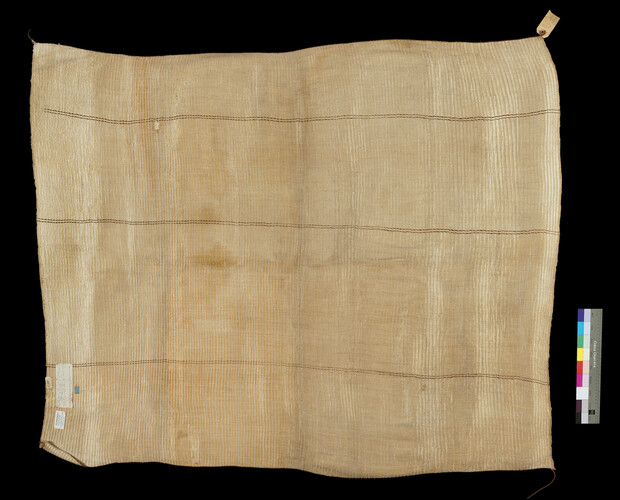 1886.1.1136Flax cloak decorated with three pairs of horizontal lines of dark fibre.1886.1.1136
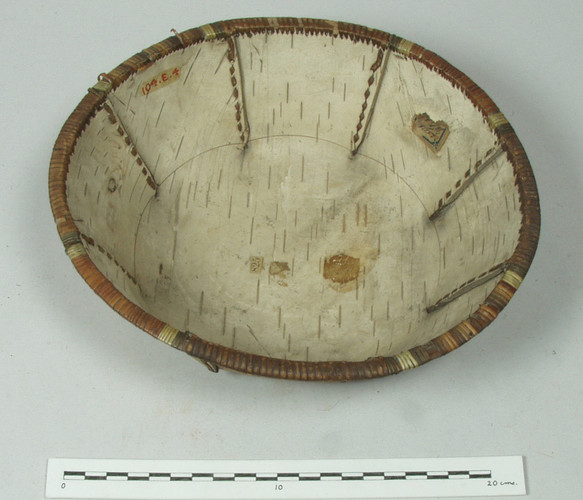 1886.1.825Birch bark bowl, stitched around edge.1886.1.825
 1897.43.6Shell bead1897.43.6
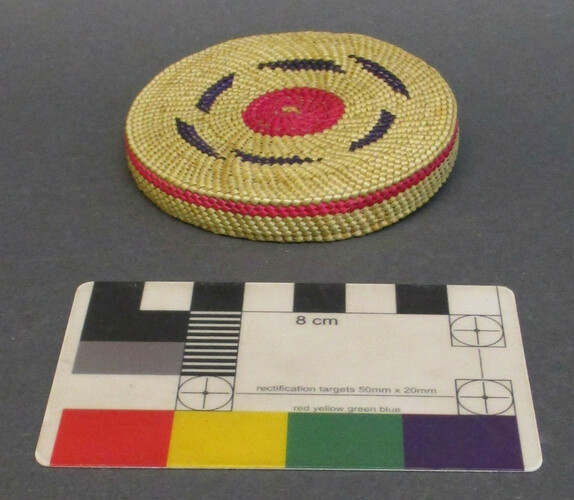 1953.7.6.2Finely woven circular basket lid. For the basket please refer to 1953.7.6 .1. [BH [OPS Move] 10/11/2016]1953.7.6.2
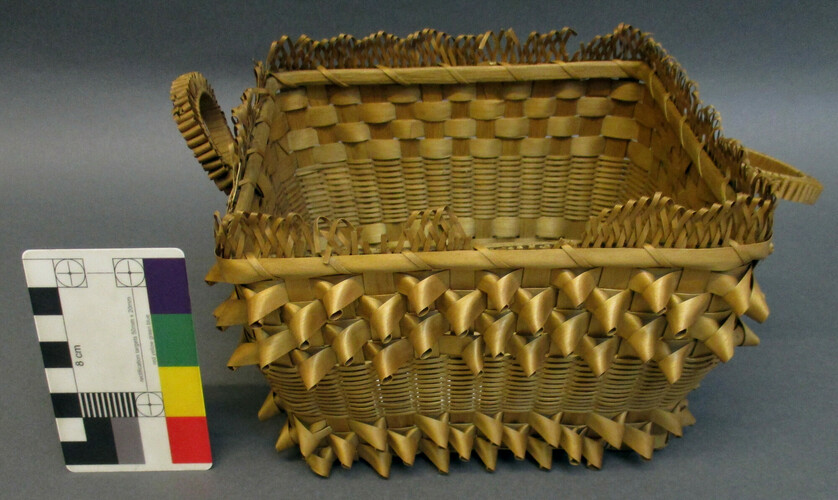 1991.23.1Rectangular woodsplint basket with chequer plaited base. [MOBB [OPS move] 2/11/2016]1991.23.1