
- Collection type
- Object
- Description
- Leg rattles made out of seed pods of varying sizes. These are tied together on cord, with coloured fabric at either end.
- Long description
- Large rattle made out of seed pods of varying sizes. These are tied together on cord, with coloured fabric at either end. Made of strychnos seed pods. The seeds are mounted on string on six bands of 4,5,5,5,4,4 pods on each band. A thick band of string top and bottom is bound with maroon and red fabric, the seeds are perforated with holes in cross or oval shapes.
- Geographical reference
- Cultural groups
- Lozi
- Date / Period
- Date made: Before 1902
- Date collected
- By 1902
- Acquisition information
- Donated: 1933
- Materials and processes
- Material Plant Nut-shell, Material String, Material Textile, Material Plant Seed Capsule, Process Perforated, Process Tied, Process Woven
- Dimensions
- Length: max 280 mm body, Width: max 280 mm body
- Object numbers
- Accession number: 1933.38.39.2
- Research and responses
Leg rattles are common across Southern and Eastern Africa and have a different name depending on the region (Maghavu, Mathowa, Amahlwayi, Matlhoa and many more). The rattles are tied around dancer’s lower legs as percussion instruments played during ceremonies such as weddings or for entertainment purposes. The rhythms produced by the leg rattles emphasise the leg movements of the dancers, and more complex improvised rhythms that vary and cross over from the basic rhythms of a dance can be heard during improvisations by virtuoso dancers.
Traditionally, leg rattles are made from seed-filled gourd fruits such as the Strychnos Spinosa, colloquially known as the spiny monkey orange (known as matamba in Zimbabwe, mateme in Malawi, massala in Mozambique and many other names across southern and Eastern Africa). They can also be made of dried insect cocoons (caterpillar and moth cocoons being the most common) or palm fronds that are filled with pebbles and threaded together using rope or bark fibre. The materials used to make leg rattles vary by region, and traditional materials may be swapped out for contemporary materials if they are more readily available.
Sources:
Professor Robert Nyamushosho (interview)
Jones, C. (1992). Making Music, Musical Instruments in Zimbabwe Past and Present, Academic Books Zimbabwe, p. 78
- Associated publications
- .2 is illustrated in colour on page 16 of Oxford & South Africa (Oxford: Oxford University External Relations Office, 1996).
Search terms: Music, Dance, Ornament, Musical Instrument, Dance Accessory, Leg Ornament, Rattle
Further items to explore
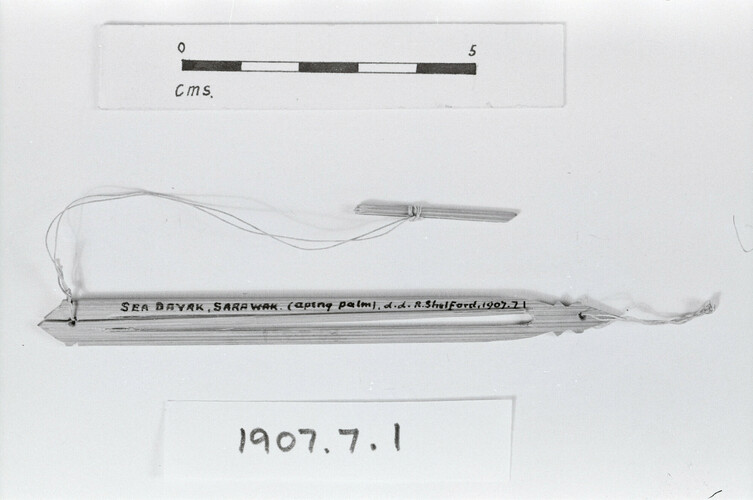 1907.7.1Jew’s harp.1907.7.1
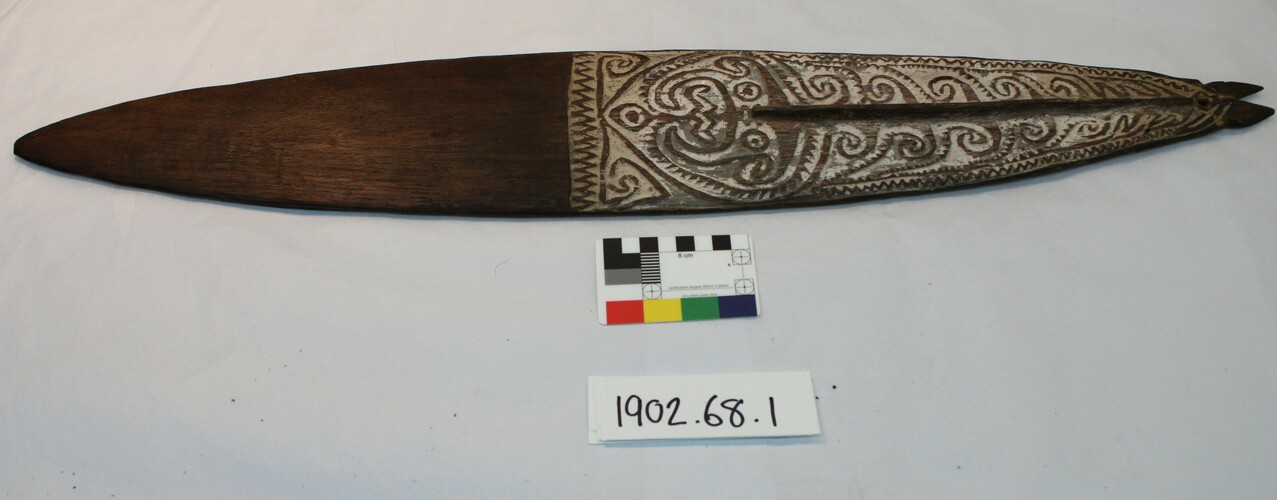 1902.68.1'Bullroarer'1902.68.1
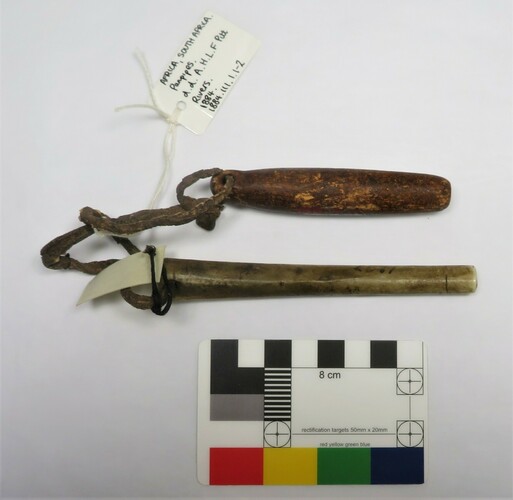 1884.111.1.1Bone pan pipe. This is one part of a pan pipe, for the other see 1884.111.1 .21884.111.1.1
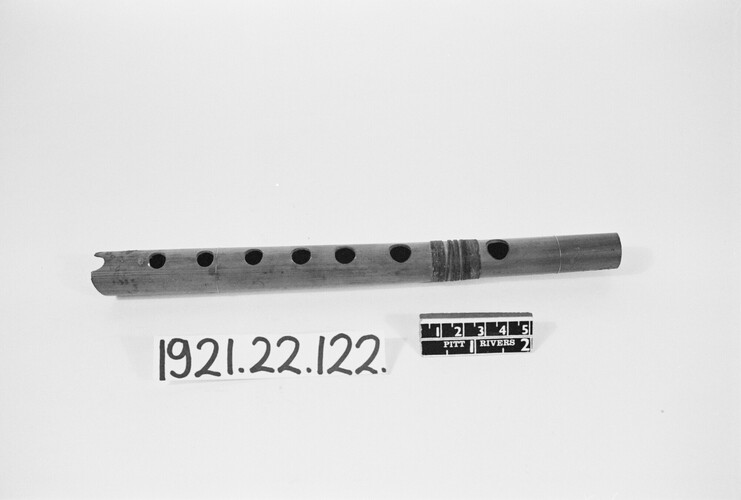 1921.22.122Reed end-flute1921.22.122
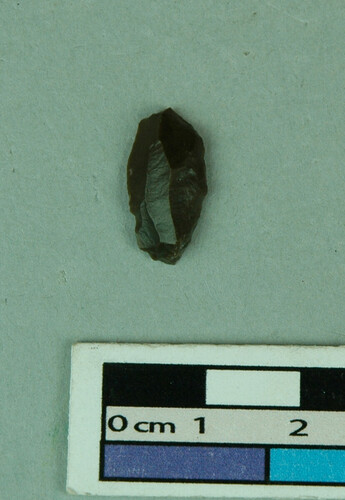 1937.10.20Stone flake, ventral surface with flake scars. The flake is dark brown in colour. [MJD 09/06/2010]1937.10.20
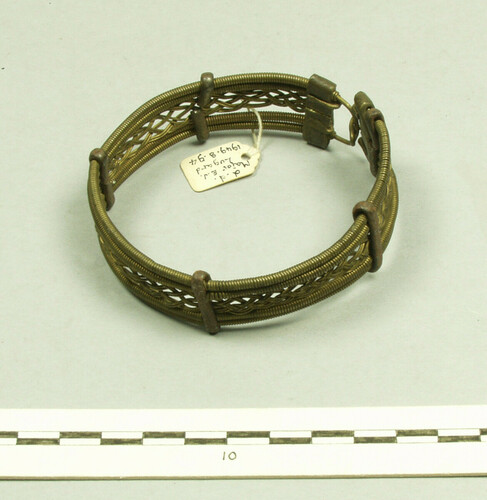 1949.8.94Bracelet of wire-work, of brass and copper wire.1949.8.94
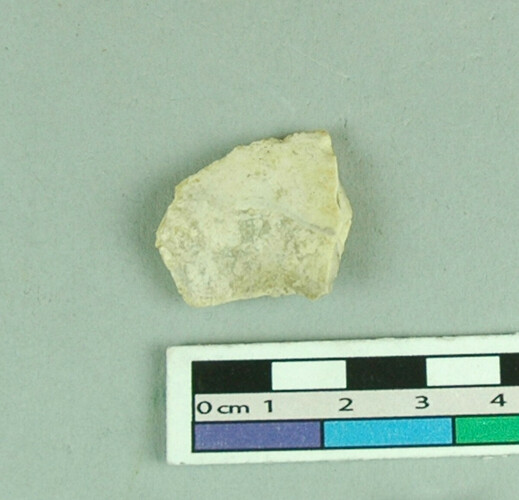 1927.37.58.55Flake of creamy-white stone, roughly triangular with a blunted point at the distal edge. [LKG 23/03/2010]1927.37.58.55
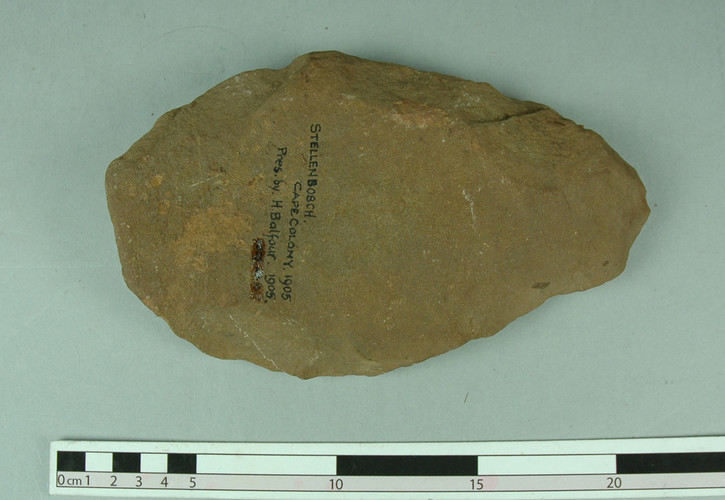 1905.49.14Stone tool; Quartzite implement. [LKG 18/01/2010]1905.49.14