
- Collection type
- Object
- Description
- Musical instrument. [DCF Court Team 17/2/2003]
- Geographical reference
- Cultural groups
- Sotho
- Date / Period
- Date made: Before 1938
- Date collected
- By 1938
- Acquisition information
- Donated: 1938
- Materials and processes
- Material Wood Plant, Material Horse Hair Animal, Material Bird Quill, Process Carpentered
- Dimensions
- Length: max 1005 mm
- Object numbers
- Accession number: 1938.5.3
- Associated publications
- This object features in the Museum's audio tour produced in 2010. Transcription as follows: “The lesiba is wind blown stringed instrument that is usually played by Basotho shepherds, and especially boys, as they herd their cattle on the hill slopes of Lesotho, a small mountainous country surrounded on all sides by South Africa. The lesiba (meaning ‘feather’ in the Sesotho language) is related to the gora of the Khoi people, who are thought to have migrated to Southern Africa over 2000 years ago from Botswana. The lesiba has practically become the national instrument of Lesotho, and its sound is regularly featured before news bulletins on TV and radio. In the far right hand side of the case you can see two examples of the instrument (1905.18.1 and 1938.5.3). Both instruments are fashioned from a slightly bent stick, along one side of which is stretched a thin wire or string – this is sometimes made of horsehair or even sinew. The instrument on the left of the pair has a long string made of horsehair and you can see how it is plaited by looking at the bottom end of the string. The top end of the string is attached to a section of fowl or vulture feather which is held by placing it between wedges that project out of a small hole drilled in to the end of the stick. To play the instrument, the player holds the flat feather between his lips and then performs a skilful variety of breathing techniques to create an impressive double effect. As the player breathes in and out the feather vibrates, much like when one whistles across paper or a blade of grass. Breathing in causes the string to vibrate at various harmonics of the string’s fundamental note, and then the player adds in vocal improvisations as he breathes out, typically including some of the sounds uttered to cattle and birds. Playing the instrument is physically demanding and sometimes requires circular breathing, and so pieces tend to be short. It is often said that cattle graze more contentedly when they hear its sound, although the instrument can also be played for pleasure and improvisation. These two instruments were donated to the museum in 1905 and 1938 respectively and the lesiba is still played regularly in Lesotho today. As the following recording demonstrates, it sounds very modern and almost electronic in places. The recording is called ‘khajaone’ which means ‘the mountain eagle’ and is played by Theko Moshesh who was recorded by Hugh Tracey in Cape Province in South Africa in 1957. The recording is owned by the International Library of African Music in Grahamstown, South Africa, who have kindly granted permission for its use.” (Written by Noel Lobley) [HH 25/10/2010]
Search terms: Music, Agriculture and Horticulture, Musical Instrument
Further items to explore
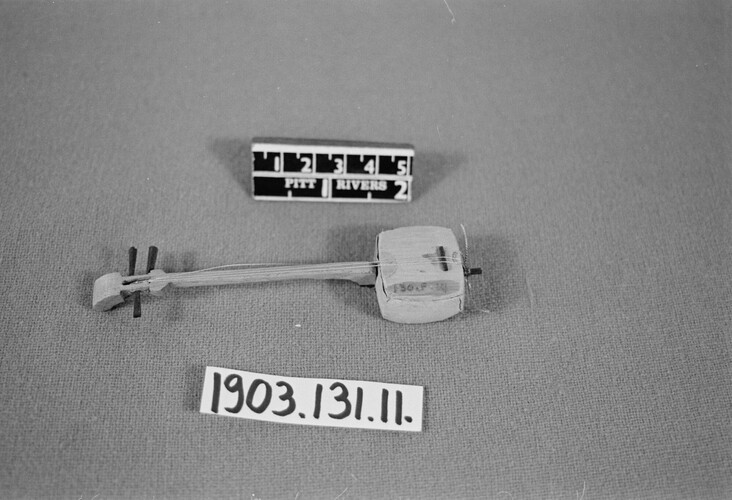 1903.131.11.1Lute model1903.131.11.1
 1914.53.8'Bullroarer'1914.53.8
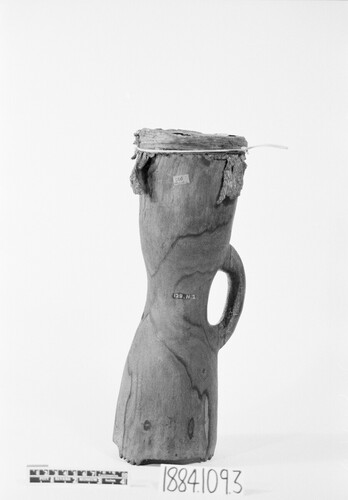 1884.109.3Drum1884.109.3
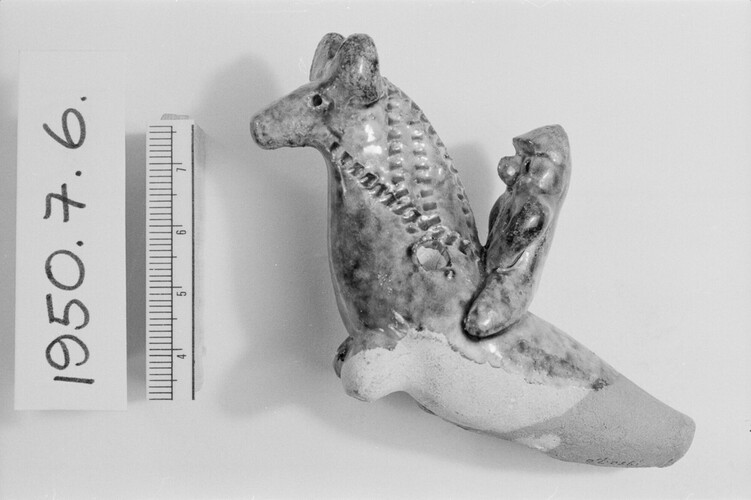 1950.7.6Whistle in the form of a man on horseback Vessel flute with two fingerholes.1950.7.6
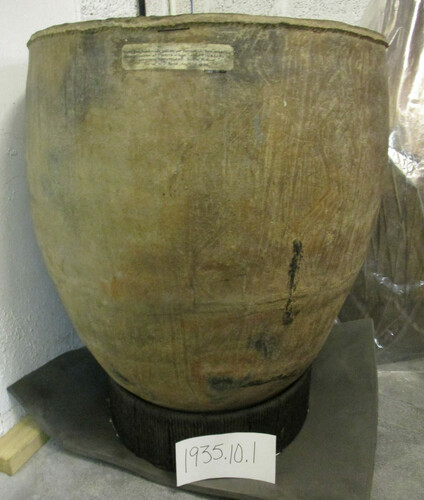 1935.10.1Large pottery jar for storing 'beer'. Decorated with lined and zig zag design and red and black pigment. Plaited designed rim. Signs of non local repair work on a crack near the rim. [BH [OPS Move] 13/1/2017]1935.10.1
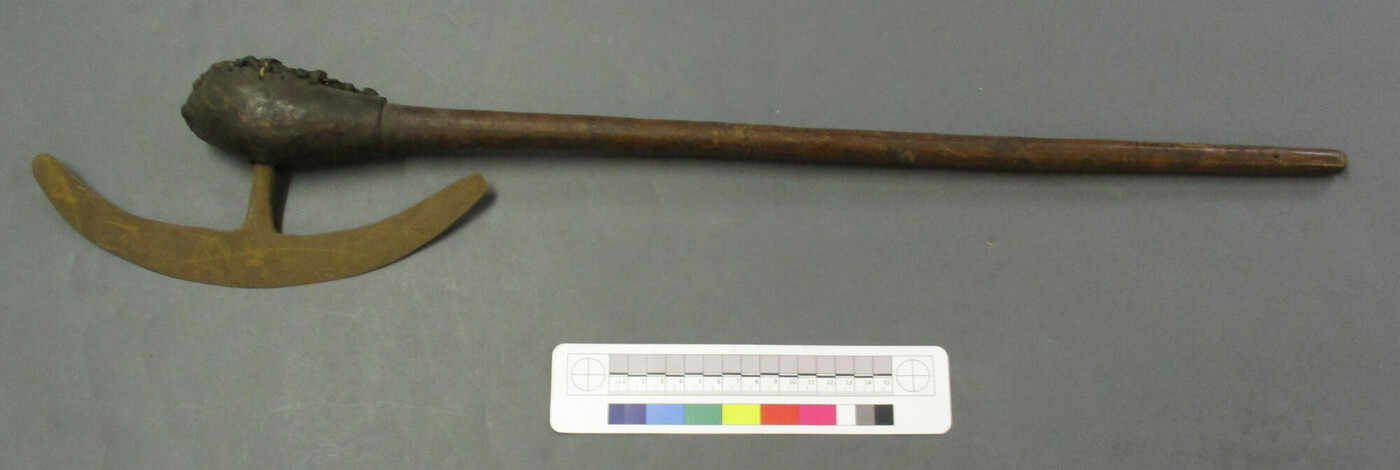 1966.1.267Axe with a crescent shaped metal blade. [CW [OPS Move] 27/1/2017]1966.1.267
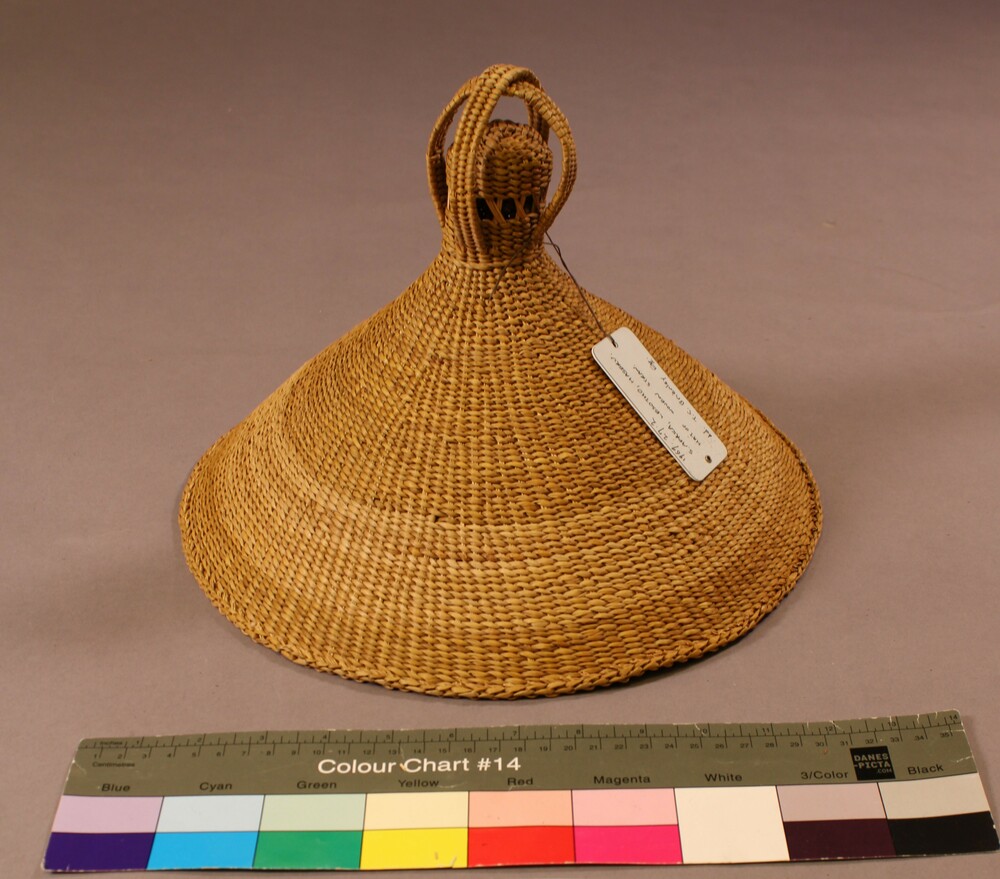 1969.27.2Conical hat of woven straw.1969.27.2
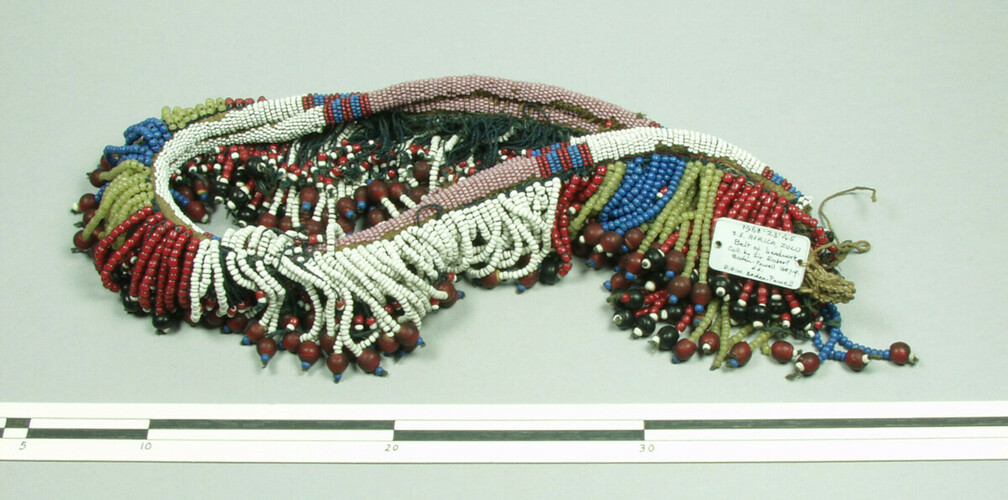 1968.23.45Belt consisting of 2 cloth rolls sewn with broad (pink and white) and narrow (red and blue) bands of beads, with a heavy fringe of beads over the whole length. [N.B. 'DCF 2004-2006 What's Upstairs?' 11/7/2005]1968.23.45