
- Collection type
- Object
- Description
- Side-blown trumpet carved from a tusk, rectangular mouthpiece on the convex side near the narrow end. [presumably LMM 7/1991; JC 6/7/2000]
- Person
- Field collector George Le Clerc Egerton
- Field collector 1897 Benin City "Punitive Expedition"
- PRM source Dumas-Egerton Trust
- Date / Period
- Date made: Before 1897
- Date collected
- 1897
- Acquisition information
- Loaned: 1991
- Materials and processes
- Material Elephant Tooth Ivory Animal, Process Perforated, Process Carved
- Dimensions
- Length: max 840 mm
- Object numbers
- Accession number: 1991.13.20
- Research and responses
Examined by Benin specialist Barbara Blackmun in July 1991. According to Blackmun, this piece is carved with Yoruba-style images similar to those found in Owo, including Eshu the god of unpredictability and a goat with a rope, as well as representations of mudfish, crocodiles and the crescent moon. Although found in Benin it should therefore be described as a Yoruba piece with Edo influence. [LMM 7 1991 ?; JC 9 7 2000]
The Dumas-Egerton Collection, of which this is part, was examined by Hermione Waterfield of Christie's in May 1984; see 'Part of the Nigerian Art Collected by Admiral Sir George Le Cler[c] Egerton on the Benin Expedition of 1897 on Deposit at Maidstone Museum' (copy in RDF). The entry for this object reads: 'A Yoruba carved oliphant with figures, snakes and animals, strapwork about the rim, head at the tip, damages, from Owo. 33 1/2 in. long (max. width 33 in.).' The suggested Owo provenance was independently confirmed by Barbara Blackmun in July 1991 and so can be regarded as safe. [JC 19 10 2001 / 23 1 2002]
Examined by Hermione Waterfield on 29 January 2002. In an e-mail (not kept) of 30 January to Jeremy Coote, she remarked: 'the oliphant could be Benin because Bill [Fagg] said they were the only people who did that interlaced motif, but I know they also used it in Owo which is no doubt why he placed it there. The type of carving is much more like that found in Ijebu and that Yoruba vicinity.' [JC 30/1/2002]
Search terms: Music, Figure, Musical Instrument, Animal Figure, Fish Figure, Trumpet
Further items to explore
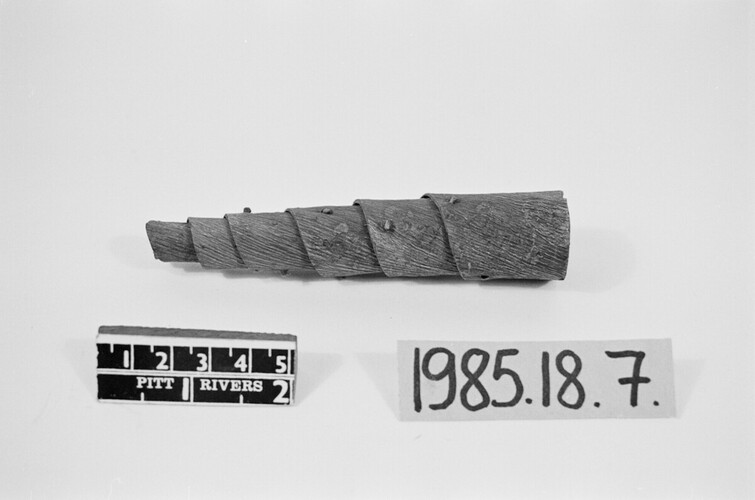 1985.18.7Whithorn oboe.1985.18.7
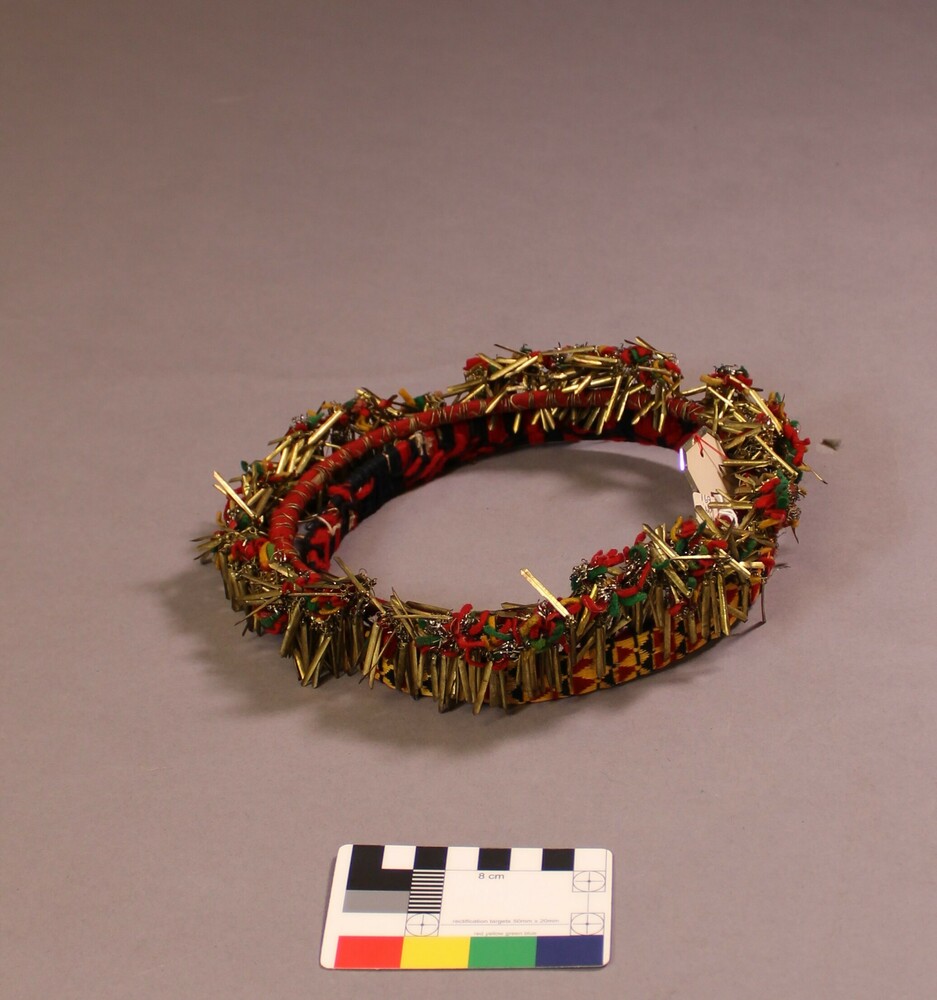 1928.69.691Girl's dance coronet with brass jingles & coloured wool1928.69.691
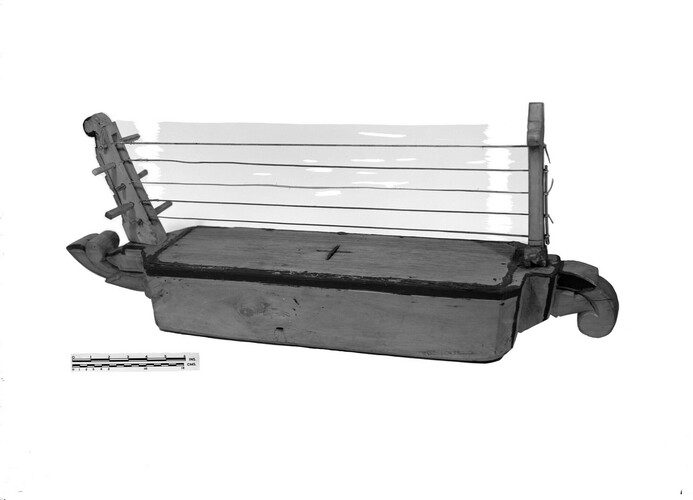 1923.86.538Harp like instrument of wood with rectangular resonator with five strings of creeper plant secured to uprights tenoned into resonator.1923.86.538
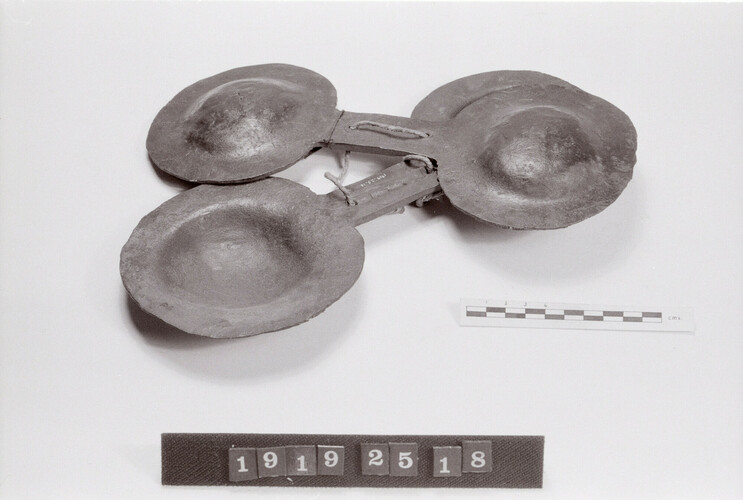 1919.25.18.1One of a pair of cymbals. The associated cymbal is catalogued under number 1919.25.18 .2 [RR 5/2/2020]1919.25.18.1