
- Collection type
- Object
- Description
- Rectangular pouch of deer-skin, decorated with quillwork, brass thimbles and jingles.
- Long description
- Rectangular pouch of deer-skin, decorated with quillwork, brass thimbles & jingles. Finger-woven carrying-strap decorated with interwoven beads, & brass pellet bells. [EC 'DCF 2004-2006 What's Upstairs?' 4/1/2006]
- Geographical reference
- Great Lakes
- Cultural groups
- Native American
- Date / Period
- Date made: Circa 1800-1850
- Date collected
- By 1953
- Acquisition information
- Donated: 1954
- Materials and processes
- Material Deer Skin Animal, Material Brass Metal, Material Bead, Material Porcupine Quill Animal, Material Textile, Material Pigment, Material Deer Hoof Animal, Process Stitched, Process Decorated, Process Woven, Process Recycled, Process Quillwork, Process Resist Dyed
- Dimensions
- Width: max 301 mm, Length: max 253 mm
- Object numbers
- Accession number: 1954.9.22
- Research and responses
Observations made by delegates during the ‘Object Lives’ research visit to the PRM on the 13-15th April 2015. The delegation consisted of Beverly Lemire, Anne Whitelaw, Sara Komarnisky, Judy Half, Cynthia Cooper, Sarah Nesbitt, Sarah Carter, Jonathan Lainey, Laurie Bertram, Susan Berry, Katie Pollock and Julie-Ann Mercer. This is a University of Alberta-based group; see: http://objectlives.com/
Deer-skin pouch. Embellished with thimbles of many different sizes, and with different types and sizes of jingle cones. The finger-woven sash not necessarily part of the bag originally, but is of the right period to have been. NE-mid to 18th century. The thimble jingles are original. The claws are smaller dew claws. Judy Half observed that such a pouch would be worn by men for dancing, especially for slow moving dances with pauses to hear the jingles. The group noted the fragility of claws and jingles, they would break if danced too hard. The group also commented on the possible ritual aspect of bag: the back of the bag has red paint in places. [FB 31/10/2016]
Examined by the GRASAC research team on 12 December 2007 as part of a research project to create a digital database. This will incorporate information about collections of indigenous material culture from the Great Lakes region of North America that are housed in a number of museums on several continents; see https://icslac.carleton.ca/grasac/ [see researchers file GRASAC]. The group identified the materials as hide from a white-tailed deer, which has been tanned or cured (the appears to be from the legs, with dewclaws left intact), porcupine quills (coloured red, black, white, and yellow), red and black yarn (black could be bison hair), white and sky blue pony beads (size 8), brass cones with red dyed deer hair, thimbles and bells (bag designed purposefully to make a noise). Looks like ochre at the bottom of each deerskin strip, between the dewclaws. Motifs are formed of zigzag bands of quillwork over two linen threads, the shoulder band motif is an otter tail with zigzag lines. There are two large H-shaped motifs on the front of the bag, the team had seen this before but didn’t know the meaning. Date of manufacture 18th century, although Cory Willmot wouldn’t go much earlier than 1740 based upon style (rectangular pouch and strap). The size of the pouch is large and the bells and thimbles might also hold a clue to dating. Typical style of Anishinaabeg, although Cory Willmott thought possibly Hodenosaunee. Al Corbiere thought the bag looked as though it had been used. [ZM 15/05/2008]
Final GRASAC entry on this object reads: Materials: Rectangular pouch made of tanned or cured furred hide of a white-tailed deer, probably from four legs - dew claws have been left intact. Decorated with red, white, black and yellow porcupine quills, red and black yarn, brass thimbles (18 attache to lower fringe, 8 on front flap), brass cones, hock bells (8 attached to the strap's fringe). The thongs tipped with brass cones also contain red dyed deer hair. There may be ochre on the bottom of each deer skin strip, between the dew claws. Sewn with linen thread. The strap is decorated with inwoven white and sky blue size 8 pony beads.
Format/Techniques: The bag's front appears to be made of the skin from four deer legs, sewn together, bound with quill-wrapped leather thong. The strap is finger-woven decorated with inwoven beads and resist dye on the straps' centre-top. Zigzag band quillwork is done over two linen threads. The pouch is unlined.
Motifs and Images: The bag's strap has beaded otter tail motifs and zig zag lines. Strips of zigzag band quillwork form two large H-shaped motifs on the bag's front, and two parallel lines on the top of the flap.
Symbolism and Interpretation: "H"s are not unique but we don't know what they mean. (RP) This item looks like other rectangular and black skinned pouches. [added by Laura Peers, 08/10/2008]
- Associated publications
- Reference: Object Lives and Global Histories in Northern North America: Material Culture in Motion, c. 1780-1980, Editor: Beverly Lemire; Editor: Laura Peers; Editor: Anne Whitelaw; London, Chicago, 2021, Page: 289, Page illustrated: 290, Catalogue number: 10.1, Notes: Dew claw bag from the Northeast Woodlands, possibly Anishinaabe or Haudenosaunee, collected 1953. Copyright Pitt Rivers Museum, University of Oxford, 19554.9.22.
- Illustrated as fig. 33 on page 36 of Transformations: The Art of Recycling, by Jeremy Coote, Chris Morton, and Julia Nicholson (Oxford: Pitt Rivers Museum, University of Oxford, 2000). (LP 21/6/2000) Illustrated in colour on page 26 of Pitt Rivers Museum: An Introduction, by Julia Cousins (Oxford: Pitt Rivers Museum, University of Oxford, 2004). Caption (same page) reads: 'Man's hunting pouch made from the skin of a deer's legs, decorated with quills, wool, beads, and thimbles; from the Northeastern Woodlands of North America, nineteenth century.' [JC 8 10 2004]
Search terms: Music, Bag, Textile, Tool, Musical Instrument, Thimble Sewing Equipment, Rattle, Bell
Further items to explore
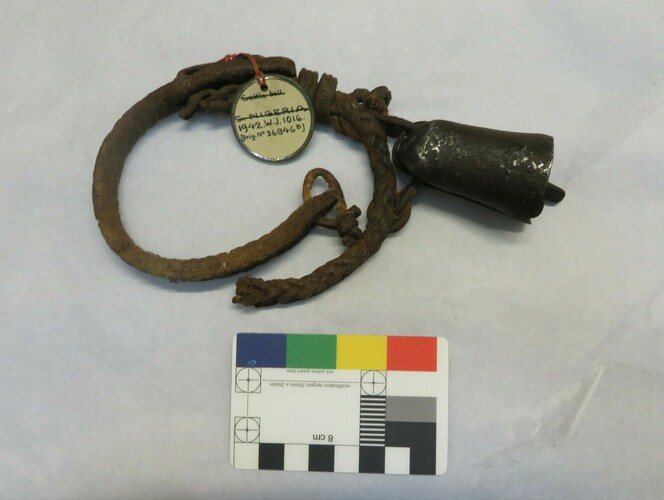 1942.13.1016Iron bell strung on plaited leather strap. [JID 30/1/2020]1942.13.1016
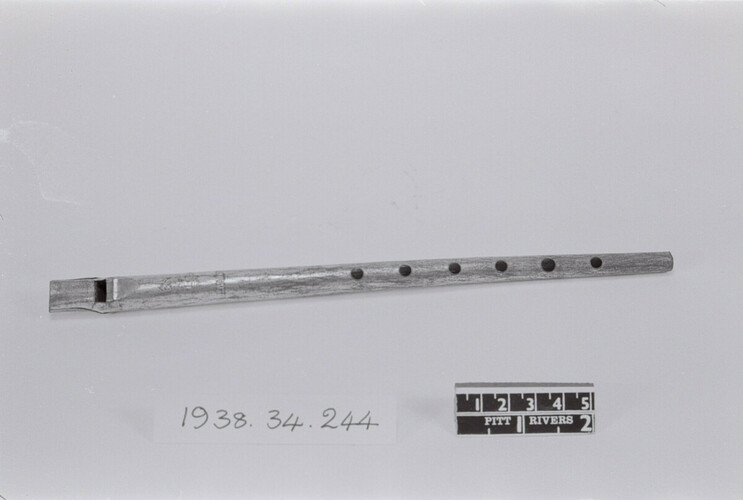 1938.34.244Machine-made tin duct-flute, toy flute a bec, 6 stops. Block also of tin. Square vent, Instrument tapers to distal end. With makers stamp.1938.34.244
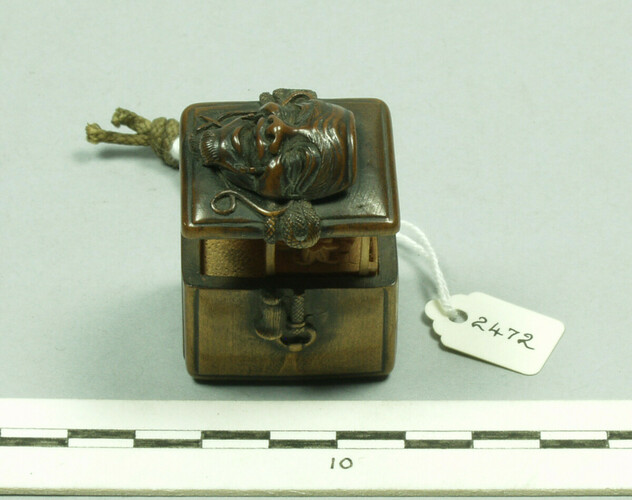 1980.34.2472Wooden box netsuke toggle with a wooden mask attached to the lid. [N.B. 'DCF 2004-2006 What's Upstairs?' 18/5/2005]1980.34.2472
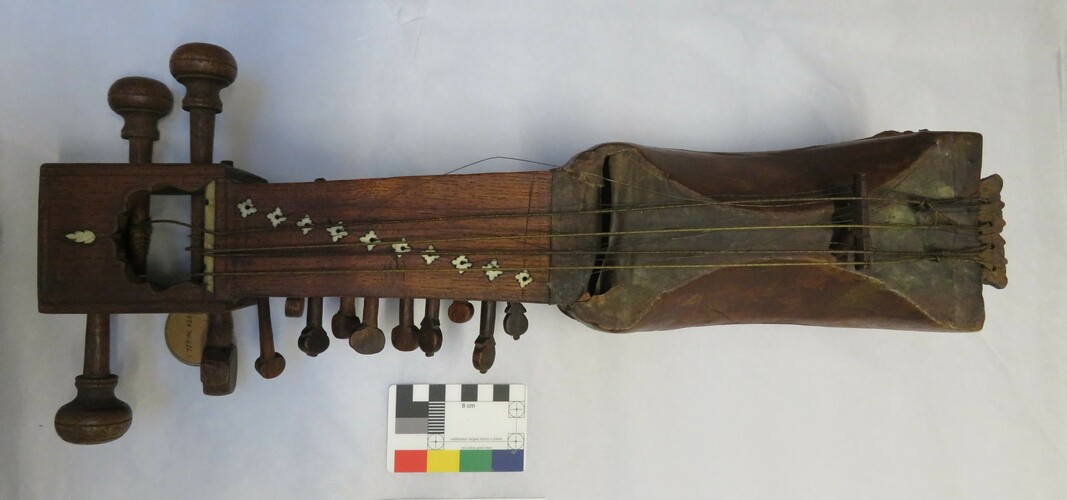 1938.34.626.1Fiddle. To be played with bow 1938.34.626 .2. [MdeA 27/7/2007]1938.34.626.1
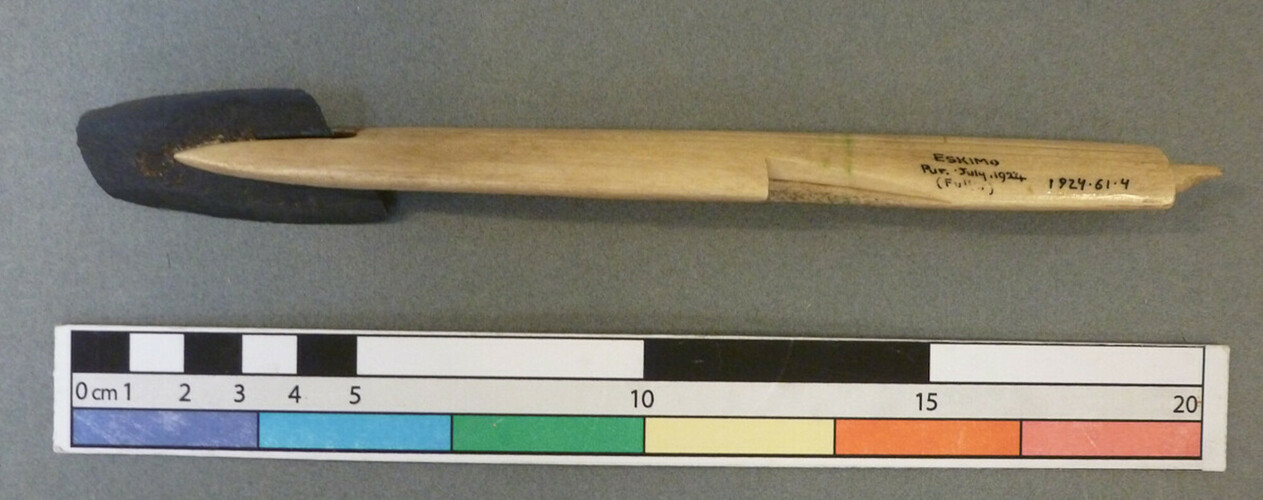 1924.61.4Spear head of caribou antler with blade of slate. [El.B 03/05/2012]1924.61.4
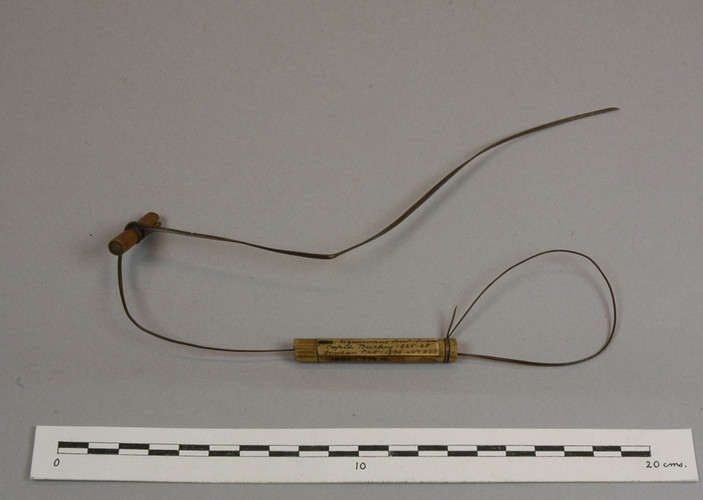 1886.1.779.14Bird snare of whalebone and wood. [LM 26/11/2007]1886.1.779.14
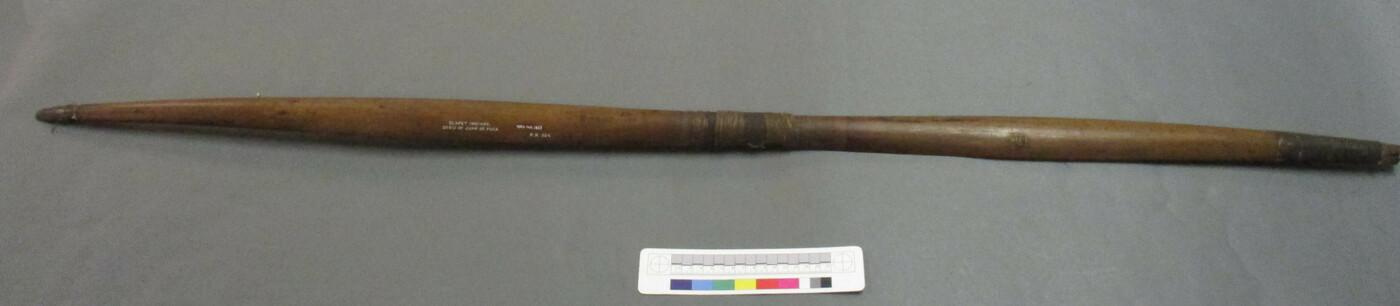 1884.140.1833Bow with notched ends, one end is broken and bound with plant fibre and string. One side of the bow has been carved with a ridge. [FB 1/8/2017]1884.140.1833
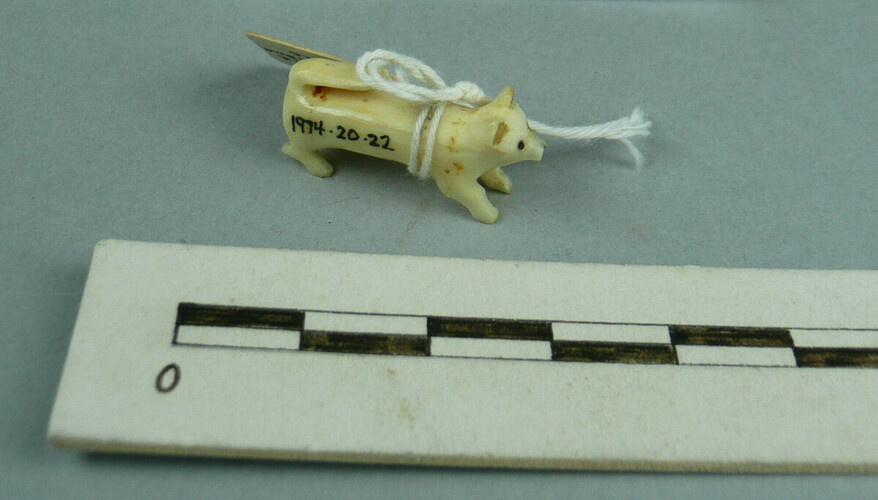 1974.20.22Ivory carving of an animal possibly a ?dog.1974.20.22