
- Collection type
- Object
- Description
- Whithorn oboe.
- Geographical reference
- England Oxfordshire Ducklington near Witney
- Cultural groups
- English
- Date / Period
- Date made: Probably 1895
- Date collected
- 1895
- Acquisition information
- Donated: 1902
- Materials and processes
- Material Willow Wood Plant, Material Bark Wood Plant, Material Plant Thorn, Process Twisted, Process Pegged
- Dimensions
- Diameter 45 mm bell, Length: max 203 mm
- Object numbers
- Accession number: 1902.16.7
- Research and responses
For the donor's own account of 'whit horns', see 'A Primitive Musical Instrument', by Henry Balfour, in The Reliquary and Illustrated Archaeologist, new series, Vol. II (October 1896), pp. 221-4 (copy in RDF for 1903.130.22). [JC 23 6 2006]
For further information about tradition see http://www.icknieldwaymorrismen.org.uk/tradition_ducklington.html: The village of Ducklington supported an elaborate Whit-Monday ceremony known as the 'Peeling Horn Ceremony', in which the young men of the village made horns which were used as part of the Whit Hunt in Wychwood Forest. They joined residents from other villages (Hailey, Witney, Leafield and Crawley), who were allowed to hunt, kill and retain a stag during Whitsuntide. At 3 a.m. on Whit-Monday the young men of the village cut withies from which they removed the bark. This was rolled up into three funnel shaped horns by pinning the bark with thorns (e.g. blackthorn). A double reed of willow was fitted into the narrow end, which enabled the horn to make a loud hooting sound. The village was roused by this sound at 4 a.m. and all participated in erecting a pre-assembled maypole, which in total measured some 40-ft. The maypole was decorated with 'laycocks and golden chains'. Once assembled the Morris was danced around it; this was thought to be associated with worship of the vegetable world. [AP 29/06/2006]
- Associated publications
- Discussed, along with the other whit-horns in the PRM, on pages 118-120 of '"Captain Kennedy's Mandolin", and Other English Musical Instruments at the University of Oxford's Pitt Rivers Museum', by Alice Little, in Journal of Museum Ethnography, no. 23 (2010), pp. 117-28. (Copy in RDF: Researchers: Little, Alice.) [JC 20 12 2012]
Search terms: Music, Hunting, Musical Instrument, Hunting accessory, Double Reed
Further items to explore
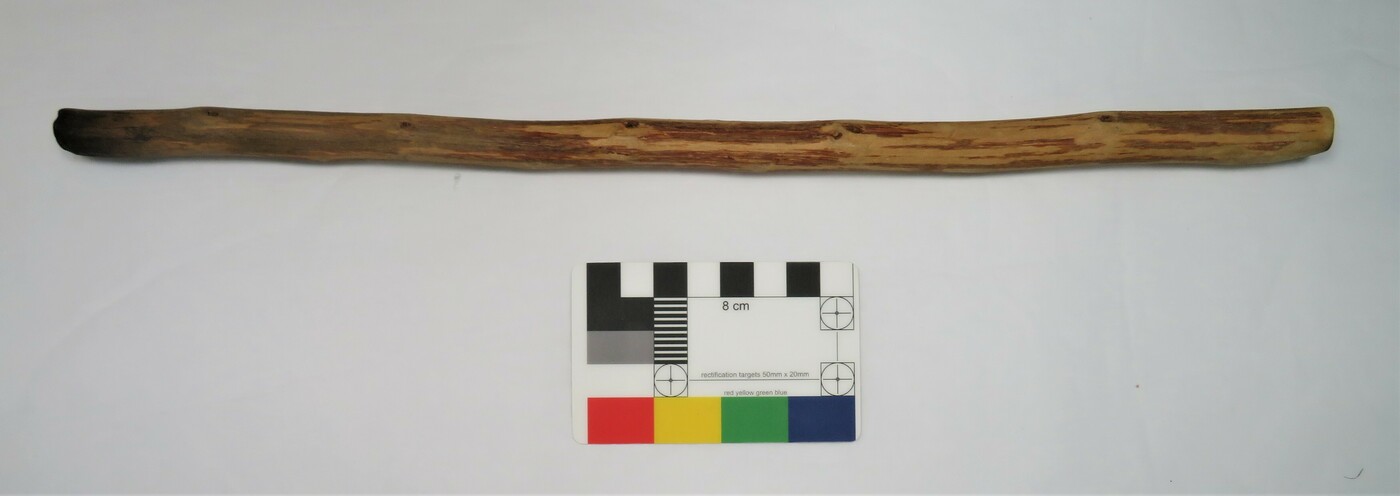 1971.34.61Wooden drum stick [RR 9/1/2020]1971.34.61
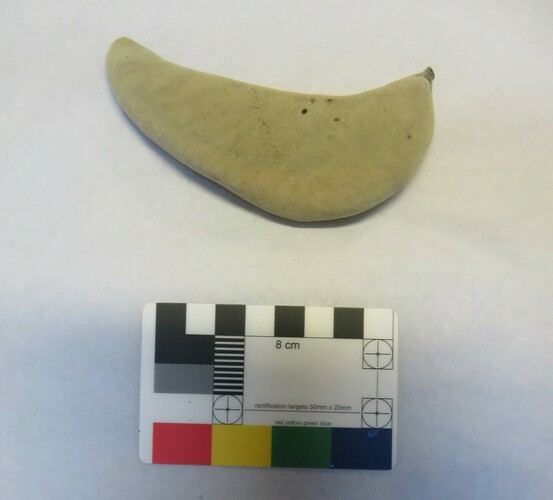 2003.60.17Crescent-shaped grey seed pod of a type used as a rattle, and whose seeds may be removed and strung for necklaces. [JP 4/3/2004]2003.60.17
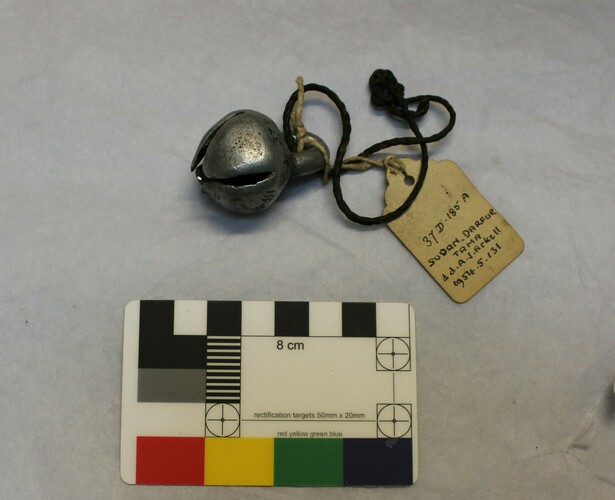 1954.5.131Sheep bell1954.5.131
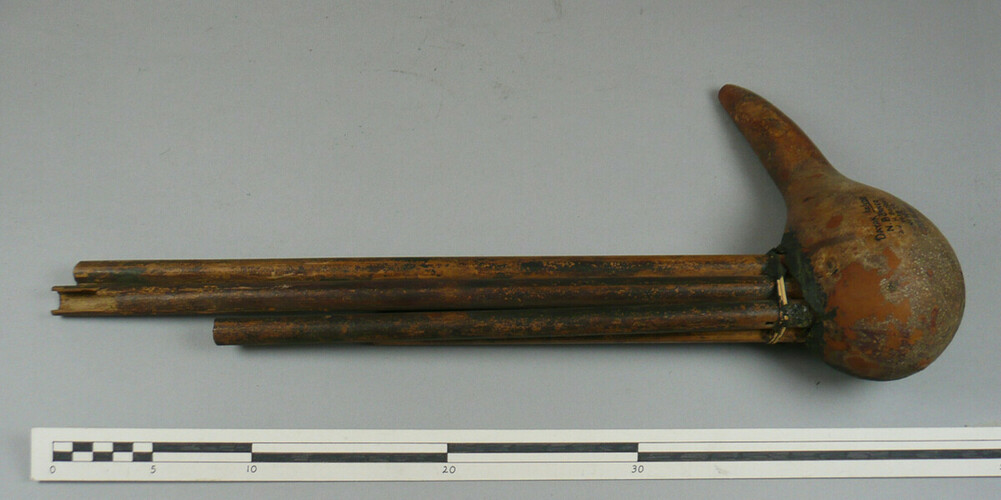 1938.34.102Mouth-organ, kaluri, 6 pipes of which 3 shorter ones of same length, 3 longer or different length.1938.34.102
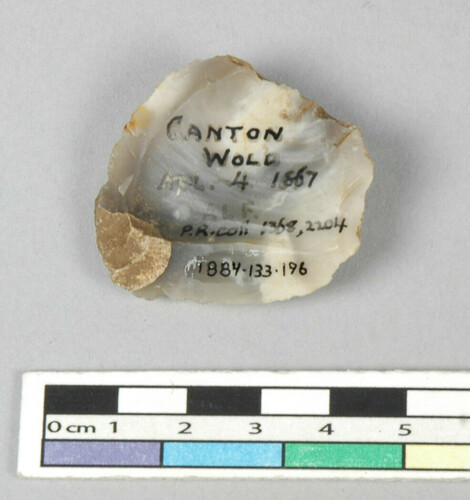 1884.133.196Stone scraper1884.133.196
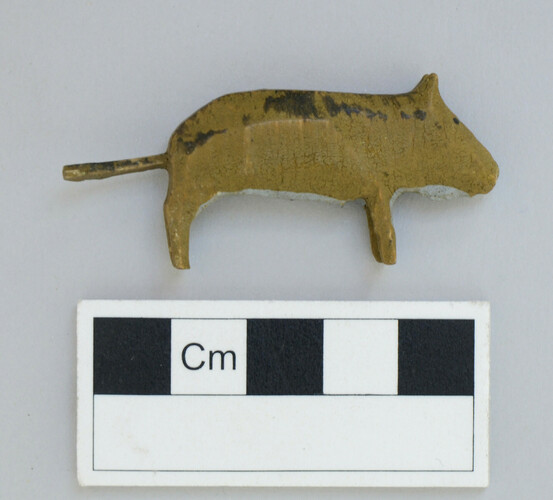 1956.9.70.113Dark brown-grey pig figure with black back and grey stomach. Part of a Noah’s Ark set. One of a pair. [See 1956.98.70.112 for other figure]. [SM (Verve) 15/04/2015]1956.9.70.113
 1884.137.21.22Ceramic sherd1884.137.21.22
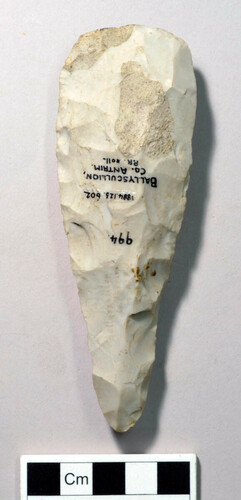 1884.123.602Stone axe1884.123.602