
- Collection type
- Object
- Description
- Three legged cylindrical drum (ngoma) with single membrane. Membrane secured by numerous wooden pegs. [LKG 15/9/2008]
- Geographical reference
- Date / Period
- Date made: Before 1927
- Date collected
- By 1927
- Acquisition information
- Donated: 1927
- Materials and processes
- Material Wood Plant, Material Membrane, Process Hollowed, Process Pegged, Process Sawn
- Dimensions
- Diameter: max 248 mm, Height: max 427 mm
- Object numbers
- Accession number: 1927.19.71
- Research and responses
Ngoma are prominent across east, central and southern Africa and are played by many groups including the Zulu, Venda, Shona, Tsonga, Lozi and Tswana people. In Shona, the word ngoma refers to drum and drumming, but is also a term that encompasses the concepts of music and dancing in general.
Ngoma come in many shapes and sizes- tall versions are played standing up and small versions are played sitting down and are usually made with wood and animal skin from livestock or hunted animals. As with their appearance, the types of music played by ngoma are just as diverse. Ngoma can be played as accompaniments to vocalists or other instruments or can be the focal point of music as solo instruments or as part of an ensemble. They are played at religious ceremonies, social gatherings, traditional dances, for children’s games, and even for war. In Southern African culture, drums are prominent at funerals, accompanied with singing to celebrate the deceased and boost morale.
This particular drum has the typical appearance of a tall ngoma, with a cylindrical wooden body that tapers at the base, three legs, and protruding sections around the circumference to secure the ngoma’s animal skin membrane in place and keep it taut. Other examples of ngoma that demonstrate the degree to which they can vary in size include the extremely tall mutandarikwa, which has an almost equal circumference at the top and bottom, and the garina, which is flat and cylindrical.
Professor Robert Nyamushosho (interview)
Jones, C. (1992). Making Music, Musical Instruments in Zimbabwe Past and Present, Academic Books Zimbabwe, pp. 146-147
Search terms: Music, Musical Instrument, Cylindrical Drum
Further items to explore
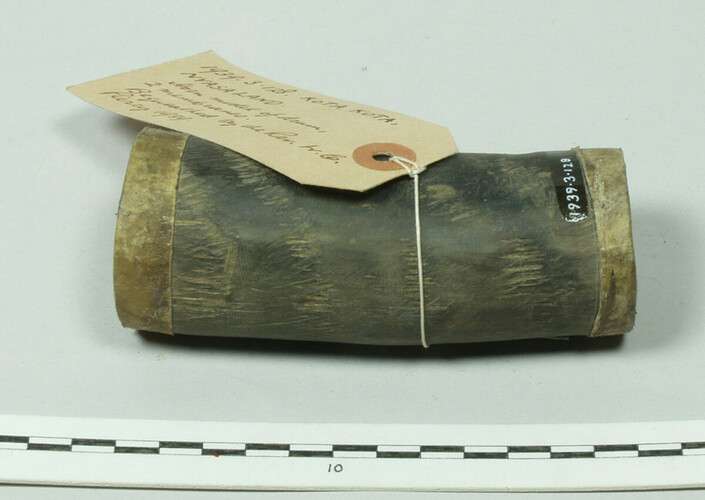 1939.3.128Model drum of horn with double membrane. [El.B 'DCF 2004-2006 What's Upstairs?' 15/3/2005]1939.3.128
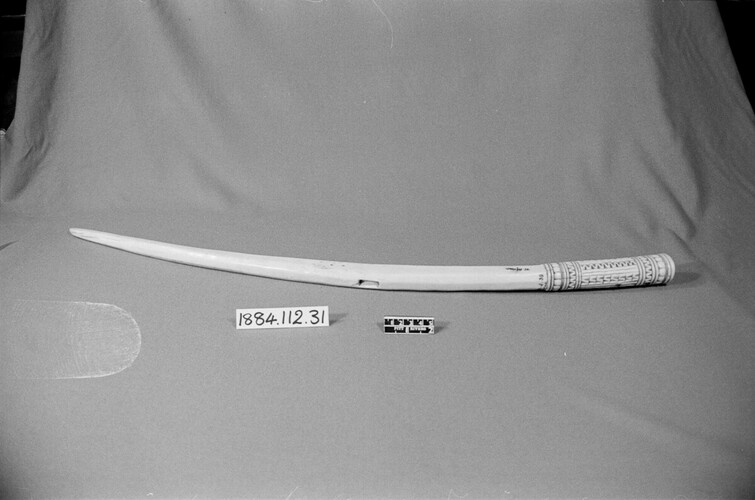 1884.112.31Side-blown trumpet of elephant tusk with elaborate carving at bell end.1884.112.31
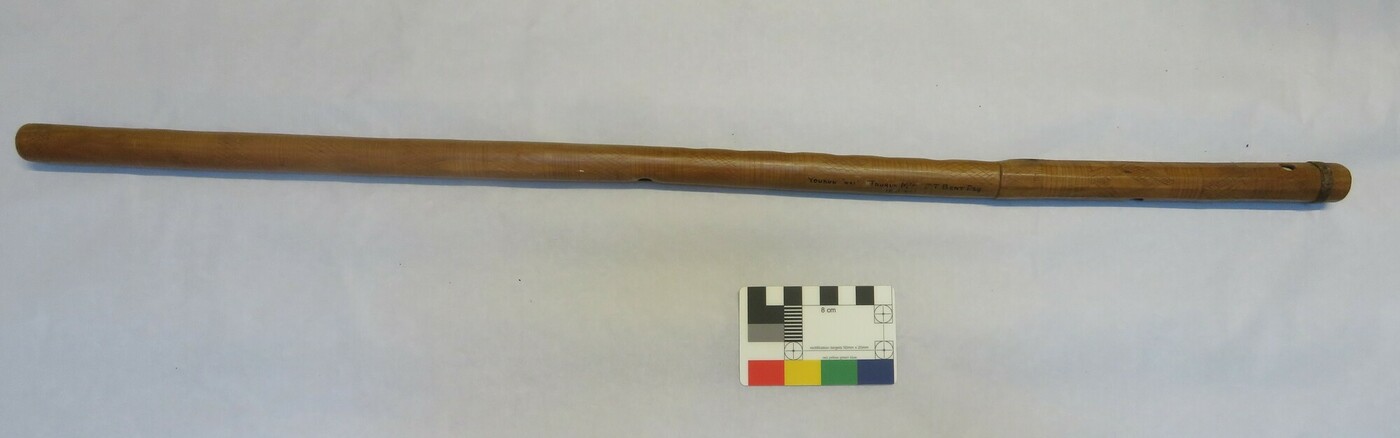 1891.4.1.1End flute. For carved wood case for this object see 1891.4.1 .2 [MdeA 24/5/2007]1891.4.1.1
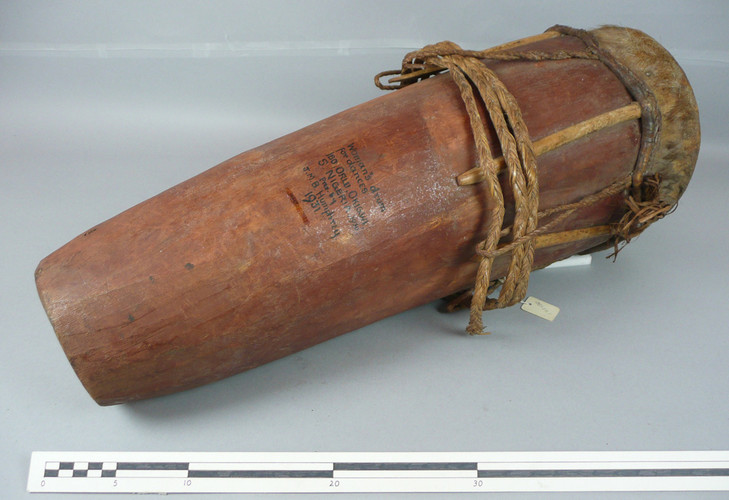 1931.57.1Single-membrane drum, with hollow wooden body tapering downwards, hide membrane strained with thongs and wedges. [LKG 16/9/2008]1931.57.1
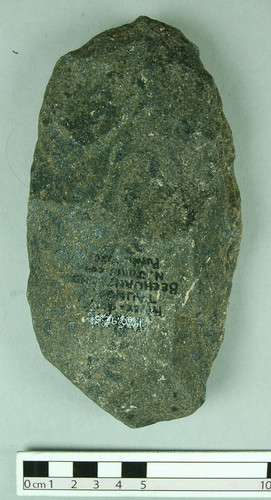 1920.92.5Stone tool, black with white and grey specks, oval shaped. [MJD 02/02/2010]1920.92.5
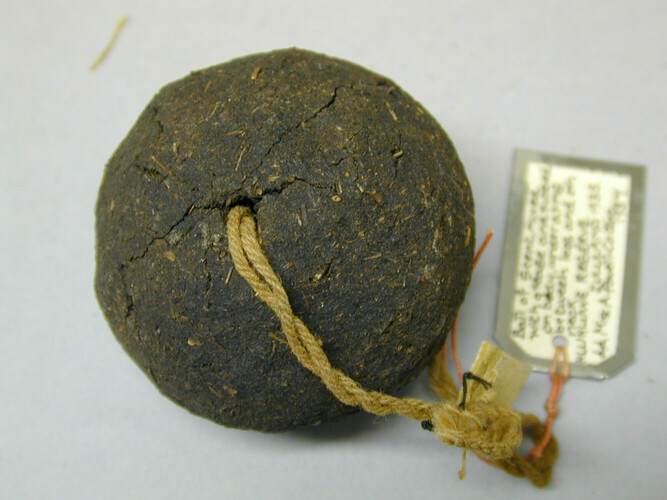 1937.38.66Ball of scent to rub on body. Perforated and threaded with string.1937.38.66
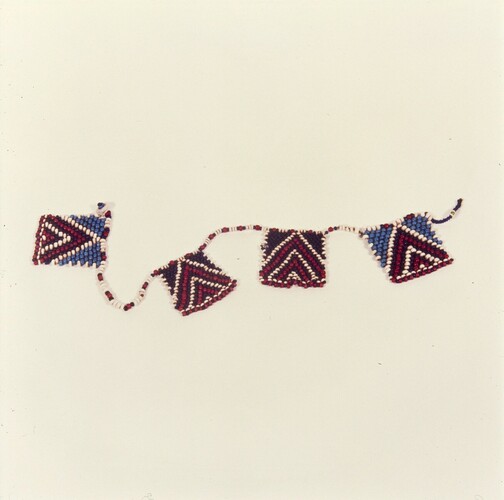 1982.17.4.1Neck ornament, now broken, consisting of a string [.1] of 3 beadwork panels (2 dark blue, red and white, and 1 bright blue, red and white); and a loose beadwork panel [.2] (bright blue, red and white). [N.B. 'DCF 2004-2006 What's Upstairs?' 15/7/2005]1982.17.4.1
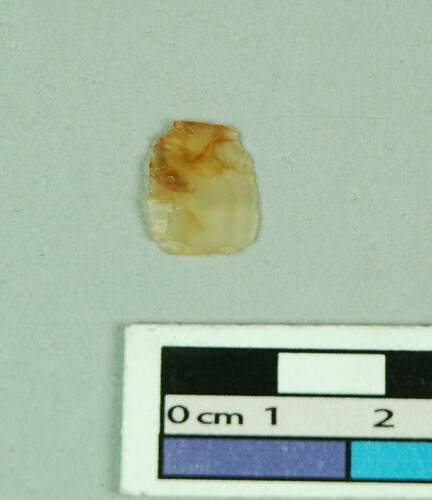 1927.39.96.130Stone flake, semi transparent with light brown bands. [MJD 06/04/2010]1927.39.96.130