
- Collection type
- Photograph
- Description
- A group portrait of three ash-covered Nuer boys standing in a homestead, with some cattle and a hut visible behind them. Young children and their mothers were often the last to leave the villages in the dry season, joining the youths at cattle camps near rivers or other permanent water sites at the height of the drought. Boys helped around the home by gathering cow dung fuel and milking.
- Geographical reference
- Unity State or Jonglei or Upper Nile
- Cultural groups
- Nuer
- Date / Period
- Date of photograph: 1930 - 1931
- Acquisition information
- Donated: 1966
- Photographic process
- Negative film nitrate
- Dimensions
- Length x Width 100 x 75 mm
- Object numbers
- Accession number: 1998.346.54.1 Previous PRM number: EP.N.54 Previous other number: 31 7
Search terms: Physical Anthropology, Settlement, Animal Husbandry
Further items to explore
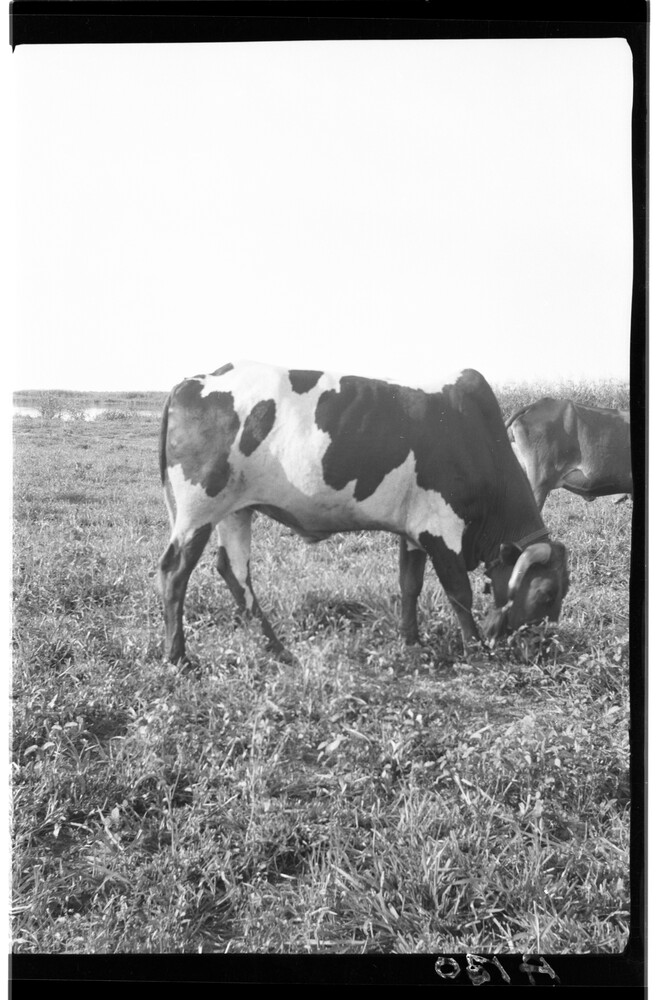 1998.355.467.1An ox grazing in lush grasses close to a river, visible in the background. The film number suggests that the location is Yakwach village on the Sobat. In contrast to his two earlier fieldwork visits when photographing cattle was viewed suspiciously by the Nuer, Evans-Pritchard took numerous record images of them during his later field trips.1998.355.467.1
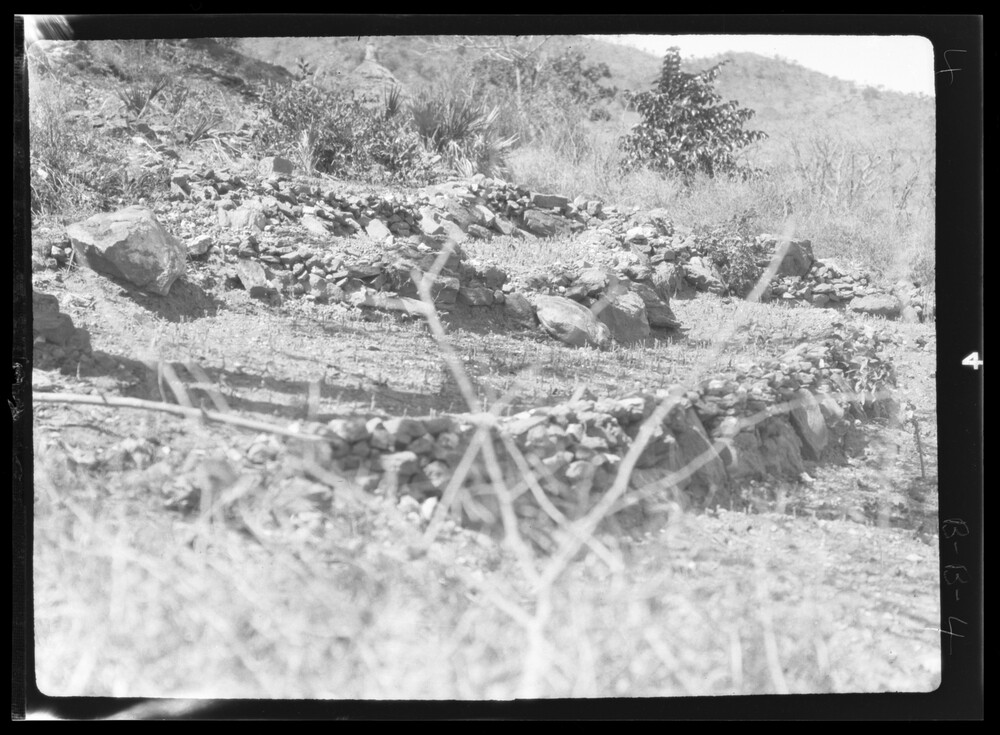 1998.344.52.1Looking across a section of hillside terrace cultivation (kal) constructed by gathering locally available surface rocks and building them into low walls which allow retention of soils and moisture for agriculture. The Ingessana grew two harvests in the year, reaping in February and September, with the first crop restricted to the terraces next to the hill habitations and the second on the plains some two hours walk away. Evans-Pritchard notes that the terrace crops had been reaped some weeks before he arrived in early November.1998.344.52.1
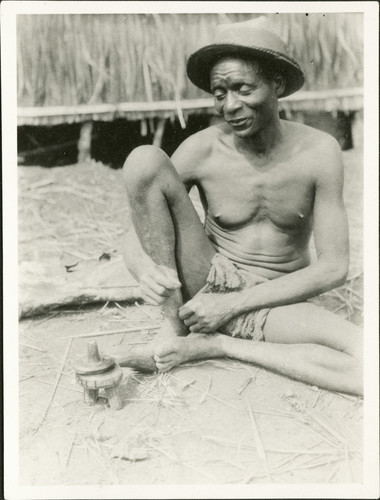 1998.341.223.2A man (identified as Windis or Zori, a subject of Gami, a commoner Governor) sitting on the ground within a homestead, his foot resting on the tail of an iwa (rubbing-board) oracle.1998.341.223.2
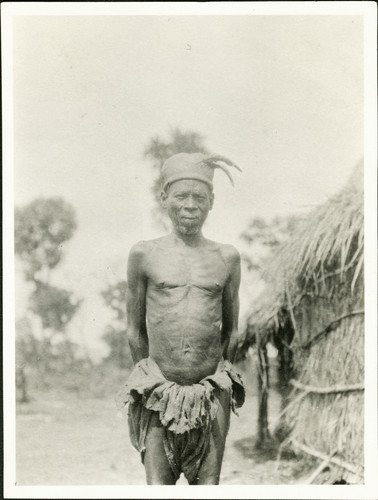 1998.341.461.2A three-quarter length portrait of a man (identified as a man of the Bukuru people), standing next to a grass-walled hut wearing a feathered hat. One branch of the Bukuru (Babukur) people lived under Avongara suzerainty as a subject people in the Sueh valley to the north of Yambio. Such peoples were considered Azande although were further designated auro or outsiders.1998.341.461.2
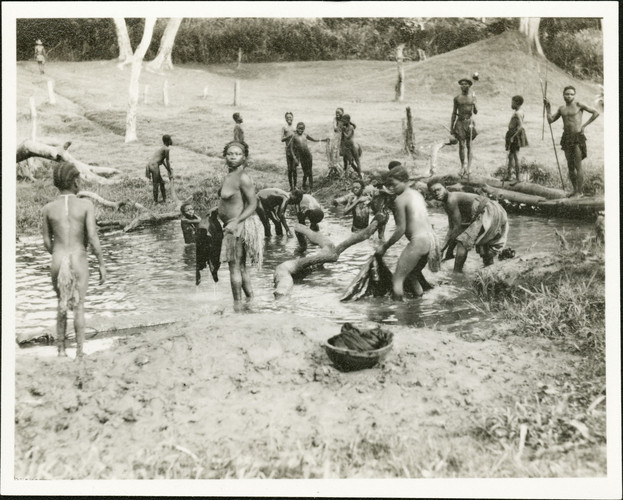 1998.341.6.2Circumcision initiate boys or agangasi (some wearing fringed circumcision skirts) washing in a pool as part of ritual activity. A woman and man are also present, apparently cleansing items of clothing, possibly barkcloth waist-coverings.1998.341.6.2
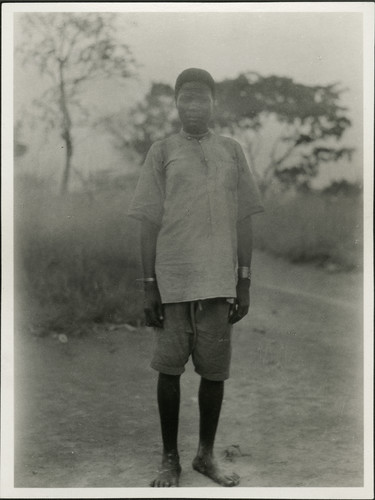 1998.353.50.2A full length portrait of a man wearing a white European shirt and shorts and wearing wrist ornaments.1998.353.50.2
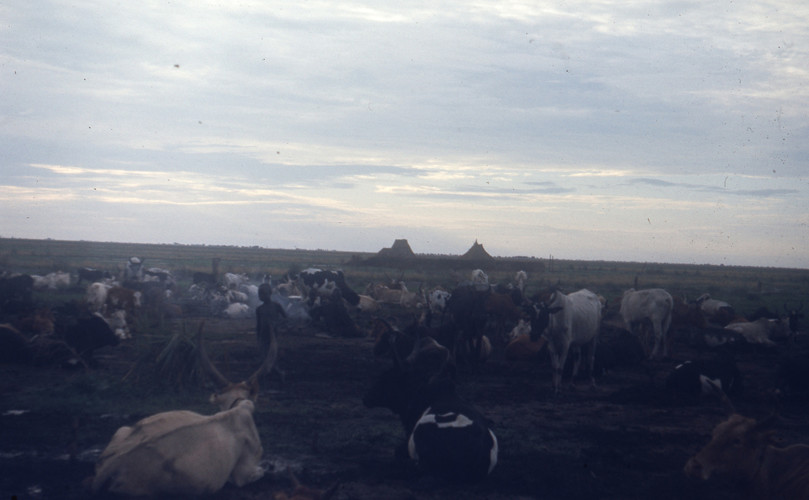 2018.310.220Cattle at Fathai, early morning.2018.310.220
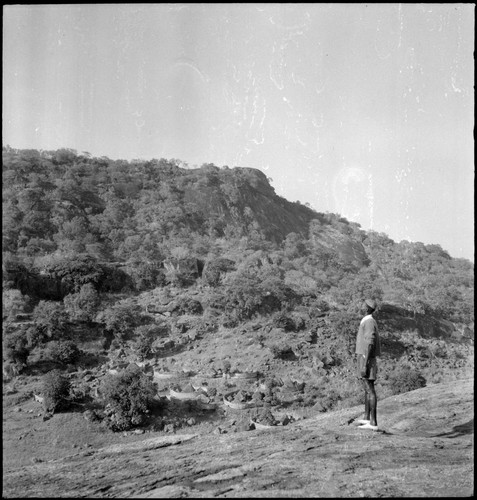 2005.51.78.1A view of a brush-covered rocky outcrop with a youth in the foreground, probably near Lyria in Lokoya country.2005.51.78.1