
- Collection type
- Photograph
- Description
- A tuka or spirit shrine outside a hut with a child beyond, consisting of a split stick, the ends bound at the top and a straw hat on top, and ritual offerings below with magico-religious plants (ranga ambiri (against wild animals) and possibly also sarawa (food-medicine)) growing around the base. Such shrines are sites for medicines or ngua that are invoked to ensure ancestral (spirit) favour for the inhabitants of the homestead.
- Cultural groups
- Zande
- Date / Period
- Date of photograph: 1927 - 1930
- Acquisition information
- Donated: 1966
- Photographic process
- Print gelatin silver
- Dimensions
- Length x Width 104 x 78 mm
- Object numbers
- Accession number: 1998.341.141.2 Previous PRM number: EP.A.141a Previous other number: 92 1 (41) [frame 4]
- Research and responses
Ethnographic context - In The Azande (OUP, 1971) page 99, E. E. Evans-Pritchard notes that "the ordinary old Mbomu shrine is the tuka, a stake split at the top and with the split sections bound to form a recepticle for offerings."
In Witchcraft, Oracles and Magic Among the Azande (OUP 1937, page 441) he also states that 'Medicines which are domesticated are planted around the ghost-shrine, and when a new shrine is erected medicines are often buried at its base and ghosts and medicines are alike addressed to ensure the welfare of the inmates of the homestead. Likewise, when a shrine is erected in an eleusine cultivation medicines are placed around it, and both they and the ghosts are asked to protect the eleusine. The association is here close, but the power of the medicines is not attributable to the ghosts, for the power is in the medicines.'
In The Azande (London AIA, 1953 page 94) P. Baxter & A. Butt state that 'When a Zande establishes a new homestead he erects in the centre of it a shrine (tuka) to the spirit (atoro or atolo) of his father... [b]efore being set up, the stake is rubbed with ashes from the new homestead's first fire and soon after its erection a sacrifice made at it. A selection of first fruits and the liver of the first animal killed by the homestead head are usually placed in the basket, but otherwise offerings are not made regularly, except perhaps in times of dearth or adversity, or when disease is attributed to the anger of the spirits.' This account is based upon C.R. Legae's article "Les procedés d'augere et de divination chez les Azande" (Congo, 1921, I) and so may or may not relate to practices related to the tuka shrine among the Azande of the Sudan.
- Associated publications
- Contemporary Publication - Reproduced as Plate XXIIIb (facing page 358) in Witchcraft, Oracles and Magic Among the Azande (OUP 1937), with the caption "A ghost-shrine with medicines growing at its foot"
Search terms: Religion, Dwelling, Ritual and Ceremonial, Landscape/View
Further items to explore
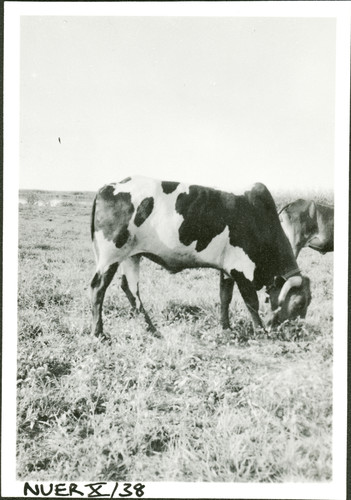 1998.355.467.2An ox grazing in lush grasses close to a river, visible in the background. The film number suggests that the location is Yakwach village on the Sobat. In contrast to his two earlier fieldwork visits when photographing cattle was viewed suspiciously by the Nuer, Evans-Pritchard took numerous record images of them during his later field trips.1998.355.467.2
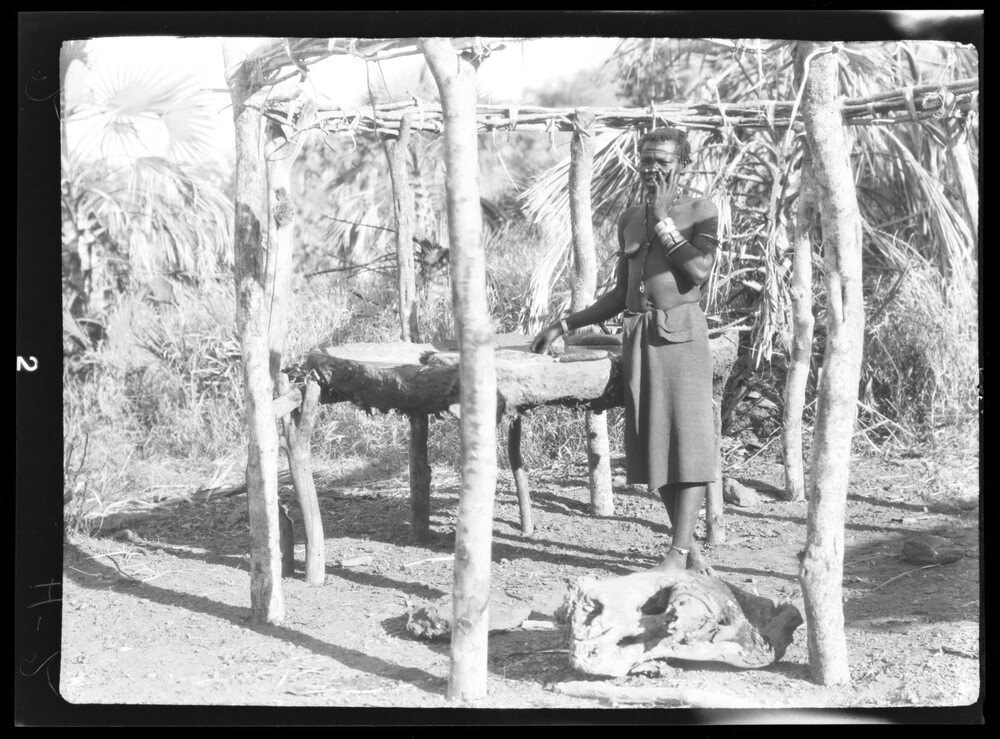 1998.344.28.1A woman (unidentified) standing at a raised grinding bench within an unfinished circular shelter, the roof supports of which encircle her. The bench seems to consist of a surface of hardened clay soil with flat stones placed on top.1998.344.28.1
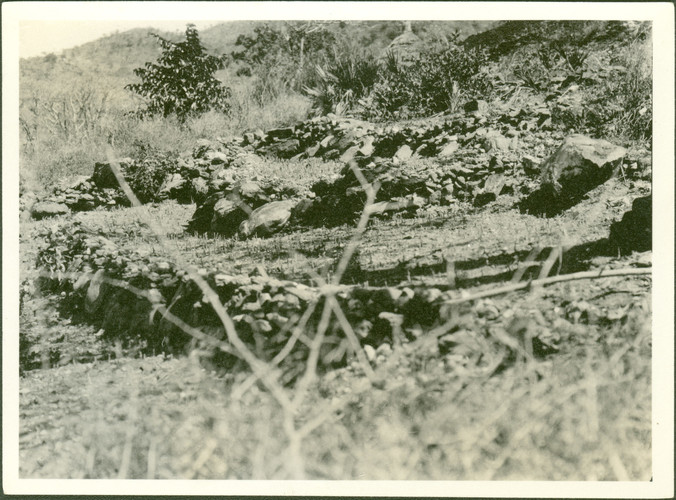 1998.344.52.2Looking across a section of hillside terrace cultivation (kal) constructed by gathering locally available surface rocks and building them into low walls which allow retention of soils and moisture for agriculture. The Ingessana grew two harvests in the year, reaping in February and September, with the first crop restricted to the terraces next to the hill habitations and the second on the plains some two hours walk away. Evans-Pritchard notes that the terrace crops had been reaped some weeks before he arrived in early November.1998.344.52.2
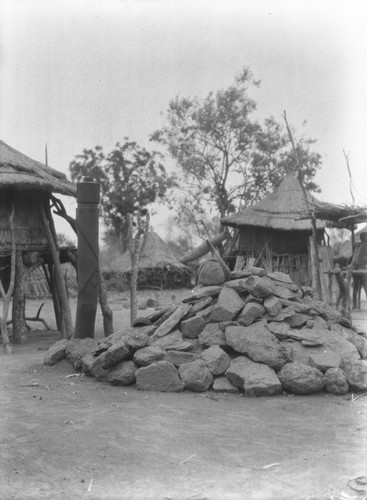 2013.2.27.1Grave, a heap of stones with a carved wooden post beside it.2013.2.27.1
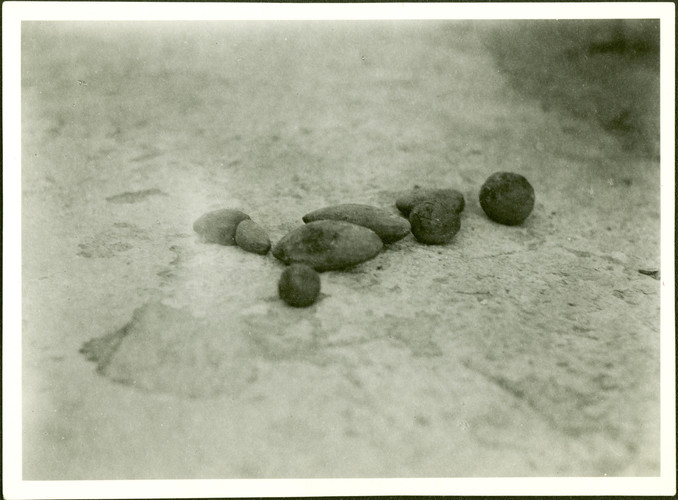 1998.343.43.2A set of old stone axe-heads and other stones, laid out on the ground by Surur the rain-maker for Evans-Pritchard to photograph them (although not touch them) from their home in a pot beneath the eaves of his hut, which also contained some of his hair clippings. These stones were called landa loma - stones of Loma, a spiritual connection with rain-making. During rain-making Surur would place these stones along with magical medicines in a pot with rock-pool water and sprinkle to the east where the next day was to arrive from.1998.343.43.2
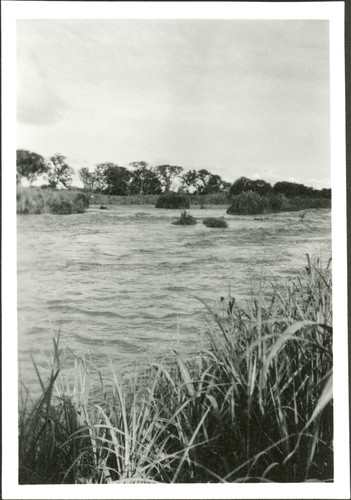 1998.342.6.2A wide section of river with rushes growing along the banks and trees in the distance.1998.342.6.2
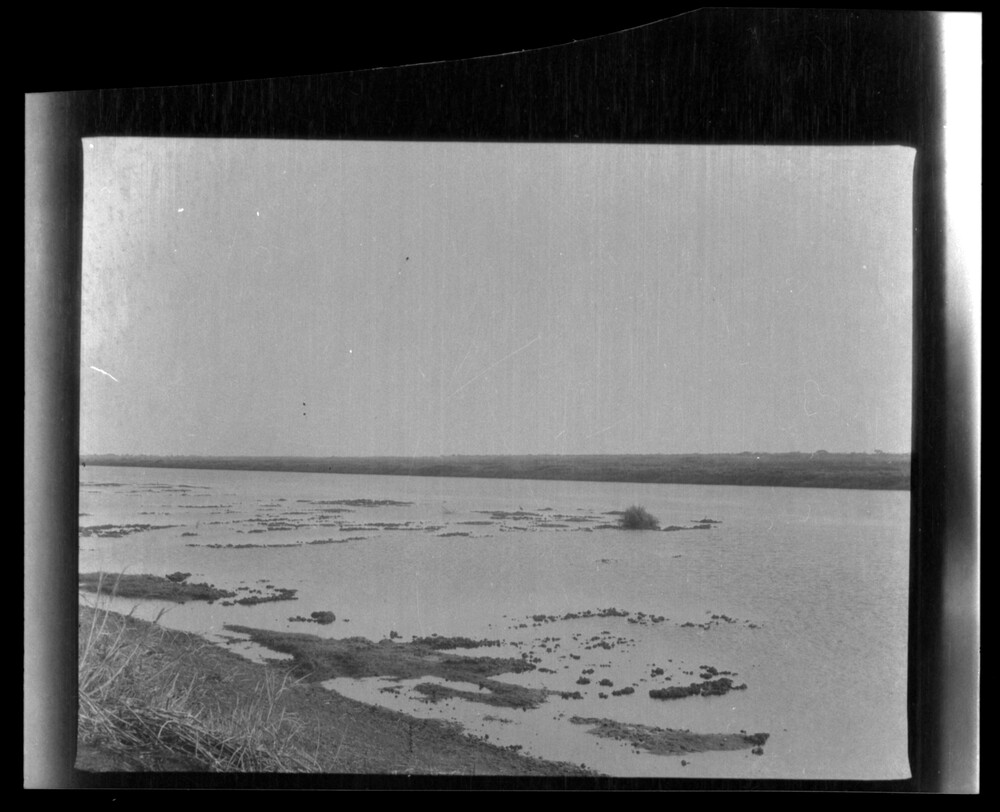 1998.346.168.1A view of low water on the Sobat River where Evans-Pritchard spent 3 months in 1931 among the Lou Nuer in the dry season.1998.346.168.1
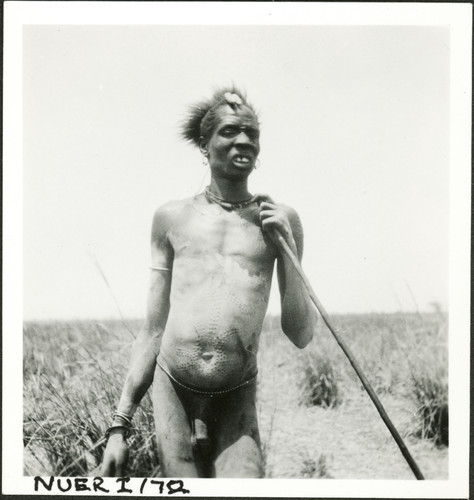 1998.355.36.2An upper body portrait of a man leaning against his spear, with keloid patterns on his abdomen, chest and arms. He is also wearing a band across his hair with an ornament on the front.1998.355.36.2