
- Collection type
- Object
- Description
- Hollow tin rattle wth cylindrical handle [RTS 1/9/2005].
- Geographical reference
- Cultural groups
- Sudanese
- Date / Period
- Date made: Before 1936
- Date collected
- By 1936
- Acquisition information
- Donated: 1936
- Dimensions
- Width: max 85 mm, Length: max 358 mm
- Object numbers
- Accession number: 1936.10.96
- Research and responses
Related Documents File - 'EXTRACT of a Note on the Shakhshâkha ([Arabic characters]) by Major J.W. McPherson (26.11.25). (The shakhshâkha is a cylindrical metal rattle called 'sistrum' in the Note) The present home of the instrument seems to be the Sudan. It is common in Cairo at Mulids (Moslem saint "birthday" celebrations) circumcision, Marriage, & other festivals frequented by Sudani & Berberi dancers who use it, as well as at Ringas (booza (beer) booths). It is usually used with the ringu ([Arabic characters]) a kind of harmonium with vertical keys & pipes of painted gourds (the festival is named after the instrument or vice versa), & with the Kurîa ([Arabic characters]), a piece of railway-line to all appearances, beaten with 2 iron rods. It seems only to be used as an accompaniment to dances in which some half dozen youths circle a girl with rhythmic steps (embracing her in turn until one is accepted) though occasionally a dancer leaps high with 2 shakhshâkha in each hand. Sometimes there are ejaculatory songs or "croonings" with, perhaps, oft-repeated doggrel verses. The shakhshâkha is a cyliinder of white metal rather more than a foot long, with a conical cap & a handle: the rattles are pebbles. From one to four are held high in front by the dancer and shaken. Sometimes the handle is ornamented with yellow metal. That of one which the the writer tried to buy suggested a fish & phallus which the owner prized as a memento of ther fisher-lover drowned in the Nile. The writer noticed the instrument first in 1919 at a Zarr (Sudani exorist rite) in the hands of an aalima dancer circling a kind of altar after a blood sacrifice. The vogue for its use seems to have greatly increased in recent years. The shakhshâkha is never, as the sistrum was, used in religious ceremonies in mosque or church in Egypt. Small coloured wicker rattles of globular form * are sold at the Mosque of Sidna Nefisa near Cairo. The Saint is said to have like the sound & they are rattled in his honour. Sometimes they are lengthened, sceptre-like, with a cane. A still more sceptre-like form (also called shakhshâkha) is carried by gorgeiously dressed men (sometimes dervishes) on a pole (it is much more ornate than the ordinary kind) in the Zaffa (procession) of many Muslids, but its use seems to be waning. *The example in the Pitt Rivers Museum have rattles of thin metal discs.' [MOB 4/12/2001].
Search terms: Music, Dance, Ritual and Ceremonial, Marriage, Status, Religion, Musical Instrument, Dance Accessory, Ceremonial Object, Rattle
Further items to explore
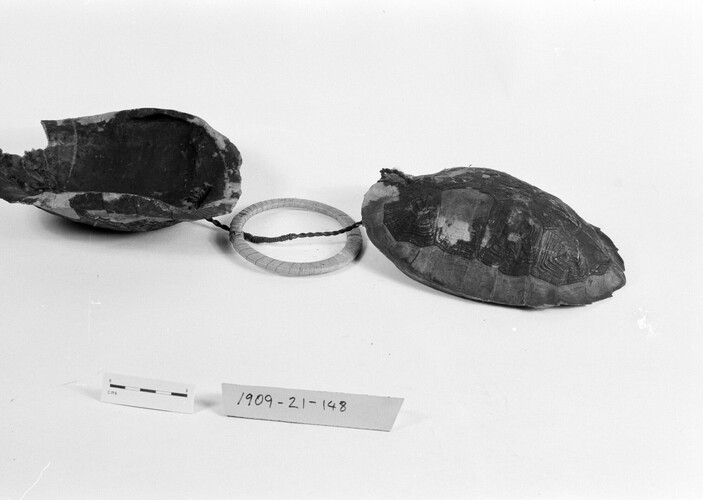 1909.21.148Clapper or castanets made from tortoise carapace [JID 16/1/2020]1909.21.148
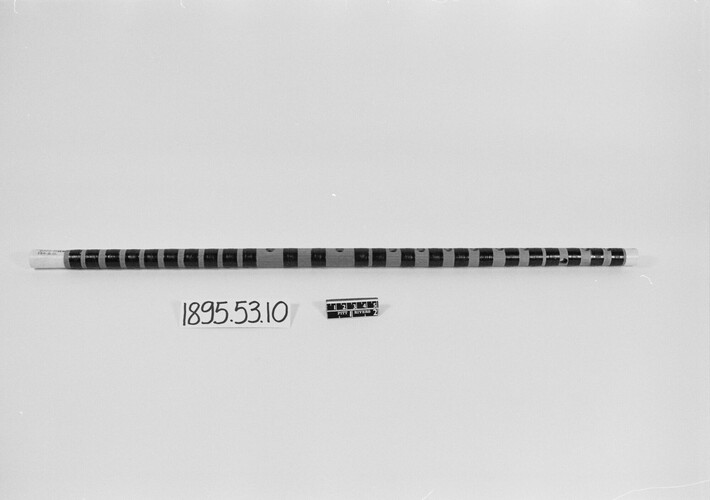 1895.53.10Flute.1895.53.10
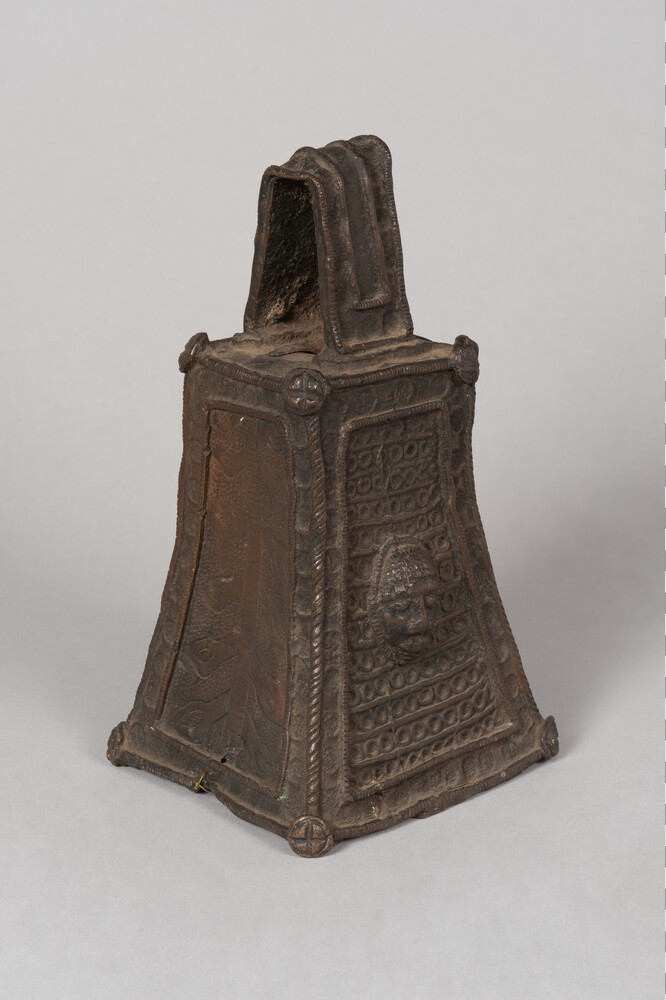 1941.2.118Bell.1941.2.118
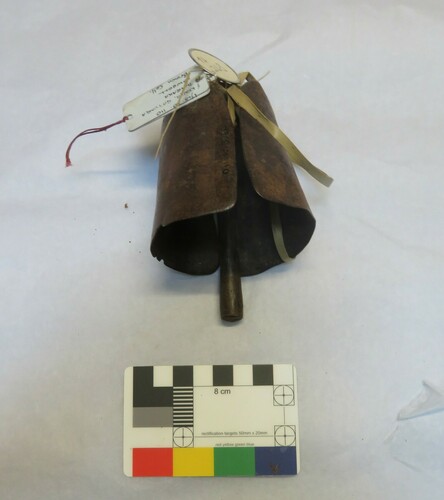 1968.20.110Cattle bell of folded iron with an iron stick clapper.1968.20.110
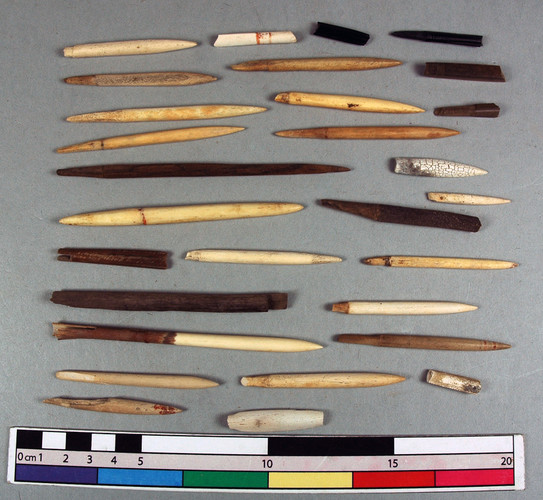 1901.40.42.1Arrowhead1901.40.42.1
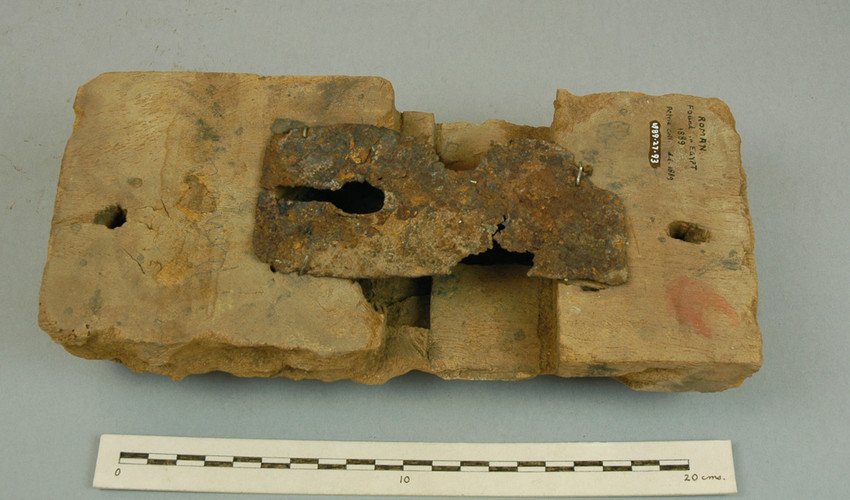 1889.27.93Part of a wooden door-frame with iron lockplate. [El.B 10/06/2009]1889.27.93
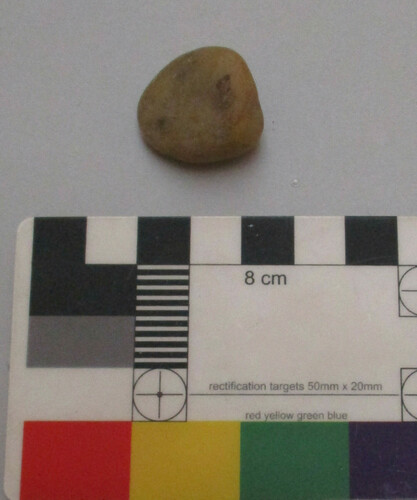 1985.54.1068Amulet. Stone, buff in colour. The stone has one flat face, and one curved face. [EH [OPS Move] 10/3/2017]1985.54.1068
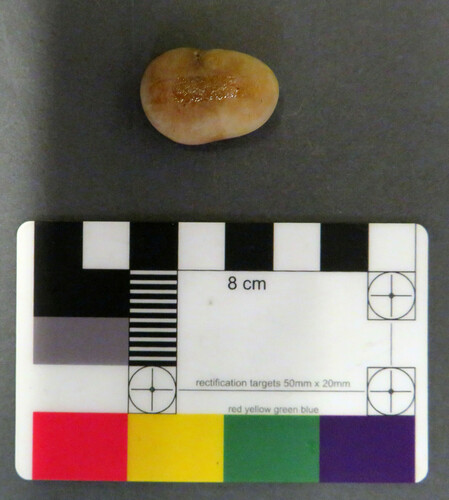 1985.54.2461Amulet, made from yellow coloured stone. Used by boys for pain in the heart. [CW [OPS Move Project] 14/02/2017]1985.54.2461