
- Collection type
- Photograph
- Description
- Three woman, the one standing on the right carries a baby on her left hip. All of them are wearing necklaces, the woman to the left holds a pipe in her left hand. A basket is on the ground in front of the group.
- Cultural groups
- Chokwe
- Person
- Photographer Heinrich Hermann Meinhard
- Expedition or compiler Museum für Völkerkunde Berlin, Hermann Baumann
- PRM source Tom Meinhard
- Date / Period
- Date of photograph: 04/1930 - 11/1930
- Acquisition information
- Purchased: 03/1997
- Photographic process
- Print gelatin silver
- Dimensions
- Length x Width 120 x 90 mm
- Object numbers
- Accession number: 1998.340.22.105
- Associated publications
- Contemporary Publication - Hermann Baumann Lunda. Bei Jägern und Bauern in Inner-Angola. Ergebnisse der Angola-Expedition des Museums für Völkerkunde (Würfel-Verlag, Berlin 1935). He notes on page 57-58: "Die Tabakspfeife tritt bei den Tsokwe in zwei grundverschiedenen Typen auf. Da haben wir erstens die 'mutopa', die Wasserpfeife, und zweitens den 'tsinu tsa makanya', die hölzerne Tabakspfeife üblicher Art [...]. Während also heute bei den Tsokwe die 'mutopa' fast ausschließlich ein Männergerät geworden ist, verwenden die Frauen die 'tsinu tsa makanya' (Tabakmörser) genannten Holzpfeifen, eine Erscheinung, die durch das mehr konservative Verhalten der Frauen erklärt werden kann und zugleich anzeigt, daß die 'mutopa' eine Neueinführung bei den Tsokwe ist [...]. Der 'tsinu tsa makanya' besteht meist aus dem mörserartigen Kopf mit einer aus Eisenblech hergestellten Einlage und Polsternagelverzierung, einem Pfeifenrohrteil als Holz (umwunden mit Messing-, Eisen- oder Kupferdraht) und einer dünnen Eisenröhre als Mundstück (s. Taf. 58,6). Angezündet wird der Tabak mit Hilfe einer glühenden Kohle, die mit einer Eisenpinzette aufgenommen wird. Im Süden sieht man, wie bei den Ngangela, Mbundu und Luimbi, Pfeifen mit rundem Kopf und gebogenem Holzstiel, die sicher auf europäische Formen zurückgehen."
Search terms: Settlement, Vessel, Ornament, Narcotic
Further items to explore
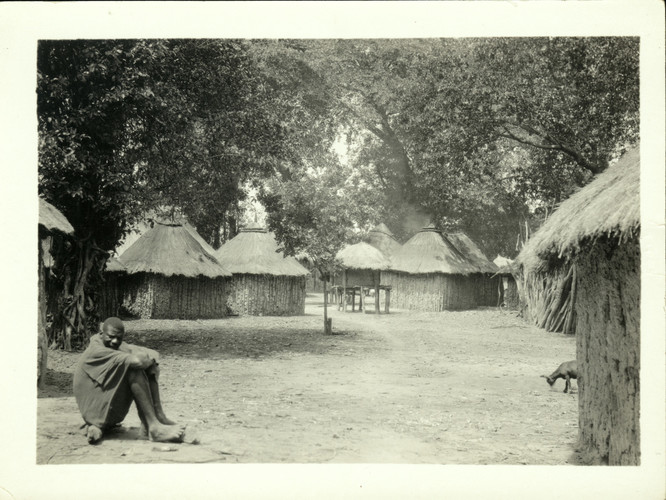 1998.340.22.167Several roof thatched buildings, the one in the middle being a storage house. Seated man in front to the left, unidentifiable animal to the right, partly behind the first house.1998.340.22.167
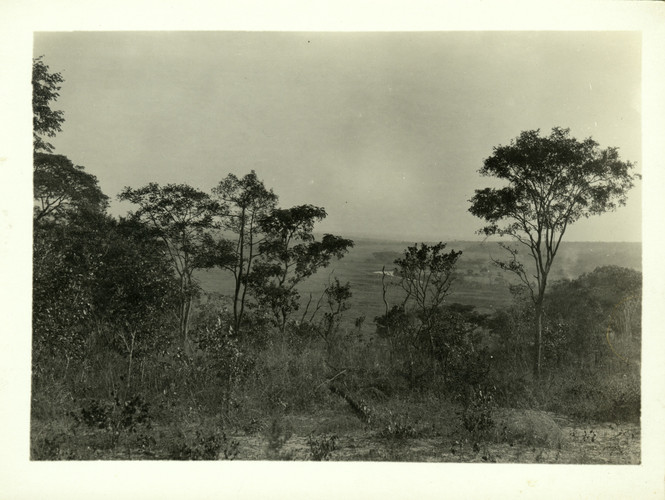 1998.340.22.215Kassai river valley. Trees and copes in the foreground (see 1998.340.22.214).1998.340.22.215
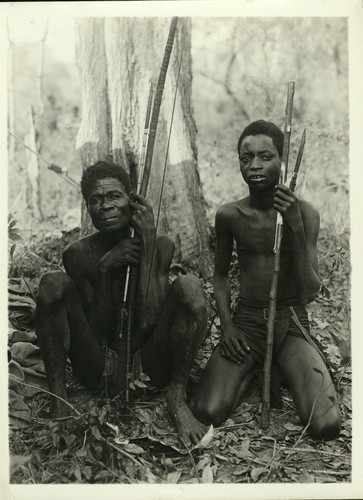 1998.340.22.90Two men with hunting weapons sitting in front of a tree. The one to the left holds bow and arrow, the right one a broken (?) spear or lance. He also has filed teeth.1998.340.22.90
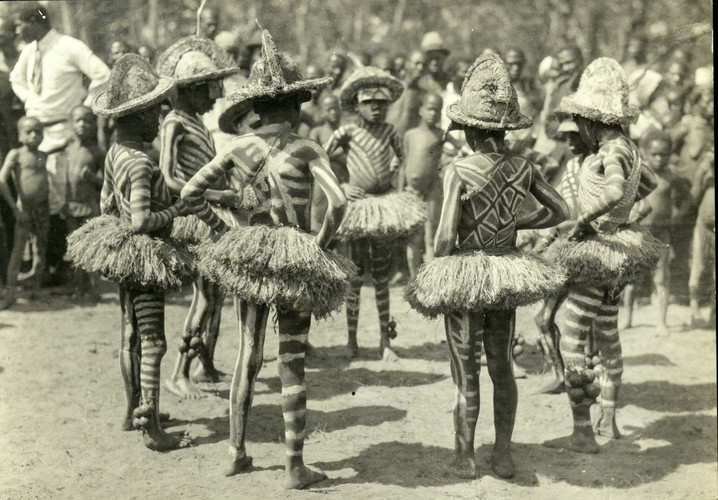 1998.340.22.138Scene of a circumcision initiation, group of nine boys with painted bodies, wearing costumes of grass skirts and headgears (uncannily resembling Portuguese colonial helmet), forming a circle. Surrounded by villagers, an African dressed in european trousers and shirt with tie in the background to the left.1998.340.22.138
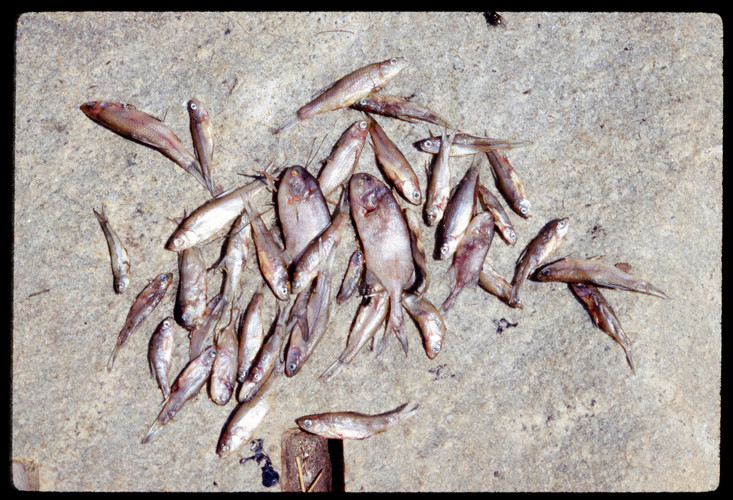 2018.313.4000Close up view of a pile of fish caught from a river 27 kilometres south of Waku-Kungo (previously Santa Comba), Angola.2018.313.4000
 2018.313.4097View of a woman washing a fabric item in water outside.2018.313.4097
 2018.313.4267View of a Delta Line Freight Ship docked on the Congo River at Noqui, Angola.2018.313.4267
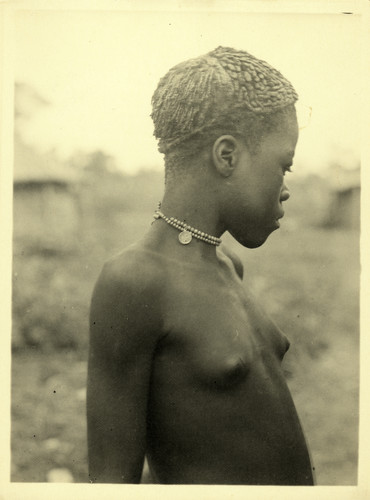 1998.340.22.23Three quarter portrait of a young girl, whose hair is twisted and covered with dots of clay. She wears a necklace of beads with a coin as pendant.1998.340.22.23