
- Collection type
- Object
- Description
- Cloth patterned by the "tie-and-dye" process and woven on a loom. [CW 15 6 98]
- Long description
- Rectangular ikat cloth made of two lengths of cloth stitched together. Warp faced ikat, predominanatly faded red colour with weft twining near the two cut borders. Fringed along the two cut borders. Striped woven patterning adjacent to the selvedge borders. One corner has strings of four red beads fixed to it. [JN]
- Person
- Field collector Charles Anthony Johnson Brooke
- PRM source Third Rajah of Sarawak, Charles Vyner de Windt Brooke
- PRM source Bertram Norman Sergison Brooke
- Date / Period
- Date made: Before 1923
- Date collected
- By 1923
- Acquisition information
- Donated: 1923
- Materials and processes
- Material Textile, Material Bead, Material Pigment, Process Ikat Resist Dyed, Process Woven
- Dimensions
- Width 860 mm approx, Length 2050 mm approx
- Object numbers
- Accession number: 1923.86.80
- Research and responses
Traude Gavin, author of The Women's Warpath: Iban Ritual Fabrics from Borneo (Los Angeles: UCLA Fowler Museum of Cultural History, 1966), states that the pattern of this cloth "is known in some Iban areas (Baleh, Ulu Ai) as the Rang Jugah pattern (compare Gavin 1996:43). However, if these cloths come form another area, the pattern may not be known there by this name". Commenting on Hepple's statement that this is 'a blanket for dreaming in', Traude Gavin says that "Iban pua kumbu are not for everyday wear, but only for ritual use. One ritual function was to sleep covered by a pua kumbu to attract dreams of spirit helpers, or dreams for guidance before important undertakings. This is done rarely today." She notes that there are many other ritual functions for Iban ritual textiles. Notes in RDF under 1923.86.83-94. [CF 24/7/2002]
Further items to explore
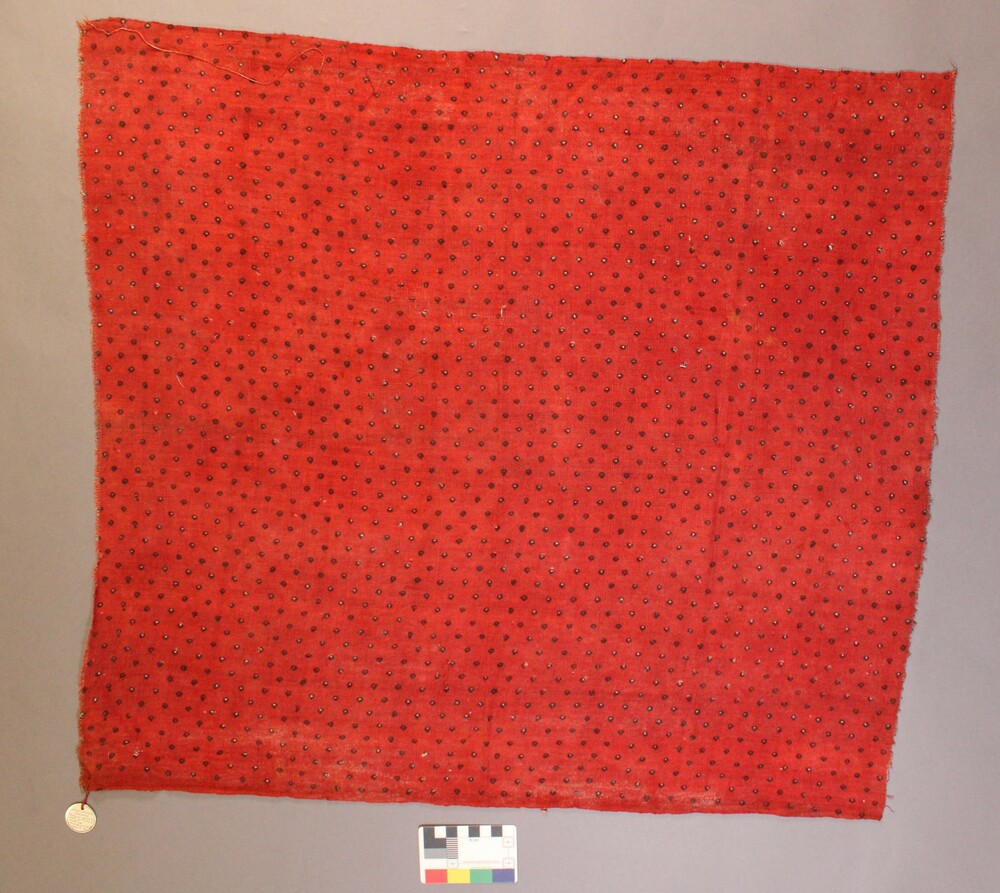 1965.3.40Cotton material for clothing1965.3.40
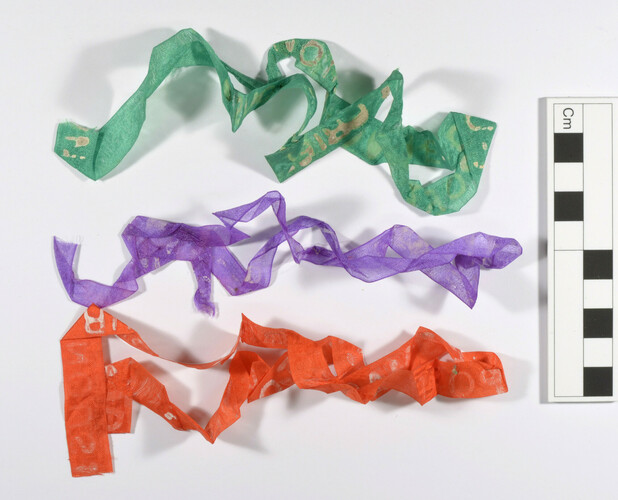 1985.52.2680.1Amulet, one of three silk ribbons [the other two are 1985.52.2680 .2 & .3]. Green in colour, printed with the inscription 'Notre Dame de Port priez pour nous'. Found in an envelope. [ASh [OPS move] 3/2/2017]1985.52.2680.1
 2003.9.400Indigo dyed cloth, undecorated. [MdeA 25/10/2005]2003.9.400
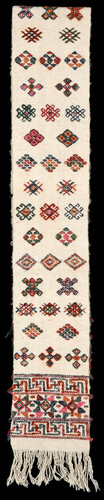 2004.18.3Long thin rectangular cream cloth with tassles at either end, embroidered in coloured wool (mainly red, pink, blue, green and orange) with rows of different geometric motifs and at either end with a wide band of floral? motifs and interlocking swastikas. [JP 19/4/2004]2004.18.3
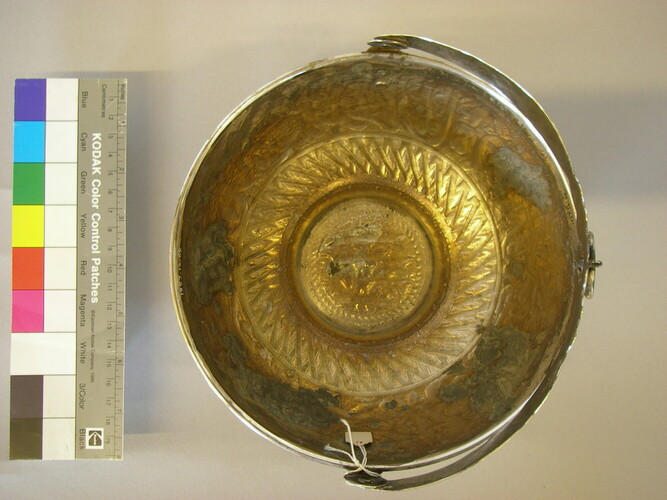 1957.12.05Silver bowl. [DCF Court Team 22/11/2002]1957.12.05
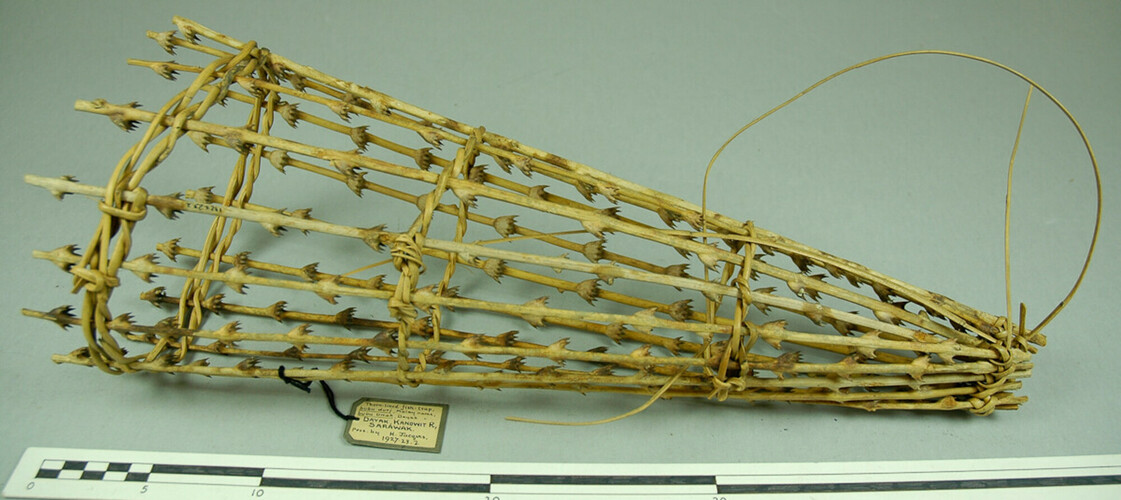 1927.23.2Conical fish trap of 15 thorny calamus sticks bound together with ?bamboo. [MJD 04/11/2009]1927.23.2
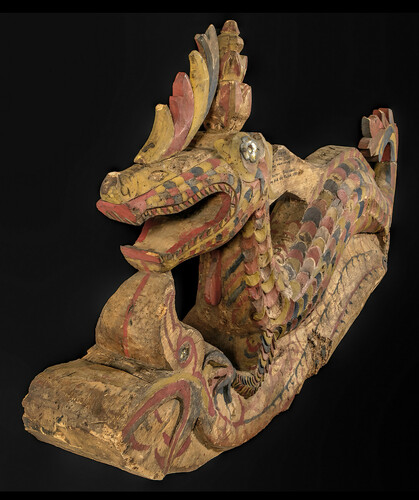 1923.86.29Carved and painted wooden figure of a naga in the form of a dragon, with an open mouth, clinging to the back of another creature (a bird?) [SM (Verve) 01/10/2013]1923.86.29
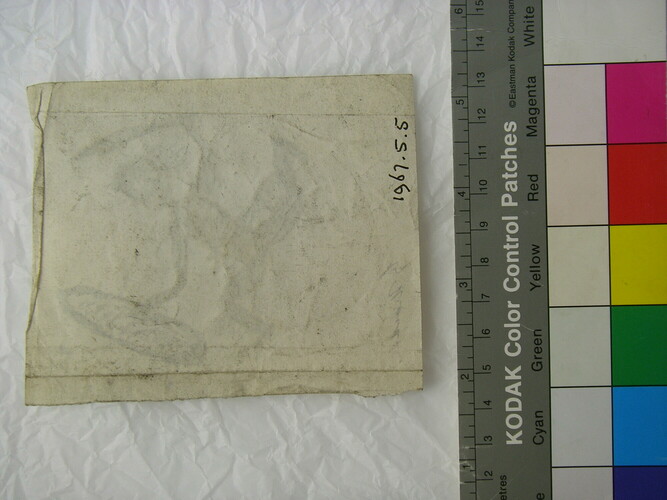 1967.5.5Drawing of man running, holding a shield and a sword, drawn in black pigment. [SM 05/02/2008]1967.5.5