
- Collection type
- Object
- Description
- Carved figure of a fish from a headdress. Perforated at the gills, with traces of white paint in incisions. [MdeA / CW 30 4 98]
- Geographical reference
- Southern Nigeria Niger Delta Rivers State Degema
- Date / Period
- Date made: Before 1916
- Date collected
- By 1916
- Acquisition information
- Donated: 1916
- Materials and processes
- Material Wood Plant, Material Pigment, Process Carved, Process Painted, Process Incised, Process Perforated
- Dimensions
- Length: max 419 mm, Width: max 128 mm, Depth: max 44 mm
- Object numbers
- Accession number: 1916.45.93
- Research and responses
John Picton examined this mask during a consultation visit about the Ijo masks on 20 August 2013 and noted the following: This is a Kalabari Ijo head-dress mask worn on top of the head as part of a masquerade costume (for one still showing the wicker base that sits on the head see 1916.45.92). This is an interesting example because the gills of the fish are carved out, which would allow the light to show through when this was being worn for masquerade. The accession book entry describes this as from the Obukere Club that can also be spelt Egbukere or Egbukele, which is a masquerade not indigenous to the area. Originating in Abua where they spread to Ahoada (southern Igbo) and Kalabari. Now they are essentially an entertainment that allows for a display of young males demonstrating strength and agility and are not part of the masquerades that come under the Ekine society, who are usually responsible for looking after water-spirit masquerades amongst the Eastern Ijo, who are categorised as the groups living on the east side of the Nun River, which includes the Kalabari (for more details about this see p.48 of Robin Horton, Kalabari Sculpture (Nigeria: Department of Antiquities, 1965). [ZM 21/08/2013]
On page 305 of Tribes of the Niger Delta (1932, London: Sheldon Press) P.A. Talbot describes the Obukere Club as follows: "The Obukere, or Obukele, Club is a semi-secret society, which possesses great power along both sides of the Sombreiro River north of Degama. It was probably introduced by the Kalabari colonies in imitation of their Sakapu society, and the rites paid to the Owu, but has been adapted and modified in various ways by the different peoples among which it has flourished. Generally speaking, the main object of the club is to secure fruitfulness for human beings, animals and fishes. The most usual head-dress of the 'players' is a highly conventionalised fish." [see pages 305 and 306 for Talbot's full description] [ZM 08/10/2013]
Search terms: Mask, Figure, Dance, Ritual and Ceremonial, Clothing Headgear, Theatre and Drama, Head Ornament, Dance Accessory, Headdress, Fish Figure
Further items to explore
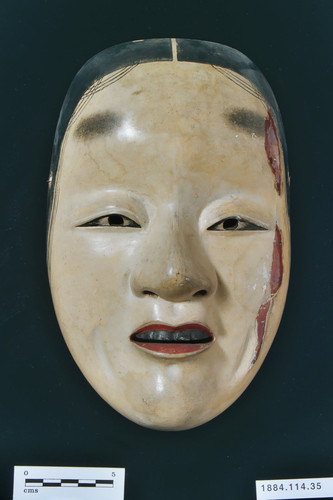 1884.114.35Carved wooden Noh mask of an older woman or grieving mother. The mask is carved from wood with a painted gesso coating. The lips are painted red and the mouth is slightly open revealing blackened teeth. [CW [OPS Move] 31/8/2016]1884.114.35
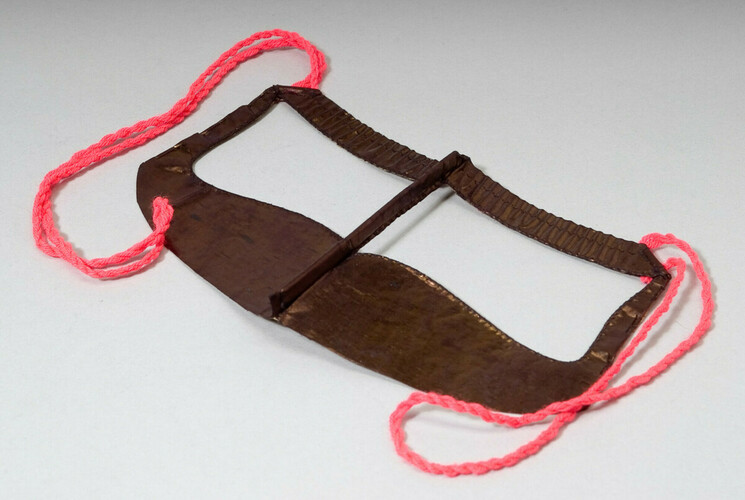 2003.9.271Indigo mask2003.9.271
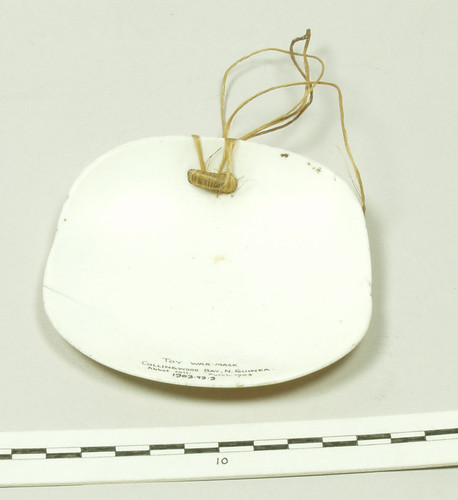 1903.43.3Miniature shell mask, perforated and threaded through with plant fibre ties [L.Ph 'DCF 2004-2006 What's Upstairs?' 17/3/2005]1903.43.3
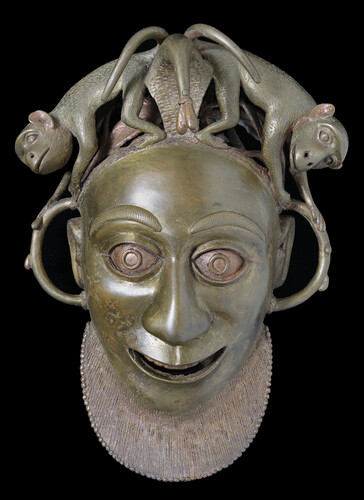 1942.13.429Mask of human face with a headdress that includes a pair of monkeys. [ZM 30/04/2013]1942.13.429
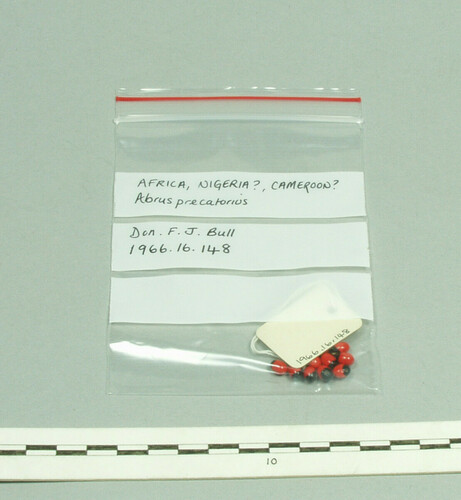 1966.16.148One of a collection of beads and seeds. Ten red and black abrus precatorius seeds. [JP 16/1/2003]1966.16.148
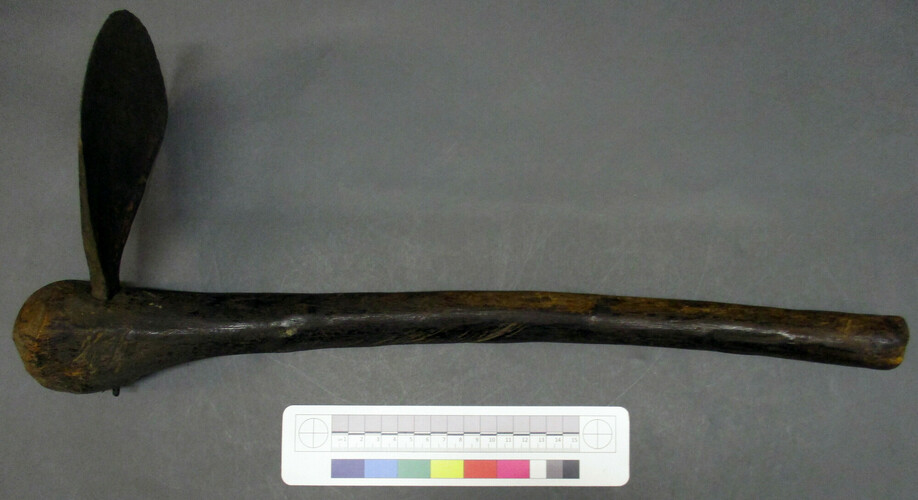 1922.23.49Hoe with iron blade set into wooden handle. [JC [OPS Move] 19/12/2016]1922.23.49
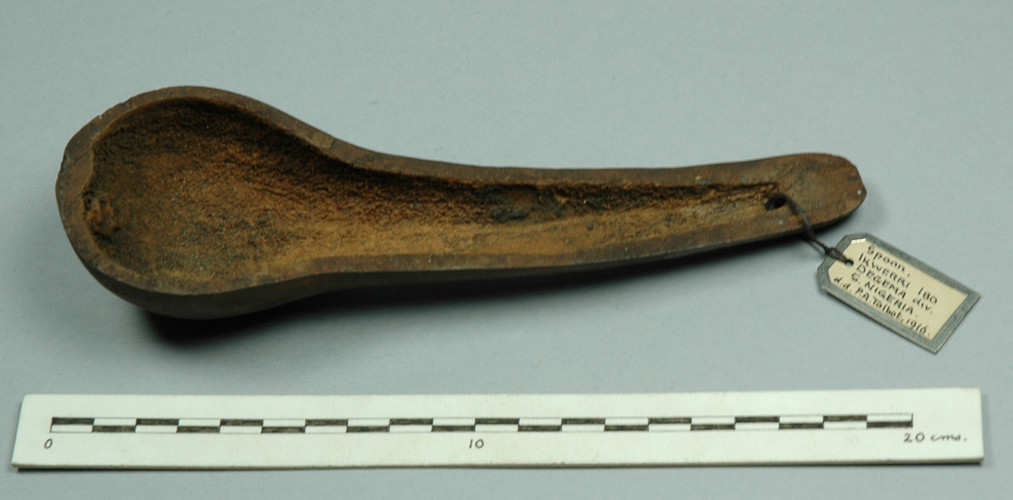 1916.45.3Spoon made out of a small gourd cut in half. [El.B 'DCF 2004-2006 What's Upstairs?' 30/3/2006]1916.45.3
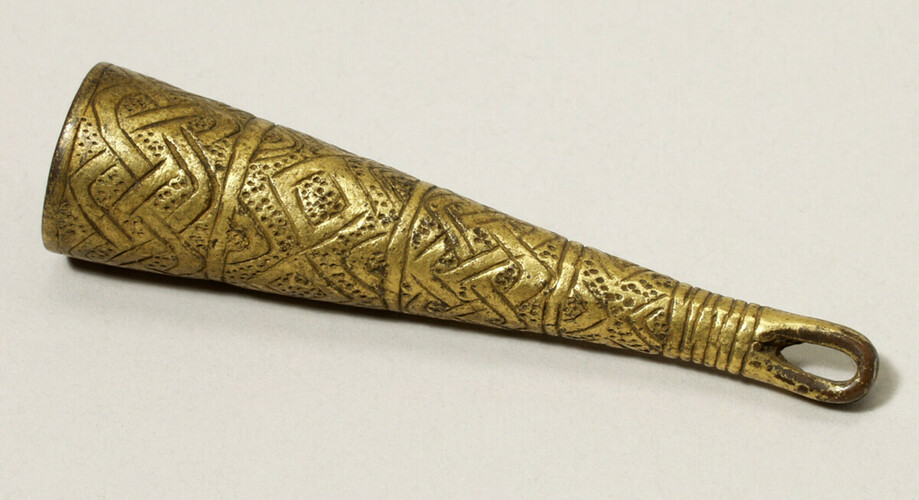 1991.13.24Cast and gilded brass cone with incised decoration and loops for attachment. These would have hung from the costume of a notable person and jingled as he moved. [presumably LMM 7 1991; JC 6 7 2000]1991.13.24