
- Collection type
- Object
- Description
- Headdress mask on a wicker cap for the Owu dance. [MdeA / CW 30 4 98]
- Long description
- Headdress mask on a wicker cap for the Owu dance. The base is basketry edged with (?cotton) textile. Attached to this base are fibre strings. The base is strapped to the upper carved part of the headdress with strips of cane. This upper part consists of a carved and painted stylized human face. The face has a long nose, protruding mouth and bared teeth. The brow is protruding and the eyes are raised. There is a perforated carving above the forehed, which has a nail protruding. [MdeA / CW 30 4 98]
- Geographical reference
- Southern Nigeria Niger Delta Rivers State Abonnema
- Date / Period
- Date made: Before 1916
- Date collected
- 1916
- Acquisition information
- Donated: 1916
- Materials and processes
- Material Wood Plant, Material Cane Plant, Material Cotton Seed Fibre Textile Plant, Material Plant Fibre, Material Metal, Process Carved, Process Wicker Woven, Process Perforated, Process Nailed, Process Basketry, Process Printed
- Dimensions
- Length: max 300 mm face, Height: max 270 mm, Diameter: max 213 mm base
- Object numbers
- Accession number: 1916.45.98
- Research and responses
John Picton examined this mask during a consultation visit about the Ijo masks on 20 August 2013 and noted the following: This is a Kalabari Ijo head-dress mask worn as part of a costume in water-spirit (owu) masquerades. Amongst the Eastern Ijo, who are categorised as the groups living on the east side of the Nun River, which includes the Kalabari, water-spirit masquerades are looked after by the Ekine society. This type of mask is worn on top of the head with the carved face pointing skywards, although this makes the mask invisible to spectators at times they do see glimpses of the mask through the movements of masquerader's dance. This is a good an example that shows how the carved section is attached to the wicker base, which sits on the top of the head. The bottom of the wicker base is wrapped with an imported woven cotton textile, in the Niger Delta Indian checked cloth like this is very popular and fashionable. Around the back of the carving are more holes than have been used to attach the mask to the wicker base, this could be to enable a different base to be used. Holes are also used to attached feathers and other decorations when the mask is worn. [ZM 21/08/2013]
Search terms: Mask, Clothing Headgear, Figure, Religion, Basketry, Dance, Theatre and Drama, Headdress, Head Ornament, Dance Accessory
Further items to explore
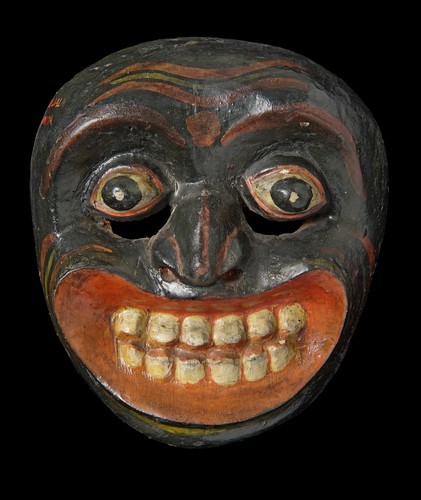 1895.36.9Mask used in dances performed for curing, an upturned mouth and holes under the eyes to enable the wearer to see [JN 15/07/2008]1895.36.9
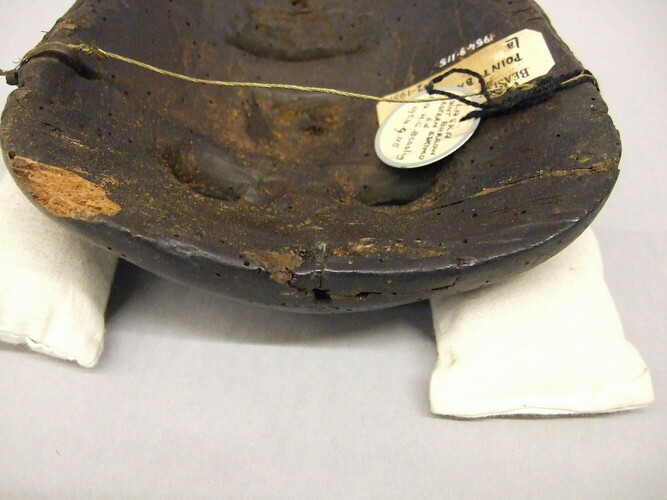 1954.9.115Mask of carved wood. Representing a human face. The mask is rounded with perforations for the eyes and mouth. There are holes at the side of the mask, there is a loop of plant fibre knotted through one hole. [AB [OPS Move] 5/9/2016]1954.9.115
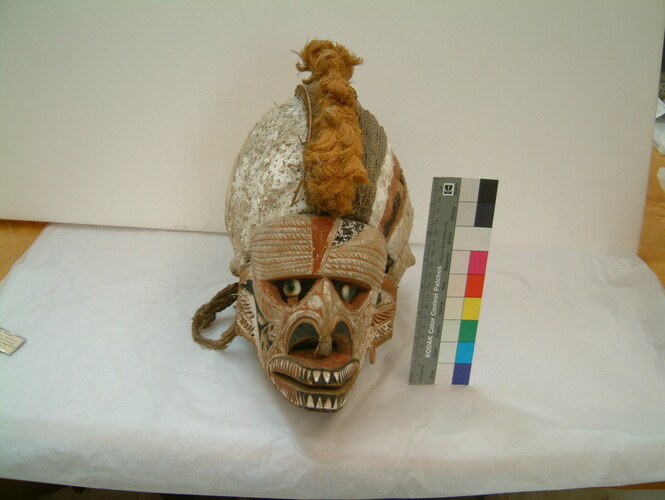 1943.4.1Carved wooden dance mask depicting a stylised face. [CW [OPS move] 31/8/2016]1943.4.1
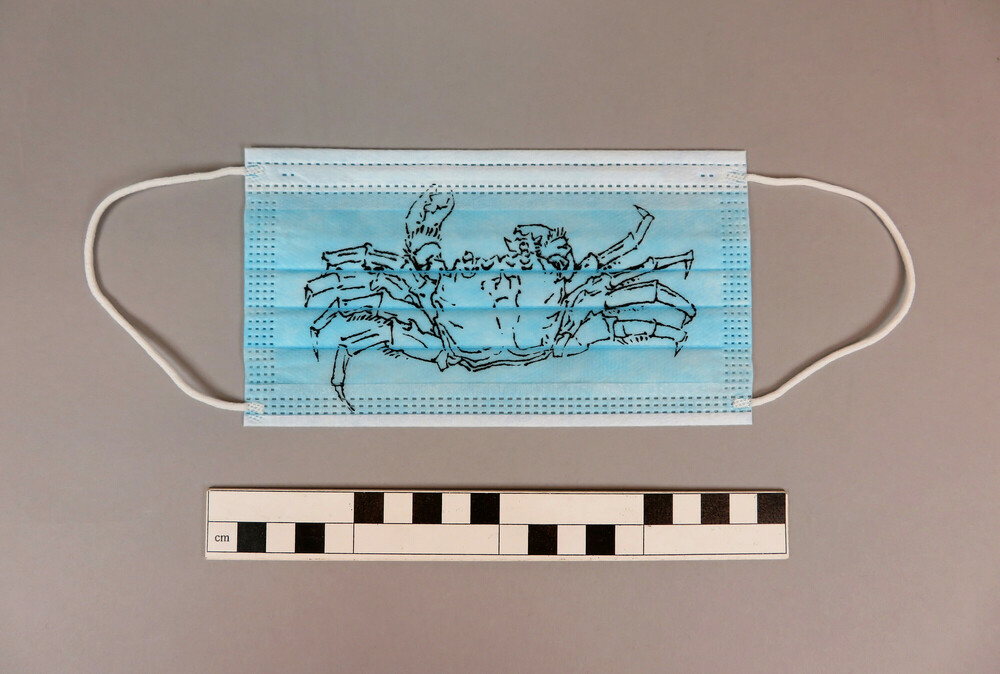 2020.40.14Covid face mask2020.40.14
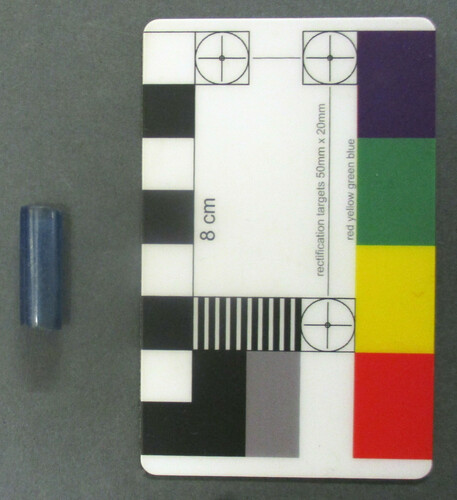 1942.13.700Bead. Made from glass and cylindrical in shape with a hollow channel through the centre. [ASh [OPS move] 16/11/2016]1942.13.700
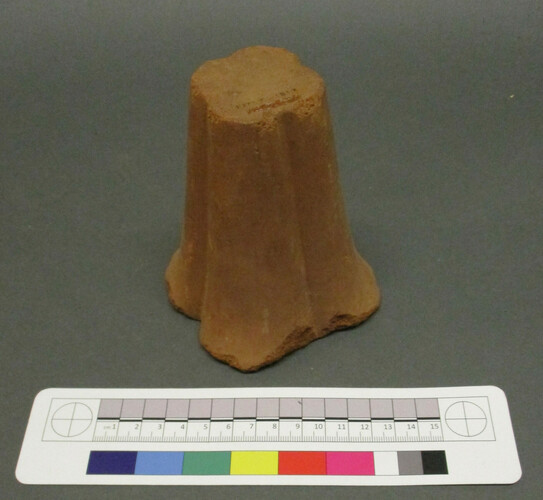 1972.24.181.3Clay mould (bell), to demonstrate lost wax process. The mould is for the inside of the bell. It is conical with four broad flutings and is mainly solid, although partially hollow at the base. The clay is smooth. [JC [OPS Move] 22/2/2017]1972.24.181.3
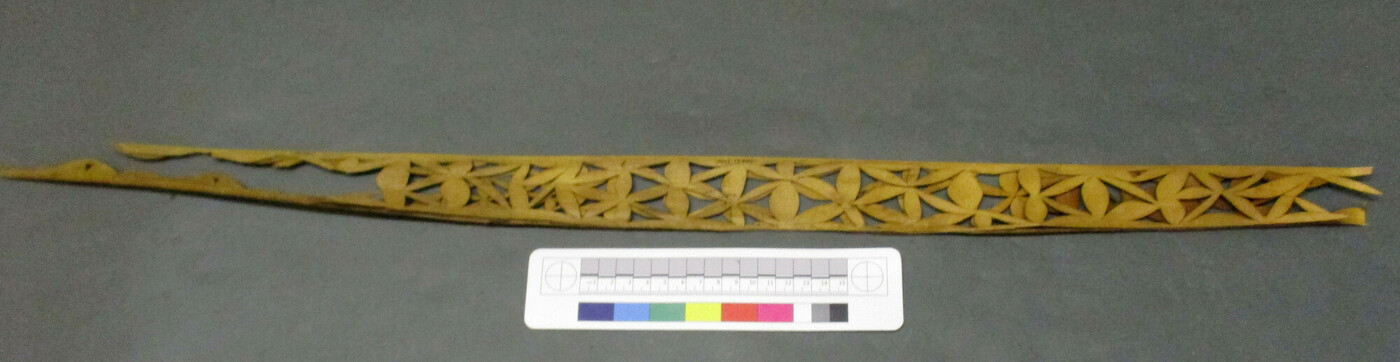 1942.13.904Palm leaf house ornament, cut to create open decorative designs. The designs are in the form two parallel rows of five-petalled flowers, folded in half so one row is on top of the other. [JC [OPS Move] 25/1/2017]1942.13.904
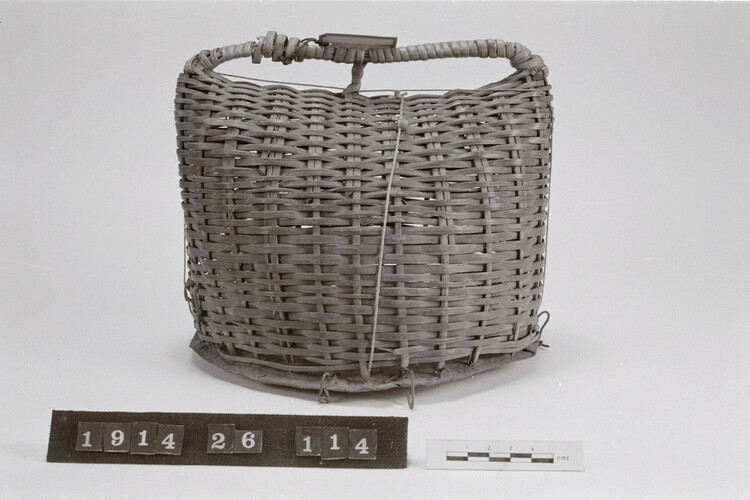 1914.26.114Rattle of basket-work with tin base, for containing loose pellets. [DCF Court Team 7/2/2003]1914.26.114