
- Collection type
- Object
- Description
- Carved and painted wooden mask. [MdeA 23 4 1998]
- Long description
- Carved and painted wooden mask. The eyes are perforated. The mouth is open showing incised marks for teeth but not perforated. There are no nostrils marked on the mask but the area just below the nose is painted blue. The lower lip is also painted blue. A piece of animal skin with tufts of hair still attached has been nailed to the chin. There are two incised black lines going in a diagonal direction from just below the inner corner of the eyes to the jaw (possible scarification marks?). There is a horse-shoe-shaped carving on the forehead with the two ends of the carving pointing down towards the chin. This carving is painted black and could represent two thick locks of hair. The right side of this carving has been broken and shows signs of local repair. [MdeA 23 4 1998]
- Geographical reference
- Southern Nigeria Niger Delta Rivers State Ahoada
- Date / Period
- Date made: Before 1937
- Date collected
- 1937
- Acquisition information
- Donated: 1938
- Materials and processes
- Material Wood Plant, Material Pigment, Material Iron Metal, Material Animal Hair, Material Animal Skin, Process Carved, Process Painted, Process Nailed, Process Incised, Process Repaired (local)
- Dimensions
- Width: max 151 mm, Length: max 260 mm
- Object numbers
- Accession number: 1938.15.2
- Research and responses
John Picton examined this mask during a consultation visit to look at Igbo masks on 12 November 2013 and noted the following: When boys use masks for plays they wear them infront of the face or on top of the head, as the identity of the performer does not need to be hidden as small boys' plays require no ritual commitment and are performed for entertainment. This looks like it represents a ram with the horns curling round and down, when masks that represent a ram are worn the performer often mimics the behaviour of the ram, running and butting people. [ZM 19/11/2013]
Search terms: Mask, Children and Childcare
Further items to explore
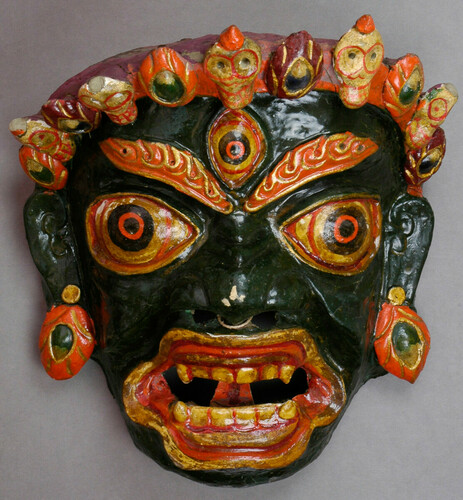 1967.25.23Face mask of papier mache painted dark green. Moulded eyebrows painted orange and gold. Yellow headband with eleven alternate floral ornaments and death's heads. Mouth and nostrils pierced. Upturned tongue.1967.25.23
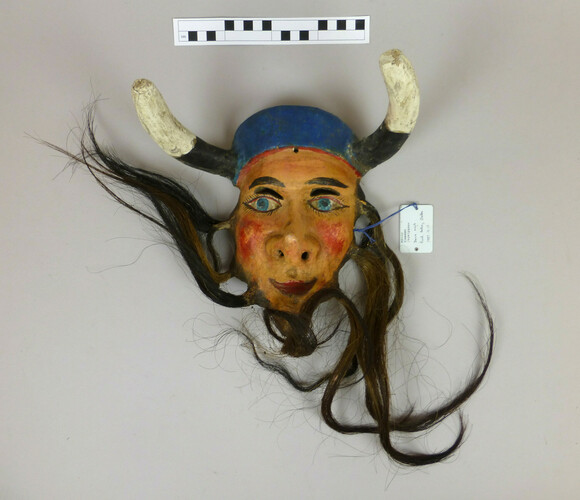 1987.16.10Wooden mask representing a Christian character in the Dance of the Moors, with tufts of horsehair as a bead and side whiskers and carved horns. [SM (Verve) 20/02/2013]1987.16.10
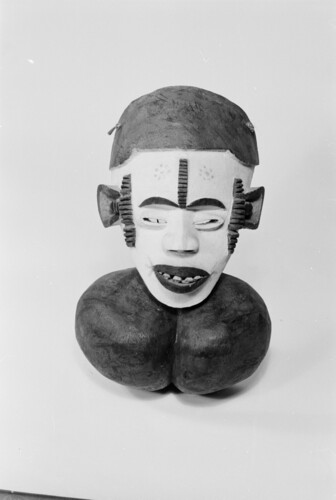 1932.33.6Carved and painted wooden mask. MdeA 23 4 19981932.33.6
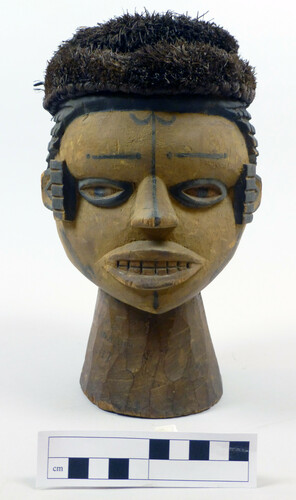 1926.8.7Carved human head in light wood, showing cicatrization marks. Painted, with plant fibre plaited and nailed to top of head to represent hair.1926.8.7
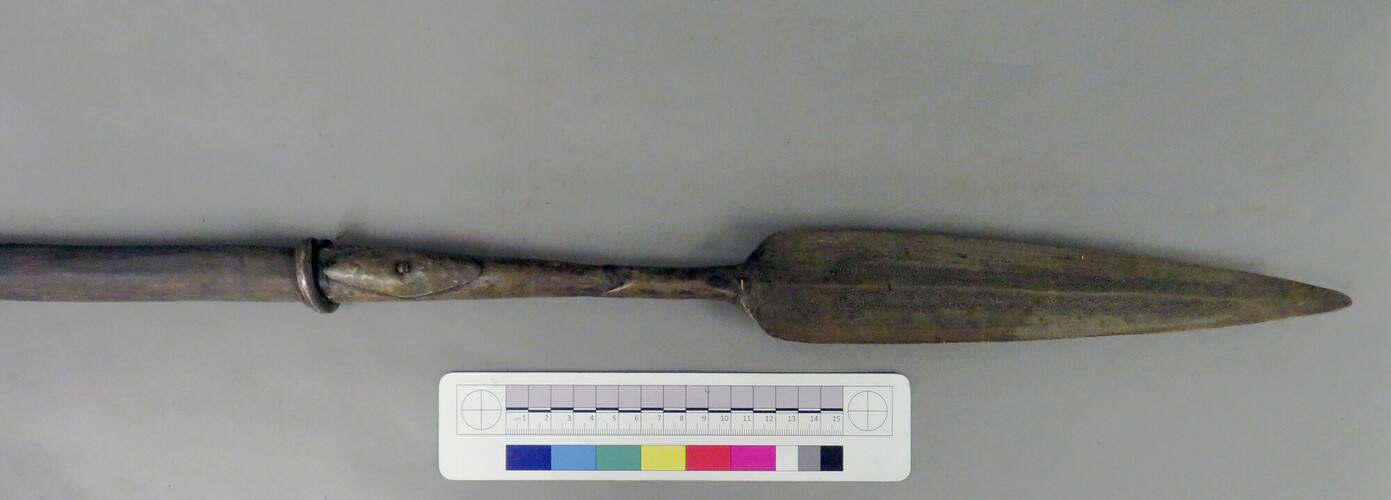 1904.59.18Spear with plain wooden shaft and large socketed leaf-shaped iron blade with incised lines and swirls. [RH [OPS move] 10/7/2018]1904.59.18
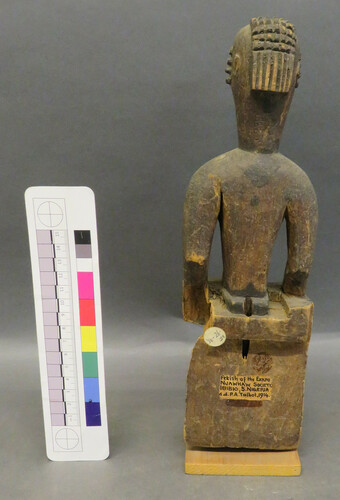 1914.26.31Carved female figure, sat on raised stand or base. Carved facial details with prominent and protruding brow and forehead. Open ovoid mouth with carved teeth. Sat on raised stand or base, with disproportionately short and narrow legs. Also has disproportionately large arms. [IL [OPS Move] 12/6/2017]1914.26.31
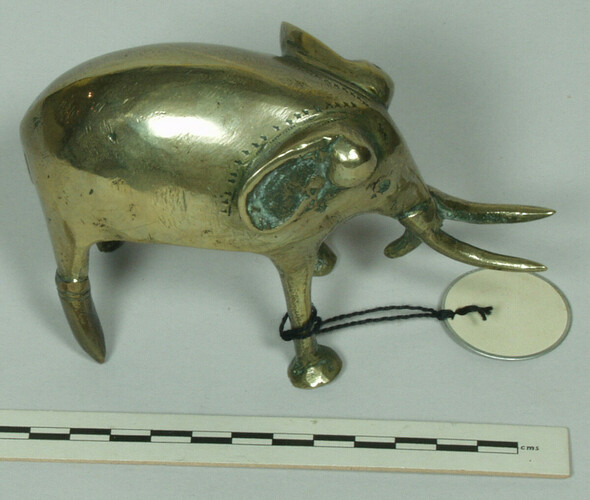 1965.12.52Brass figure of an elephant.1965.12.52
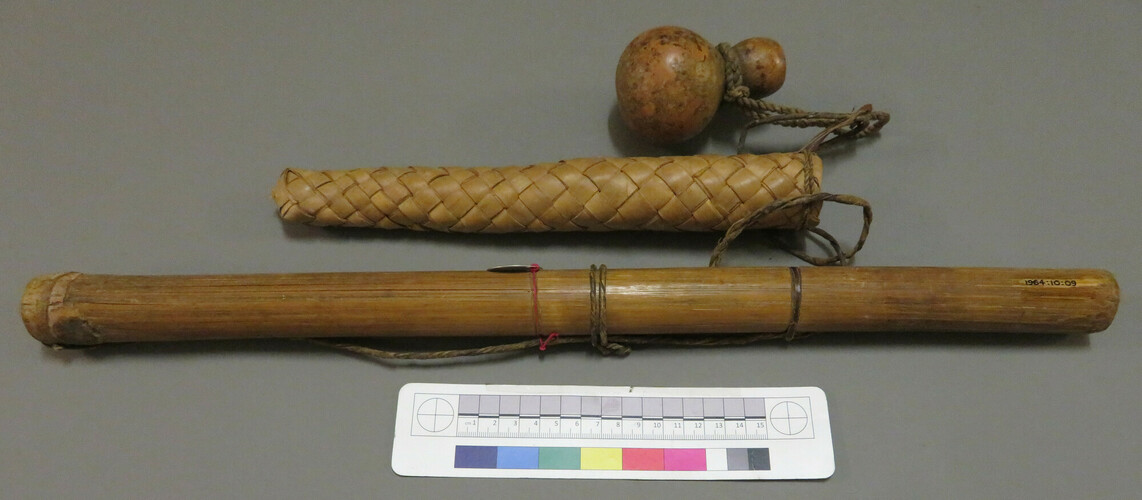 1964.10.09.1Quiver with attached basket lid and poison gourd. [ASh [OPS move] 3/10/2017]1964.10.09.1