
- Collection type
- Object
- Description
- Hide belt decorated with small beads and short copper chains [El.B 'DCF 2004-2006 What's Upstairs?' 12/7/2005]
- Long description
- Hide belt decorated with small seed beads (mainly blue and white but also reddish brown and green in small areas) and groups of short copper chains. On the front of the belt the hide is completely covered by the beads. The belt is fastened by a strip of hide at one end and a hole in the hide at the other. [El.B 'DCF 2004-2006 What's Upstairs?' 12/7/2005] Worn by men only, and only a few special warriors at that, keen young warriors in training camps, they are loved, cool men, eager to volunteer. These belts are regarded as a special part of dressing, an additional special accessory, not just part of the normal attire. The chains would be bought as one long chain and cut by the belt maker, the chain is not made. [ThW [Living Cultures Project] 17/3/2021]
- Geographical reference
- Cultural groups
- Maasai
- Date / Period
- Date made: Before 1900
- Date collected
- Circa 1920s
- Acquisition information
- Donated: 17/01/1997
- Materials and processes
- Material Bead, Material Copper Metal, Material Animal Hide Skin, Process Beadwork, Process Perforated
- Dimensions
- Length: max 950 mm
- Object numbers
- Accession number: 1997.1.1
- Research and responses
'Belt or waist ornament which is definitely Maasai. Worn by men only, and only a few special warriors at that, keen young warriors in training camps, they are loved, cool men, eager to volunteer. These belts are regarded as a special part of dressing, an additional special accessory, not just part of the normal attire. The chains would be bought as one long chain and cut by the belt maker, the chain is not made.' The information used to describe this object has been reviewed through a process of consultation with Maasai representatives and community elders as part of The Maasai Living Cultures Project. Living Cultures started in 2017 and is a partnership between Maasai representatives from Tanzania and Kenya, the Pitt Rivers Museum and InsightShare, an Oxford-based NGO. The project is working to represent the history and narratives behind artefacts held in museum collections. Over the course of three years (2017, 2018, 2020) Maasai delegates have visited the museum to discuss how their culture is represented and how the Museum speaks about Maasai communities in its displays, databases, and education programmes. [ThW [Living Cultures Project] 17/3/2021]
Search terms: Clothing, Ornament, Status, Belt, Chain, Waist Ornament
Further items to explore
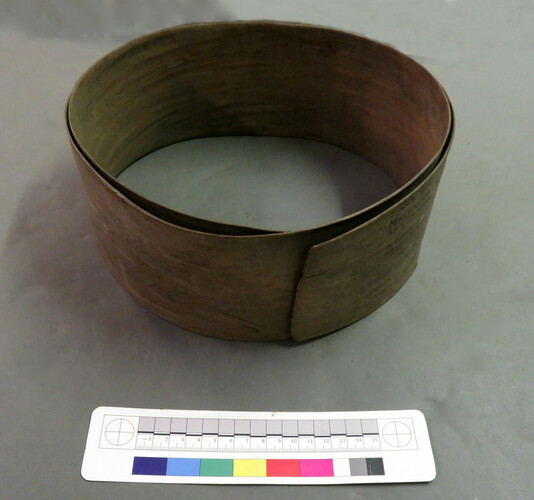 1896.33.41Belt made from strip of bark curled into a spiral. [MOBB [OPS move] 1/9/2017]1896.33.41
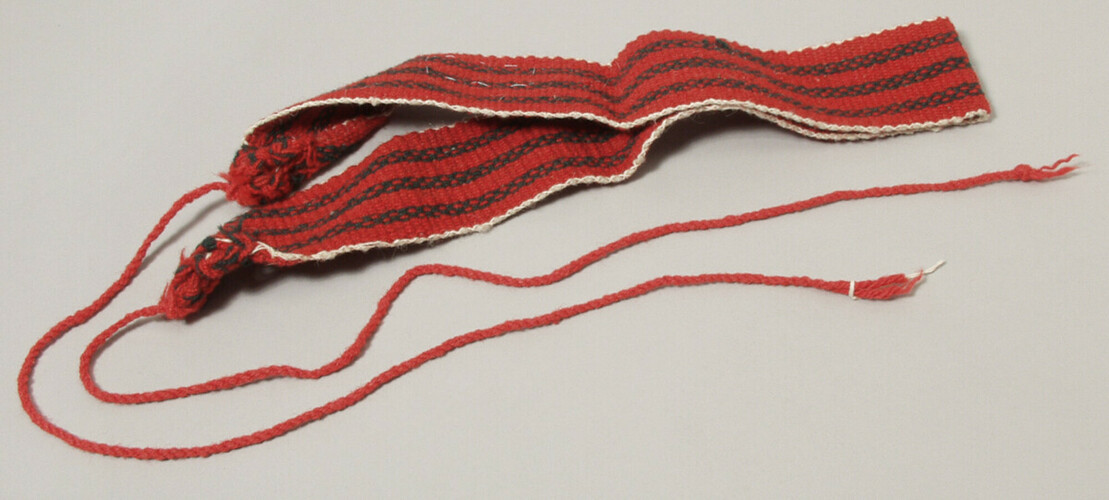 2001.69.4Man's red and black striped woven belt of coarse wool edged with cream wool and cream cotton stitching. [JP 2/1/2003]2001.69.4
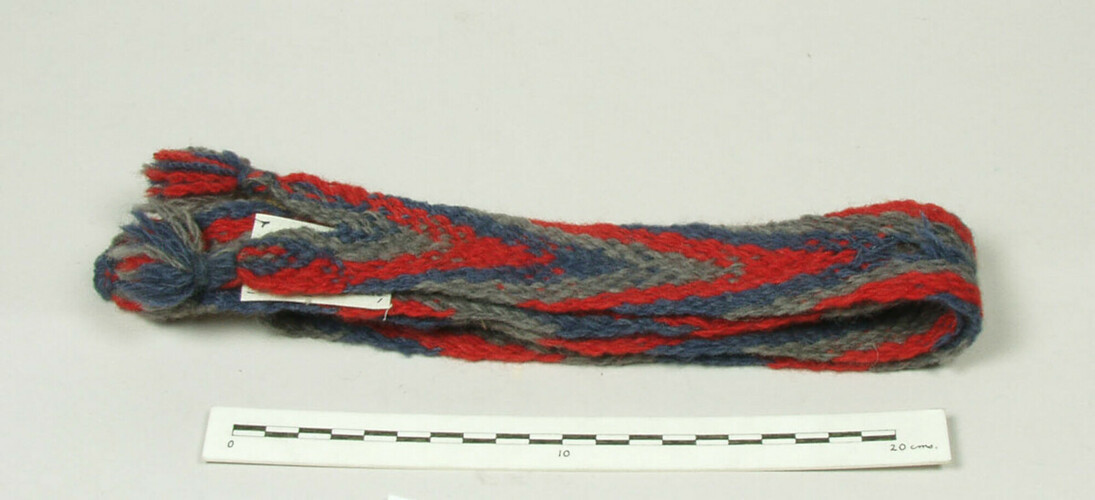 1940.12.040Belt of plaited wool, blue, gray and red [L.Ph 'DCF 2004-2006 What's Upstairs?' 22/4/2005]1940.12.040
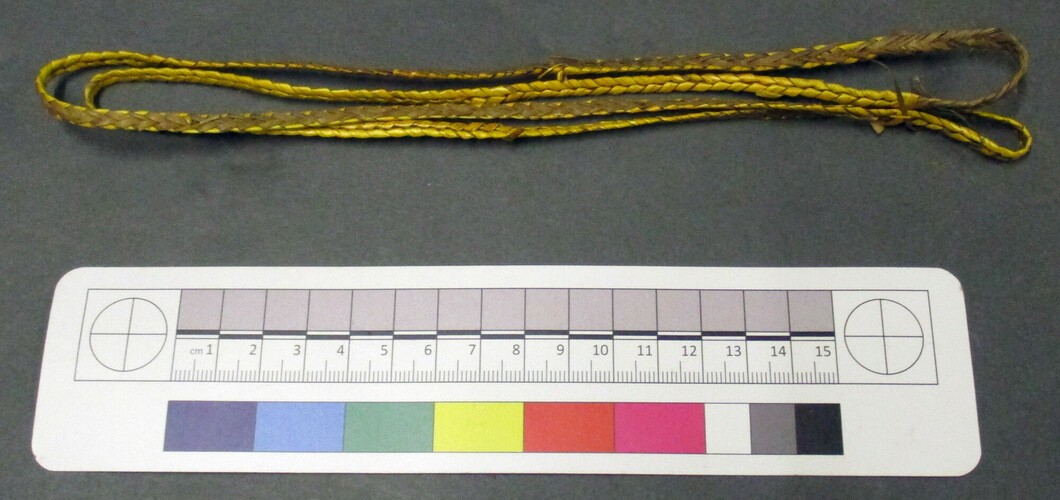 1938.36.703Baldric of plaited pandanus leaf with decoration of yellow strands of orchid stem. [BS [OPS move] 11/11/2016]1938.36.703
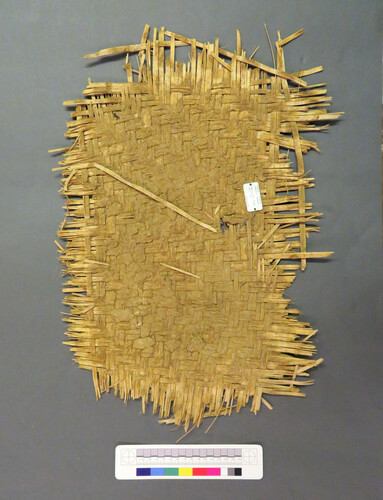 1982.20.38Wedging mat for kneading clay. Roughly rectangular mat, constructed from twill woven strips of palm leaf onto which animal dung has been applied. The edges of the mat are roughly cut and unwoven. [EH [OPS Move] 29/6/2017]1982.20.38
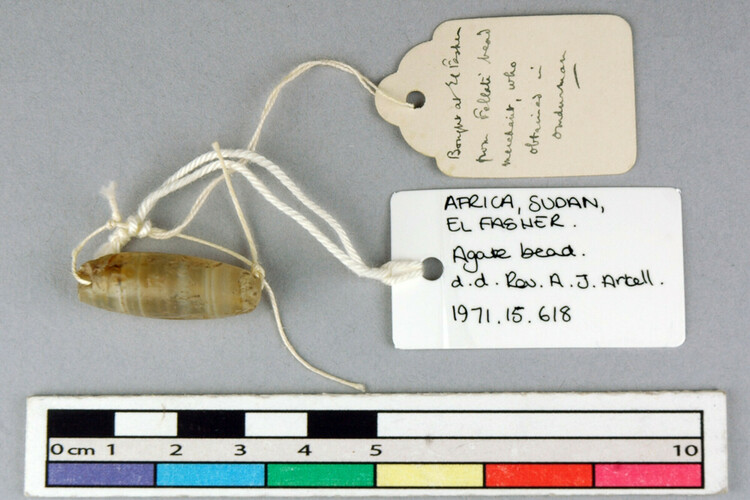 1971.15.618A tapering beige and white barrel bead of agate. [SM 21/10/2010]1971.15.618
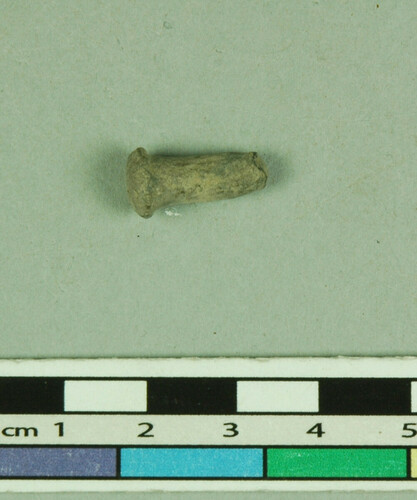 1949.12.137.4Pottery lip stud. [El.B DDF Body Arts Project 2010/2011 11/10/2010]1949.12.137.4
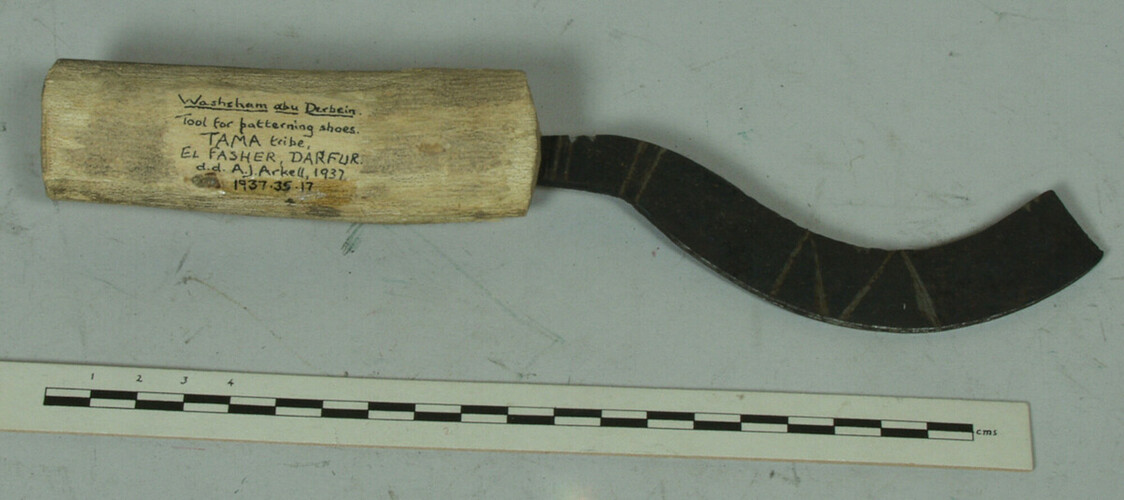 1937.35.17Tool for patterning shoes: curved metal blade in wooden handle.1937.35.17